

If your cervical pillow has a removable cover, wash the cover. Never machine-wash the memory-foam core. Spot-clean the foam with a damp cloth and mild detergent, then air-dry it completely before you sleep on it again, which typically takes a full day or two. Skip this drying window and you risk trapping moisture inside the foam, where mold can take hold unseen.
TL;DR:
- The memory foam core must never be soaked or machine-washed; spot-clean with damp cloth and air-dry for 24 to 48 hours to prevent mold.
- Always check the manufacturer’s care tag before cleaning, as many cores are not designed for machine washing and require gentle spot cleaning.
- Wash removable pillow covers on a gentle, cold cycle and air-dry to prevent fabric damage and maintain hygiene.
- Complete drying of the foam core is crucial, especially in humid environments, to prevent mold growth, and may take up to two days.
- Regular maintenance, including weekly pillowcase washing and monthly vacuuming, extends the pillow’s lifespan and keeps it fresh.
Table of Contents
- What You Need Before You Clean a Cervical Pillow
- How Do You Clean a Memory Foam Cervical Pillow Core?
- How Do You Wash a Cervical Pillow Cover?
- How Long Does It Take a Cervical Pillow to Dry Completely?
- How Do You Remove Stains and Yellowing From a Foam Pillow?
- How Often Should You Clean and Replace a Cervical Pillow?
- Why Manufacturer Care Instructions Matter More Than Habit
- The Small Habits That Save You a Deep Clean
- Make Cervical Pillow Care Part of the Design, Not an Afterthought
- Sources
What You Need Before You Clean a Cervical Pillow
A rushed cleaning job is how foam gets ruined. Take five minutes to prep first.
Start by checking the manufacturer’s care tag or the original packaging insert. It tells you whether the cover is machine-washable, whether the foam is CertiPUR-US certified, and what temperature limits apply. If the tag is missing or worn off, Consumer Reports recommends treating the cover as delicate: cold water, gentle cycle, air-dry only. That default protects fabric you can’t otherwise identify.
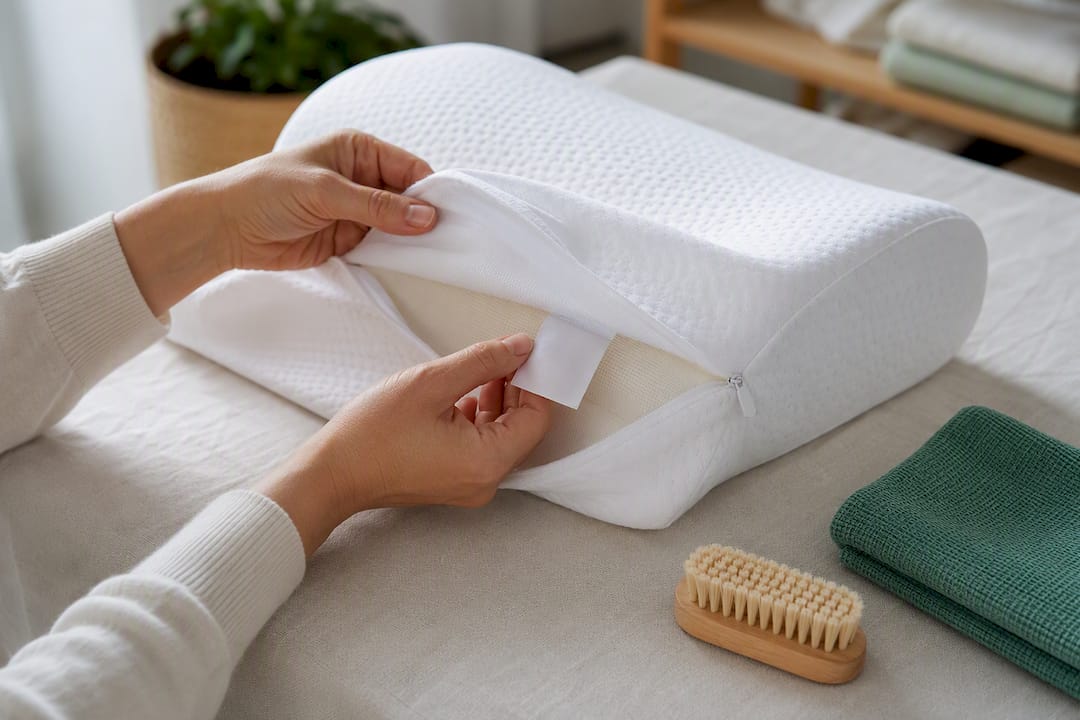
Inspect the seams and zipper for fraying or tears while you’re at it. A weak seam can split open in the wash and let foam crumbs escape.
Gather these before you start:
- Mild liquid detergent (a delicates formula works well)
- Baking soda for deodorizing
- Two clean towels or microfiber cloths
- A vacuum with an upholstery brush attachment
- A spray bottle for controlled dampening
Then make the call: does the cover come off? If yes, that’s a separate wash. If the pillow is one solid piece, you’re working with spot-cleaning only.
How Do You Clean a Memory Foam Cervical Pillow Core?
The foam core is the part people damage most, usually by treating it like a regular pillow. Memory foam absorbs and holds moisture, and Sleep Foundation guidance is direct on this: machine agitation and dryer heat break down the cell structure that gives the foam its support. Once that structure collapses, no amount of drying brings it back.
Here’s the sequence that actually works:
- Vacuum first. Run the upholstery brush over the entire surface to lift dust, skin flakes, and loose debris before any liquid touches the foam.
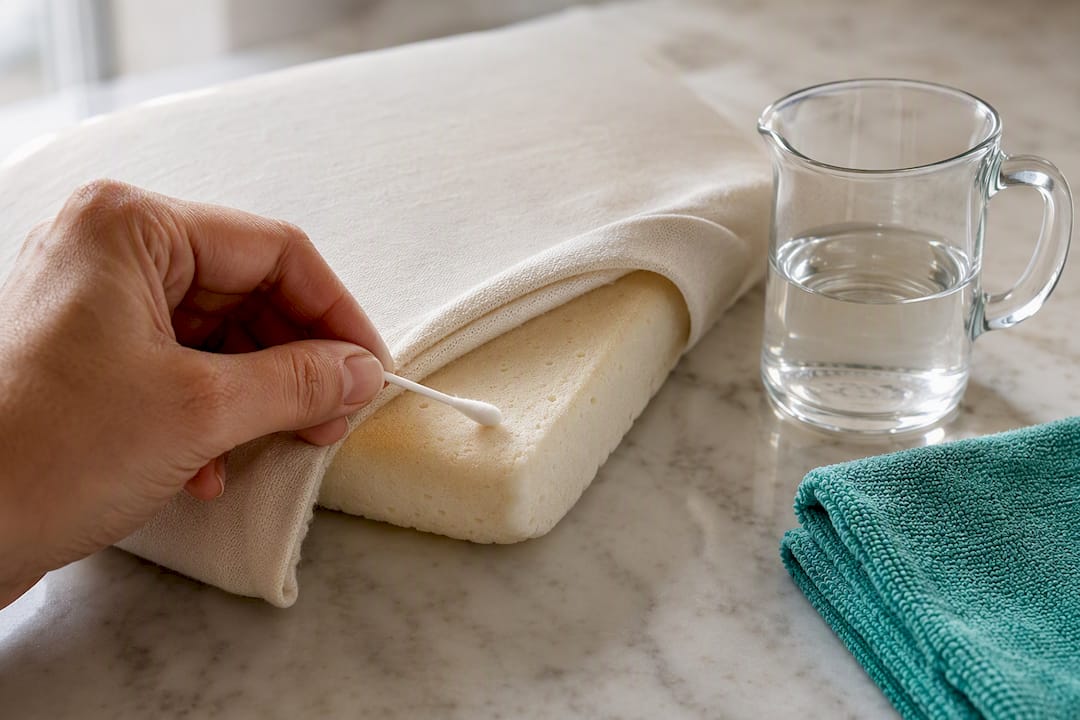
- Mix your solution. A few drops of mild detergent in a cup of lukewarm water is enough. More soap doesn’t mean cleaner foam, it means longer drying time.
- Dampen, don’t soak. Dip a cloth in the solution, wring it out until it’s just damp, and blot stains directly. Never pour liquid onto the foam.
- Rinse by blotting. Use a second clean, damp cloth to lift out the soap residue with the same blotting motion.
- Press, never wring. Lay a dry towel over the treated area and press down firmly to pull out moisture. Twisting or wringing memory foam permanently distorts its shape.
- Air-dry flat. Set the pillow on a towel in a ventilated room, away from direct sunlight, and leave it alone for 24 to 48 hours.
Before you use it again, press into the center and along the edges. If any spot feels cool or damp, it’s still holding moisture, and needs more time to dry all the way through.
Pro Tip: Diluted vinegar shows up in a lot of home cleaning advice, but its acidity can quietly break down polyurethane foam over repeated uses. If you use it at all, dilute it heavily (at least 1 part vinegar to 4 parts water) and test a hidden corner first.
How Do You Wash a Cervical Pillow Cover?
The cover is the easy part, and it’s also the piece doing most of the hygiene work, since it’s what touches your skin and absorbs sweat and oil every night.
- Zip closures and fasten any straps before the wash cycle, so nothing snags or unravels.
- Wash on gentle or cold with a mild detergent, no fabric softener, since softener residue can trap odor over time.
- Air-dry when possible. Tumble dry on low heat only if the care tag specifically allows it.
- Reshape the cover while it’s still damp so it dries back into its original fit around the pillow.
Material matters here too. Bamboo and microfiber covers tend to hold up well on gentle cycles but can pill under high heat. Polyester covers are the most forgiving of the three and usually tolerate a low tumble dry. Washing frequency depends on personal factors like sweat and allergies.
How Long Does It Take a Cervical Pillow to Dry Completely?
Surface-dry and actually-dry are two different things, and that gap is where most mold problems start. Memory foam’s density means moisture can sit deep in the core long after the outside feels fine to the touch.
Plan on a full day or two for complete drying, longer in humid climates. Speed it up with a fan pointed at the pillow and a spot with low humidity. A dehumidifier in the room helps too, especially in summer.
Roughly 60% of indoor mold problems trace back to trapped moisture in porous materials, which is exactly the environment a half-dried foam pillow creates.
To deodorize along the way:
- Sprinkle baking soda evenly over the dry foam surface.
- Let it sit for 30 to 60 minutes for light odor, or overnight for anything stronger, a method EatHealthy365 outlines as a low-risk way to pull smell out of foam.
- Vacuum it off thoroughly with the upholstery attachment.
Skip direct sunlight and any heat source during drying. Both degrade foam faster than moisture ever will.
How Do You Remove Stains and Yellowing From a Foam Pillow?
Sweat stains and yellowing are cosmetic problems, but they’re also the ones people reach for the strongest cleaner to fix, which is exactly the wrong instinct with foam.
- For protein or oil-based stains (sweat, drool, skin oils), mix a small amount of hydrogen peroxide with a drop of dish soap into a light paste. Test it on a hidden spot first, then blot onto the stain and rinse by blotting with a clean damp cloth.
- For general yellowing, a baking soda paste works gently. Apply it, let it sit for 15 to 20 minutes, then wipe away and vacuum any residue.
- Never use undiluted bleach on foam. It breaks down the material and can leave behind a chemical smell that’s worse than the stain.
- After any stain treatment, rinse thoroughly and give the pillow the full drying window before reuse.
How Often Should You Clean and Replace a Cervical Pillow?
A simple rhythm keeps hygiene in check without turning cleaning into a chore. Here’s the cadence worth following:
- Weekly: Wash the pillowcase.
- Monthly: Wash the removable cover and vacuum the foam surface.
- Every 3 to 6 months: Spot-clean or deodorize the core, depending on use.
- Every 2 to 3 years: Replace the pillow, or sooner if support has flattened out.
House Beautiful recommends washing pillowcases weekly and covers every 3 to 6 months, tightening that schedule if you sweat heavily, sleep with pets, or deal with allergies. Frequent travelers should also shorten the interval, since a pillow that rides in a bag picks up more grime than one that stays on a bed.
| Signal to check | What it means |
|---|---|
| Lingering odor after deodorizing | Foam may be breaking down internally |
| Visible flattening or slow rebound | Support has degraded, replace soon |
| Stains that won’t lift after treatment | Consider a new cover or a new pillow |
If your pillow shows two or more of these, it’s past the point cleaning can fix.
Why Manufacturer Care Instructions Matter More Than Habit
Most cleaning mistakes happen because people apply bed-pillow habits to a piece of engineered foam. A cervical pillow is shaped and dense for a reason, and that same density is what makes it vulnerable to machine agitation and trapped moisture.
Removable, washable covers exist precisely so the delicate part, the foam core, never has to touch a washing machine. Treat the cover as the workhorse of your cleaning routine and the core as the part you protect.
Some cervical pillows are designed with a washable outer cover paired with a foam core meant for spot-cleaning only, never a wash cycle. That design choice reflects the same guidance manufacturer care pages across the category tend to give, and it’s worth checking your own pillow’s product page for the specific instructions that apply to your model.
The Small Habits That Save You a Deep Clean
The pillows that stay fresh longest aren’t the ones people clean hardest. They’re the ones that get a little attention every week instead of a big rescue every few months.
A washable protector under the cover catches most sweat and oil before it ever reaches the foam, and washing your pillowcase weekly keeps bacteria from building up against your skin. Airing the pillow out once a month, just setting it somewhere ventilated for a few hours, does more for odor control than any deodorizing session after the fact. Catch a stain the day it happens instead of a month later, and you’ll almost never need the peroxide paste at all.
— Achraf
Make Cervical Pillow Care Part of the Design, Not an Afterthought
Most neck pillows force you to choose between comfort and easy care, since the same dense foam that supports your neck is the part you can never toss in a washer. Certain cervical pillow lines are built around a removable, washable cover specifically so the daily hygiene work, the part that actually matters most for sweat and skin oil, never touches the foam core at all.

The Vitality™ MagicPro 2.0 pairs naturally with this kind of pillow routine if neck stiffness is part of why you’re relying on a cervical pillow in the first place, since heat and stimulation therapy address the tension a pillow alone can’t fix. For anyone building out a full sleep and pain-relief setup, the broader Vitality™ Devices collection covers the rest of that routine, from portable relief devices to accessories. Check the product pages for warranty terms and return details, and browse collections to see what fits your own nightly routine.
Sources
- How to clean memory foam pillows — Sleep Foundation
- How to wash a pillow — Consumer Reports
- How to wash pillows — House Beautiful
- How to properly clean and care for your neck pillow — EatHealthy365
- How to clean your travel neck pillow — Cabeau