

Heat therapy is the targeted application of warmth to the neck area to relieve pain, reduce muscle stiffness, and enhance blood flow. Clinically, this approach is called thermotherapy, and its effects go well beyond simple comfort. Research shows it raises local tissue metabolism by 10–15% per degree Celsius of temperature increase, accelerating the body’s natural repair process. Whether you are managing a stiff neck at work, recovering from a sports strain, or dealing with chronic cervical tension, understanding the heat therapy neck pain benefits gives you a real tool for relief.
1. What happens to your neck when you apply heat?
Heat dilates blood vessels in the cervical muscles, increasing circulation immediately. That extra blood flow delivers oxygen and nutrients to stressed tissue while flushing out the metabolic waste products that cause soreness. The result is faster recovery and noticeably less aching.
Heat also raises tissue elasticity. Warm muscle fibers are more pliable than cold ones, which is why stiffness drops quickly after applying a heat wrap. At the same time, sensory receptors override pain signals traveling to the brain, a process sometimes called the gate control effect. Pain perception decreases even before the muscle fully relaxes.
The type of heat source matters. Moist heat penetrates muscle tissue more effectively than dry heat and causes less skin dryness during treatment. Hydrocollator packs and moist heating wraps are preferred by physical therapists for this reason. Dry electric pads still work, but they require a barrier cloth to protect skin.
- Blood vessel dilation increases local circulation within minutes of application.
- Muscle fiber pliability improves, reducing the mechanical resistance that causes stiffness.
- Sensory receptor activation interrupts pain signal transmission to the brain.
- Metabolic waste clearance speeds up, reducing the chemical cause of soreness.
- Tissue repair rate rises as oxygen and nutrient delivery improves.
Pro Tip: Place a damp towel between a dry heating pad and your skin. You get the penetration benefit of moist heat without buying specialized equipment.
2. Top 6 benefits of heat therapy for neck pain and stiffness
Heat therapy delivers six distinct, measurable benefits for people managing neck pain. Each one builds on the physiological changes described above.
1. Pain reduction through muscle relaxation. Tight cervical muscles compress nerves and restrict movement. Heat relaxes those fibers directly, reducing the mechanical pressure on surrounding nerves. Pressure sensitivity at trigger points decreases measurably after heat application, meaning the threshold for pain increases.

2. Improved range of motion. Stiffness is the most common complaint in heat therapy stiff neck at work cases. Warmer, more elastic muscle tissue allows the cervical spine to rotate and flex more freely. People who apply heat before gentle movement exercises report significantly better mobility than those who rest without treatment.
3. Enhanced circulation for tissue repair. Blood carries the building blocks of repair: oxygen, glucose, and growth factors. Heat therapy muscle recovery benefits are largely driven by this circulatory boost. Faster nutrient delivery means minor muscle tears and strains heal more quickly.
4. Faster recovery from minor injuries. Heat therapy is most effective when used before gentle range-of-motion exercises to increase tissue elasticity and prevent stiffness from returning. Athletes and active people use this sequence deliberately: heat, move, recover.
5. Convenience and safety at home. Top heat therapy neck wraps, microwavable packs, and electric heating pads are all low-cost, low-risk tools. 87% of patients recommend heat therapy as a self-management option for neck pain. That recommendation rate reflects both effectiveness and ease of use.
6. Support for other treatments. Heat does not replace physical therapy or ergonomic changes, but it reduces symptoms enough to make those interventions easier to tolerate. When the neck relaxes, the brain often follows, and that calmer state supports better engagement with exercise and posture correction.
“Heat therapy reduces symptoms enough to enable movement and improve long-term outcomes. It works best as one part of a broader self-management plan that includes exercise and ergonomic adjustments.”
3. How to safely use heat therapy for neck pain at home
Safe application produces the best results. The guidelines below reflect clinical recommendations and patient safety data.
Timing and duration
Sessions should last 10–15 minutes. Longer exposure increases the risk of skin irritation and burns without adding therapeutic benefit. Space sessions at least one hour apart to allow skin temperature to normalize.
Medical guidelines recommend cold therapy for the first 48 hours after an acute neck injury. Cold reduces swelling and inflammation. Heat comes after that window, once acute inflammation has subsided, to promote circulation and relaxation.
Choosing the right heat source
| Heat Source | Penetration | Skin Comfort | Best Use |
|---|---|---|---|
| Moist wrap or hydrocollator | Deep | High | Chronic stiffness, muscle knots |
| Microwavable grain pack | Moderate | Moderate | Home use, travel |
| Dry electric heating pad | Moderate | Lower (needs cloth barrier) | Sustained sessions |
| Multi-modal device (heat + massage) | Deep | High | Sports recovery, daily relief |
Pro Tip: Warm up for 10–15 minutes before doing gentle neck rotations. Warming before exercise improves results compared to remaining sedentary after heat application.
Key safety rules
- Never apply heat to open wounds, broken skin, or areas with active swelling from a fresh injury.
- Use a low or medium setting on electric pads. High settings cause thermal injury faster than most people expect.
- Do not fall asleep with a heating pad active. Burns occur most often during unmonitored sessions.
- Applying heat too early after an acute injury worsens inflammation instead of relieving it. When in doubt, use cold first.
- Check skin every five minutes during the first session to confirm no redness or irritation is developing.
For people managing spinal alignment issues alongside neck pain, combining heat with posture correction produces better outcomes than either approach alone.
4. What does research say about heat therapy effectiveness?
The clinical evidence for heat therapy is solid, though researchers consistently note it works best as part of a broader plan. A systematic review found that NDI scores improved from 29.6 to 19.0 after two weeks of consistent heat therapy use. The Neck Disability Index measures how much neck pain limits daily activities, so a drop of that size represents a meaningful functional improvement.
The same body of research confirms that local metabolism rises 10–15% per degree Celsius of tissue temperature increase. That metabolic boost directly accelerates tissue repair, which explains why heat therapy muscle recovery benefits show up quickly in both clinical and sports settings.
Patient satisfaction data reinforces the clinical findings. The 87% recommendation rate from patient surveys is unusually high for a self-managed intervention. High satisfaction combined with a strong safety profile makes heat therapy one of the most practical first-line options available without a prescription.
Researchers do note limitations. Most studies focus on non-specific neck pain rather than diagnosed conditions like cervical disc herniation. Heat therapy works best as one component of a multimodal approach that includes exercise and ergonomic modifications. People with structural causes of neck pain should use heat alongside, not instead of, professional care.
For those dealing with travel-related neck discomfort, research on vibration exposure and posture supports combining heat with movement breaks as an effective recovery strategy.
5. Combining heat with other therapy methods for better results
Heat therapy works well on its own, but it works better when paired with complementary approaches. This is the principle behind top heat massage devices for muscle recovery: combining modalities addresses pain through multiple pathways simultaneously.
Heat or massage alone reduces discomfort and enables movement, but neither fixes postural causes of neck pain like tech neck. Addressing the root cause requires ergonomic changes, strengthening exercises, and consistent movement habits. Heat and massage create the window of reduced pain that makes those changes easier to implement.
The most effective sequence for daily management looks like this: apply heat for 10–15 minutes to warm and relax cervical muscles, perform gentle range-of-motion exercises while tissue is warm and pliable, then use massage or electrical muscle stimulation to address residual tension. Devices that combine heat with massage, such as the Vitalitytherapy MagicPro 2.0 and MagicPro 3.0, deliver this sequence in a single 15-minute session. That efficiency matters for people managing neck pain at work or during travel.
For anyone researching top sports recovery neck massagers in 2026, the key evaluation criteria are heat output consistency, massage depth, and portability. Multi-modal devices that deliver heat alongside vibration or electrical stimulation outperform single-function tools in clinical and real-world settings.
Key Takeaways
Heat therapy relieves neck pain by relaxing cervical muscles, increasing circulation, and blocking pain signals, with research showing measurable improvements in neck function after consistent use.
| Point | Details |
|---|---|
| Apply heat after 48 hours | Use cold therapy first for acute injuries; switch to heat once inflammation subsides. |
| Limit sessions to 10–15 minutes | Longer sessions increase burn risk without adding therapeutic benefit. |
| Moist heat outperforms dry heat | Moist sources penetrate deeper and cause less skin dryness during treatment. |
| Combine heat with movement | Warming tissue before gentle exercises improves range of motion and recovery speed. |
| Heat works best in a broader plan | Pair heat therapy with ergonomic adjustments and exercise for lasting results. |
What I’ve learned from years of watching people use heat therapy wrong
Most people reach for a heating pad the moment they feel neck pain. That instinct is understandable, but it is wrong about half the time. If the pain started within the last 48 hours from a sudden strain or impact, heat will make the swelling worse. Cold is the correct first response. Heat comes later, once the acute phase has passed.
The second mistake I see constantly is passive use. People apply heat, sit still, and expect the pain to disappear. Heat creates a window of opportunity. It relaxes the tissue and reduces pain enough to move. If you do not use that window to do gentle neck rotations or stretches, the stiffness returns within an hour. The heat did not fail. The follow-through was missing.
The third issue is treating heat as a cure rather than a tool. Chronic neck pain almost always has a postural or ergonomic cause, whether it is a poorly set up office chair neck support or hours spent looking down at a phone. Heat manages the symptom. Fixing the cause requires changing how you sit, stand, and hold your head throughout the day.
My honest recommendation: use heat consistently, use it at the right time, and pair it with movement and posture work. That combination produces results that heat alone never will.
— Achraf
Vitalitytherapy’s approach to neck heat therapy at home
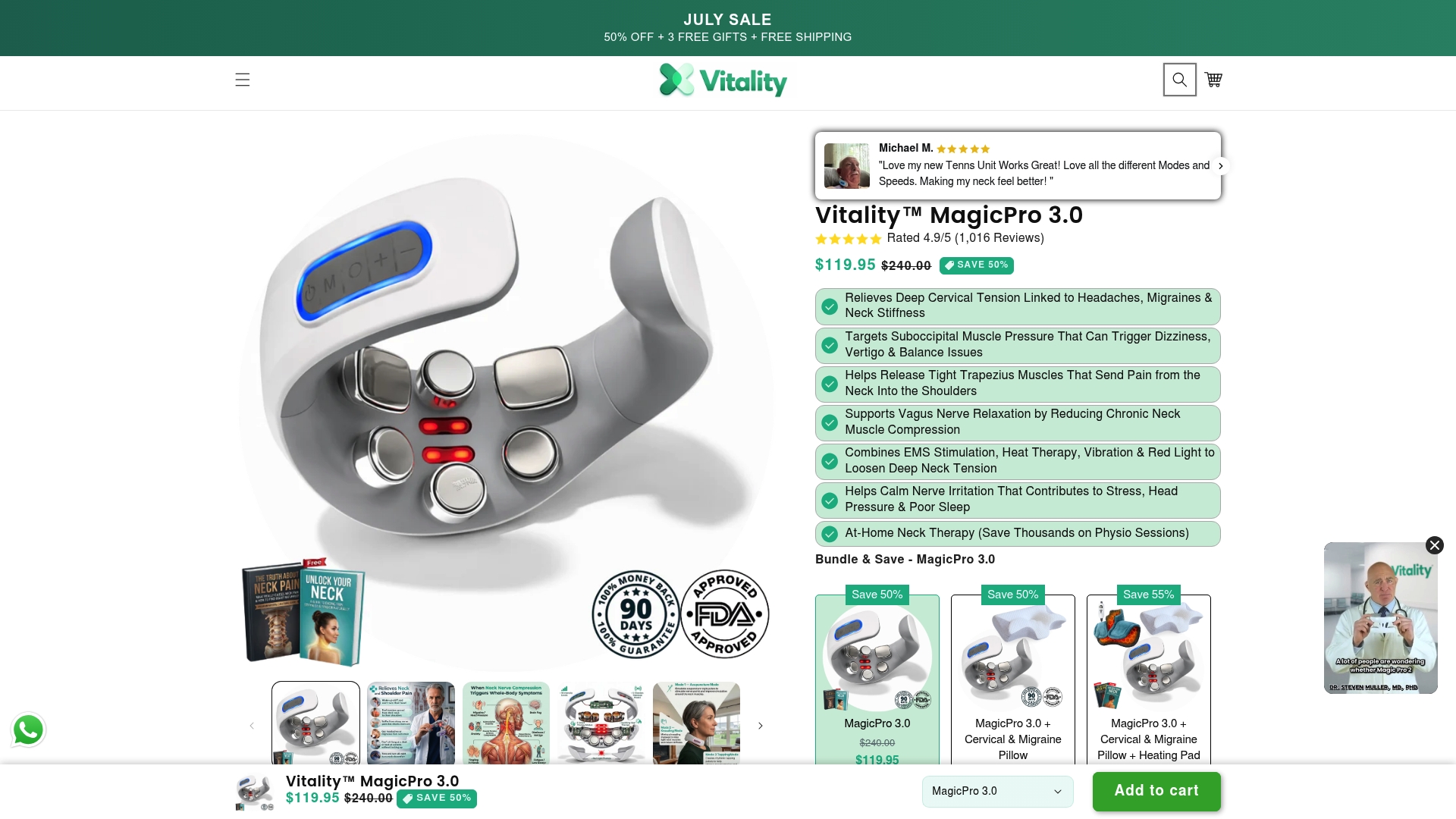
Vitalitytherapy designed the MagicPro 2.0 and MagicPro 3.0 specifically for people who need effective neck relief without scheduling a clinic visit. Both devices combine heat, electrical muscle stimulation, and massage in one wearable unit, delivering the multi-modal therapy sequence that research supports in just 15 minutes per day. The MagicPro line is doctor-recommended and built for use at home, at a desk, or while traveling. If you want to explore the full range of options, the Vitality™ Heating Pad is a straightforward, high-quality starting point for anyone adding moist heat to their daily routine.
FAQ
How long should I apply heat to my neck?
Apply heat for 10–15 minutes per session. Sessions longer than 15 minutes increase the risk of skin irritation and burns without improving therapeutic outcomes.
Can I use heat therapy for a stiff neck at work?
Yes. Portable heat wraps and compact devices designed for desk use make heat therapy practical during the workday. Apply heat for 10–15 minutes, then perform gentle neck rotations to maximize the benefit.
When should I use cold instead of heat for neck pain?
Use cold therapy for the first 48 hours after an acute neck injury to reduce swelling. Switch to heat once inflammation has subsided to promote circulation and muscle relaxation.
Does heat therapy actually speed up muscle recovery?
Research confirms that heat raises local tissue metabolism by 10–15% per degree Celsius of temperature increase. That metabolic boost accelerates nutrient delivery and waste removal, which speeds muscle repair after strain or overuse.
Is moist heat better than dry heat for neck pain?
Moist heat penetrates muscle tissue more effectively than dry heat and causes less skin dryness during treatment. Physical therapists prefer moist sources like hydrocollator packs or damp-towel-wrapped pads for this reason.