


Poor posture is a direct cause of tension and cervicogenic headaches, two of the most common head pain types in adults who sit for long hours. When the neck and upper spine hold a strained position for extended periods, the surrounding muscles fatigue, joints become irritated, and nerve signals refer pain upward into the skull. Understanding how poor posture triggers headaches is the first step toward breaking that cycle. The good news is that the connection between posture and headache pain is well understood, and the corrective strategies are practical and proven.
How does poor posture physically cause headache pain?
Forward head posture is the most common postural fault linked to headaches. It occurs when the head drifts forward of the shoulders, placing the cervical spine under load that multiplies with every inch of forward displacement. The muscles of the upper neck and base of the skull, including the suboccipital group, work overtime to hold the head up. That sustained effort leads to fatigue, tightness, and eventually referred pain into the head.
The anatomical chain works like this:
- Cervical joint irritation: Sustained forward lean compresses the facet joints of the upper cervical spine. Irritated joints send pain signals that travel along shared nerve pathways into the scalp and forehead.
- Muscle trigger points: Poor posture creates trigger points in the suboccipital muscles and tightness in the jaw and neck, contributing directly to headache onset and jaw dysfunction.
- Nerve compression: Tight muscles can compress the greater occipital nerve, which runs from the upper neck into the back of the skull, producing a characteristic squeezing or pressure sensation.
- Referred pain pathways: The trigeminal and upper cervical nerves share relay stations in the brainstem. Irritation in the neck activates these shared pathways, so the brain perceives pain in the head even though the source is in the neck.
Sustained poor posture irritates neck muscles and cervical spine joints, referring pain to the head and producing both tension and cervicogenic headaches. This explains why treating the neck directly, rather than just taking pain medication, often resolves headaches that have resisted other treatments.
Pro Tip: Place two fingers on the base of your skull and press gently. If that spot is tender, your suboccipital muscles are likely contributing to your headaches. That tenderness is a trigger point, not a coincidence.

Muscle fatigue compounds the problem over time. A muscle held in a shortened or lengthened position for hours loses its ability to generate force efficiently. The result is a cycle of tension, reduced blood flow, and chemical irritant buildup that keeps pain signals firing long after you have left your desk.
What are the common posture patterns and symptoms linked to headaches?
Certain postural habits appear repeatedly in people who develop chronic headaches. Recognizing them is the first step toward changing them.
The most common patterns include:
- Prolonged screen use with the chin jutting forward: The head moves ahead of the shoulders, increasing the load on cervical extensors.
- Slumping in a chair: The thoracic spine rounds, which forces the neck to extend upward to keep the eyes level, compressing the upper cervical joints.
- Shoulder elevation and rounding: Tight upper trapezius and levator scapulae muscles pull on the base of the skull, creating a direct mechanical link to headache pain.
- Static postures held without breaks: Compensatory behaviors from poor desk ergonomics, like head jutting and shoulder rounding, contribute to headaches even when an ergonomic chair is in use.
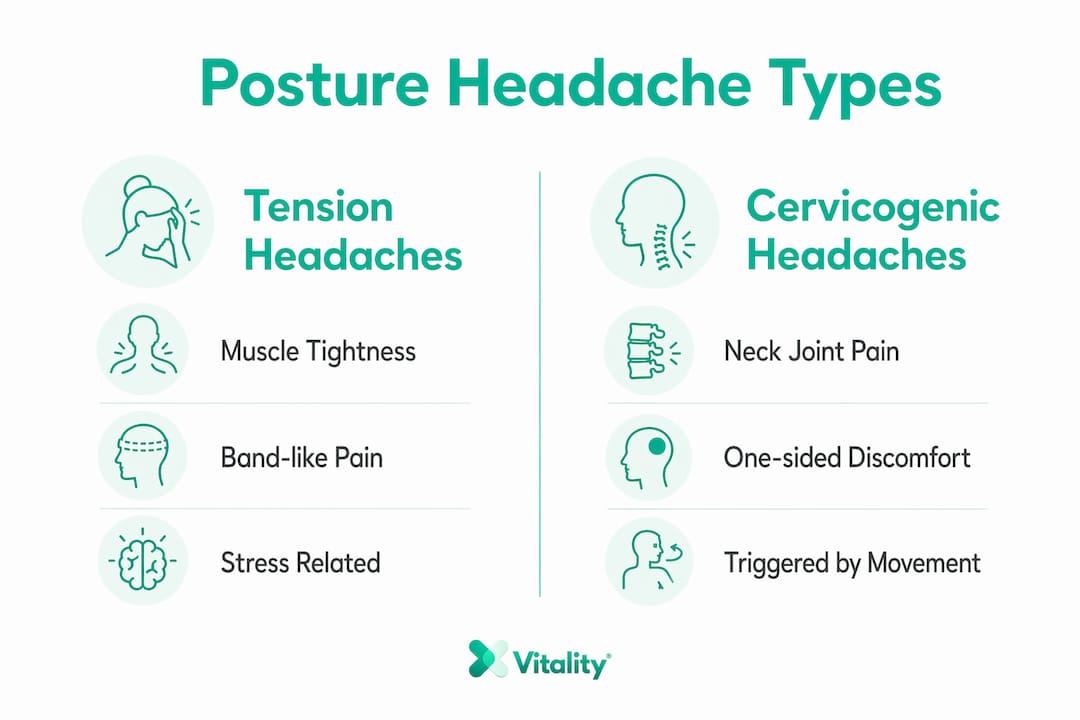
The symptoms that result from these patterns fall into two recognizable categories. Tension-type headaches feel like a band of pressure around the head, often starting at the back of the skull and spreading forward. Cervicogenic headaches originate in the neck and refer pain to one side of the head, sometimes reaching the eye or temple. Both types worsen with prolonged static posture and improve with movement or position changes.
You can find a detailed breakdown of the most common office posture problems and their physical consequences if you want to identify your specific pattern. Neck stiffness, reduced range of motion, and a dull ache at the base of the skull are the clearest early warning signs that posture is driving your head pain.
What does current research say about the posture and headache connection?
The clinical evidence linking posture to headaches has grown substantially. Studies now quantify the relationship rather than just describing it.
Forward head posture severity correlates positively with headache disability index scores (r = 0.438, p = 0.001). That means the further the head sits in front of the shoulders, the greater the functional impairment from headaches. This is not a minor association. It suggests that correcting head position could meaningfully reduce how much headaches interfere with daily life.
Muscle endurance is equally important. Females with migraines show significantly lower cervical extensor muscle endurance compared to people without migraines (p < 0.05). Weak neck muscles cannot maintain neutral alignment under load, which accelerates the fatigue and compression cycle described above.
| Research finding | Clinical implication |
|---|---|
| Forward head posture correlates with headache disability (r = 0.438) | Reducing forward head posture directly lowers headache severity |
| Low cervical extensor endurance links to migraine severity | Neck strengthening is a therapeutic target, not just a preventive measure |
| Movement breaks every 30–60 minutes reduce muscle and joint stress | Scheduled micro-breaks are a clinical recommendation, not optional advice |
| Holistic musculoskeletal assessment improves outcomes | Lumbar alignment and hamstring flexibility affect cervical posture |
A comprehensive musculoskeletal assessment is necessary because factors beyond the neck, including lumbar spine alignment and hamstring flexibility, affect overall posture and therefore headache risk. Treating only the neck misses part of the picture. Stress also plays a role. Stress-induced muscle tension creates a physical cycle of pain that poor posture intensifies, which is why integrated management of physical and psychological factors produces better results than either approach alone.
How can you correct poor posture to relieve and prevent headaches?
Correction works best when it addresses the full chain of contributing factors rather than focusing on a single fix. Here is a structured approach:
-
Set up your workstation properly. The monitor should sit at eye level so the head stays neutral. The chair should support the lumbar curve so the thoracic spine does not round. A well-configured office chair neck support setup reduces the compensatory head jutting that drives cervicogenic headaches.
-
Take movement breaks every 30–60 minutes. Medical guidelines recommend movement breaks at this interval during prolonged screen use to reduce muscle and joint stress. Set a timer. Stand, walk, or perform a few neck rolls. The goal is to interrupt the static load before fatigue accumulates.
-
Strengthen the deep neck flexors. These muscles, located at the front of the cervical spine, stabilize the head in neutral alignment. Chin tucks performed daily build the endurance needed to hold good posture without effort. Long-term relief depends more on building neck flexor endurance than on passive treatments like heat or massage alone.
-
Add upper back and shoulder exercises. Rows, face pulls, and scapular retractions strengthen the muscles that hold the shoulders back, which indirectly reduces the forward pull on the neck. A structured program of neck mobility exercises is a practical starting point for seated workers.
-
Address sleep and stress. Poor sleep posture, particularly stomach sleeping, places the cervical spine in rotation for hours. Stress tightens the upper trapezius and jaw muscles, feeding directly into the headache cycle. Managing both factors reduces the baseline tension that posture then amplifies.
Pro Tip: Do not try to hold “perfect posture” rigidly all day. Sustained muscle contraction in any position causes fatigue. The goal is frequent position changes, not a single static ideal.
Posture-related headaches accumulate from sustained static loads rather than from any single bad position. This means micro-movements are as important as ergonomic setup. Even small shifts every few minutes reduce the cumulative strain that eventually triggers head pain.
Key Takeaways
Poor posture causes headaches by creating sustained cervical muscle fatigue, joint irritation, and referred nerve pain that travels from the neck into the skull.
| Point | Details |
|---|---|
| Forward head posture drives headache disability | The further the head sits forward, the higher the headache severity and functional impairment. |
| Cervical muscle endurance is a key target | Strengthening deep neck flexors reduces the fatigue cycle that triggers posture-related headaches. |
| Movement breaks are clinically recommended | Taking a break every 30–60 minutes interrupts the static load that accumulates into head pain. |
| Ergonomic fixes alone are not enough | Without regular movement and user education, even good equipment cannot prevent compensatory postures. |
| Stress and sleep amplify posture-related pain | Integrated management of physical and psychological factors produces better headache outcomes. |
What I have learned from watching patients connect posture to their headaches
The reaction I see most often is genuine surprise. People come in convinced their headaches are a brain problem, a sinus problem, or a stress problem. When I explain that the pain is actually referred from the neck and upper spine, many of them pause and say, “But my neck doesn’t even hurt that much.” That is the nature of referred pain. The source and the symptom do not always feel connected.
What I have found over time is that the patients who get lasting relief are the ones who commit to gradual endurance building rather than chasing quick fixes. Heat and massage feel good and provide real short-term relief, but they do not change the underlying muscle weakness that allows poor posture to persist. The people who add chin tucks and scapular exercises to their routine, and who actually set that 30-minute movement timer, are the ones who stop needing to manage headaches reactively.
The other lesson is that the body works as a system. I have seen people correct their neck posture completely and still struggle with headaches because their lumbar spine was collapsing, which rotated the pelvis and pulled the thoracic spine into flexion, which then forced the neck to compensate. A holistic musculoskeletal assessment is not a luxury. It is the only way to find all the contributing factors.
Ergonomic changes are worth making, but they require follow-through. The chair, the monitor height, the keyboard position: none of it works if you do not also move regularly and build the muscular capacity to hold good alignment without strain. The fix is not a product or a single adjustment. It is a set of daily habits that gradually shift the baseline.
— Achraf
Neck and nerve relief that supports your posture correction plan
Correcting posture takes time, and the neck muscles need support during that process. Vitalitytherapy’s Neck & Nerve Relief collection offers devices designed to complement the ergonomic and exercise strategies covered here.
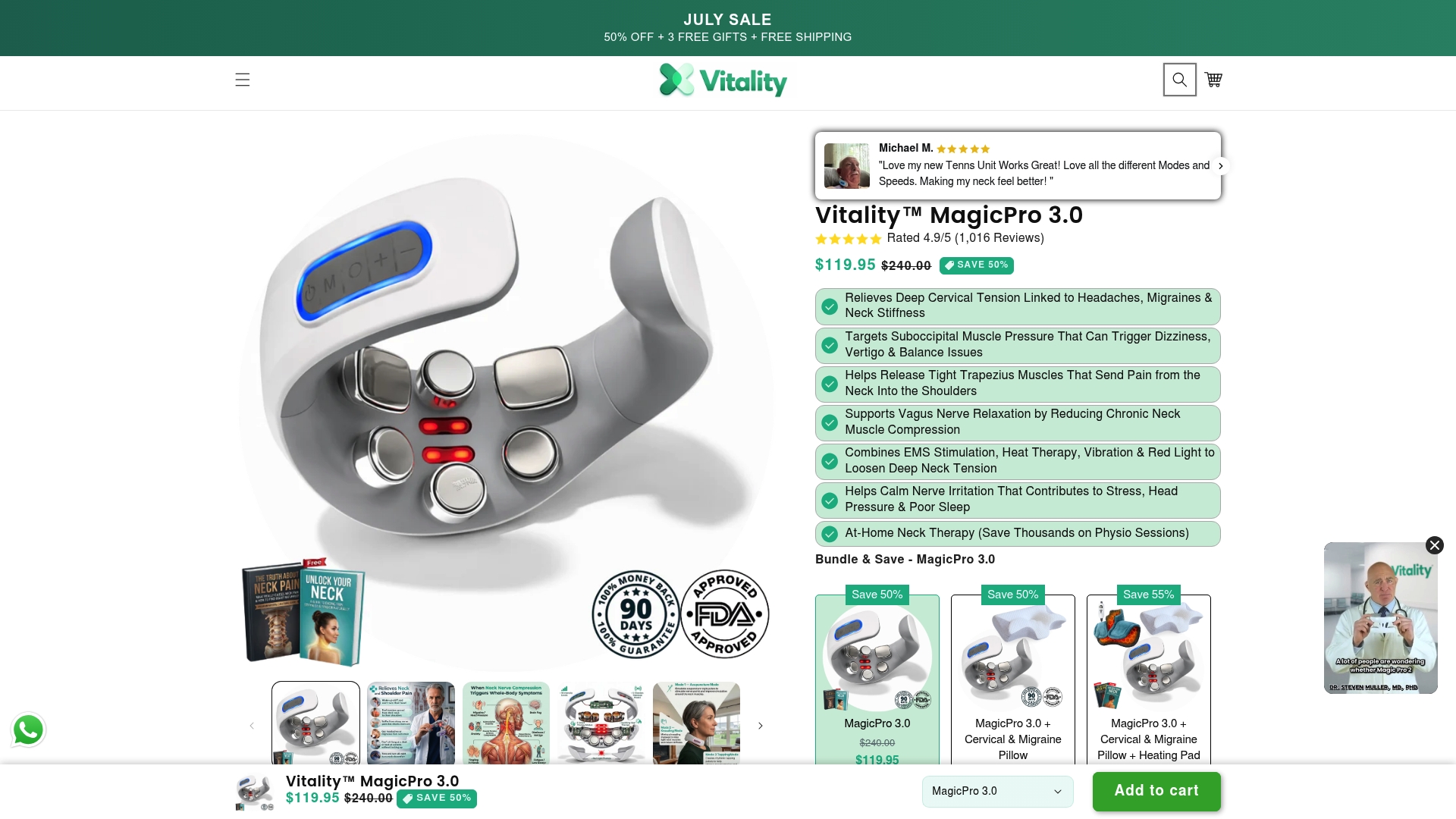
The MagicPro™ 2.0 combines electrical muscle stimulation, heat, and massage to deliver targeted relief to the cervical muscles in 15 minutes per day. That combination addresses the muscle fatigue and tension that accumulate from prolonged poor posture, making it easier to stay consistent with your strengthening exercises and movement breaks. Vitalitytherapy devices are doctor-recommended and built for use at home, at your desk, or while traveling, so relief fits into your routine rather than requiring a separate appointment.
FAQ
Can bad posture really cause migraines?
Poor posture can worsen migraine frequency and severity. Research shows that females with migraines have significantly lower cervical extensor muscle endurance than those without, linking neck muscle weakness directly to migraine burden.
What type of headache does poor posture most commonly cause?
Poor posture most commonly causes tension-type headaches and cervicogenic headaches. Tension headaches feel like a band of pressure around the head, while cervicogenic headaches originate in the neck and refer pain to one side of the skull.
How quickly can posture correction relieve headaches?
Relief timelines vary, but people who combine ergonomic adjustments with regular movement breaks and neck strengthening exercises typically notice improvement within a few weeks. Passive treatments alone produce slower and less lasting results.
How does forward head posture specifically trigger head pain?
Forward head posture overloads the suboccipital muscles and cervical joints, creating trigger points and nerve irritation that refer pain into the skull through shared trigeminal and cervical nerve pathways.
Are movement breaks really necessary if I have a good ergonomic chair?
Yes. Ergonomic chairs reduce strain but cannot prevent headaches on their own. Clinical guidance recommends movement breaks every 30–60 minutes because even well-supported static postures accumulate muscle fatigue over time.