


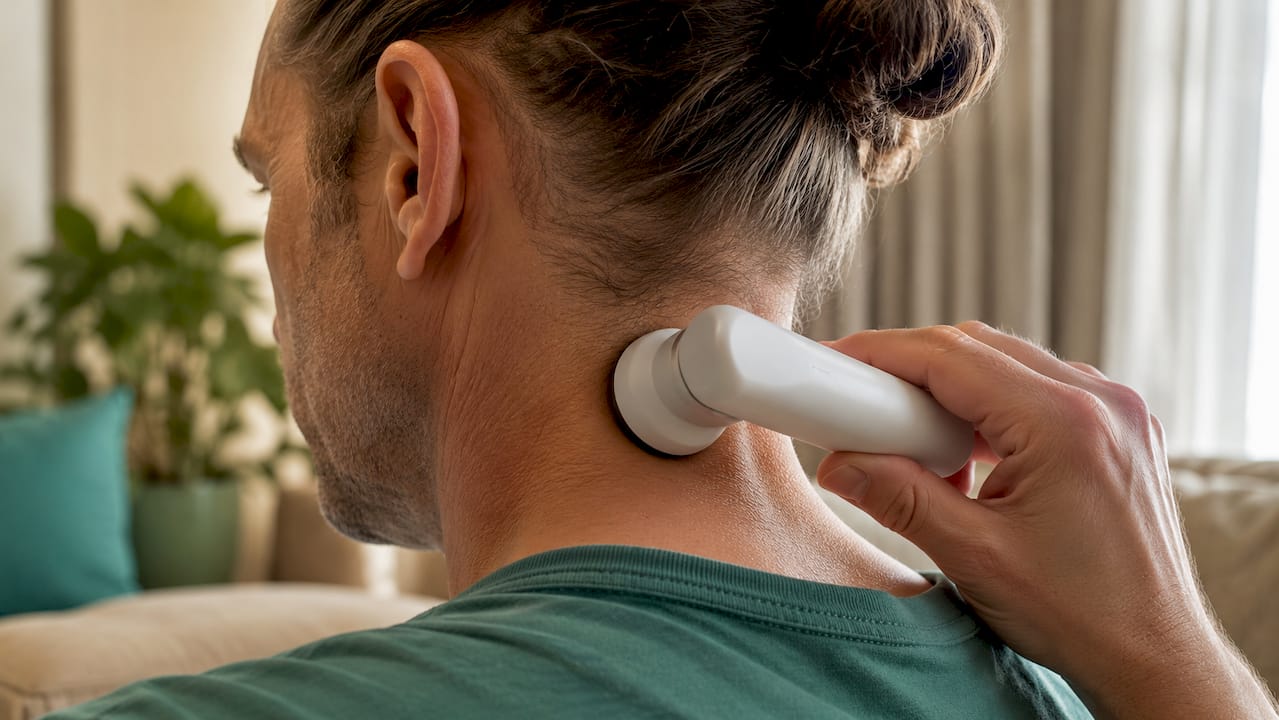
Wearable therapy devices are defined as body-worn systems that deliver targeted physical stimulation directly to muscles and nerves to produce measurable relief. Understanding how wearable therapy devices work matters because the mechanism determines the outcome. These devices use sensors, actuators, and embedded processing to interact with your body’s neural and muscular systems in real time. For neck pain specifically, they combine electrical muscle stimulation, mechanical vibration, and heat to address cervical tension at its source. The result is a therapy you can wear at home, at your desk, or on the go.
What key technologies power wearable therapy devices?
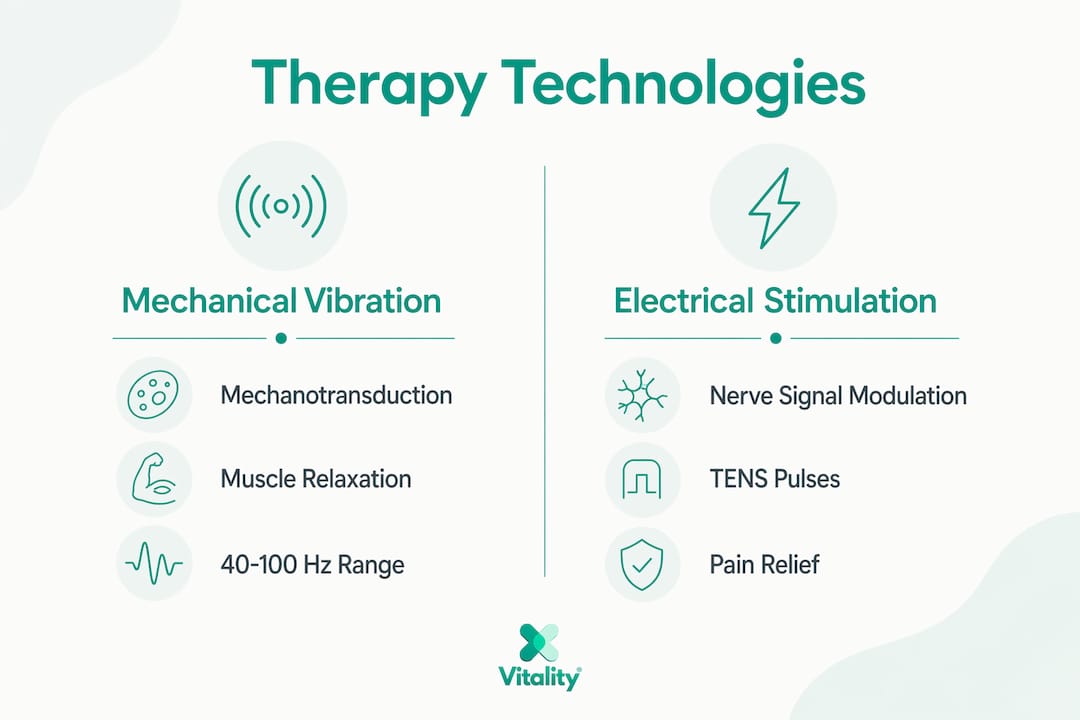
Wearable therapy devices operate through three primary delivery mechanisms: mechanical vibration, transcutaneous electrical nerve stimulation (TENS), and pulsed electromagnetic field (PEMF) therapy. Each mechanism targets a different biological pathway, and matching the delivery mode to the therapeutic goal is critical for success. Choosing the wrong mechanism for your condition produces weak results, even from a well-built device.
Mechanical vibration and mechanotransduction
Mechanical vibration works through a process called mechanotransduction. When a device vibrates against your skin, mechanoreceptors convert vibrations into nerve signals that influence pain modulation and autonomic tone. The therapeutic frequency range for this type of stimulation sits between 40 and 100 Hz, with an amplitude of 0.2–3 mm. That range is specific because it matches the sensitivity threshold of the skin’s Meissner and Pacinian corpuscles, the receptors most responsible for deep pressure and vibration detection.
Electrical stimulation and nerve signaling
Transcutaneous electrical nerve stimulation (TENS) sends low-level electrical pulses through the skin to peripheral nerves. This interrupts pain signals traveling toward the brain and triggers the release of endorphins, the body’s natural pain-blocking compounds. FDA-cleared neurostimulation devices now adapt electrical output in real time to match the user’s motor activity, delivering symptom control exactly when and where it is needed. For neck pain, this means the device can increase stimulation during periods of muscle tension and reduce it during rest.
Auricular vagal nerve stimulation
A third approach targets the vagus nerve through the ear. Non-surgical auricular vagal nerve stimulation is non-invasive, pain-free, and can deliver stimulation lasting up to 21 days after a single placement session. This pathway activates the parasympathetic nervous system, which directly reduces muscle tension in the cervical region. It is a less common but clinically supported option for people whose neck pain has a strong neurological component.
Pro Tip: If your neck pain is primarily muscular, start with a device that combines TENS and heat. If your pain involves nerve sensitivity or radiates into the shoulders, look for devices that address the parasympathetic pathway.
| Technology | Biological pathway | Primary benefit |
|---|---|---|
| Mechanical vibration (40–100 Hz) | Mechanoreceptors to autonomic tone | Reduces muscle tension and arousal |
| TENS electrical stimulation | Peripheral nerves to brain pain signals | Blocks pain and triggers endorphins |
| Auricular vagal stimulation | Vagus nerve to parasympathetic system | Lowers systemic tension and inflammation |
| PEMF therapy | Cellular electromagnetic fields | Supports tissue repair and circulation |
How do wearable therapy devices monitor physiological signals?
The most advanced wearable therapy devices do not just deliver stimulation. They listen to your body and adjust. This is the closed therapy-data loop: the device stimulates, monitors your response, analyzes the data, and refines the next stimulation cycle. This loop improves clinical outcomes and is what separates a basic massager from a true therapeutic wearable.
The sensors inside these devices track several physiological signals simultaneously:
- Heart rate variability (HRV): A drop in HRV signals increased stress or pain load, prompting the device to adjust intensity.
- Electrodermal activity (EDA): Skin conductance rises with emotional or physical stress, giving the device a real-time stress marker.
- Movement sensors (accelerometers): These detect posture and activity level, allowing the device to respond to slouching or sudden movement.
- Biochemical sensors: Emerging devices now track cortisol or lactate through sweat, adding a hormonal layer to the monitoring picture.
Wearable biosensors enable continuous, objective data collection that bridges the mind-body connection by tracking metrics like HRV and electrodermal activity. This shifts therapy from reactive to proactive, catching stress triggers before they become pain episodes. Continuous biosignal tracking validates internal emotional states in daily life, giving both users and clinicians a far more accurate picture than self-reporting alone.
Embedded machine learning models process this data on the device itself or in a paired app. AI-supported wearables detect shifts in physiological markers early, enabling proactive intervention through automated notifications to users and clinicians. For neck pain management, this means the device can alert you when your muscle tension is building, before the headache starts.
Signal quality matters as much as sensor type. Motion artifacts, the electrical noise created by body movement, can corrupt biosignal readings and cause the device to make incorrect therapy adjustments. High-quality artifact management is a safety parameter, not just a technical detail. Power efficiency is equally important: a device that drains its battery mid-session interrupts therapy at the worst possible moment.
What protocols optimize wearable therapy for neck pain?
Knowing the technology is only half the picture. How you use the device determines how much relief you actually get. Therapy protocols for neck pain follow specific parameters that clinical guidelines have refined over years of research.
-
Placement matters first. Position the device directly over the cervical muscles, typically at the base of the neck or across the upper trapezius. For spinal alignment and comfort, the device should sit flush against the skin with no gaps that would reduce conductivity or vibration transfer.
-
Session duration should be consistent. Most clinical protocols for non-invasive neurostimulation run 15–20 minutes per session. Longer sessions do not proportionally increase benefit and can cause skin irritation with electrical devices.
-
Frequency and duty cycle matter for haptic therapy. Effective haptic protocols use cycles of 60 seconds of stimulation followed by 180 seconds of rest. This rhythm synchronizes biological rhythms and lowers autonomic arousal without fatiguing the mechanoreceptors.
-
Consistency outperforms intensity. A moderate session every day produces better cumulative results than an intense session once a week. The cervical muscles respond to repeated, predictable stimulation by gradually reducing their baseline tension level.
-
Combine modalities when possible. Devices that layer heat with electrical stimulation or vibration produce faster relief than single-modality devices. Heat increases local circulation and makes muscle tissue more receptive to electrical and mechanical input.
Pro Tip: Use your device at the same time each day, ideally in the early evening when cervical muscle tension from desk work peaks. Consistency in timing trains your nervous system to expect and respond to the therapy.
What are the practical benefits and limitations of wearable therapy devices?
The benefits of wearable therapy devices extend beyond simple pain relief. Understanding both sides helps you set realistic expectations and use the technology effectively.
Key benefits
- Targeted relief without systemic drugs. Electrical and mechanical stimulation addresses pain at the source, reducing the need for oral analgesics that affect the entire body.
- Objective self-management. Continuous physiological tracking replaces guesswork with data, letting you see exactly how your body responds to therapy over time.
- Portability and convenience. Wireless devices like the Vitalitytherapy MagicPro 2.0 and MagicPro 3.0 deliver clinical-grade therapy at home, at work, or during travel without requiring a clinic visit.
- Personalization through feedback loops. Devices with closed-loop systems adjust therapy parameters to your real physiological state, not a generic preset.
Limitations to know
- Battery life is a clinical variable. Power management must be engineered into the device architecture from the start. A device that loses power mid-session interrupts therapy and can reduce treatment efficacy over time.
- Data privacy requires attention. Continuous biosignal monitoring generates sensitive health data. Users should verify that their device encrypts data and complies with relevant health data regulations before use.
- Adherence is the biggest real-world challenge. The most sophisticated device produces no benefit sitting in a drawer. Devices with simple interfaces and short session times consistently show higher adherence rates in clinical studies.
- Not all devices are clinically validated. The wearable therapy market includes products with no peer-reviewed evidence. Prioritize devices that carry FDA clearance or are aligned with recognized clinical guidelines.
Key Takeaways
Wearable therapy devices work by combining targeted physical stimulation with real-time biosignal monitoring to deliver personalized, continuous relief for neck pain and related conditions.
| Point | Details |
|---|---|
| Match technology to pathway | Choose TENS for nerve pain, vibration for muscle tension, and PEMF for tissue repair. |
| Closed-loop systems outperform presets | Devices that monitor HRV and EDA adjust therapy in real time for better outcomes. |
| Consistency beats intensity | Daily moderate sessions reduce cervical baseline tension more effectively than occasional intense use. |
| Battery life affects clinical results | Power interruptions break therapy continuity; prioritize devices with reliable power architecture. |
| FDA clearance signals clinical validity | Regulatory approval confirms a device meets safety and efficacy standards for therapeutic use. |
What I’ve learned about wearable therapy after years of watching this space
The technology in wearable therapy devices has moved faster than most people realize. Three years ago, a device that monitored HRV and adjusted stimulation in real time was a research prototype. Today, it is a consumer product you can order online. That shift is genuinely significant for people managing chronic neck pain.
What I find underappreciated is the adherence problem. The clinical literature on wearable therapy consistently shows that the best-performing device is the one people actually use. A device with a 15-minute session time and a simple interface will outperform a more sophisticated device with a 45-minute protocol in real-world conditions. Vitalitytherapy understood this early. The MagicPro design prioritizes short, effective sessions precisely because adherence is where most therapy programs fail.
I also think the conversation about data privacy in wearable health devices is not serious enough yet. Continuous biosignal monitoring generates a detailed picture of your physiological and emotional states. That data has real value, and users deserve to know exactly how it is stored and who can access it. Before committing to any wearable therapy device, read the privacy policy the way you would read a medication label.
The future I expect is hybrid: devices that combine real-time sensing with AI-driven personalization and sync with clinical care teams. The EMS technology already in devices like the MagicPro 3.0 is a foundation for that future. The people who benefit most will be those who start building the habit now, while the technology is already clinically sound and accessible.
— Achraf
Vitalitytherapy’s MagicPro devices: wearable therapy built for real neck pain
Vitalitytherapy’s MagicPro 2.0 and MagicPro 3.0 combine electrical muscle stimulation, targeted heat, and massage in one wireless device designed for cervical relief in 15 minutes per day. Both devices are doctor-recommended and built around the clinical principle that consistent, multi-modal therapy outperforms any single approach.
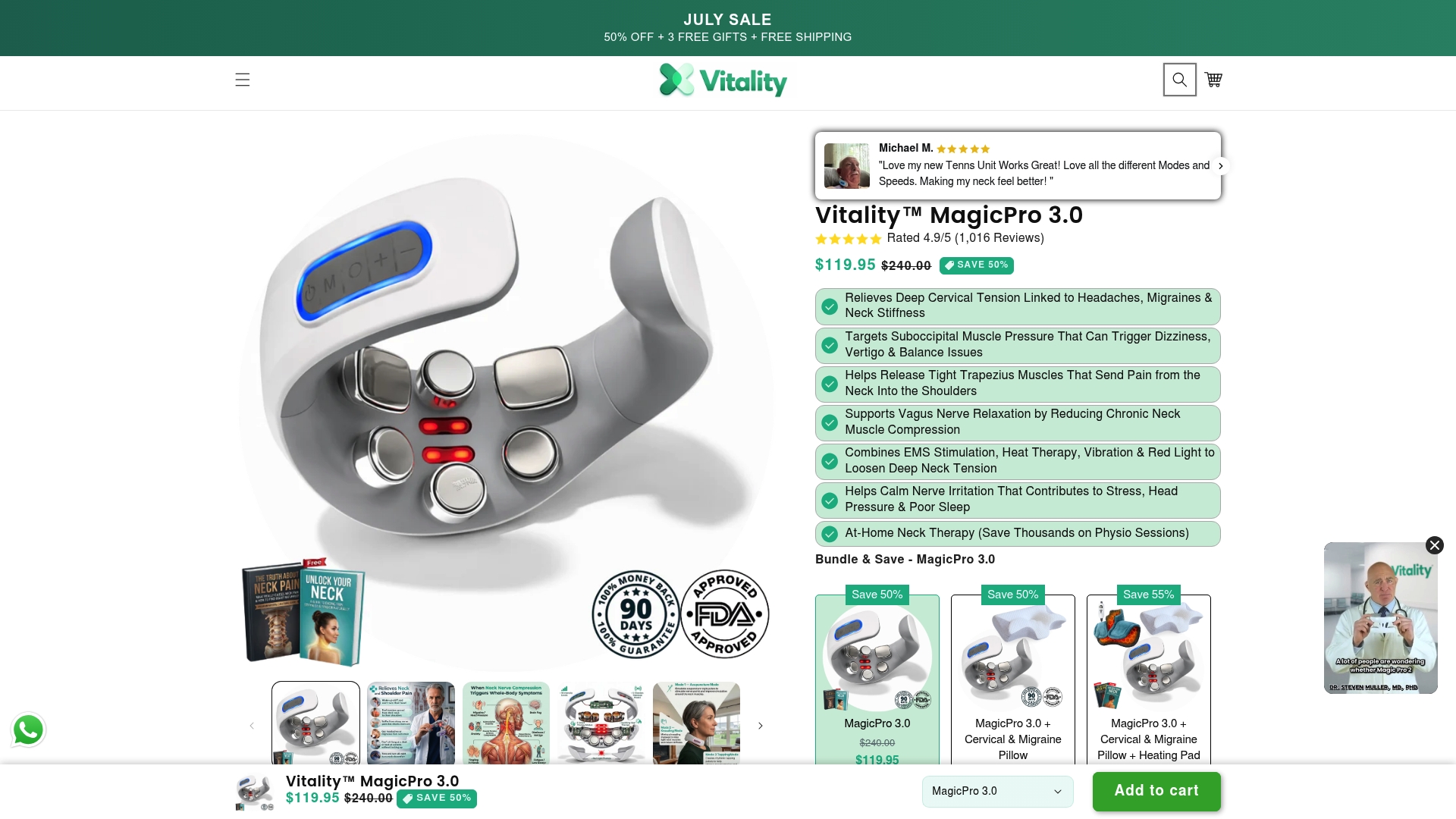
The MagicPro 3.0 adds real-time adaptive stimulation, making it the right choice for people whose neck pain varies throughout the day. The MagicPro 2.0 delivers the same core therapy at a more accessible price point. Both are available through Vitalitytherapy’s neck and nerve relief collection, alongside the full MagicPro therapy device range. If you are ready to move from managing pain to actively treating it, these devices give you a clinically grounded place to start.
FAQ
How do wearable therapy devices work for neck pain?
Wearable therapy devices deliver electrical stimulation, mechanical vibration, or heat directly to cervical muscles and nerves, interrupting pain signals and promoting muscle relaxation. Advanced devices monitor physiological signals like HRV and adjust stimulation in real time for personalized relief.
Are wearable therapy devices effective without a prescription?
Many wearable therapy devices, including FDA-cleared neurostimulation devices, are available without a prescription and have demonstrated clinical efficacy for pain relief. Effectiveness depends on consistent use, correct placement, and choosing a device validated for your specific condition.
How long does a wearable therapy session need to be?
Most clinical protocols for non-invasive neurostimulation recommend 15–20 minutes per session, with daily use producing better cumulative results than infrequent longer sessions. Haptic therapy protocols specifically use 60-second stimulation cycles followed by 180-second rest periods.
What is the difference between TENS and haptic therapy wearables?
TENS devices send electrical pulses through the skin to block pain signals at the nerve level, while haptic therapy devices use mechanical vibration at 40–100 Hz to activate mechanoreceptors and lower autonomic arousal. Both reduce neck pain but through distinct biological pathways, making them suited to different types of discomfort.
How do I know if a wearable therapy device is clinically validated?
Look for FDA clearance, peer-reviewed clinical studies, or explicit alignment with recognized medical guidelines. Doctor-recommended devices like the Vitalitytherapy MagicPro line meet this standard and provide a reliable starting point for at-home cervical therapy.