

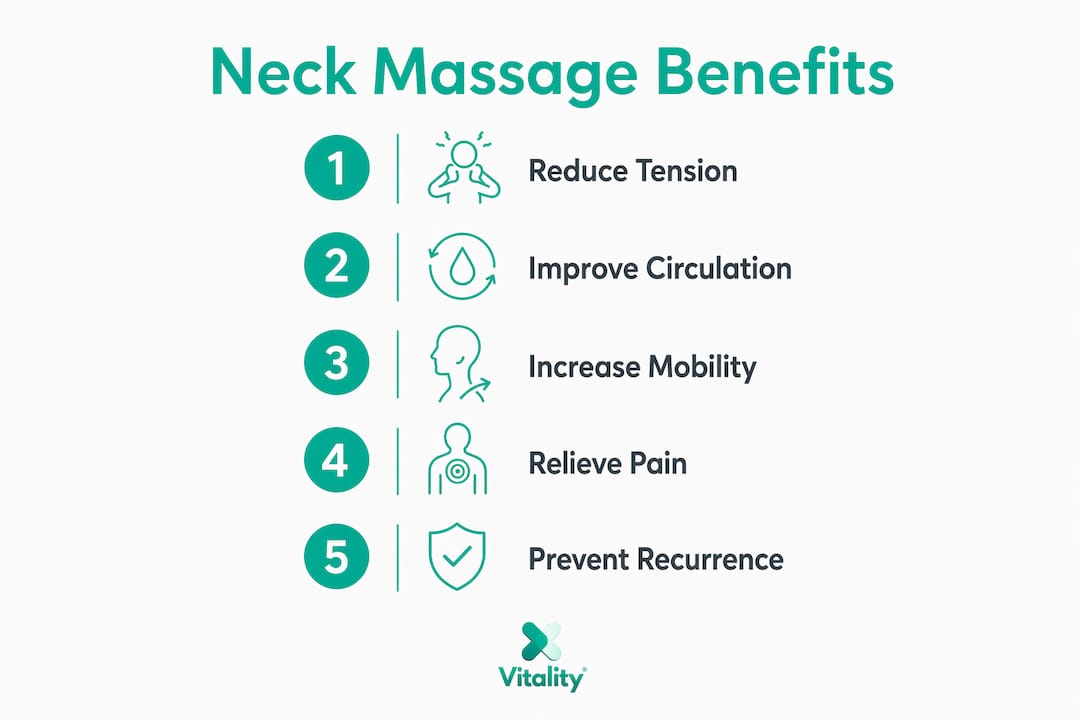
Massage therapy for sore neck muscles is a clinically supported method to reduce muscle tension, restore circulation, and improve neck mobility. The cervical region carries significant daily load from posture, stress, and repetitive movement, making it one of the most common sites for muscle guarding and trigger point buildup. With the right techniques, consistent application, and a few smart lifestyle adjustments, you can get meaningful neck pain relief without relying solely on medication or clinic visits. This guide covers the anatomy behind neck soreness, safe self-massage techniques, when to see a professional, and how to keep the relief lasting.
What muscles cause sore neck pain and how does massage target them?
Four muscles drive most neck soreness. Understanding them helps you apply massage techniques for neck relief where they actually count.
- Trapezius: The large muscle spanning your upper back and neck. Poor posture and prolonged sitting cause it to shorten and develop trigger points, producing that familiar ache between the neck and shoulder.
- Levator scapulae: Runs from the upper shoulder blade to the side of the cervical spine. Stress and forward head posture overload it, creating deep, localized pain near the base of the skull.
- Suboccipitals: A group of small muscles at the base of the skull. They tighten from screen time and head-forward positions, contributing to tension headaches and restricted rotation.
- Sternocleidomastoid (SCM): Runs diagonally along the front and side of the neck. Chronic tension here causes referred pain to the head and jaw.
Massage reduces muscle tone and trigger point sensitivity, which directly lowers pain and improves how far you can move your head. The mechanism is neurological as much as mechanical. Pressure on a tight muscle sends signals that calm the nervous system, reducing the protective guarding response that keeps muscles locked up.
Common causes of tension in these muscles include prolonged desk work, sleeping in an awkward position, emotional stress, and carrying heavy bags on one shoulder. Each of these creates postural overload that the cervical muscles absorb over time.
Pro Tip: Press gently into the muscle belly of your upper trapezius with your opposite hand. If you feel a hard, rope-like knot that reproduces your familiar neck ache, that is an active trigger point. That is exactly where focused massage pressure belongs.

How do you safely perform self-massage for sore neck muscles?
Self-massage is effective when you apply the right technique to the right area. Three core methods cover most of what you need for tension relief massage at home.
The three foundational techniques
- Effleurage (gliding strokes): Place your fingertips at the base of your skull and glide slowly down toward your shoulders using light to moderate pressure. This warms the tissue and increases blood flow before deeper work. Spend 60–90 seconds on each side.
- Petrissage (kneading): Grip the upper trapezius between your thumb and fingers and gently knead the muscle in a rolling motion. This technique breaks up adhesions and moves fluid through congested tissue. Work for 60–90 seconds per muscle group.
- Circular friction: Use two or three fingertips to apply small, firm circles directly on a trigger point. Hold steady pressure on the most tender spot for 30–60 seconds, then release. This is the most effective method for stubborn knots in the trapezius and levator scapulae.
Suboccipital release
Sit upright and place both hands behind your head with fingertips resting at the base of the skull. Apply gentle upward pressure and hold for 30–60 seconds. You should feel a gradual softening and release. This technique relieves tension headaches and restores rotation range.
Safety rules you must follow
- Never apply deep pressure to the front or sides of the neck. The carotid artery, jugular vein, and larynx sit close to the surface. Deep kneading belongs only on the posterior neck, trapezius, and shoulder junction.
- Use only light gliding strokes on the SCM. A delicate gliding approach along the side of the neck avoids sensitive throat structures while still releasing tension in that muscle.
- Stop if sharp pain, numbness, or tingling occurs. These signals indicate nerve involvement that massage alone cannot address.
Pro Tip: A firm massage ball pressed between your upper back and a wall gives you consistent, hands-free pressure on the trapezius and levator scapulae. Roll slowly until you find a tender spot, hold for 20–30 seconds, and breathe deeply.
Tools like massage balls, handheld rollers, and at-home therapy devices extend what your hands can do alone. They are especially useful for reaching the posterior neck and shoulder junction without straining your arms.
When should you seek professional massage therapy for neck pain?
Professional massage therapy for stiffness and chronic neck pain delivers results that self-massage cannot always match. A licensed therapist works the upper traps, levator scapulae, and suboccipitals with precision and sustained pressure that is difficult to replicate on yourself. Professional techniques also address multiple tissue layers simultaneously, which matters for long-standing tension patterns.
Certain signs indicate that professional assessment is the right first step:
- Neck pain that radiates down the arm or into the hand
- Stiffness with significantly restricted range of motion
- Pain following a fall, collision, or sudden impact
- Symptoms that worsen after massage rather than improving
Massage is not appropriate as a first response when pain causes restricted motion or radiates to the arm. These presentations require imaging or clinical assessment to rule out nerve compression or joint pathology. A chiropractor or physician addresses the joint component, while a massage therapist addresses the surrounding muscle tissue. The two approaches complement each other well for complex or chronic cases.
Mild to moderate neck pain, by contrast, often resolves with simple self-care within 2–3 weeks, including gentle movement, heat or ice, and massage. Cold therapy works best in the first 48 hours after acute onset. Heat becomes more useful after that window closes, when muscles have moved from acute inflammation into chronic guarding.
Avoid excessive pressure during any session, professional or self-directed. Soreness lasting beyond 48–72 hours after massage signals that the pressure was too intense. Adjust technique before the next session rather than pushing through.
What lifestyle habits sustain neck relief after massage therapy?
Massage creates a temporary window of improved mobility. Without lifestyle changes, muscles reflexively re-tighten as protection from the same stresses that caused the problem. The habits below keep that window open long enough for real recovery to take hold.
Posture and ergonomics
Set your monitor at eye level so your head does not drift forward. Position your keyboard so your elbows stay at roughly 90 degrees. Take a posture break and do neck mobility exercises every 30–45 minutes during desk work. These micro-breaks prevent the postural overload that rebuilds tension between massage sessions.
Sleep posture and pillow support
Sleep on your back or side, never on your stomach. A pillow that keeps your cervical spine neutral, neither flexed nor extended, reduces the overnight muscle guarding that makes mornings painful. Memory foam cervical pillows maintain this alignment better than standard pillows for most people.
Heat and cold therapy
Heat therapy relaxes muscles and improves tissue extensibility before massage or stretching. Apply a heating pad for 10–15 minutes before your self-massage session to get more from each technique. Cold packs reduce inflammation after an acute flare and work best in the first 48 hours.
Pro Tip: Perform gentle chin tucks and slow neck rotations immediately after heat application. The warmth increases muscle pliability, so the same stretch produces a deeper release than it would on cold tissue.
Daily habits that reduce tension buildup
| Habit | Why it helps |
|---|---|
| Chin tucks (10 reps, 3x daily) | Reactivates deep cervical flexors weakened by forward head posture |
| Shoulder blade squeezes | Reduces upper trapezius overload by engaging mid-back muscles |
| Hydration (consistent daily intake) | Keeps intervertebral discs and muscle tissue pliable |
| Stress management practice | Lowers cortisol-driven muscle guarding in the neck and shoulders |
A 4-week program combining cervical stabilization exercises with self-massage significantly improves pain intensity and neck disability compared to exercise alone. The benefits held at a 6-week follow-up. That finding confirms what most therapists already know: massage and corrective movement work better together than either does alone.
Key Takeaways
Massage therapy relieves sore neck muscles most effectively when paired with safe technique, correct pressure, and consistent lifestyle habits that prevent tension from returning.
| Point | Details |
|---|---|
| Target the right muscles | Focus pressure on the trapezius, levator scapulae, and suboccipitals for the greatest relief. |
| Respect safety boundaries | Never apply deep pressure to the front or sides of the neck due to vulnerable vascular structures. |
| Use three core techniques | Effleurage, petrissage, and circular friction cover the full range of self-massage needs. |
| Combine massage with movement | Pairing massage with cervical stabilization exercises produces better and longer-lasting results. |
| Address lifestyle drivers | Ergonomic adjustments and posture breaks prevent muscles from re-tightening between sessions. |
What I have learned from years of watching people treat neck pain
The most common mistake I see is treating massage as a cure rather than a tool. People find a technique that brings relief, repeat it aggressively, and then wonder why the tension returns within a day or two. Massage calms the nervous system and temporarily reduces muscle sensitivity. It does not fix the posture, the stress load, or the workstation setup that created the problem.
The second mistake is pressure. More is not better in the cervical region. I have seen people work so hard on a trigger point that they create bruising and inflammation that sets them back a full week. The goal is to calm the nervous system, not to force a muscle into submission. Slow, sustained pressure with full breath cycles works better than aggressive digging every time.
What actually works is using massage to create a mobility window, then immediately filling that window with corrective movement. Do your self-massage, feel the release, and then do your chin tucks and shoulder retractions while the tissue is still pliable. That sequence builds lasting change. Massage alone just buys you time.
— Achraf
At-home neck relief with Vitalitytherapy
Consistent relief between massage sessions requires the right tools. Vitalitytherapy’s MagicPro 2.0 combines electrical muscle stimulation, heat, and massage in one compact device, delivering targeted cervical muscle relief in 15 minutes per day. It is doctor-recommended and designed for use at home, at your desk, or while traveling.
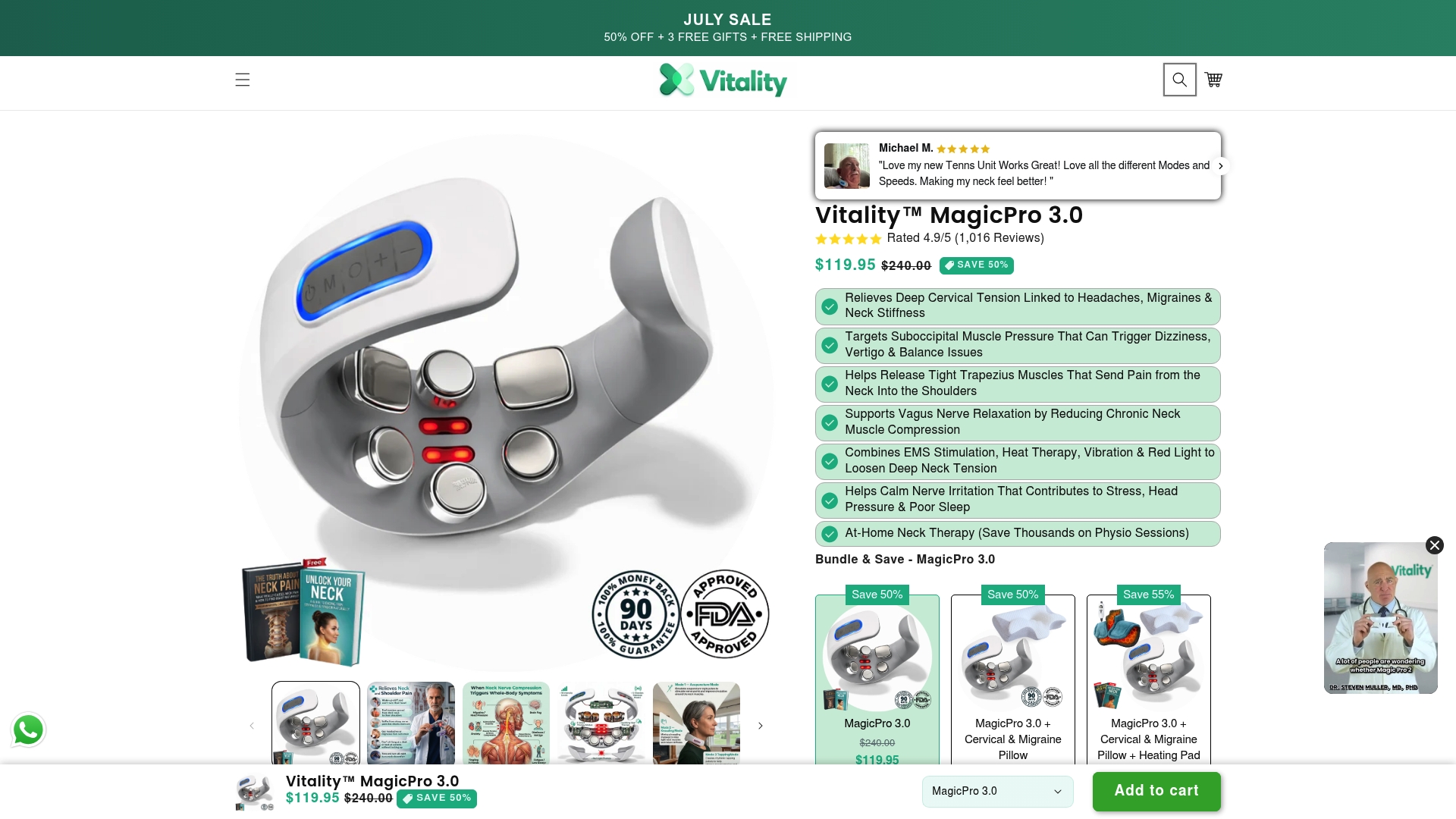
For people who want to warm tight muscles before stretching or self-massage, Vitalitytherapy’s heating pad improves tissue extensibility and reduces the effort needed to release trigger points. Both tools integrate directly into the self-care routine described in this article. Explore the full neck and nerve relief collection to find the right fit for your daily routine.
FAQ
What is the best massage technique for a sore neck?
Circular friction on trigger points in the trapezius and levator scapulae produces the most direct relief. Combine it with effleurage to warm the tissue first and petrissage to work out deeper adhesions.
How often should you massage a sore neck?
Three sessions per week is a well-supported frequency. A 4-week program at that frequency significantly reduces pain and disability, with benefits maintained at the 6-week mark.
Is it safe to massage the front of the neck?
Light gliding strokes along the side of the neck are safe for the SCM muscle. Deep pressure on the front or lateral neck is not safe due to the carotid artery and larynx sitting close to the surface.
When should neck pain not be treated with massage?
Skip massage and seek clinical assessment when pain radiates down the arm, when range of motion is severely restricted, or when symptoms follow trauma. These signs suggest nerve or joint involvement that massage cannot address.
How long does soreness after a neck massage last?
Mild next-day soreness is normal and resolves quickly. Soreness lasting 48–72 hours indicates the pressure was too intense. Reduce pressure and session duration before trying again.