


For pain relief in Los Angeles, the three strongest alternatives to Massage Revolution are national membership chains (Massage Envy, Massage Heights), mobile/on-demand platforms (Zeel, Soothe), and independent boutique therapeutic clinics. Each serves a different need, and knowing which fits your situation saves both time and money.
Quick TL;DR:
- National chains (Massage Envy, Massage Heights): best for predictable monthly pricing and broad neighborhood access across LA
- Mobile/on-demand apps (Zeel, Soothe): best for same-day booking and home visits when you can’t travel
- Independent boutique clinics: best for specialized, outcome-driven care like neuromuscular therapy or myofascial release
Your next step today: Search your zip code on Zeel or Soothe for same-day availability, or visit Massage Envy’s location finder to confirm a nearby clinic and check membership terms before your first visit.
According to modality market-share data, Swedish massage accounts for roughly 28% of sessions, deep tissue for about 26%, and sports massage for around 18%, making these the most popular choices in 2026. If pain relief is your goal, deep tissue and trigger-point work are where most therapeutic demand concentrates.
Table of Contents
- How do the best massage therapy alternatives compare?
- When an at-home device fills the gap between sessions
- Key Takeaways
- A note on combining devices with hands-on care
- Useful sources and further reading
How do the best massage therapy alternatives compare?
The table below covers the decision factors that matter most for therapeutic pain relief in Los Angeles.
| Dimension | National chains (Massage Envy, Massage Heights) | Mobile apps (Zeel, Soothe) | Independent/boutique clinics |
|---|---|---|---|
| Best for | Regular sessions, budget predictability | Same-day relief, home visits | Complex or chronic pain, specialty modalities |
| Pricing model | Monthly membership; one session included, discounted add-ons | Pay-per-visit; no membership required | Pay-per-visit or package; no long-term contract |
| LA availability | Multiple locations across LA metro | City-wide mobile coverage | Varies; concentrated in specific neighborhoods |
| Service customization | Standard menu; limited specialty depth | Depends on matched therapist | High; neuromuscular, myofascial, trigger-point common |
| Therapist oversight | Employed staff; chain-level vetting | App-based screening; varies by platform | Owner-operated; credentials often directly verifiable |
| Booking convenience | App, online, walk-in | App; same-day slots common | Phone or online; less automated |
| Typical session cost | Lower with membership; higher single-visit rate | Mid-range per visit | Mid-to-high per visit; reflects specialization |
When to choose each category
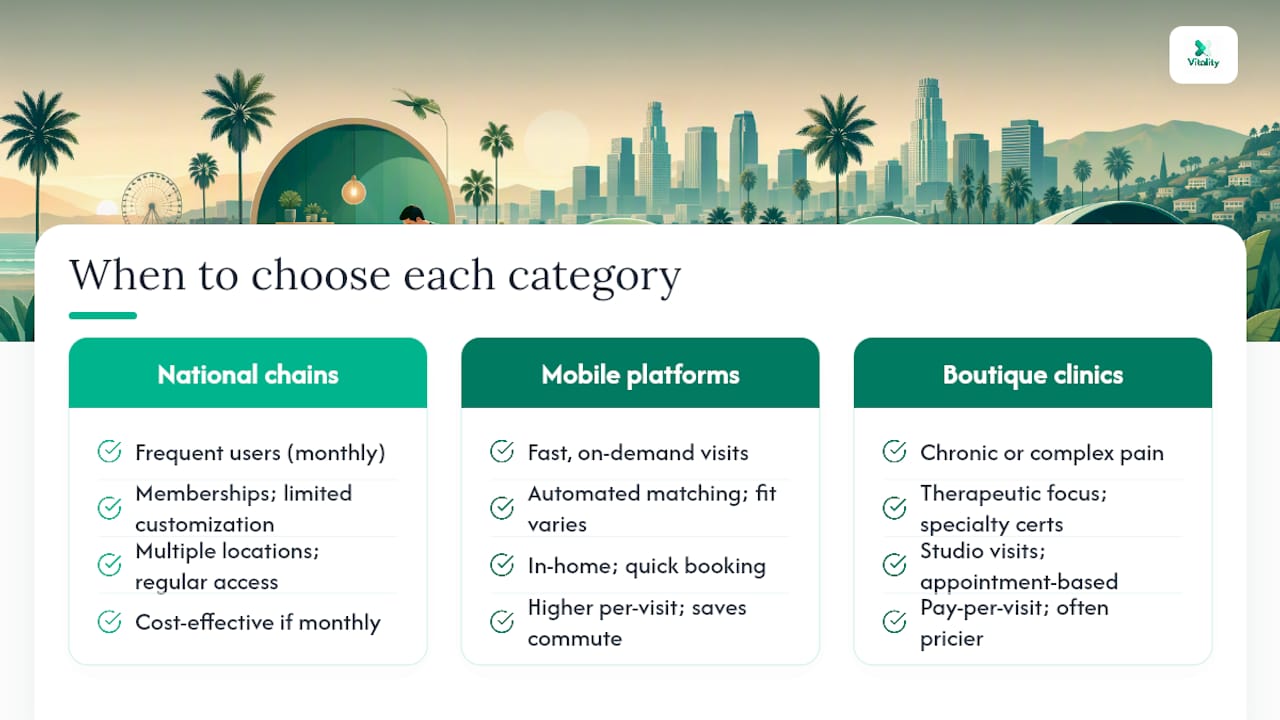
National chains work well when you want consistent access across multiple LA neighborhoods and plan to go at least once a month. Membership structures at major chains typically include one session per month with discounted add-ons, which makes the math favorable for regular users. If you expect fewer than roughly ten sessions per year, pay-per-visit is usually cheaper than monthly dues.
Chains do differ meaningfully on customization. Comparative reviews of Massage Heights and Massage Envy show one brand often scores higher on network size while the other offers a more flexible service menu. Check both before committing to a membership.
Mobile platforms like Zeel and Soothe prioritize speed. Research comparing mobile and app-based platforms notes that automated matching is fast but may not optimize for clinical fit. If your pain is complex, a therapist-owned mobile service that offers a phone consultation before booking tends to produce a better match.
Independent boutique clinics are the right call for chronic or medically complex pain. A dedicated massage studio focuses on therapeutic, outcome-driven bodywork rather than pampering, and therapists there are more likely to hold specialty certifications in neuromuscular therapy or myofascial release. The distinction between a spa and a studio matters: spas bundle skin and body treatments; studios focus on the musculoskeletal work that actually resolves pain.
For neuropathy or medically complex conditions, look specifically for therapists trained in neuromuscular therapy or myofascial release, or those who coordinate with physical therapists.
Checking LA therapist credentials: California requires massage therapists to hold a valid CAMTC (California Massage Therapy Council) certificate. Verify any therapist’s certificate number directly on the CAMTC website before booking. Read location-level reviews on Google and Yelp, and check how the studio responds to negative feedback. A provider’s website should show a clear service menu, visible therapist bios, and online booking. Websites that lack these signals often indicate lower operational standards.
Red flags to avoid: no listed therapist credentials, vague cancellation policies, no online booking or confirmation system, and pressure to commit to a long membership before your first session.
Pro Tip: When choosing between mobile and spa, factor in total cost including your commute time and parking. A $90 in-home visit can be cheaper in real terms than a $75 studio session that costs you 45 minutes of driving in LA traffic.
Insurance note: Most health insurance plans do not cover therapeutic massage unless it is prescribed by a physician and billed through a licensed physical therapy practice. Check your plan’s “complementary and alternative medicine” benefit, and ask the provider whether they supply a superbill for HSA or FSA reimbursement.
When an at-home device fills the gap between sessions
In-person care is not always available the same day you need relief. That’s where My Vitality’s MagicPro devices fit in as a practical adjunct, not a replacement for hands-on therapy.
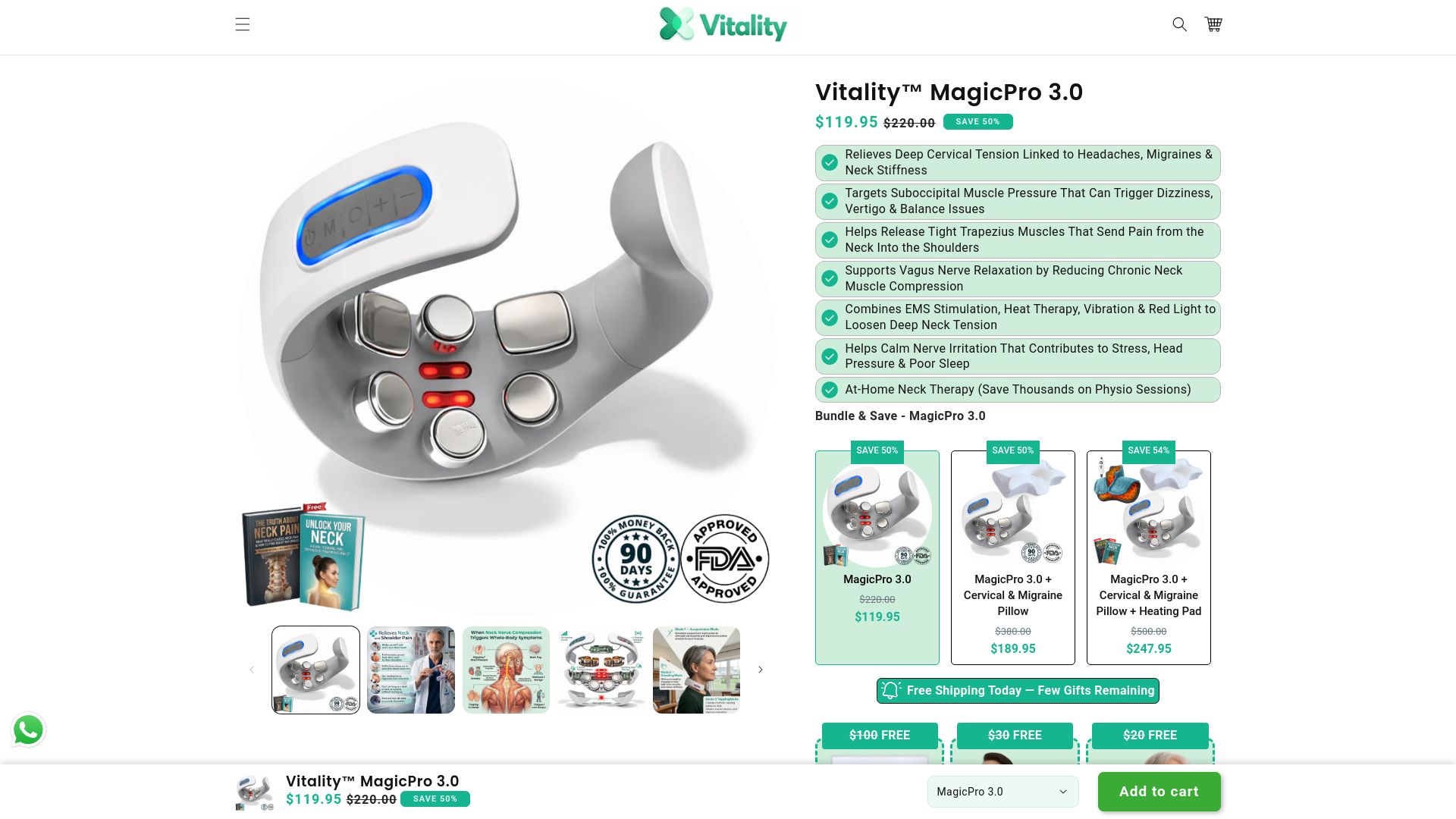
The MagicPro 2.0 and MagicPro 3.0 combine electrical muscle stimulation, heat, massage, and vibration into a compact neck device that delivers targeted relief in about 15 minutes. For neck stiffness, tension headaches, or the residual soreness that lingers between professional sessions, that daily maintenance window matters. The devices are designed for home, office, or travel use, so availability is never the barrier.
Use a device when:
- You need daily symptom management between monthly clinic visits
- Same-day booking isn’t available and you need relief now
- Travel or a packed schedule makes getting to a studio impractical
Always follow manufacturer guidance and consult a physician before using EMS devices if you have a pacemaker, active inflammation, or an undiagnosed pain condition. My Vitality’s devices are intended for adults managing neck tension and stiffness, not for acute injury treatment.
Key Takeaways
Choosing the right massage therapy alternative in Los Angeles comes down to matching your pain goal, schedule, and budget to the provider type that actually delivers it.
| Point | Details |
|---|---|
| Match provider to pain goal | Boutique clinics for chronic or complex pain; chains for regular maintenance; mobile apps for same-day convenience. |
| Verify therapist credentials | Confirm a valid CAMTC certificate before booking any therapist in California. |
| Membership math | Membership saves money only if you book at least roughly ten sessions per year; otherwise pay-per-visit costs less. |
| Red flags | Avoid providers with no listed credentials, unclear cancellation terms, or pressure to sign a contract before a first visit. |
| My Vitality devices | The MagicPro 2.0 and 3.0 are practical between-session tools for neck pain, not a substitute for specialized hands-on therapy. |
A note on combining devices with hands-on care
The conventional advice is to pick one: either see a therapist or manage pain at home. That framing misses something. For most people dealing with neck tension or chronic stiffness, the real gap isn’t the weekly session. It’s the six days in between.
Hands-on therapy from a licensed specialist, whether at a boutique clinic or through a vetted mobile platform, addresses the structural and neuromuscular causes of pain in ways no device can replicate. That’s the honest starting point. But the relief from a good session can fade within 48 hours if daily habits and muscle tension aren’t managed. A device that delivers heat, EMS, and massage in 15 minutes each morning extends the benefit of that session rather than replacing it.
My Vitality’s MagicPro devices are built for that maintenance role. Check the product details before purchasing to confirm the device fits your specific condition and usage context.
Useful sources and further reading
These are the primary sources used in this article. Each is worth bookmarking if you want to go deeper on a specific decision.
| Source | What you’ll learn |
|---|---|
| Spa vs. Studio Massage Near Me – Luna Massage Studio | Spa vs. studio differences, modality market-share data, and why therapist credentials are the top trust signal. |
| Body Well vs Soothe vs Zeel – Body Well Mobile Massage | How mobile platforms and therapist-owned services differ on vetting, matching, and clinical fit. |
| Mobile Massage vs Spa Massage: How to Choose – Masseur.app | A practical checklist covering convenience, environment, total cost, and booking fit. |
| Massage Heights vs Massage Envy – VersusGuy | Side-by-side comparison of two major chains on location availability and service customization. |
| Massage Envy vs Hand and Stone – VersusGuy | Membership structures, service variety, and pricing tradeoffs across national chains. |
| 30 Excellent Massage Websites – UENI | Website signals that indicate a professional, bookable provider worth trusting. |
| Best Massage Therapy Websites – Colorlib | How to evaluate reviews, pricing transparency, and cancellation policies before committing. |
This article is general information, not medical or professional advice. Confirm current therapist licensing with CAMTC and consult a qualified healthcare provider for any diagnosed pain condition before beginning massage therapy.