


If you’re dealing with neck arthritis, the fastest path to relief looks like this: apply ice initially if you’re in an acute flare, then switch to heat, start gentle range-of-motion movement daily, and use an over-the-counter pain reliever if your clinician has cleared you for one. MedlinePlus and Cleveland Clinic both frame this combination as the standard first response, and most flares improve within a few days to a few weeks when you stay consistent.
- Ice first (48 to 72 hours), then heat
- Start gentle chin tucks and rotations the same day, if tolerated
- Consider acetaminophen or an NSAID for short-term relief
Here’s the number that matters: basic self-care resolves most routine neck pain episodes without needing imaging or a specialist. Extended bed rest actually slows recovery.
Watch for red flags that override all of the above: numbness or weakness spreading into your arms, loss of bladder or bowel control, fever paired with neck stiffness, or an inability to move your head. Those symptoms mean urgent care, not home treatment.
Key Takeaways
Neck arthritis home treatment works best when ice or heat, daily gentle movement, and posture correction are combined consistently rather than used in isolation.
| Point | Details |
|---|---|
| Time your ice and heat | Ice for the first 48 to 72 hours of a flare, then switch to heat for muscle relaxation. |
| Move daily, don’t rest fully | Gentle chin tucks and rotations, done consistently, prevent stiffness better than bed rest. |
| Limit collar use | Soft collars help short-term but should be limited to 2 to 4 days to avoid muscle weakening. |
| Know the red flags | New arm numbness, bladder/bowel loss, fever with stiffness, or inability to move the head need urgent care. |
| Consider a supportive device | My Vitality’s MagicPro devices combine heat, massage, and stimulation into a 15-minute daily session that complements exercise and posture fixes. |
This article is general information, not a substitute for advice from a qualified doctor. Consult a qualified healthcare professional about your own circumstances before acting on anything here.
Table of Contents
- Neck Stretches and Strengthening Exercises for Arthritis
- How Do You Relieve Neck Arthritis Pain at Home?
- Posture, Sleep, and Ergonomics for Neck Arthritis Relief
- Do Home Devices Like TENS or Traction Actually Help?
- When Should You See a Doctor for Neck Arthritis Pain?
- Lifestyle Habits That Support Long-Term Neck Health
- Tips for Managing a Neck Arthritis Flare-Up at Home
- Sleep Hygiene for Neck Arthritis Discomfort
- A Realistic Outlook on Neck Arthritis Home Treatment
- A Practical Complement to Your At-Home Neck Care Plan
- Sources
Neck Stretches and Strengthening Exercises for Arthritis
Movement is the part of neck arthritis home treatment people skip out of fear, and it’s usually the part that helps most. Exercises combining range-of-motion work, stretching, and upper-back strengthening reduce pain and improve mobility for most people with cervical spondylosis, according to Mayo Clinic guidance on conservative treatment.
Start with this sequence once or twice daily:
- Chin tucks. Pull your chin straight back, like making a double chin, hold 5 seconds, release. Do 8 to 10 reps.
- Gentle rotations. Turn your head slowly toward each shoulder, hold 3 to 5 seconds per side. Do 5 reps each direction.
- Lateral tilts. Ear toward shoulder, without shrugging. Hold 5 seconds, 5 reps per side.
- Isometric holds. Press your palm against your forehead, resist without moving your head, hold 5 seconds. Repeat 5 times, then do the same at the back and sides of your head.
- Scapular retraction. Squeeze your shoulder blades together and hold 5 seconds, 10 reps, to build the upper-back support your neck depends on.
Add reps gradually over two to three weeks rather than pushing intensity. Stop and reassess if you notice sharp shooting pain, tingling down an arm, or new weakness in your hands. Those aren’t signs to push through.
Pro Tip: Do your warm-up sequence right after a warm shower, when your neck muscles are already loosened up. It takes less effort and you’ll get a fuller range of motion.
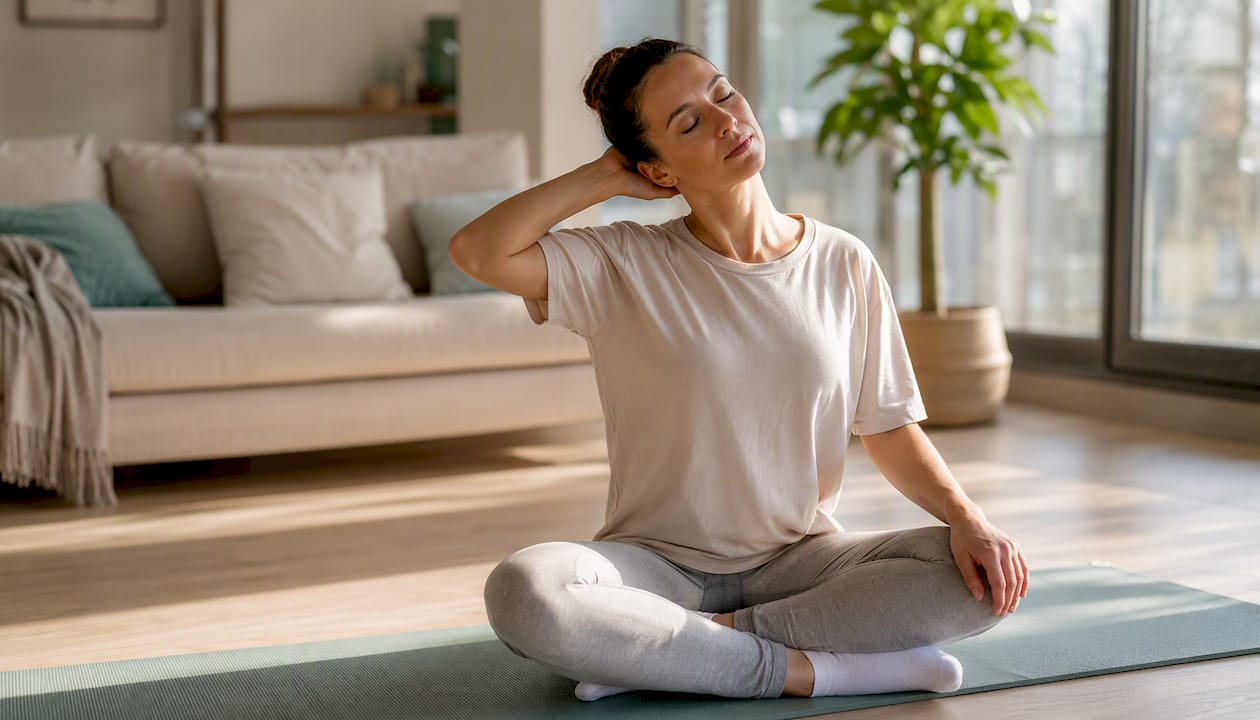
If pain doesn’t ease after two to three weeks of consistent exercise, ask a physical therapist to tailor the progression to your specific arthritis pattern. A PT can also catch compensation habits, like leading with your shoulders instead of your neck, that make exercises less effective.
How Do You Relieve Neck Arthritis Pain at Home?
Timing matters more than most people realize. For an acute flare, ice for the first 48 to 72 hours to calm inflammation, then transition to heat, which relaxes muscle tension and improves blood flow, per MedlinePlus guidance on self-care for neck pain and spasms.
- Apply ice or heat for 15 to 20 minutes at a time, never longer
- Always place a towel between the source and your skin
- Reapply every 2 to 3 hours as needed during a flare
For medication, acetaminophen, ibuprofen, and naproxen are the commonly recommended options for short-term relief, but check dosing limits and interactions with your clinician, especially if you take blood pressure medication or have kidney concerns. Topical NSAID gels and capsaicin cream can help too, with less systemic exposure than a pill.
One detail people miss: a soft collar can ease acute pain, but MedlinePlus specifically warns to limit use to 2 to 4 days. Wearing one longer lets your neck muscles weaken, which sets you up for more flares later.
Posture, Sleep, and Ergonomics for Neck Arthritis Relief
Small daily adjustments cut down how often flares happen in the first place.
- Raise your monitor so the top of the screen sits at eye level, and set your chair so your forearms rest flat while typing.
- Take a 30-second movement break every 30 to 45 minutes. A few chin tucks and shoulder rolls reset the tension building from stillness.
- Hold your phone at eye level instead of looking down, and set an hourly reminder if you catch yourself slouching over it.
- Choose a pillow that keeps your neck in a neutral line with your spine, not angled up or crushed flat. A cervical pillow designed for that alignment can help side and back sleepers especially.
- Adjust your car headrest and mirrors so you’re not craning forward to see the road.
A supportive office chair and the right sleep setup do more for long-term neck arthritis pain relief than most people expect from furniture.
Do Home Devices Like TENS or Traction Actually Help?
Home electrotherapy and traction devices can genuinely help some people manage neck arthritis, but they work best as one piece of a broader plan, not a replacement for movement and posture correction. Harvard Health notes that TENS and similar devices may relieve pain for some patients, but they should be used per clinician guidance, and people with pacemakers or certain conditions should avoid them.
Before using any electrical stimulation or traction device, run through this checklist:
- Avoid use over an implanted device like a pacemaker
- Skip it if you have an active infection or broken skin near the treatment area
- Start at the lowest intensity setting and stop if you notice new numbness or tingling
- Talk to your clinician first if you’re pregnant or have a diagnosed spine instability
Physical therapists caution that home traction and massage tools work best when they’re built into a broader rehab plan, correcting movement patterns rather than just masking pain in the moment. Harvard Health
A practical routine looks like 15 minutes a day of combined heat, massage for neck and shoulder pain, and gentle stimulation, layered alongside your stretching sequence, not instead of it.,. Always check with your clinician before adding an electrical or traction device to your routine, particularly if you have other cardiac or neurological conditions.
When Should You See a Doctor for Neck Arthritis Pain?
Most neck arthritis flares respond to home care. Some symptoms mean you shouldn’t wait.
Go to the emergency department if you notice:
- New numbness or weakness spreading into your arms or legs
- Loss of bladder or bowel control
- Fever combined with neck stiffness
- Inability to move your head at all
See your primary care doctor or a spine specialist, on a less urgent basis, if:
- Pain hasn’t improved after 2 to 3 weeks of consistent home care
- Symptoms are getting worse instead of better
- Nighttime pain is severe enough to disrupt sleep regularly
Bring a symptom timeline to that appointment. Expect a conversation about physical therapy referral first, with imaging reserved for cases where red flags or lack of progress point to something imaging would actually change.
Lifestyle Habits That Support Long-Term Neck Health
Neck arthritis pain relief isn’t only about the neck itself. What you eat and how you move all day shape inflammation levels over months, not just during a flare.
- Shift toward a Mediterranean-style eating pattern, heavy on vegetables, fish, and olive oil, light on processed foods
- Maintain a healthy weight to reduce mechanical load on cervical joints
- Walk or swim regularly. Low-impact aerobic movement keeps joints lubricated without adding strain
- Quit smoking, which accelerates disc degeneration
- Try CBT, meditation, or tai chi; these mind-body approaches reduce pain-related distress when paired with physical treatment
Pick one habit this week. Adding a 15-minute walk after dinner is a realistic starting point that beats an ambitious plan you abandon by Friday.
Tips for Managing a Neck Arthritis Flare-Up at Home
Flares feel alarming, but panic makes them worse. The goal during a bad stretch isn’t to eliminate pain instantly, it’s to keep your neck moving in a limited, controlled way while calming the inflammation driving the spike.
Start with ice for the first 48 to 72 hours, then heat, following the same timing guidance that applies to any acute episode. Scale your exercises down rather than stopping entirely: smaller range-of-motion chin tucks and gentle tilts, done more gently but still daily, keep the joint lubricated without provoking sharper pain. The CDC’s framing of arthritis self-care sums this up well: motion is lotion, and complete rest during a flare tends to prolong stiffness rather than resolve it.
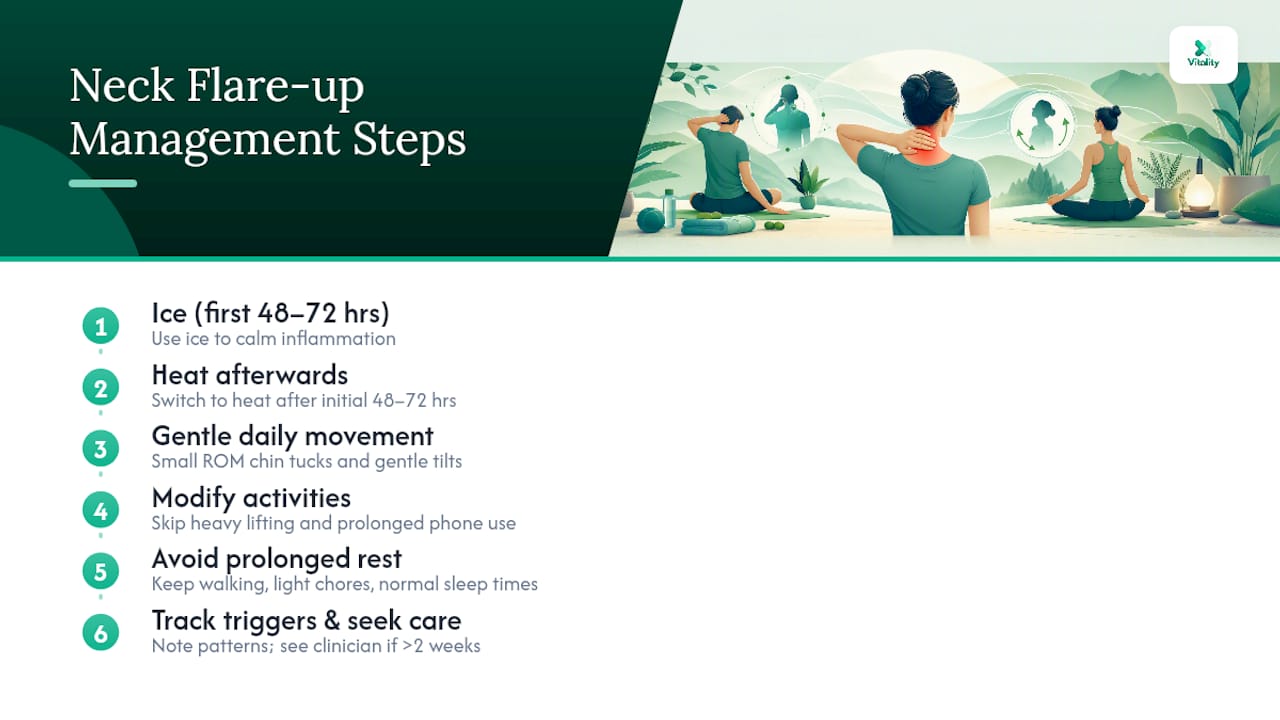
Modify your day instead of canceling it. Skip the activities that clearly aggravate your neck (heavy lifting, prolonged downward phone use) but keep walking, keep doing light chores, keep your normal sleep and wake times. Prolonged bed rest is specifically discouraged by clinical guidance on neck pain, since it weakens supporting muscles and can extend recovery.
Track what triggered the flare if you can. Was it a long drive, a rough night’s sleep, an overly ambitious gym session? Patterns become obvious after two or three flares, and once you spot yours, you can head off the next one before it fully develops. A flare usually settles within several days to two weeks with consistent basic care. If it doesn’t, that’s the signal to loop in a clinician rather than wait it out longer.
Sleep Hygiene for Neck Arthritis Discomfort
Bad sleep positioning undoes a lot of the progress you make during the day. The core rule is keeping your cervical spine in a neutral line all night, not angled sharply up, down, or to one side.
Back sleepers generally do best with a pillow that supports the natural curve of the neck without pushing the head too far forward. Side sleepers need a pillow thick enough to fill the gap between ear and shoulder, otherwise the neck tilts all night and you wake up stiffer than when you went to bed. Stomach sleeping is the position to phase out if you can. It forces your neck into rotation for hours at a stretch, which tends to aggravate arthritis symptoms more than any other position.
A few other adjustments help more than people expect:
- Keep your bedroom cool and dark enough for uninterrupted sleep. Fragmented sleep lowers your pain threshold the next day.
- Avoid falling asleep on the couch with your head propped at an odd angle, which is a common flare trigger people don’t connect to their symptoms.
- If you wake up mid-night with stiffness, a few slow chin tucks before falling back asleep can prevent morning pain from compounding.
- Consider a supportive cervical pillow if standard pillows aren’t holding your neck in a neutral position through the night.
Good sleep hygiene isn’t a cure for arthritis, but it removes one of the most common, and most fixable, sources of morning flare-ups.
A Realistic Outlook on Neck Arthritis Home Treatment
Home treatment won’t erase arthritis. The realistic goal is fewer flares, faster recovery from the ones that happen, and less disruption to your daily life overall. Progress is usually gradual, and it’s worth partnering with a clinician when home care stalls.
— Achraf
A Practical Complement to Your At-Home Neck Care Plan
Everything in this plan, the stretches, the heat and ice, the posture fixes, works better when it’s easy to stick with every day. That’s the gap My Vitality built the MagicPro devices to close: a single 15-minute session combining heat, massage, and gentle electrical stimulation, instead of juggling a heating pad, a massage ball, and a separate TENS unit.
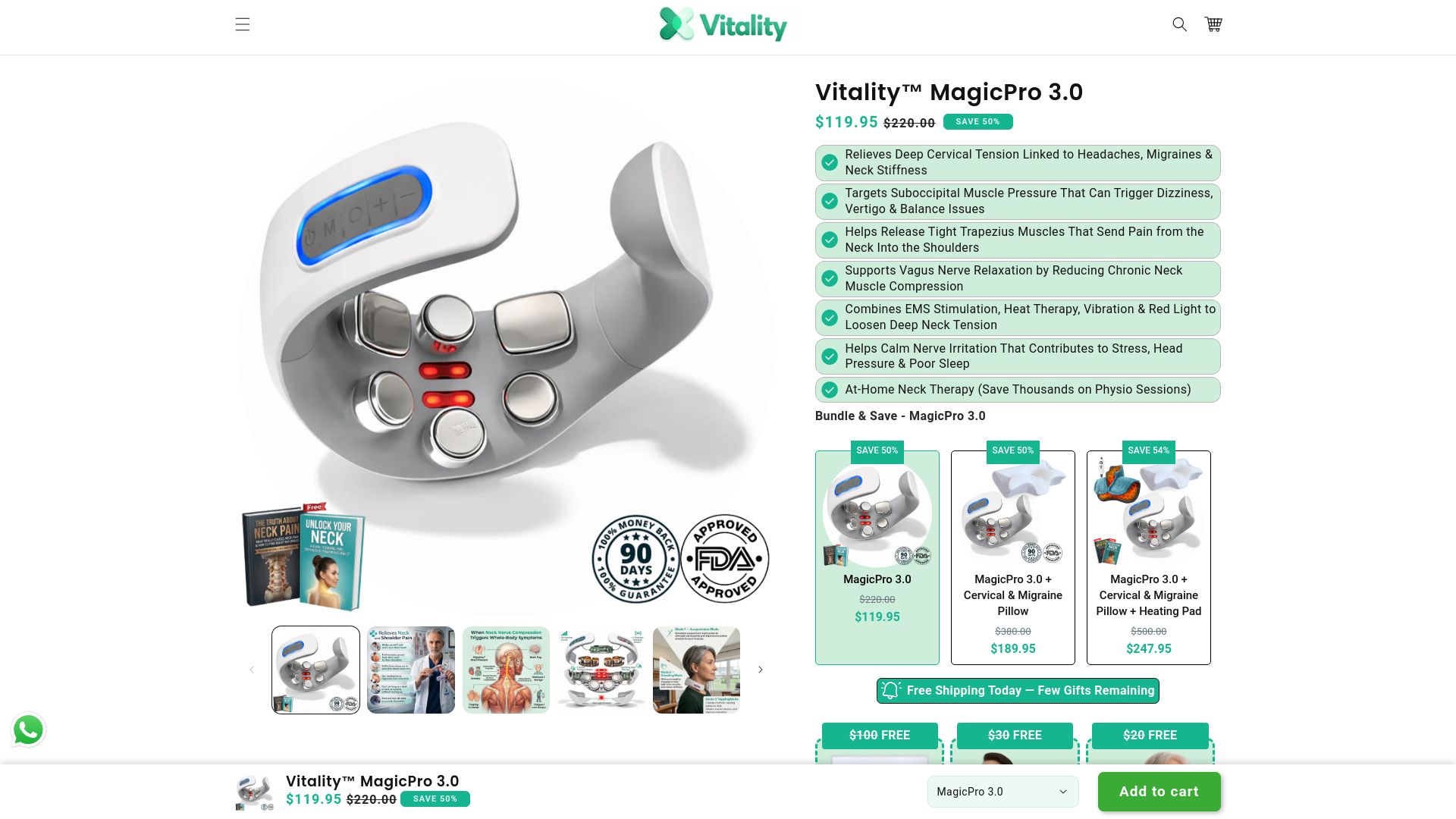
The MagicPro 2.0 and MagicPro 3.0 fit into the same routine outlined above, used after your stretching sequence or on a flare day when ice and heat alone aren’t cutting it. Both devices carry a warranty and come with clear safety guidance, including the same contraindications covered earlier: skip use over a pacemaker, active infection, or broken skin, and start at the lowest intensity. Browse the full Vitality device lineup to see which model fits your daily routine, and check the product page for sizing and warranty details before you order.
Sources
- Neck pain or spasms - self care: MedlinePlus Medical Encyclopedia
- Cervical spondylosis - Diagnosis & treatment - Mayo Clinic
- Neck pain - Cleveland Clinic
- How to soothe a sore neck - Harvard Health