


If you’re searching for NecksLevel.com alternatives, the short answer is this: Iron Neck suits athletes focused on rotational stability, TheraBand-style harnesses cover the budget-DIY crowd, Bodyblade trains neuromuscular control, and the Vitality MagicPro 3.0 is the therapy-first pick for anyone whose primary goal is pain relief at home.
Here’s the quick shortlist by goal:
- Rehab (early to mid-stage): NecksLevel Glide (baseline) or a supervised resistance-band harness
- Athletic performance / dynamic stability: Rotational-resistance rigs (Iron Neck category)
- Budget / DIY home use: TheraBand-style head harness with progressive bands
- Neuromuscular control and stabilization: Bodyblade or similar oscillation tools
- Therapy-first / pain relief at home: Vitality MagicPro 3.0 (EMS + heat + massage)
One important caveat: if you have acute neck pain, a recent injury, or neurological symptoms such as arm tingling or weakness, consult a physical therapist or physician before using any of these devices.
Table of Contents
- How do these NecksLevel alternatives compare side by side?
- What is NecksLevel and who is it actually for?
- Why do some buyers prefer rotational-resistance rigs like Iron Neck?
- Is a TheraBand-style head harness a valid budget alternative?
- How does Bodyblade train the neck differently?
- What makes Vitality MagicPro 3.0 a therapy-first alternative?
- How do you choose the right alternative for your goal?
- How we compared these options
- Key Takeaways
- What most device comparisons get wrong
- Pain relief is your priority? MagicPro 3.0 is worth a close look
- Further reading and sources
How do these NecksLevel alternatives compare side by side?
| Device category | Best for | Mechanism | Price range | Portability | Clinical/therapy features | Ease of setup |
|---|---|---|---|---|---|---|
| Isolation glide (NecksLevel) | Early/mid rehab, clinic use | Slide board + resistance bands, gravity-reduced | Meaningful investment | Moderate | Measurement features on Pro; home vs pro models | Moderate learning curve |
| Rotational-resistance rig | Athletic performance, dynamic stability | 360° rotational resistance | Mid-to-high | Moderate | Limited therapy modes | Steeper curve |
| Elastic-band harness (TheraBand-style) | Budget rehab, home DIY | Flexion/extension/rotation via bands | Low ($20–$60) | High | None built-in | Low |
| Oscillation/stabilization tool | Neuromuscular control, reactive stability | High-frequency oscillation | Mid | High | None built-in | Low-moderate |
| Multi-modal therapy device (MagicPro) | Pain relief, home therapy | EMS + heat + massage | Mid | Very high | EMS, heat, massage; doctor-recommended | Very low |
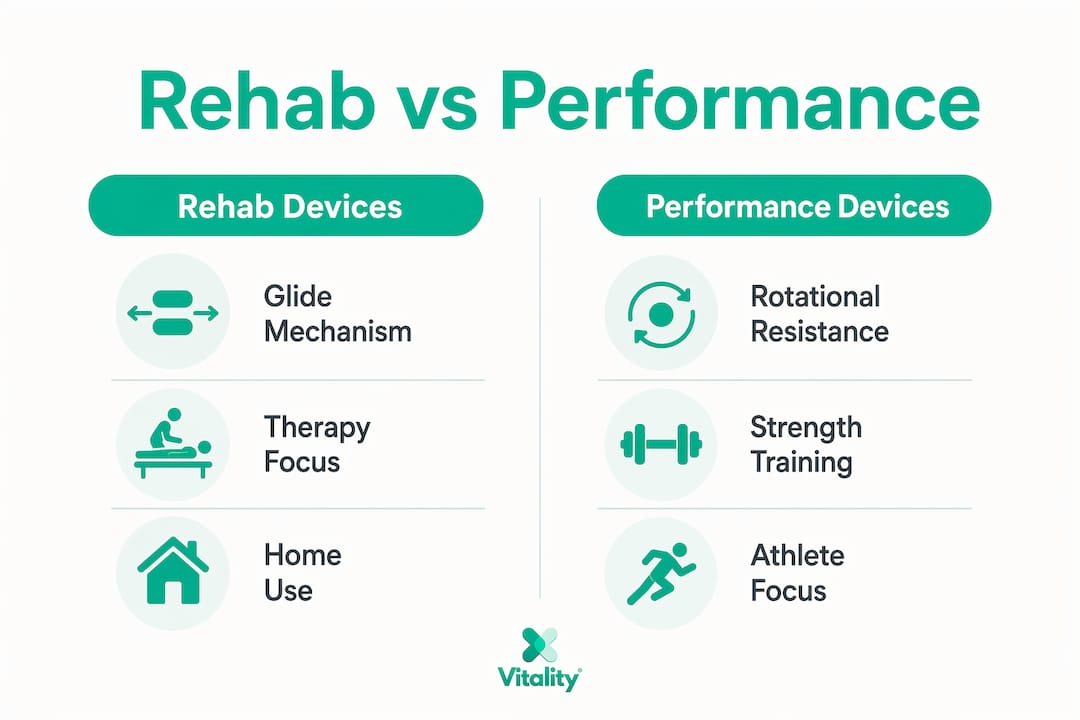
Clinic-grade devices (NecksLevel Pro) include objective data tracking, which is the main differentiator from home-grade options, not raw resistance levels. For most home users, that measurement capability is unnecessary.
What is NecksLevel and who is it actually for?
NecksLevel trains the neck through an isolation glide mechanism: a slide board reduces gravitational load so muscles work through controlled ranges without the compressive forces of upright training. Physical therapists frequently describe it as well-suited for early- and mid-stage cervical rehab, and it sees adoption across physical therapy clinics and sports teams.
The Glide is the home-facing model, with swappable resistance bands and a smaller profile. The Pro adds measurement features that clinicians use to track patient progress objectively. The Glide bundle is priced as a meaningful investment for a home user.
Pros:
- Gravity-reduced position reduces compression during early rehab
- Swappable bands allow progressive resistance
- Hands-on reviews confirm the Glide is easier for supine, controlled rehabilitation
Cons:
- Higher price point than DIY alternatives
- Pro model is clinic-oriented; home users may not need its full feature set
- Requires space and a learning period to use correctly
Pro Tip: If you’re a home user without a clinician guiding your program, the Glide is the right starting point. The Pro’s measurement tools add value mainly when a therapist is tracking your progress session to session.
Why do some buyers prefer rotational-resistance rigs like Iron Neck?
Rotational-resistance rigs train the neck through 360° of dynamic resistance rather than the linear, gravity-reduced motion of a glide board. That distinction matters for athletes: sports like wrestling, football, and martial arts demand reactive rotational stability, not just controlled linear strength. Iron Neck is the most commonly cited device in this category when reviewers compare it to NecksLevel.
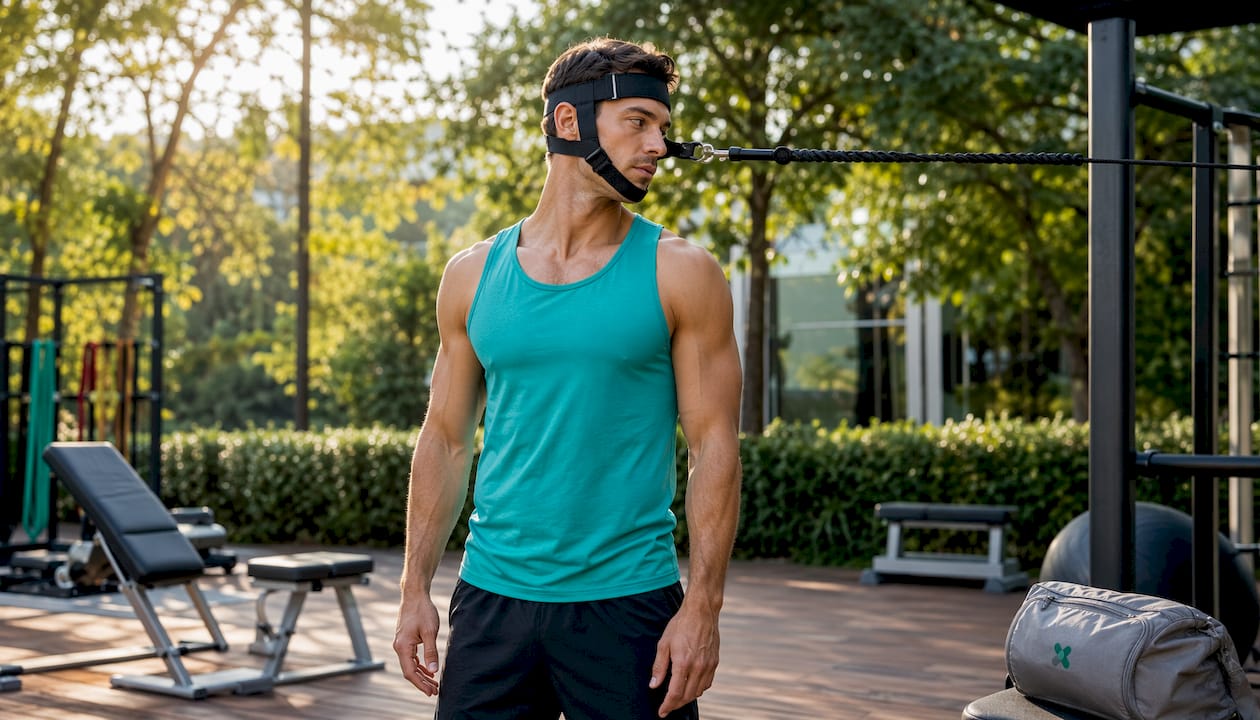
The trade-off is intensity. Rotational rigs can load the neck aggressively from the start, which makes them a poor fit for someone in early rehab or dealing with active pain. They’re best reserved for people who already have a baseline of cervical strength and want to build sport-specific stability.
Pros:
- Trains rotational and dynamic stability directly relevant to sport
- Builds strength through full range of motion
Cons:
- Starting resistance can be too high for pain-sensitive or early-rehab users
- Less suited to the supine, gravity-reduced positions used in clinical rehab
- Higher cost for pro versions; portability varies by model
Is a TheraBand-style head harness a valid budget alternative?
For many people, a resistance-band harness is the most practical starting point. The setup is simple: a neoprene or fabric head harness attaches to a resistance band anchored to a door, cable machine, or fixed point, and you train flexion, extension, and lateral or rotational movements with progressive band tension.
Here’s how to set it up safely:
- Choose a low-resistance band to start (light TheraBand or equivalent).
- Anchor the band at approximately head height for lateral movements, lower for flexion/extension.
- Perform 2–3 sets of 10–15 controlled reps per direction, moving through pain-free range only.
- Progress band resistance only after two consecutive sessions feel easy with no discomfort.
- If any movement causes sharp pain, radiating symptoms, or dizziness, stop and consult a clinician.
Pros:
- Very low cost ($20–$60 for a quality harness and band set)
- Highly portable; fits in a gym bag
- Adjustable resistance through band selection
Cons:
- No built-in measurement or feedback
- Requires self-discipline to progress safely
- Less precise than purpose-built devices for early rehab
Pro Tip: Pair a harness with gentle neck pain relief techniques to build a complete home protocol. Bands alone don’t address mobility or soft-tissue tension.
How does Bodyblade train the neck differently?
Bodyblade and similar oscillation tools work through high-frequency oscillation: you hold the blade and its flex creates rapid, small-amplitude vibrations that force your stabilizing muscles to fire reflexively. The neck and shoulder complex must co-contract continuously to control the oscillation, which trains sensorimotor control rather than isolated strength.
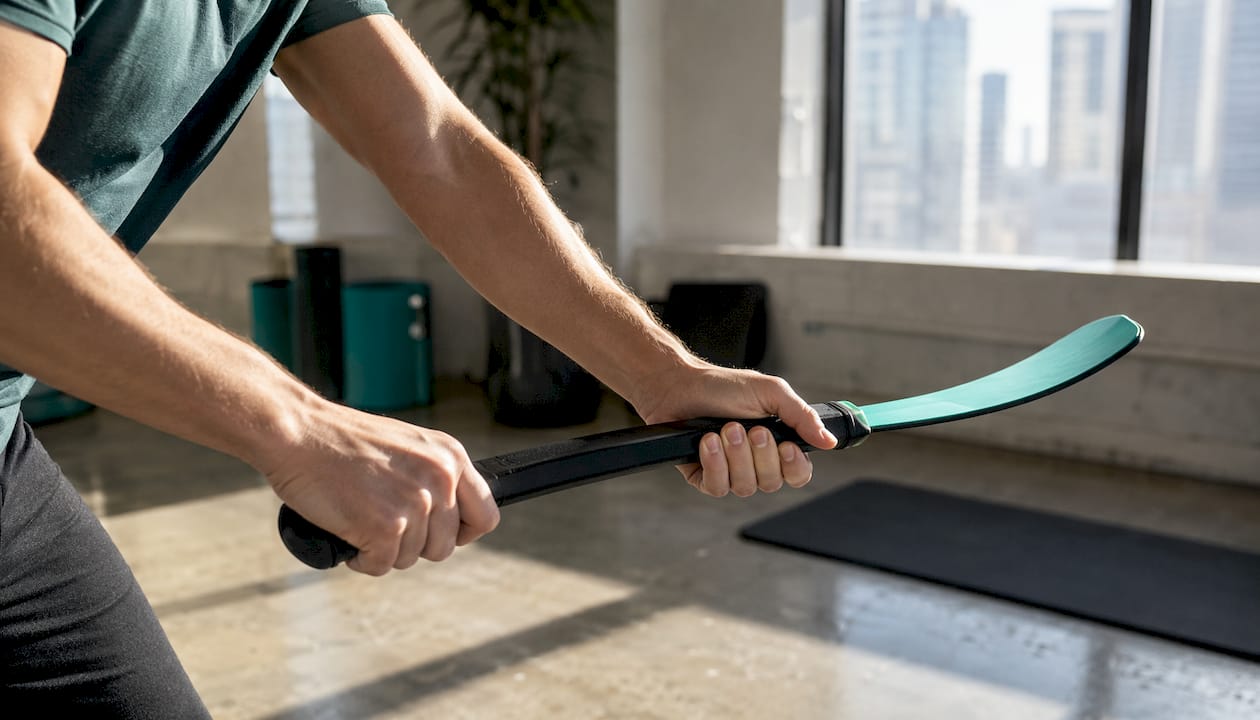
This is genuinely different from resistance-based training. Where a glide board or harness builds targeted muscle strength, oscillation tools improve the nervous system’s ability to coordinate and stabilize the cervical spine under unpredictable load. Athletes recovering from whiplash or those with poor postural stability often respond well to this type of training.
Pros:
- Trains reflexive stabilization that resistance tools miss
- Portable and easy to use in standing or seated positions
- Low injury risk when used at appropriate intensity
Cons:
- Not a replacement for progressive resistance training if strength is the goal
- Less effective as a standalone tool for severe pain or early-stage rehab
- Learning curve to use correctly without compensating through the shoulders
What makes Vitality MagicPro 3.0 a therapy-first alternative?
The MagicPro 3.0 from My Vitality takes a different approach entirely. Rather than training neck strength through resistance, it delivers three therapeutic modalities simultaneously: electrical muscle stimulation (EMS), heat, and massage. The goal is pain relief, circulation support, and muscle relaxation, not progressive strength development.
This makes it a distinct category from the devices above. It’s not a direct substitute for a NecksLevel or a resistance harness if building cervical strength is your aim. But for someone whose primary complaint is daily neck pain, stiffness, or tension, and who wants a home therapy option that fits into a 15-minute session, it addresses a need the other devices don’t.
Pros:
- Multi-modal therapy (EMS + heat + massage) in one compact device
- Doctor-recommended; designed for home use without clinical supervision
- Very easy to use; no learning curve
- Highly portable; works at home, at a desk, or while traveling
Cons:
- Does not build progressive neck strength
- Not a replacement for a structured rehab program if you have significant weakness
- Clinical claims should be verified with your own physician for your specific condition
Pro Tip: The MagicPro 3.0 pairs well with a neck mobility routine for seated workers — use the device for relief, then follow with gentle mobility work to maintain range of motion.
How do you choose the right alternative for your goal?
The right device depends on three things: your primary goal, your current pain level, and whether a clinician is involved. Work through this checklist before you buy.
- Primary goal is pain relief: A multi-modal therapy device (MagicPro 3.0) or a supervised resistance-band program is the right starting point. Targeted neck strengthening benefits include reduced pain and improved mobility when used in a graded plan.
- Primary goal is rehab (post-injury or post-surgery): NecksLevel Glide or a clinician-supervised harness program. Start supine, unresisted, and progress slowly.
- Primary goal is athletic performance: Rotational-resistance rigs suit athletes with a baseline of cervical strength. Do not start here if you have active pain.
- Budget is a constraint: A TheraBand-style harness delivers real results at low cost. Pair it with professional guidance if possible.
- Neuromuscular control is the gap: Add an oscillation tool like Bodyblade as a complement to resistance training, not a replacement.
Red flags that require a clinician before you start any device: radiating arm pain, numbness or tingling in the hands, dizziness or visual changes with neck movement, recent cervical fracture or surgery, or any diagnosis involving spinal cord involvement.
Pro Tip: Progression best practice is to start in unresisted or low-resistance positions, reintroduce resistance only in pain-free ranges, and address rotational control before adding heavy axial loading. Rushing this sequence is the most common cause of setbacks.
How we compared these options
This comparison draws on several types of evidence:
- Physical therapist reviews and write-ups, including hands-on comparisons that tested devices in clinical and home settings
- Head-to-head video reviews (Iron Neck vs NecksLevel format) that show real-world setup and use
- User testimonials and community feedback from fitness and rehab forums
- Price checks from vendor pages and third-party retailers
- Clinician-published benefit summaries from PT practice pages
Individual responses to any device vary. Device specifications and pricing can change after publication. This article is general information, not medical advice. Consult a physical therapist or physician for guidance specific to your condition.
Key Takeaways
The best NecksLevel alternative depends entirely on your goal: resistance-based devices build strength, oscillation tools train stability, and multi-modal therapy devices like MagicPro 3.0 target pain relief directly.
| Point | Details |
|---|---|
| Match device to goal | Rehab needs glide or harness; athletes need rotational rigs; pain relief needs therapy-first devices. |
| Budget option works | A TheraBand harness delivers real results when used with progressive loading and proper form. |
| Clinician input matters | Red-flag symptoms (radiating pain, tingling, dizziness) require professional evaluation before any device use. |
| Oscillation fills a gap | Bodyblade-style tools train reflexive stabilization that resistance devices alone cannot replicate. |
| My Vitality MagicPro 3.0 | Best fit for home users prioritizing pain relief, stiffness, and tension over progressive strength training. |
What most device comparisons get wrong
Most articles comparing NecksLevel substitutes treat the category as a single market. It isn’t. A post-surgical rehab patient and a competitive wrestler have almost nothing in common in terms of what their neck needs, and recommending the same device to both is a disservice to both.
The deeper issue is that resistance-based neck training, regardless of the device, is only one part of a complete cervical health protocol. Clinicians typically combine device work with manual therapy, postural correction, and conventional exercise. A device that does all three things adequately is often more useful for a home user than one that does a single thing exceptionally well.
That’s the case for multi-modal devices like the MagicPro 3.0. It doesn’t out-strengthen a NecksLevel or out-rotate Iron Neck. What it does is address the therapeutic side of neck health, the circulation, the muscle tension, the nerve sensitivity, in a format that requires no setup, no learning curve, and no dedicated training session. For someone managing chronic neck pain around a full schedule, that accessibility is the deciding factor.
The other overlooked point: most home users don’t need objective data tracking. The main difference between clinic-grade and home-grade devices is measurement capability, not resistance levels. Paying for measurement features you’ll never use is a common and avoidable mistake.
Pain relief is your priority? MagicPro 3.0 is worth a close look
If you’ve read through the comparisons above and your main concern is daily neck pain, stiffness, or tension rather than building athletic strength, the Vitality MagicPro 3.0 addresses that directly. It combines EMS, heat, and massage in a single wearable device, delivering a 15-minute therapy session you can run at home, at your desk, or while traveling.
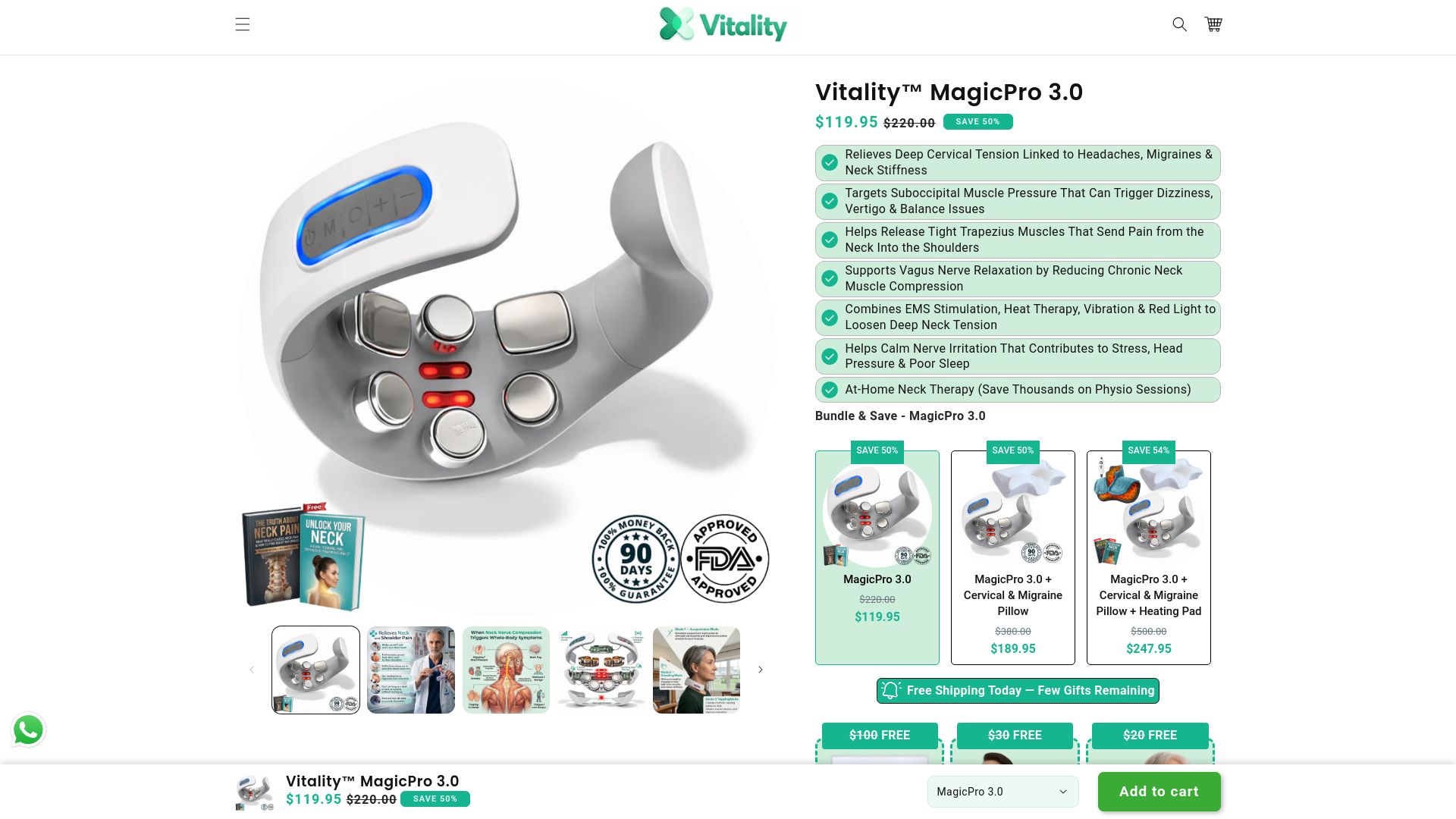
My Vitality’s MagicPro devices are doctor-recommended and designed for people who want real therapeutic relief without a clinic appointment. The MagicPro 3.0 bundle includes a cervical pillow and heating pad, making it a complete home therapy setup. It pairs well with a gentle strengthening program once acute pain settles. Check the product page for current warranty details and return policy before purchasing.
Further reading and sources
- Iron Neck vs NecksLevel: Physical Therapist Review — hands-on head-to-head with price data and clinical use notes
- NecksLevel Review from a Physical Therapist — in-depth clinician perspective on rehab utility and limitations
- NecksLevel Glide Review: Home vs Pro Models — model comparison with use-case guidance
- NecksLevel at Hands of Hope PT — clinical practice page with therapeutic benefit summary
- NecksLevel Company Profile — background on clinical adoption and product positioning
- NecksLevel Glide Product Page — pricing and model specs
Always check the vendor’s current return policy and warranty terms before purchasing any neck device. Specifications and prices change, and a clear return window matters when you’re evaluating a device for the first time.