


Spinal alignment is defined as the natural positioning of the vertebrae that allows the spine to distribute body weight evenly, protect the nervous system, and support pain-free movement. The role of spinal alignment in comfort is foundational: when your spine sits in its correct position, muscles work less, joints move freely, and nerve signals travel without interference. When alignment breaks down, the body compensates by tightening surrounding muscles, which creates the fatigue and aching that many people mistake for a purely muscular problem. Understanding this connection is the first step toward lasting relief.
How does proper spinal alignment reduce pain and improve mobility?
Proper spinal alignment acts as a structural base that determines how efficiently every joint in your body functions. When the vertebrae stack correctly, mechanical stress spreads evenly across discs and joints. When they do not, specific tissues absorb far more load than they were designed to handle.
The clinical evidence here is striking. Maintaining proper physiological sagittal spinal alignment reduces postoperative disability odds by 67% and persistent pain by 61%. Those numbers reflect how deeply structural positioning shapes the body’s ability to recover and function.
The nervous system benefits are equally significant. The spinal cord and its branching nerves pass through the vertebral column. Misalignment compresses these pathways, slowing or distorting nerve signals to muscles and organs. Restoring alignment relieves that compression, which is why people often report improved energy and reduced muscle fatigue after correcting their posture, not just reduced pain.
Pro Tip: Mobility exercises like chin tucks and thoracic extensions address alignment at the source. Pair them with awareness of your sitting position throughout the day for compounding benefit.
The benefits of proper spine alignment extend beyond pain relief:
- Reduced muscle fatigue: Aligned muscles share load evenly instead of compensating for structural imbalance.
- Improved joint range of motion: Joints track correctly when the spine is stacked, reducing grinding and stiffness.
- Better breathing: Thoracic alignment directly affects rib cage expansion and lung capacity.
- Clearer nerve signaling: Decompressed nerve roots transmit signals more efficiently to the limbs and organs.
What daily habits disrupt spinal alignment and comfort?
Most spinal misalignment does not happen suddenly. It builds gradually through repeated daily habits that most people never question.
Sitting is the most common culprit. Prolonged sitting on soft sofas promotes posterior pelvic tilt, which flattens the lumbar curve and increases mechanical stress on the low back. Physical therapists recommend maintaining a slight anterior pelvic tilt while seated to preserve the spine’s natural curve and reduce that stress. The problem is that soft, deep cushions make anterior tilt nearly impossible to sustain.
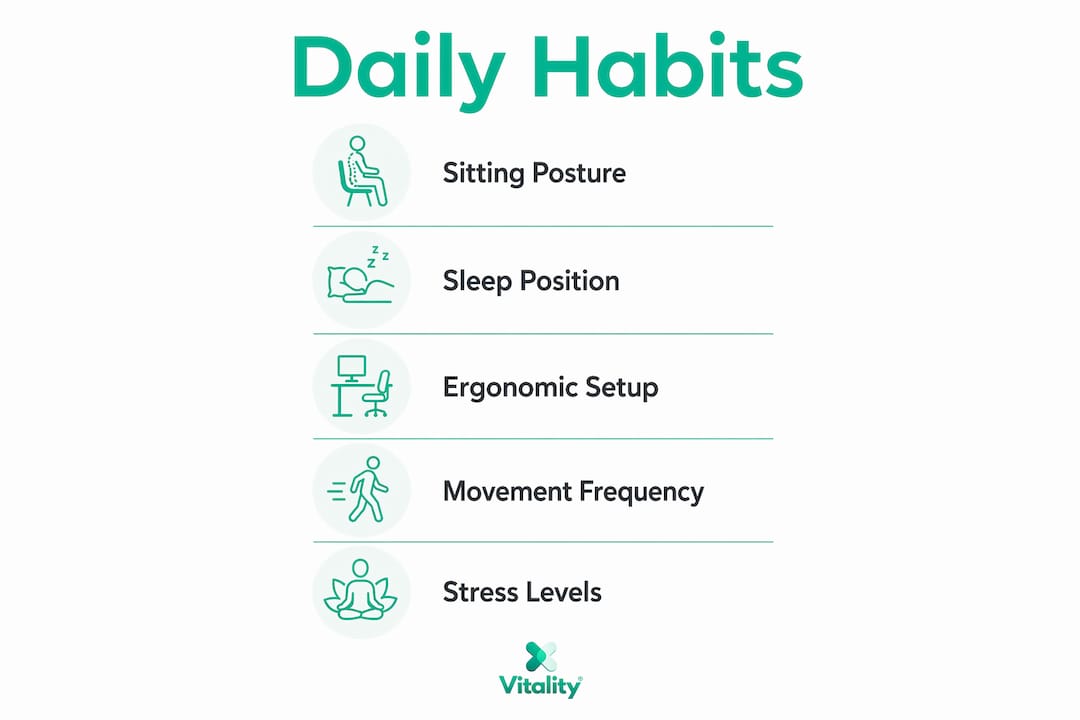
Screen position compounds the issue. When a monitor sits too low, the head drifts forward. For every inch the head moves forward from its neutral position, the effective load on the cervical spine increases significantly. That load accumulates over hours and years.
Here is a practical sequence for auditing your daily habits:
- Check your chair height. Your feet should rest flat on the floor with knees at roughly 90 degrees.
- Assess your monitor level. The top of the screen should align with your eye level to prevent forward head posture.
- Examine your sofa habits. Avoid sitting deep in soft cushions for extended periods. Use a lumbar roll if needed.
- Review your phone use. Looking down at a phone for long periods loads the cervical spine. Raise the phone to eye level instead.
- Note your sleeping setup. A pillow that is too high or too low forces the cervical spine out of neutral alignment for hours at a time.
Pro Tip: Buying an ergonomic chair is insufficient without addressing pelvic tilt and micro-adjustment habits. Set a timer to shift your position every 15–20 minutes. Movement matters more than the chair itself.
Sleep posture is the habit most people overlook. Adults spend roughly one third of their lives sleeping, and that time either supports or undermines spinal health. Many neck pain sufferers do not recognize that their pillow and mattress setup causes micro-trauma that disrupts tissue repair every single night.
How does spinal alignment affect neck pain specifically?
Neck pain is rarely an isolated problem. The cervical spine, which consists of the top seven vertebrae, depends on the alignment of everything below it. When the pelvis tilts or the thoracic spine rounds, the cervical spine compensates by shifting forward or rotating to keep the eyes level. That compensation loads the neck’s muscles and joints far beyond their normal capacity.
Neck and shoulder discomfort often results from the spine losing its “stacked” efficiency, shifting load onto unsupported soft tissues. The pain you feel in your neck may originate in your lower back or pelvis. This is why treating the neck alone frequently produces only temporary relief.

Sleep ergonomics play a direct role in cervical comfort. Research shows that optimal pillow height ranges from 4–10 cm based on individual body dimensions, and that a pillow preserving the cervical curve significantly reduces neck muscle fatigue compared to standard pillows. A firm mattress alone does not solve the problem. Customized pillow height is more critical for neck comfort than mattress firmness because it directly governs cervical curve preservation during sleep.
| Factor | Effect on neck comfort |
|---|---|
| Pillow too high | Forces cervical spine into flexion, straining posterior muscles |
| Pillow too low | Allows lateral flexion, compressing one side of the neck |
| Optimal pillow height (4–10 cm) | Preserves cervical curve, reduces muscle fatigue |
| Forward head posture | Multiplies effective load on cervical joints |
| Lower back misalignment | Triggers compensatory cervical tension through the spinal chain |
You can also explore office chair neck support adjustments that address these cervical alignment factors during work hours.
What practical strategies improve spinal alignment for better comfort?
Improving spinal alignment does not require expensive equipment or daily clinic visits. It requires consistent, specific habits applied across sitting, sleeping, and movement.
- Adjust your workstation first. Raise your monitor, position your keyboard so elbows stay at 90 degrees, and place your chair so your lower back contacts the lumbar support. These three changes address the most common office posture problems that accumulate over a workday.
- Optimize your sleep position. Side sleepers should place a pillow between the knees to keep the pelvis neutral. Back sleepers benefit from a pillow under the knees to reduce lumbar strain. Stomach sleeping is the one position that consistently disrupts cervical alignment and is best avoided.
- Use micro-movement as a tool. Micro-adjusting your sitting posture every 15–20 minutes is more effective for spinal health than any static chair feature. Stand briefly, shift your weight, or perform a seated pelvic tilt to reset the lumbar curve.
- Strengthen the posterior chain. Weak glutes and deep spinal extensors force the spine into compensatory curves. Exercises like glute bridges, bird dogs, and dead bugs build the muscular support that holds alignment in place between adjustments.
- Address tension actively. Tight cervical muscles pull vertebrae out of position. Targeted heat and massage applied to the neck and upper back reduce that tension and allow the spine to return to a more neutral position. Tension relief directly supports better sleep and overnight tissue repair.
“Neck discomfort is often secondary to pelvic or lower back misalignment. A full head-to-pelvis evaluation is essential for lasting relief because compensatory mechanisms cause referred pain that no amount of neck-focused treatment alone will resolve.” — Integrated spinal alignment research
Spinal alignment for better sleep also depends on mattress selection. A one-size-fits-all firm mattress can worsen neck tension for certain spinal curves. The goal is a surface that supports the natural lumbar curve without creating pressure points at the hips or shoulders.
Key Takeaways
Proper spinal alignment reduces pain, improves nerve function, and supports whole-body comfort by distributing mechanical load evenly across the spine’s discs and joints.
| Point | Details |
|---|---|
| Alignment reduces pain significantly | Proper sagittal alignment cuts disability odds by 67% and persistent pain by 61%. |
| Neck pain often starts lower | Pelvic and lumbar misalignment trigger compensatory cervical tension through the spinal chain. |
| Pillow height matters most for sleep | An optimal pillow height of 4–10 cm preserves the cervical curve and reduces neck muscle fatigue. |
| Micro-movement beats static sitting | Shifting posture every 15–20 minutes protects spinal alignment better than ergonomic chairs alone. |
| Daily habits are the primary cause | Soft sofas, low screens, and poor sleep posture gradually disrupt alignment over months and years. |
Why I think most people are treating the wrong part of their spine
Most people who come to me with neck pain have already tried neck stretches, neck massages, and neck-specific exercises. Some get temporary relief. Very few get lasting results. The reason is almost always the same: the neck is not where the problem started.
What I have found, time and again, is that the real disruption lives in the pelvis or the mid-back. The neck is simply the part of the chain that runs out of compensation capacity first and starts hurting. Treating it in isolation is like replacing a tire on a car with a bent axle. You address the symptom, not the cause.
The other thing most people miss is the sleep window. You can do everything right during the day and still wake up stiff and sore if your pillow height is wrong. That eight-hour window is when your body repairs tissue. A misaligned cervical spine during sleep means that repair happens under constant mechanical stress. The results compound negatively over months.
My honest recommendation: before you invest in any device or therapy, get a full head-to-pelvis assessment. Identify where your compensation pattern starts. Then address that origin point alongside the neck. The people who do this see results that actually last.
— Achraf
Vitalitytherapy’s MagicPro devices for neck and spinal comfort
Neck tension from spinal misalignment responds well to targeted therapeutic input, and that is exactly what Vitalitytherapy’s MagicPro devices deliver. The MagicPro 2.0 and MagicPro 3.0 combine electrical muscle stimulation, heat, and massage in a single wearable device. Each 15-minute session targets the cervical muscles directly, reducing the tension that pulls the neck out of alignment and disrupting the fatigue cycle that builds through the day.

These devices are doctor-recommended and designed for use at home, at a desk, or while traveling. For readers dealing with persistent neck discomfort, the Vitality™ MagicPro 2.0 offers a practical, evidence-supported way to address cervical tension as part of a broader alignment care routine. Pair it with the posture and sleep habits covered here for the most complete approach to spinal comfort.
FAQ
What is spinal alignment and why does it matter for comfort?
Spinal alignment refers to the natural positioning of the vertebrae that allows the spine to distribute body weight evenly and protect the nervous system. When alignment is correct, muscles work efficiently, joints move freely, and pain signals decrease.
Can poor spinal alignment cause neck pain?
Yes. Misalignment in the pelvis or lower back creates compensatory tension in the cervical spine, which is a leading cause of neck pain. Addressing the full spinal chain, not just the neck, produces more lasting relief.
What pillow height is best for spinal alignment during sleep?
Research shows an optimal pillow height of 4–10 cm based on individual body dimensions. A pillow that preserves the cervical curve significantly reduces neck muscle fatigue compared to standard pillows.
How often should I adjust my posture while sitting?
Micro-adjusting your sitting posture every 15–20 minutes is more effective for spinal health than any ergonomic chair feature alone. Brief standing or a seated pelvic tilt resets the lumbar curve and reduces cumulative stress.
Does spinal alignment affect sleep quality?
Yes. Adults spend roughly one third of their lives sleeping, and poor sleep posture causes micro-trauma that disrupts overnight tissue repair. Correcting pillow height and sleep position directly improves spinal comfort and sleep quality.