

Stretching relieves stiffness by recalibrating your nervous system’s tolerance for movement, not by physically lengthening muscle fibers. That distinction matters enormously for anyone dealing with neck tightness. The role of stretching in stiffness relief is neurological first and structural second. Research confirms that stretching increases movement tolerance by reducing the protective signals your nervous system sends to cervical muscles. With consistent practice, 2–4 sets held for 60 seconds daily over 4–8 weeks, you can achieve real, lasting range of motion gains. The American College of Sports Medicine (ACSM) and the World Health Organization (WHO) both include flexibility work in their movement guidelines for exactly this reason.
How does stretching reduce stiffness? The neurological and physiological mechanisms
Stiffness is not simply a tight muscle. It is your nervous system running a protective program. When the brain perceives a threat to a joint, it signals the surrounding muscles to guard that area. The result feels like tightness, but the root cause is neurological, not purely mechanical.
Stretching interrupts that protective loop. Stretching does not lengthen muscles in any permanent structural sense. Instead, it teaches the nervous system that a wider range of motion is safe. Over time, the brain stops sending the “guard this joint” signal as aggressively, and the sensation of tightness decreases.
Two distinct processes explain the full picture:
- Immediate relief (neurological): Static stretching activates the parasympathetic nervous system, the branch responsible for rest and recovery. This reduces overall muscle tension within minutes and explains why a gentle neck stretch can feel calming almost instantly.
- Long-term change (viscoelastic): Connective tissue surrounding joints gradually becomes more compliant with sustained, repeated stretching. This structural adaptation takes weeks, not days.
- Protective tightness reset: Each stretch session signals the nervous system that the movement is safe, progressively widening the range your body allows without triggering a guarding response.
Understanding the difference between these two mechanisms helps set realistic expectations. You will feel some relief today. Lasting mobility requires weeks of consistency.
Pro Tip: Breathe out slowly as you hold a neck stretch. Exhaling activates the parasympathetic nervous system more effectively than holding your breath, which deepens the relaxation response in the cervical muscles.
What does the science say about stretching for muscle stiffness and pain?
The evidence on stretching is more nuanced than most people expect. Stretching is genuinely effective for improving range of motion over time. Its role in reducing soreness or preventing injury is far more limited.
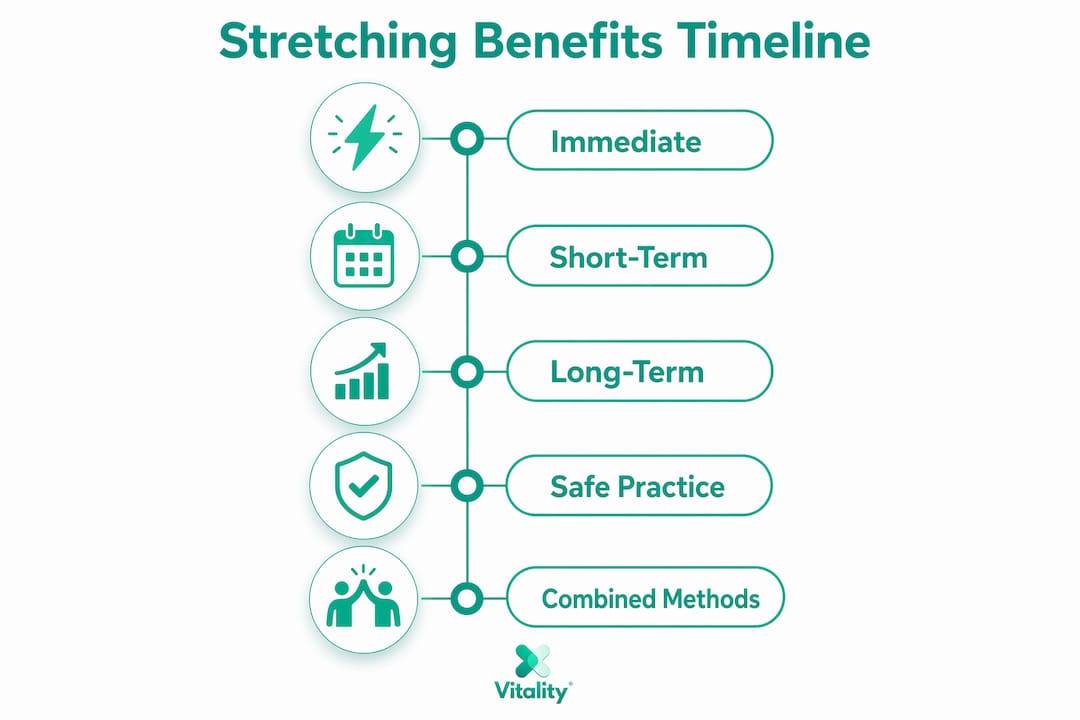
A widely cited analysis found that stretching reduces muscle soreness by less than 2 points on a 100-point scale. That reduction is too small to be clinically meaningful. This means stretching before or after exercise is not a reliable tool for preventing delayed onset muscle soreness (DOMS) or injury on its own.
Where stretching does deliver clear results is in long-term mobility. Performing 2–4 sets per area, holding each stretch for 60 seconds daily over 4–8 weeks, produces measurable range of motion improvements. That protocol is the standard referenced in ACSM guidelines for flexibility development.
| Goal | Stretching approach | Expected timeline |
|---|---|---|
| Immediate tension relief | Static stretch, 10–30 seconds, warm tissue | Minutes |
| Short-term mobility gain | 2–4 sets, 30–60 seconds, daily | 1–2 weeks |
| Lasting range of motion | 2–4 sets, 60 seconds, daily for 4–8 weeks | 4–8 weeks |
| Soreness reduction | Minimal effect regardless of protocol | Not reliable |
Overstretching carries a real cost. Holding a stretch into maximum discomfort can cause microdamage to muscle fibers that takes up to 48 hours to recover from. Pushing past mild tension does not accelerate progress. It delays it.
Static and dynamic stretching serve different purposes. Dynamic stretching before activity warms joints and improves range of motion without reducing strength output. Static stretching is better reserved for after exercise, when tissues are already warm and receptive.
How to stretch safely and effectively for neck stiffness relief
Safe stretching for neck stiffness follows a clear sequence. Skipping steps, especially stretching cold tissue, increases the risk of aggravating the very muscles you are trying to relax.
- Warm up first. Walk briskly, use a heating pad, or take a warm shower before static neck stretches. Warm tissue is more pliable and responds better to sustained holds. Vitalitytherapy’s Vitality™ Heating Pad is one practical option for preparing cervical muscles before a stretching session.
- Start with dynamic movement. Gentle neck rotations and slow chin tucks prepare the cervical joints before you hold any position. Keep the movement controlled and within a comfortable range.
- Hold static stretches for 10–60 seconds. Begin at 10–30 seconds if you are new to neck stretching. Work toward 60-second holds as your tolerance builds. Consistency matters more than intensity; daily gentle sessions outperform occasional aggressive ones.
- Perform 2–4 sets per target area. Cover the main cervical directions: lateral flexion (ear to shoulder), rotation (chin to shoulder), and gentle forward flexion (chin to chest). Rest 20–30 seconds between sets.
- Stop at mild tension, not pain. Discomfort that rates above a 4 out of 10 is a signal to ease off. Stretching into sharp or radiating pain can worsen nerve irritation in the neck.
- Combine with neck mobility exercises for seated workers if you spend long hours at a desk. Postural load is a primary driver of cervical stiffness, and targeted mobility work addresses it directly.
Pro Tip: After each static hold, gently contract the muscle you just stretched for 5 seconds before releasing. This proprioceptive neuromuscular facilitation (PNF) technique signals the nervous system more effectively and can accelerate range of motion gains.
A note on clinical adaptation: people with hypermobility conditions such as Ehlers-Danlos syndrome should work with a physical therapist before following standard stretching protocols. Overstretching already lax connective tissue worsens joint instability rather than relieving it.

How does stretching compare to other stiffness relief methods?
Stretching is one tool, not the complete solution. Understanding how it compares to strength training and massage helps you build a more effective routine for neck stiffness.
Strength training is the most underrated option in this space. Eccentric strength exercises improve range of motion comparably to stretching by improving both neural control and mechanical tissue properties. Exercises like slow neck resistance movements or shoulder blade retractions address the muscular imbalances that drive cervical stiffness in the first place. Stretching relieves the symptom. Strength training addresses a root cause.
Massage and foam rolling deliver superior short-term relief. A sequenced stretch and massage protocol reduces inflammatory markers, lowers lactate, and improves perceived pain more effectively than either intervention alone. Massage moves fluid, reduces localized inflammation, and resets tissue tension through direct mechanical pressure. Stretching resets nervous system tolerance. These two mechanisms complement each other rather than overlap.
Combining stretching with massage or foam rolling gives superior relief of persistent stiffness compared to passive rest alone. The practical takeaway: stretch first to open range of motion, then apply massage or a device like Vitalitytherapy’s MagicPro 2.0 to consolidate that relief through electrical muscle stimulation and heat.
The table below summarizes how each method acts on stiffness:
| Method | Primary mechanism | Best for |
|---|---|---|
| Static stretching | Nervous system reset, tissue compliance | Daily mobility maintenance |
| Dynamic stretching | Joint lubrication, warm-up | Pre-activity preparation |
| Eccentric strength training | Neural control, mechanical tissue change | Long-term stiffness correction |
| Massage or EMS device | Fluid movement, inflammation reduction | Short-term relief, recovery |
| Combined protocol | Multiple mechanisms simultaneously | Persistent or chronic stiffness |
The most common mistake people make is treating stretching as their only intervention. For mild, occasional neck tightness, stretching alone works well. For chronic or recurring stiffness, a combined approach consistently outperforms any single method.
Key Takeaways
Stretching relieves neck stiffness primarily by resetting nervous system tolerance for movement, and lasting results require daily practice of 2–4 sets held for 60 seconds over 4–8 weeks.
| Point | Details |
|---|---|
| Stiffness is neurological | Tightness is a protective nervous system signal, not simply a shortened muscle. |
| Consistency beats intensity | Daily gentle stretching for 60 seconds outperforms sporadic, aggressive sessions. |
| Overstretching causes damage | Microdamage from pushing past pain takes up to 48 hours to heal; stop at mild tension. |
| Combine methods for best results | Pairing stretching with massage or strength training delivers superior stiffness relief. |
| Timing matters | Use dynamic stretches before activity and static stretches after, on warm tissue. |
What I’ve learned from watching people stretch the wrong way
I have seen the same pattern repeat itself: someone wakes up with a stiff neck, drops into an aggressive stretch, feels a sharp pull, and then avoids stretching entirely for a week. That cycle is the real enemy of progress, not the stiffness itself.
The neurological nature of stiffness changes everything about how you should approach it. You are not trying to force a muscle longer. You are having a conversation with your nervous system, and that conversation requires patience, not force. The people I have seen make the most consistent progress are the ones who stretch gently every day, not the ones who push hard twice a week.
Stretching alone rarely solves chronic neck stiffness. The readers who see lasting change combine it with something that addresses the underlying cause, whether that is postural correction, how massage reduces tension, or targeted strength work for the cervical stabilizers. Stretching opens the door. The other modalities walk you through it.
The biggest pitfall I see is treating a 10-second stretch as sufficient. Research is clear that 60-second holds, repeated daily, are what produce structural change. Most people stop at 15 seconds because it feels like enough. It rarely is.
Listen to your body’s signals, but do not let mild discomfort stop you. There is a meaningful difference between the productive tension of a good stretch and the sharp warning of overstretching. Learning that distinction is the most valuable skill you can develop for managing neck stiffness long-term.
— Achraf
Vitalitytherapy’s approach to neck stiffness relief
Stretching builds the foundation. What you pair it with determines how fast and how fully you recover.
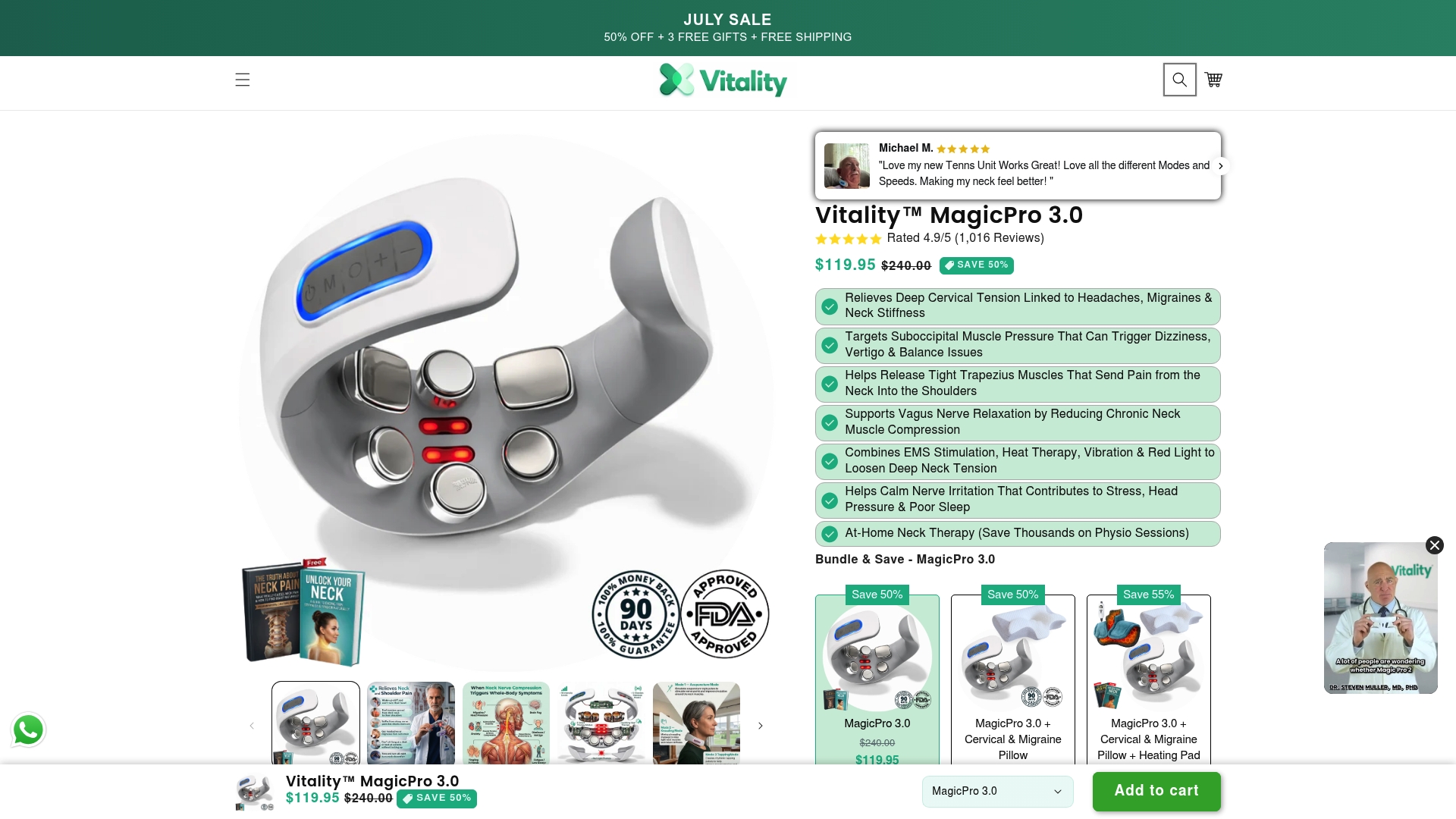
Vitalitytherapy’s Neck & Nerve Relief collection is built around the same principle this article covers: multiple mechanisms working together produce better results than any single approach. The MagicPro 2.0 and MagicPro 3.0 devices combine electrical muscle stimulation, heat, and massage in one wearable unit. That combination directly complements a stretching routine by relaxing cervical muscles before you stretch and consolidating relief afterward. Doctor-recommended and designed for use at home, at work, or in transit, these devices deliver 15-minute sessions that fit into any schedule. If you are building a consistent neck care routine, they are a practical next step.
FAQ
What is the role of stretching in stiffness relief?
Stretching relieves stiffness by increasing the nervous system’s tolerance for a wider range of motion, not by permanently lengthening muscles. The sensation of tightness decreases as the brain reduces its protective guarding response with repeated, consistent practice.
How long should I hold a neck stretch to see results?
Hold each stretch for 10–30 seconds for immediate relaxation, and work toward 60-second holds for long-term range of motion gains. Performing 2–4 sets daily over 4–8 weeks produces measurable, lasting improvement.
Can stretching make neck stiffness worse?
Stretching into sharp pain or maximum discomfort can cause microdamage that takes up to 48 hours to heal, which temporarily worsens stiffness. Stop at mild tension, around a 3–4 out of 10, to stay within a productive and safe range.
Is stretching better than massage for neck stiffness?
A combined stretch and massage protocol outperforms either method alone by reducing inflammation and improving range of motion through different mechanisms simultaneously. Stretching resets nervous system tolerance; massage reduces localized inflammation and moves fluid.
Does strength training help with neck stiffness?
Eccentric strength exercises improve range of motion comparably to stretching by enhancing neural control and mechanical tissue properties. Adding targeted cervical strengthening to a stretching routine addresses the postural imbalances that drive recurring neck stiffness.