


Targeted pain therapy is defined as a medical approach that identifies and treats pain at its exact anatomical source using precise, minimally invasive techniques. Rather than masking symptoms with oral medications, this method locates the specific structure generating pain, whether a facet joint, nerve root, or spinal disc, and delivers treatment directly there. For people living with neck pain or stiffness, this distinction matters enormously. Generalized treatments often fail because they never confirm what is actually causing the pain. Targeted therapy changes that by combining diagnostic precision with focused intervention, giving you a real path toward lasting relief.
What is targeted pain therapy and how does it work?
Targeted pain therapy is a branch of interventional pain medicine that uses minimally invasive, image-guided procedures to interrupt pain signals before they reach the brain. The approach focuses on specific anatomical structures, such as facet joints, nerve roots, or intervertebral discs, rather than treating the body as a whole. This precision separates it from conventional pain management, which often relies on systemic medications that affect the entire body.
The process begins with a thorough evaluation. A clinician reviews your symptom history, orders diagnostic imaging, and may perform a diagnostic block. A diagnostic block confirms the pain source by injecting a small amount of local anesthetic at the suspected site. If you experience immediate, temporary relief, that structure is confirmed as the pain generator. This step prevents ineffective generalized treatments by providing direct clinical evidence before any long-term procedure begins.
Once the source is confirmed, treatment is delivered with image guidance, typically fluoroscopy or ultrasound. These imaging tools allow the clinician to place medication, thermal energy, or electrical impulses at the exact target. Interventions modulate nerve signals and reduce local inflammation without exposing the rest of your body to high drug concentrations. That is the core advantage over oral pain medications, which circulate systemically and carry a broader side effect profile.
- Evaluation and imaging. Your clinician maps your pain pattern and orders cervical spine imaging.
- Diagnostic block. A local anesthetic injection confirms which structure is generating pain.
- Image-guided treatment. Fluoroscopy or ultrasound guides the therapeutic procedure to the confirmed site.
- Follow-up and rehab. Physical therapy and lifestyle adjustments reinforce the procedural results.
Pro Tip: Ask your clinician specifically which imaging guidance they use during procedures. Fluoroscopy and ultrasound each have advantages depending on the target structure, and knowing this helps you ask better questions about accuracy and safety.
What are the common targeted pain management techniques for neck pain?
Several well-established techniques fall under the targeted therapy umbrella, and each addresses a different aspect of cervical pain.
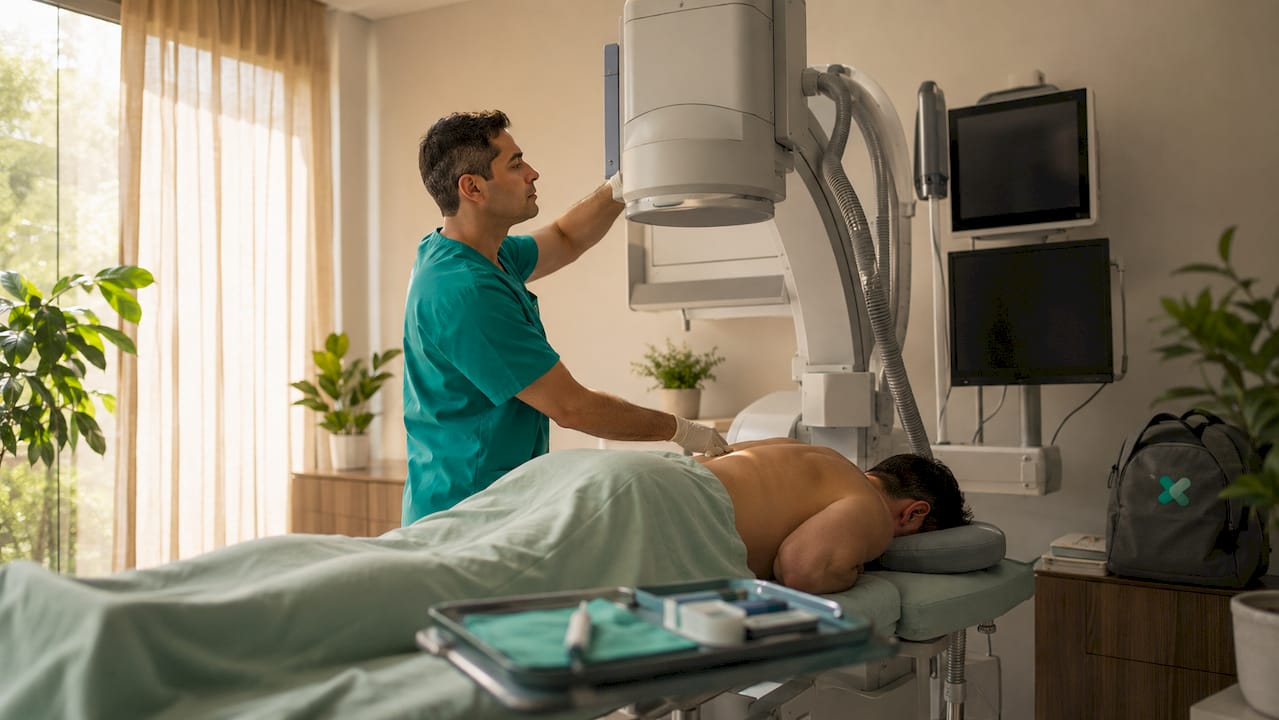
Radiofrequency ablation (RFA) uses heat generated by radio waves to disrupt the nerve fibers transmitting pain from a confirmed source, such as a cervical facet joint. The effect can last months to over a year, making it one of the more durable options for facet-mediated neck pain. Transcutaneous Pulsed Radiofrequency (TcPRF) is a non-invasive variation. A systematic review found TcPRF beneficial for chronic musculoskeletal and neuropathic pain, with no serious adverse events reported across studied populations.
Neuromodulation therapy takes a different approach. Rather than destroying nerve tissue, it re-tunes abnormal nerve signals causing chronic pain while preserving normal sensation and movement. Controlled electrical impulses are delivered to targeted nerves, reducing the intensity of pain signals reaching the brain. Dorsal Root Ganglion (DRG) stimulation is a specialized form of neuromodulation. Unlike standard spinal cord stimulation, DRG leads remain anchored at the ganglion, providing consistent pain coverage regardless of posture changes. That stability is especially useful for people whose neck pain shifts with movement. You can read more about how nerve stimulation supports relief through circulation and nerve health.
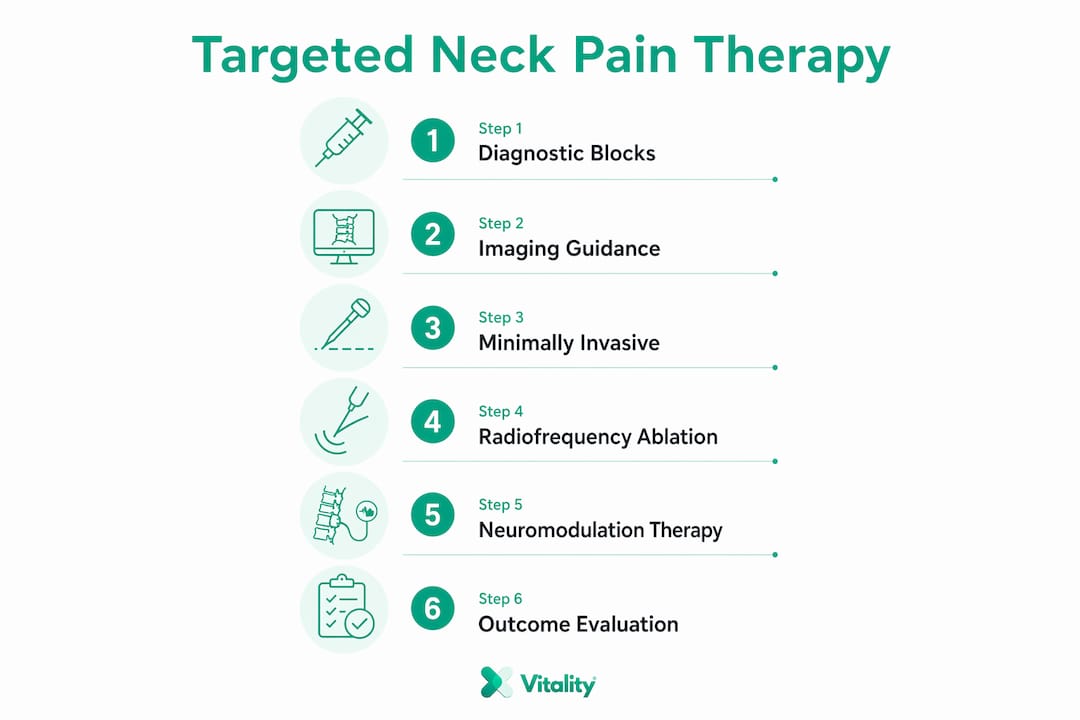
Implantable pain pump therapy delivers medication directly near the spinal cord through intrathecal administration. Because the drug reaches its target without traveling through the bloodstream, smaller doses produce effective relief while reducing systemic side effects. This method suits people with complex chronic pain who have not responded to other interventions.
Transcranial Ultrasound Stimulation (TUS) represents the leading edge of non-invasive targeted therapy. Participants in recent research reported greater pain reduction 28–55 minutes after treatment, with the therapy stimulating brain regions involved in pain processing. The delayed analgesic effect suggests TUS works by modifying central pain perception rather than blocking a peripheral nerve.
Pro Tip: Neuromodulation therapies often include a temporary trial phase before permanent implantation. Use that trial period to track your pain scores daily so you and your clinician have objective data to guide the final decision.
What are the benefits and expected outcomes of targeted pain therapy?
The primary benefit of targeted therapy is faster, more reliable pain relief because treatment reaches the confirmed source rather than approximating it. People with cervical facet pain treated with radiofrequency ablation, for example, often report meaningful improvement within two to four weeks of the procedure. That timeline is considerably shorter than the months many spend adjusting oral medication regimens without clear results.
Reduced reliance on systemic pain medications is a significant secondary benefit. When a procedure addresses the source directly, the need for daily oral analgesics or opioids decreases. Coordinated multimodal care plans that combine interventional procedures with physical therapy and behavioral changes produce the best long-term outcomes. Procedures alone rarely sustain relief indefinitely.
Functional improvements follow pain reduction. People report better sleep, greater participation in daily activities, and improved range of motion in the cervical spine. These gains compound over time when paired with active rehabilitation. Understanding spinal alignment and its role in neck pain helps you see why mobility restoration is as important as pain reduction itself.
“Long-term success in targeted pain therapy depends on integrating procedural treatment with active rehabilitation and lifestyle modifications. Procedures create a window of reduced pain; rehabilitation builds the strength and habits that keep pain from returning.”
Key benefits at a glance:
- Precise relief at the confirmed pain source, not systemic symptom suppression
- Lower medication doses and reduced systemic side effects
- Outpatient procedures with minimal recovery time
- Improved sleep, mobility, and daily function
- A foundation for active rehabilitation rather than passive dependence on drugs
How can you integrate targeted pain therapy into your neck pain care plan?
Building an effective care plan starts with a thorough initial evaluation. Your clinician needs a complete picture of your symptom history, including when the pain started, what movements worsen it, and what treatments you have already tried. Cervical spine imaging, whether X-ray, MRI, or CT, identifies structural changes that point toward likely pain generators such as degenerated discs or arthritic facet joints.
- Get a precise diagnosis. Request imaging and ask your clinician to identify specific anatomical pain generators, not just a general diagnosis of “neck pain.”
- Confirm with a diagnostic block. If a facet joint or nerve root is suspected, a diagnostic injection provides direct evidence before committing to a longer procedure.
- Customize the treatment approach. Your pain etiology determines the best technique. Facet pain responds well to RFA; neuropathic pain may benefit from neuromodulation; inflammatory pain may respond to targeted injections.
- Add physical therapy. Procedures reduce pain enough to make movement tolerable. Physical therapy then rebuilds cervical strength and corrects posture patterns that contributed to the problem.
- Set realistic timelines. Some procedures produce relief within days; others, like TUS, show delayed effects. Discuss expected timelines with your clinician so you can track progress accurately.
Behavioral adjustments reinforce everything else. Ergonomic changes at your workstation, sleep position modifications, and stress management all reduce the mechanical and neurological load on your cervical spine. Suboccipital tension and its effects on the vagus nerve illustrate how neck tension extends well beyond local discomfort, making lifestyle integration a clinical priority, not just a lifestyle suggestion.
Key Takeaways
Targeted pain therapy works because it confirms the exact anatomical pain source before treatment, delivering precise intervention that reduces pain, limits medication use, and supports active rehabilitation for lasting relief.
| Point | Details |
|---|---|
| Confirm before treating | Diagnostic blocks identify the exact pain generator before any long-term procedure begins. |
| Match technique to source | Facet pain, neuropathic pain, and inflammatory pain each respond to different targeted methods. |
| Combine procedures with rehab | Procedures create a pain-free window; physical therapy builds the strength to sustain it. |
| Non-invasive options exist | TcPRF and TUS offer effective targeted relief without needles or implants. |
| Lifestyle changes amplify results | Ergonomics, sleep position, and stress management reduce cervical load and extend procedural outcomes. |
What I’ve learned about targeted therapy that most articles miss
By Achraf
The biggest misconception I see is that targeted pain therapy is a one-time fix. People undergo a radiofrequency ablation procedure, feel dramatically better, and then return to the same posture, the same workstation setup, and the same movement habits that stressed their cervical spine in the first place. Six months later, the pain is back, and they conclude the procedure “didn’t work.” The procedure worked. The follow-through didn’t.
The second thing most articles understate is how much the diagnostic phase matters. A well-placed diagnostic block is not just a preliminary step. It is the most important step. Skipping it or accepting a vague diagnosis leads to procedures targeting the wrong structure, which produces no relief and erodes trust in the entire approach. Advocate for a confirmed diagnosis before agreeing to any long-term intervention.
I’ve also seen people dismiss non-invasive options too quickly. TcPRF and TUS are not consolation prizes for people who cannot tolerate needles. They are legitimate, evidence-backed techniques with real clinical data behind them. For people early in their pain journey, starting with a non-invasive targeted approach is often the most sensible first step.
The future of this field is moving toward greater personalization. Genetic factors, pain sensitivity profiles, and imaging biomarkers will increasingly guide which technique a clinician recommends. The people who benefit most will be those who engage actively with their care team, ask specific questions, and commit to the rehabilitative work that procedures make possible.
— Achraf
Vitalitytherapy devices as part of your neck pain relief plan
Targeted clinical procedures address the source of neck pain. At-home therapy supports the recovery between sessions.
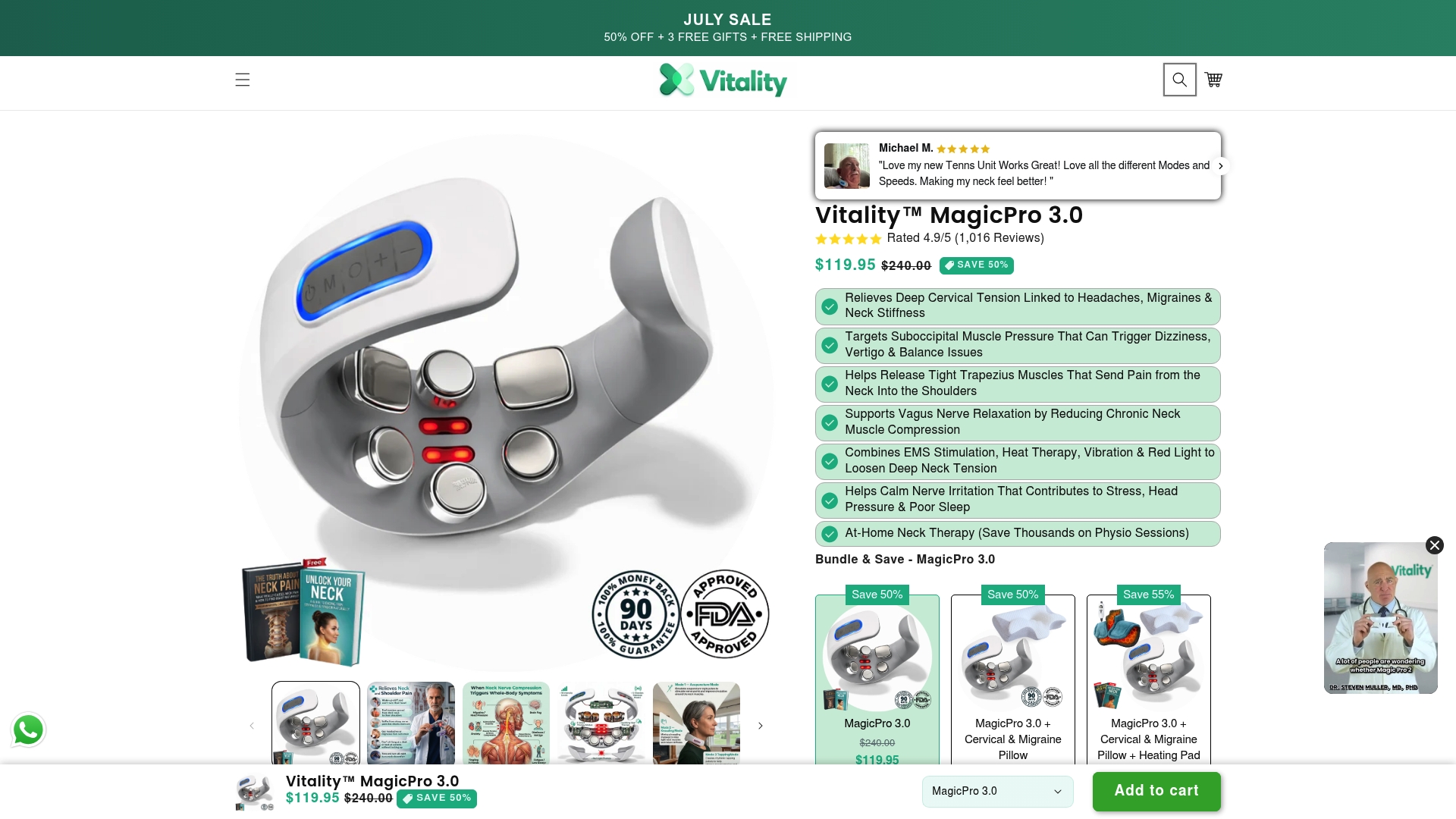
Vitalitytherapy’s MagicPro 2.0 wireless neck massager combines electrical muscle stimulation, heat, and massage in a single wearable device. It delivers 15 minutes of therapy you can use at home, at your desk, or while traveling. The electrical stimulation component works on the same principle as clinical neuromodulation: it sends controlled impulses to cervical muscles and nerves, reducing tension and supporting circulation. Vitalitytherapy devices are doctor-recommended and designed to complement, not replace, clinical care. Explore the full neck and nerve relief collection to find the right option for your recovery plan.
FAQ
What is targeted pain therapy in simple terms?
Targeted pain therapy identifies the exact anatomical structure causing pain, such as a facet joint or nerve root, and delivers treatment directly there using minimally invasive, image-guided techniques rather than systemic medications.
Is targeted pain therapy effective for chronic neck pain?
Yes. Techniques like radiofrequency ablation and neuromodulation have strong clinical evidence for chronic cervical pain, particularly when combined with physical therapy and lifestyle modifications for long-term results.
How does targeted pain therapy differ from taking pain medication?
Oral pain medications circulate through the entire body and mask symptoms without treating the source. Targeted therapy delivers treatment precisely at the confirmed pain generator, reducing inflammation or nerve signals locally with fewer systemic side effects.
What is the role of diagnostic blocks in targeted pain therapy?
Diagnostic blocks confirm which specific structure is generating pain by injecting a local anesthetic at the suspected site. Immediate temporary relief confirms the target, preventing ineffective procedures aimed at the wrong location.
Can targeted pain therapy be done without surgery or implants?
Yes. Non-invasive options like Transcutaneous Pulsed Radiofrequency and Transcranial Ultrasound Stimulation deliver targeted relief without needles or implants, making them suitable for people earlier in their pain management journey.