


Poor travel posture is the leading cause of neck and back discomfort during long journeys. The role of travel posture in discomfort is direct: when your spine loses its natural curve, muscles overwork to compensate, discs compress, and nerves get irritated. This happens on planes, in cars, and on trains alike. The good news is that most travel pain is preventable. With the right ergonomic positioning, regular movement, and a few simple accessories, you can arrive at your destination feeling far better than you left.
What is the optimal travel posture to minimize neck and back discomfort?
Ergonomic positioning during travel is defined by one goal: maintaining a neutral spine. 2026 ergonomic standards specify sitting fully upright with hips pushed back in the seat, feet flat on the floor, and knees bent at roughly 90 degrees. That position keeps your lumbar curve intact and distributes body weight evenly across your sitting bones.
Lumbar support is not optional. A small lumbar pillow or a rolled-up jacket placed behind your lower back reduces stress on the discs and supporting ligaments. Without it, the lower back rounds outward, pulling the entire spine into a C-shape that strains every region from the tailbone to the base of the skull.

Your neck position matters just as much as your lower back. The head weighs roughly 10–12 pounds in neutral alignment. Every inch it drifts forward adds significant load to the cervical muscles. Keep your ears stacked over your shoulders, and use the headrest when available. If the headrest pushes your head forward, place a small pillow between your neck and the seat back instead.
Here are the core positioning rules to follow on any journey:
- Hips back in the seat, not perched on the edge
- Feet flat on the floor or on a bag for support
- Knees at 90 degrees, not tucked under the seat
- Lumbar support in place before the vehicle moves
- Ears over shoulders, not jutting forward
- Armrests used to take weight off the shoulders and upper traps
Pro Tip: Avoid crossing your legs. Leg crossing creates rotational torque in the pelvis and lumbar spine, which raises the risk of sciatic pain. Keep both feet grounded.
Static perfect posture still causes pain over time. Even the best seated position creates disc pressure and ligament strain when held for hours without a break. Movement is the other half of the equation.
How often should travelers move to prevent spinal fatigue?
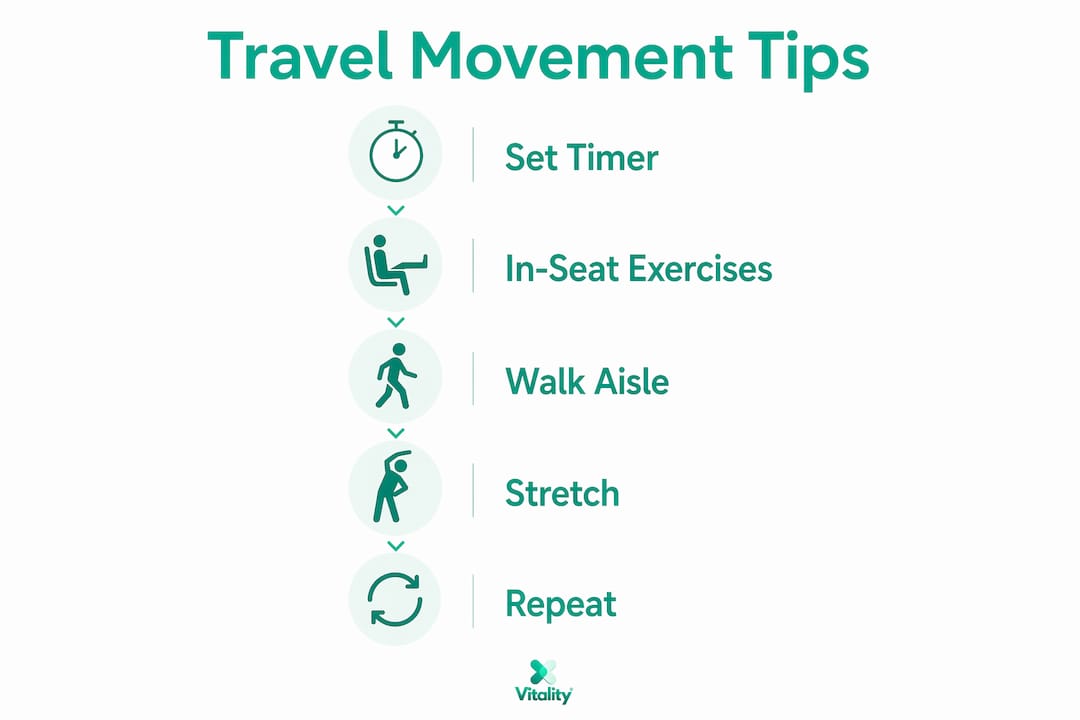
Movement resets spinal alignment and prevents the muscle fatigue that builds with static sitting. Orthopedic and physical therapy experts recommend moving or stretching every 30–60 minutes on flights. That interval is short enough to prevent ligament strain and disc pressure from accumulating.
On road trips, the standard is slightly different. Experts advise stopping every 60–120 minutes for at least 5 minutes of walking. Car seats also transmit low-frequency mechanical vibration from the road directly into the spine. That cumulative stress worsens discomfort faster when you stay still.
You do not need to stand up to benefit from movement. These in-seat micro-exercises work well in confined spaces:
- Ankle pumps. Flex and point your feet 10 times. This keeps circulation moving in the lower legs and reduces swelling.
- Shoulder rolls. Roll both shoulders backward 5 times slowly. This releases tension in the upper trapezius and rhomboids.
- Gentle spinal rotations. Sit upright, place your right hand on your left knee, and rotate slowly to the left. Hold 3 seconds. Repeat on the other side.
- Chin tucks. Draw your chin straight back without tilting your head. Hold 5 seconds. This resets forward head posture and activates deep cervical flexors.
- Seated cat-cow. Arch your lower back gently, then round it. Repeat 5 times to mobilize the lumbar spine.
Pro Tip: Set a phone timer every 45 minutes during a flight. When it goes off, do two minutes of in-seat exercises before resetting it. Consistency matters more than intensity.
Walking the aisle for even two minutes decompresses the lumbar discs and reactivates the core muscles that support your spine. If you can choose an aisle seat, do it. The access makes movement far more likely.
What preparatory and post-travel strategies reduce discomfort?
Addressing mobility and core strength before travel is more effective than reacting to pain during a journey. Pre-trip preparation that includes hip flexor stretches, thoracic mobility work, and core activation exercises reduces the load your spine carries during long periods of sitting. A 10-minute morning routine for three days before a trip makes a measurable difference.
Hydration directly affects spinal health. Intervertebral discs are 80% water. When you are dehydrated, those discs lose height and shock-absorbing capacity. Flights and long car trips both cause mild dehydration, which compounds stiffness and pain. Drink water consistently throughout your journey, not just when you feel thirsty.
Here is a practical checklist for before, during, and after travel:
- Before: Stretch hip flexors and hamstrings. Do 2 sets of bird-dog or dead bug exercises to activate core stabilizers.
- Before: Pack a lumbar pillow, a lateral-support neck pillow, and a small footrest if flying economy.
- During: Drink water every hour. Avoid alcohol and excess caffeine, both of which accelerate dehydration.
- During: Use your accessories from the moment you sit down, not after pain starts.
- After: Avoid collapsing onto a soft sofa immediately after arrival. A 15–20 minute walk post-travel decompresses the spine and reactivates the muscles that support it.
- After: Lift luggage in stages. Place bags on a seat first, then lift to the overhead bin with bent knees, not a bent waist. Sudden strenuous lifting after hours of sitting is a common trigger for acute flare-ups.
The Vitalitytherapy Back Recovery Blueprint offers structured mobility and core strengthening guidance that pairs well with these pre-trip strategies.
What common travel posture mistakes increase discomfort?
Most travel discomfort comes from a handful of predictable errors. Recognizing them is the first step to correcting them.
Slouching and forward head posture are the most common. When you slouch, the lumbar curve reverses and the head drifts forward. For every inch of forward head position, the effective load on the cervical spine increases substantially. Travelers who read on phones or tablets held low in their laps are especially prone to this pattern. Raise your screen to eye level whenever possible.
U-shaped neck pillows are widely used but often counterproductive. U-shaped pillows push the head forward and increase cervical strain rather than reducing it. A pillow that supports the side of the neck preserves neutral alignment and allows the head to rest laterally without flexing forward. This is a small change with a significant effect on cervical muscle fatigue.
Fatigue and dehydration erode posture maintenance over time. Even travelers who start a journey with good positioning tend to slump as hours pass. Fatigue reduces the brain’s ability to monitor and correct body position. Staying hydrated, moving regularly, and taking short mental breaks all help sustain awareness of how you are sitting.
“Many travelers do not realize the harm of slump sitting and crossing legs. Simple props like rolled jackets can make a significant difference by supporting natural spinal curves. The barrier to better travel posture is almost never cost. It is awareness.”
You can learn more about the posture patterns that cause pain in seated environments and how to correct them before your next trip.
How does travel posture affect the neck, shoulders, and lower back?
Each spinal region responds differently to poor positioning, but they are all connected. A problem in one area reliably creates strain in the others.
| Spinal region | Primary mechanism of injury | Common symptom |
|---|---|---|
| Cervical spine (neck) | Forward head posture increases load on cervical muscles and facet joints | Neck stiffness, headache, upper trap tension |
| Thoracic spine (upper back) | Rounded shoulders compress the thoracic vertebrae and fatigue the rhomboids | Mid-back ache, shoulder blade pain |
| Lumbar spine (lower back) | Pelvic misalignment from slouching or leg crossing increases disc pressure | Lower back pain, sciatic nerve irritation |
The neck takes the most immediate impact from poor travel posture. Forward flexion of the cervical spine stretches the posterior neck muscles and compresses the anterior discs. Travelers who sleep with their heads dropped forward or to the side without support wake up with acute cervical muscle spasm.
Rounded shoulders follow naturally from a slouched lower back. When the lumbar curve collapses, the thoracic spine rounds, the shoulder blades wing outward, and the pectorals shorten. This posture fatigues the mid-back muscles and can compress the brachial plexus, causing tingling down the arms.
The lower back and pelvis form the foundation of the entire seated posture. Pelvic misalignment from crossing legs or perching on the seat edge tilts the sacrum and increases pressure on the L4-L5 and L5-S1 discs. These are the most commonly injured levels in the lumbar spine. Keeping the pelvis neutral protects every region above it.
Key Takeaways
Maintaining a neutral spine with consistent movement is the single most effective strategy for preventing discomfort during travel.
| Point | Details |
|---|---|
| Neutral spine positioning | Sit upright with hips back, feet flat, and lumbar support in place from the start of your journey. |
| Move every 30–60 minutes | Perform in-seat exercises or walk the aisle to prevent disc compression and muscle fatigue. |
| Prepare before you travel | Stretch hip flexors and activate core muscles in the days before a long trip to reduce in-journey pain. |
| Choose the right neck pillow | Use a lateral-support pillow, not a U-shaped one, to keep the cervical spine in neutral alignment. |
| Hydrate consistently | Drink water throughout your journey since dehydrated discs lose shock-absorbing capacity and stiffen faster. |
What I have learned from years of watching travelers ignore their spines
Every frequent traveler I have spoken with has a version of the same story: they felt fine for the first two hours, then something tightened up, and by arrival they were stiff and sore. The frustrating part is that the fix is almost always simple. The problem is that people treat travel posture as a comfort issue rather than a health issue.
The conventional advice to “just sit up straight” misses the point entirely. Static good posture still causes pain. The research is clear that movement is not a supplement to good posture. It is an equal requirement. A traveler who sits perfectly still in a textbook-correct position for six hours will still arrive in pain.
What actually works is treating your spine the way you would treat any other system that needs regular input. Set a timer. Do the ankle pumps. Get up and walk. Use a lumbar pillow from minute one, not after the ache starts. These are not heroic interventions. They are small habits that compound over a long journey.
The other thing I would push back on is the idea that you need expensive gear. A rolled-up jacket behind your lower back works. A small water bottle between your knees to prevent leg crossing works. The barrier is almost never equipment. It is the decision to pay attention to how you are sitting before pain forces you to.
If you already deal with chronic neck tension, travel amplifies it fast. That is where having a reliable recovery tool matters. The Vitalitytherapy MagicPro 2.0 is compact enough to use in transit and effective enough to make a real difference after a long flight.
— Achraf
Vitalitytherapy for travel-related neck and back relief
Neck tension that builds during a long flight or road trip does not have to follow you into your destination.
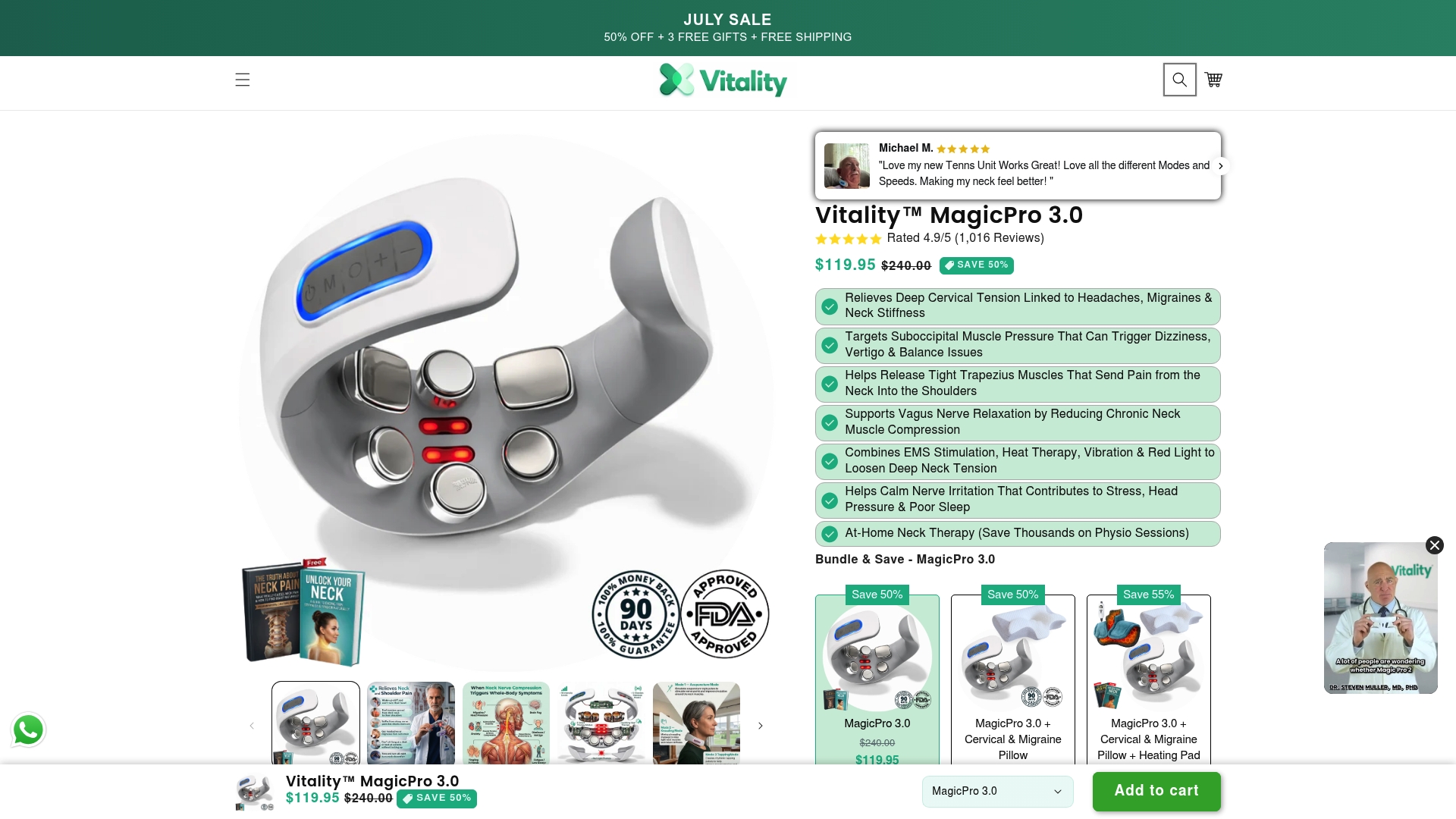
The Vitalitytherapy MagicPro 2.0 combines electrical muscle stimulation, heat, and massage in one compact device. It delivers clinically backed relief in 15 minutes, making it practical for use in a hotel room, airport lounge, or at your seat. For lower back tension, the Vitality™ Cordless Lumbar Massager targets the lumbar muscles that take the most stress during long periods of sitting. Both devices are doctor-recommended and designed for people who need real relief without a clinic visit. Browse the full neck and nerve relief collection to find the right fit for your travel routine.
FAQ
What is the role of travel posture in discomfort?
Travel posture directly controls how much stress your spine, muscles, and nerves absorb during a journey. Poor positioning compresses discs, overloads cervical muscles, and irritates nerves, producing pain that worsens the longer you sit.
How often should you move during a long flight?
Orthopedic experts recommend moving or stretching every 30–60 minutes on flights. In-seat exercises like ankle pumps, shoulder rolls, and chin tucks are effective when standing is not possible.
Why does crossing your legs cause back pain during travel?
Crossing your legs creates rotational torque in the pelvis and lumbar spine. That rotation misaligns the sacrum and increases pressure on the lower lumbar discs, raising the risk of sciatic nerve irritation.
Are U-shaped neck pillows good for travel?
U-shaped neck pillows often push the head forward and increase cervical strain. A lateral-support pillow that cradles the side of the neck preserves neutral alignment and reduces cervical muscle fatigue more effectively.
What should you do immediately after a long trip to protect your spine?
Avoid sitting or lying on a soft surface right after arrival. A 15–20 minute walk helps decompress the lumbar spine and reactivate the core muscles that support it, reducing post-travel stiffness significantly.