


Yes, portable at-home pain management tools save meaningful time for adults with neck pain. A PROMs cohort study of patients using electrical stimulation devices reported an average pain reduction of 3.13 points on a 0–10 scale, with 86.6% achieving at least 20% relief and over 96% reporting improved daily function. Separately, telemedicine research found that replacing in-person pain visits with remote care saved patients a median of 69 minutes of travel time and about $52 per visit. Devices like the Vitality™ MagicPro 2.0 and MagicPro 3.0 bring that same logic home—a 15-minute session replaces a 60 to 90-minute clinic trip.
The three main ways these tools save time:
- No travel. Sessions happen at home, at your desk, or while traveling.
- On-demand therapy. You start a session when pain appears, not when a clinic has an opening.
- Fewer follow-up appointments. Consistent home use tends to reduce how often you need in-person care.
Pro Tip: Set your device on your nightstand the night before. When you see it first thing in the morning, you are far more likely to complete a session before the day gets busy.
Key Takeaways
At-home pain management tools save time by eliminating travel, compressing therapy into 15-minute sessions, and reducing how often you need in-person care.
| Point | Details |
|---|---|
| Travel time eliminated | Replacing one clinic visit saves a median 69 minutes of travel, per telemedicine research. |
| Strong functional outcomes | Over 96% of HWDS device users reported improved daily function in a large PROMs cohort. |
| Medication reduction | About 65% of device users in the HWDS cohort reduced or stopped medication use. |
| Session length | Most EMS and heat devices require only 10–20 minutes per session, several times per week. |
| My Vitality option | The MagicPro 2.0 and 3.0 combine EMS, heat, and massage in one portable device for daily home use. |
Table of Contents
- Why pain management tools save time: the core mechanisms
- What the evidence says about outcomes and time savings
- What a typical at-home session looks like
- How to choose a device when saving time is your priority
- The Vitality™ MagicPro devices fit a busy schedule
- Safety basics and when to see a provider in person
- A sample 2-week, 15-minute/day plan
- Why a time-first approach is the right frame for neck pain
- Ready to try a time-efficient device?
- Sources
Why pain management tools save time: the core mechanisms
Four concrete mechanisms explain how portable devices compress treatment time.
- Travel elimination. A typical clinic visit for neck pain, including driving, waiting, and treatment, runs 60–90 minutes. A home session runs 15–20 minutes, start to finish.
- Shorter sessions. EMS neck devices typically require 10–20 minutes several times per week to deliver muscle relaxation and circulation support. That is a fraction of a clinic appointment.
- Reduced follow-up frequency. When pain is managed consistently at home, many users find they need fewer check-ins. Well-designed home programs have produced outcomes comparable to supervised clinic care for musculoskeletal conditions.
- Less medication management time. Fewer pills means fewer pharmacy trips, fewer side-effect management calls, and less mental overhead.
The time ROI compounds quickly. One avoided clinic visit per month recovers roughly an hour of your day, plus fuel costs and the mental load of scheduling.
Pro Tip: Pair your 15-minute session with something you already do: morning coffee, a child’s nap, or your lunch break. Stacking therapy onto an existing habit removes the friction of finding extra time.
What the evidence says about outcomes and time savings
The clinical picture is encouraging, though worth reading carefully.
A large HWDS patient-reported outcomes cohort found that chronic neck pain patients using electrical stimulation devices reported:
- Mean pain reduction of several points on a 0–10 scale
- 86.6% achieving at least 20% pain relief
- The vast majority reporting improved activities of daily living
- A substantial proportion reducing or stopping medication use
- Many reporting improved sleep
These are self-reported outcomes from a cohort study, not a randomized controlled trial, so they reflect real-world use rather than controlled conditions. Still, the functional gains are large enough to matter for daily time management: less pain means fewer disruptions, less time spent managing symptoms, and better concentration at work.
On the access side, telemedicine cost-effectiveness research from a randomized crossover trial found that remote pain follow-ups carried significantly lower direct patient costs and higher satisfaction than in-person visits. A separate randomized trial using wearable home devices showed modest pain benefits and increased physical activity over six months, though direct pain reduction was limited compared with usual clinic care. That nuance matters: home devices work best as a consistent, daily tool, not a one-time fix.
What a typical at-home session looks like
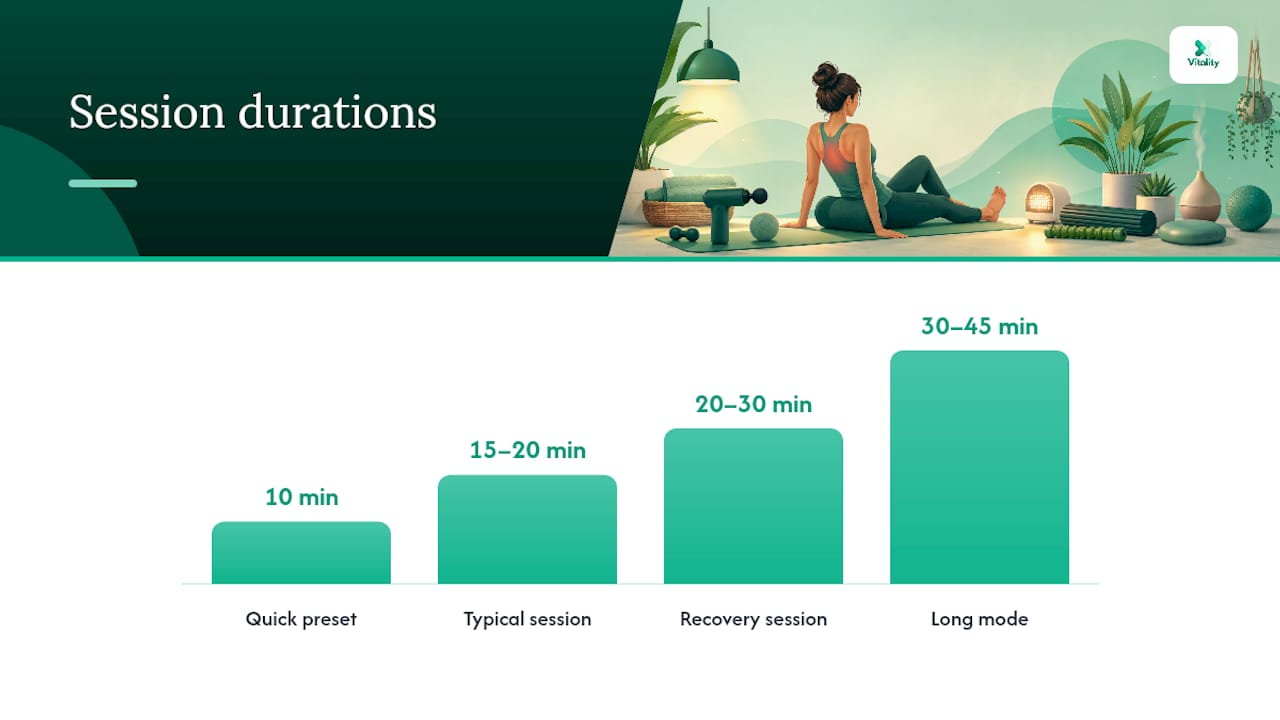
Most users spend 15–20 minutes per session, three to five times per week. Some devices offer shorter 10-minute presets for quick relief and longer 30-to-45-minute modes for deeper recovery work.
Common session formats:
- Short daily sessions (10–15 min): EMS or heat mode for morning stiffness before work
- Recovery sessions (20–30 min): Combined EMS + heat after a long day at a screen
- Travel sessions (15 min): Portable device used on a flight or in a hotel room
A realistic progression for many users looks like this:
- First session: Immediate muscle relaxation and warmth; some notice reduced tightness within minutes.
- Days 3–7: Stiffness begins to ease between sessions; sleep may improve slightly.
- Weeks 2–4: Noticeable reduction in daily pain interruptions for many users.
- Weeks 4–6: Functional improvement, including better range of motion and fewer headaches, reported by a significant portion of consistent users.
Individual results vary based on the cause and severity of neck pain. These timelines reflect patient-reported patterns, not guaranteed outcomes.
Pro Tip: Track your pain on a simple 0–10 scale each morning for two weeks. Seeing even a one-point drop keeps motivation high and helps you identify which session timing works best for your body.
How to choose a device when saving time is your priority
The right features matter more than the number of modes. A device with 20 settings you never use adds setup time, not value.
Prioritize these features, in order of impact on time saved:
- Quick fit and preset modes. One-button start beats a five-step menu every time.
- Combined modalities. EMS, heat, and massage in one device means one setup, not three.
- Portability. Wireless, lightweight devices work at home, at a desk, or in transit.
- Battery life. At least enough charge for two to three sessions between charges.
- Published clinical data or PROMs. Evidence that the device category works reduces trial-and-error time.
- Warranty and support. A clear return policy removes the risk of a wasted purchase.
What to deprioritize: extensive mode libraries, complex app onboarding, and accessories that require separate charging. Feature bloat is the enemy of a 15-minute routine.
The Vitality™ MagicPro devices fit a busy schedule
The Vitality™ MagicPro 2.0 and MagicPro 3.0 meet the time-priority checklist above. Both combine EMS, heat, massage, and vibration in a single wearable device. The MagicPro 3.0 adds red light therapy and vagus nerve stimulation for broader support, including migraine and sleep relief.
Real-life use cases where these devices cut time:
- A commuter places the MagicPro 2.0 around their neck for 15 minutes while getting ready for work, skipping a monthly physical therapy appointment.
- A parent runs a session during a child’s nap, combining heat and EMS without leaving the house.
- A frequent traveler packs the MagicPro 3.0 in a carry-on and uses it on a flight to arrive without the neck stiffness that used to require a recovery day.
Customers report significant improvement in neck discomfort and overall well-being. My Vitality’s devices are doctor-recommended and designed for daily home use without a learning curve.
Pro Tip: Start with the lowest intensity setting and increase gradually over the first week. Your muscles adapt faster when you build up slowly, and you avoid the soreness that can come from jumping to a high setting on day one.
Safety basics and when to see a provider in person
Most consumer EMS, heat, and massage devices are low risk for adults with typical neck tension. A few contraindications require a clinician’s clearance first:
- Active implanted devices (pacemakers, spinal cord stimulators, cochlear implants)
- Recent cervical surgery or open wounds in the treatment area
- Unexplained neurological symptoms (numbness, weakness, coordination problems)
- Pregnancy
- Active cancer in or near the treatment area
Seek immediate in-person care if you experience any of these red flags:
- Sudden, severe headache unlike any you have had before
- Fever combined with neck stiffness and light sensitivity
- New numbness, weakness, or loss of coordination in your arms or hands
- Pain following a significant impact or fall
These symptoms can indicate conditions that require urgent evaluation, not home therapy. Always follow the device’s FDA labeling and consult your healthcare provider before starting any new treatment, especially if you have an existing medical condition.
A sample 2-week, 15-minute/day plan
A consistent 15-minute daily plan can deliver measurable relief and reduce downstream time costs within two weeks for many users.
Weekdays (Monday through Friday):
- Morning (5 min): 2–3 neck rolls and shoulder shrugs to warm up tissue.
- Session (15 min): EMS + heat preset at low-to-medium intensity.
- Evening check-in (2 min): Rate pain on a 0–10 scale and note sleep quality.
Weekends:
- Saturday: 20-minute session with heat + massage mode; add 5 minutes of slow breathing.
- Sunday: Rest day or a 10-minute light session if stiffness is present.
Track these four items daily in a simple note or spreadsheet:
- Morning pain score (0–10)
- Medication taken (yes/no and type)
- Sleep quality (1–5)
- Minutes spent on pain management (device + any other care)
After two weeks, compare your week-one and week-two averages. Most consistent users see a measurable drop in both pain score and total time spent managing symptoms.
Pro Tip: Link your session to your morning shower routine. Device on while the coffee brews, off before you leave the bathroom. That pairing takes the decision out of your hands entirely.
Why a time-first approach is the right frame for neck pain
Most articles about neck pain lead with anatomy or treatment options. The more useful question is: what will actually fit into your life consistently enough to work?
The evidence is clear that consistency drives outcomes. The HWDS cohort data shows longer device use correlates with better results. That means the best device is not the one with the most features. It is the one you will actually use every day because it fits in 15 minutes and requires no commute.
Busy adults tend to abandon clinic-based care not because it fails, but because scheduling around work, family, and travel is genuinely hard. A well-designed home device removes that barrier. The time savings are real, the evidence is solid for functional improvement, and the risk profile for most users is low. The honest caveat: home devices work best as a consistent daily habit, not a substitute for clinical evaluation when red-flag symptoms appear.
Ready to try a time-efficient device?
Busy adults with neck tension, stiffness, or migraines who want short, effective sessions without clinic scheduling will find the MagicPro line a practical fit.
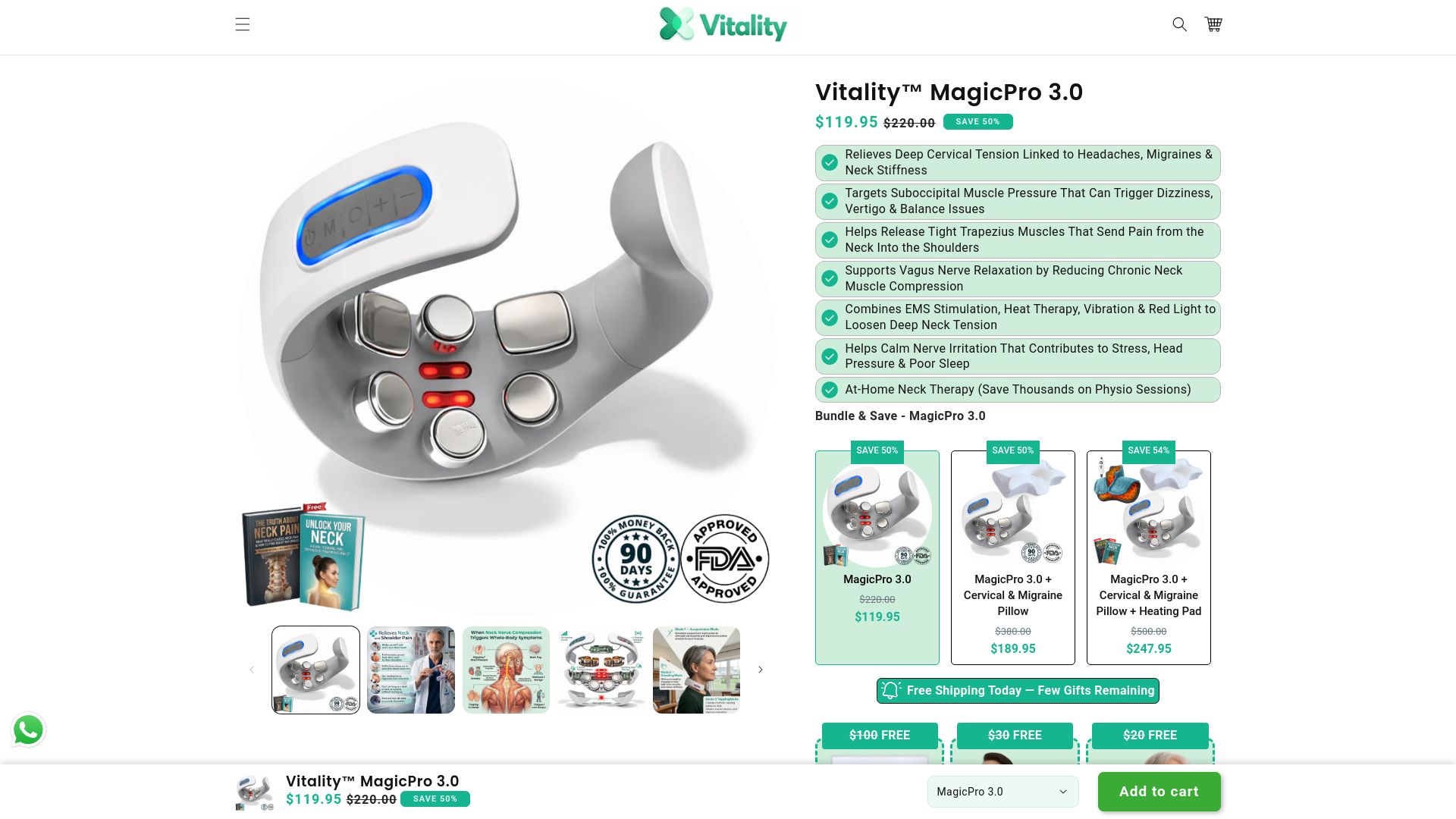
The Vitality™ MagicPro 2.0 delivers EMS, heat, and massage in one wearable device. The MagicPro 3.0 adds red light therapy and vagus nerve support for broader relief, including migraine and sleep benefits. Both are available now through My Vitality’s online store with a satisfaction guarantee and customer support access.
To get your first session running in under five minutes: unbox the device, fit it around your neck, select the EMS + heat preset, and set a 15-minute timer. That is the entire setup. My Vitality also offers guided programs and informational resources to help you build a consistent routine from day one. Visit the MagicPro collection to compare both models and find the right fit for your schedule.
Sources
The findings in this article draw on patient-reported outcomes cohorts, randomized trials, and cost-analysis studies. Evidence strength varies: PROMs cohort data reflects real-world use but lacks randomized controls; telemedicine RCTs offer stronger causal evidence for cost and time savings.
- H‑Wave device stimulation (HWDS) patient‑reported outcomes for chronic neck pain — PROMs cohort (PMC11255171)
- Periop
- Home‑based telemedicine with wearables for chronic musculoskeletal pain — randomized clinical trial (Nature Scientific Reports 2025)
- Telemedicine cost‑effectiveness and patient cost savings in chronic pain follow‑up (Canadian RCT, Springer 2009)
- AI‑guided home exercise vs supervised clinic exercise for low back pain — comparative study (ScienceDirect, 2023)
This article provides general health information only and is not a substitute for professional medical advice. Consult your healthcare provider before starting any new therapy, particularly if you have an existing medical condition or take prescription medication.