


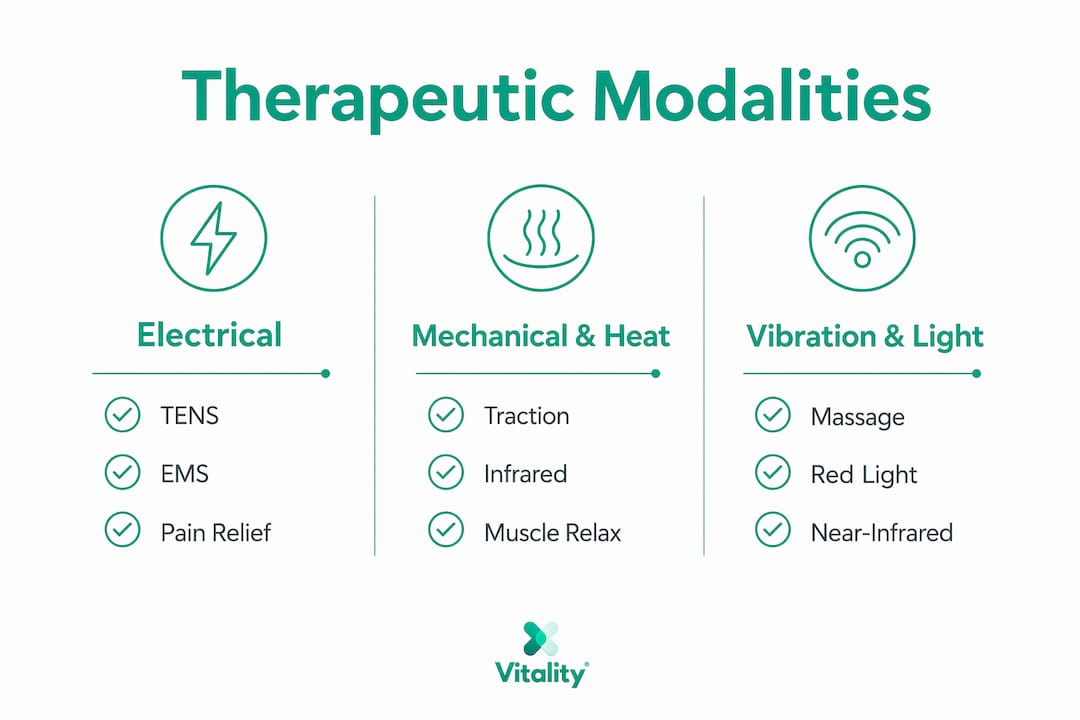
Wireless neck therapy devices deliver pain relief by combining five clinically recognized mechanisms: electrical stimulation (TENS/EMS), mechanical traction, heat, vibration/massage, and red or near-infrared light. Each mechanism targets a different part of the pain cycle, from interrupting nerve signals to increasing local circulation and reducing muscle spasm. Used consistently, these cordless wearable devices can reduce discomfort and improve neck function, especially when paired with active rehabilitation.
The core mechanisms at a glance:
- Electrical stimulation (TENS/EMS): Sends low-level electrical impulses through the skin to interrupt pain signals and prompt the body to release endorphins, the nervous system’s natural pain-dampening chemicals.
- Mechanical traction: Applies a gentle pulling force to create space between cervical vertebrae, reducing pressure on discs and compressed nerves.
- Infrared heat: Raises tissue temperature to dilate blood vessels, increase oxygen delivery, and relax tight muscles.
- Vibration/massage: Uses rhythmic mechanical pressure to stimulate mechanoreceptors, reduce muscle guarding, and promote circulation.
- Red/near-infrared light: Penetrates soft tissue to stimulate mitochondrial activity, which supports cellular repair and reduces local inflammation.
Authoritative sources including the Cleveland Clinic and Mayo Clinic recognize these modalities as legitimate adjuncts for neck pain management. My Vitality’s MagicPro line integrates several of them into a single cordless device designed for daily home use.
Table of Contents
- How each therapeutic mechanism works in your neck
- What wireless neck therapy devices actually look like
- What the research says about effectiveness
- How to use these devices safely: session length, placement, and contraindications
- When to stop using the device and see a clinician
- How wireless devices fit into a full neck care plan
- What to look for when choosing a wireless neck therapy device
- Key Takeaways
- A practical perspective on wireless neck therapy
- The My Vitality MagicPro: a clinician-aligned at-home option
- Useful sources and further reading
How each therapeutic mechanism works in your neck
Understanding the physiology behind each modality helps you set realistic expectations and use your device correctly.
Electrical stimulation: TENS and EMS

TENS (transcutaneous electrical nerve stimulation) delivers low-voltage electrical pulses through skin-contact electrodes. Those pulses travel along large-diameter sensory nerve fibers, which effectively “crowd out” slower pain signals before they reach the brain. This is the gate-control theory of pain in action. Simultaneously, the stimulation prompts the release of endorphins, providing a secondary layer of relief that can outlast the session itself. According to the Cleveland Clinic, TENS offers temporary relief; session duration typically ranges from 10 to 60 minutes, with consumer use commonly around 10–15 minutes.
EMS (electrical muscle stimulation) uses a slightly different waveform to cause involuntary muscle contractions, which helps fatigue chronically tense muscles and restore normal resting tone. The immediate effect most people notice is a tingling warmth followed by a reduction in the tight, knotted sensation across the upper trapezius and cervical paraspinals.
Limitation: Neither TENS nor EMS addresses structural causes of pain. They manage symptoms; they do not correct posture or rebuild strength.
Mechanical traction
Cervical traction works by applying a sustained or intermittent pulling force along the spine’s long axis. That force creates small gaps between vertebrae, reducing disc pressure and relieving compression on nerve roots. People with cervicogenic headaches or radiating arm discomfort often notice the most immediate benefit. Traction treatments typically last a few minutes to half an hour, and some people notice improvement after several sessions.
Limitation: Traction is not appropriate for everyone. Spinal instability, osteoporosis, or active infection are contraindications. Always confirm suitability with a clinician before using an inflatable traction collar.
Infrared heat
Heat raises the temperature of superficial and deeper soft tissues, causing local blood vessels to dilate. More blood flow means more oxygen and nutrients delivered to irritated muscles, and faster removal of metabolic waste products that contribute to soreness. Consumer-grade devices typically target moderate warmth that relaxes muscles safely, a temperature warm enough to relax muscle fibers without risking a burn.
Limitation: Heat is most effective for muscle tension and spasm. It offers less benefit for nerve-root pain or acute inflammatory flares, where ice is often preferred.
Vibration and massage
Mechanical vibration stimulates mechanoreceptors in skin and muscle, triggering a neurological response that reduces muscle guarding and promotes circulation. Rhythmic pressure also assists lymphatic drainage, which can reduce localized swelling around irritated soft tissue. The sensation is immediate: most people feel a reduction in surface tension within the first few minutes.
Limitation: Vibration alone does not penetrate deeply enough to affect disc or nerve tissue directly. Its primary benefit is superficial muscle relaxation.
Red and near-infrared light
Red light (roughly 630–700 nm) and near-infrared light (700–1100 nm) penetrate the skin and are absorbed by mitochondria in cells. This absorption stimulates ATP production, the energy currency cells use for repair. The result is reduced local inflammation and accelerated tissue recovery. Near-infrared wavelengths penetrate more deeply than red light, reaching muscle and connective tissue rather than just the skin surface.
Limitation: Evidence for red/near-infrared light in neck pain is promising but still emerging. Most trials are small, and optimal dosing parameters are not yet standardized.
Modality comparison at a glance
| Modality | Typical session length | Primary target tissue | Key caveat |
|---|---|---|---|
| TENS/EMS | 10–60 min (consumer use 10–15 min) | Nerves, superficial muscle | Temporary relief; not structural |
| Mechanical traction | 10–30 min | Cervical discs, nerve roots | Contraindicated in spinal instability |
| Infrared heat | 15–20 min | Superficial/deep muscle | Avoid on acute inflammation |
| Vibration/massage | 10–20 min | Superficial muscle, fascia | Limited deep-tissue penetration |
| Red/near-infrared light | 10–20 min | Cells, connective tissue | Evidence still emerging |
What wireless neck therapy devices actually look like
Wireless neck therapy spans several distinct product categories. Knowing the difference helps you match a mechanism to a form factor that fits your daily routine.
- Wearable U-shaped collars: The most common consumer category. These wrap around the neck and use built-in electrodes or heating elements to deliver TENS, heat, or vibration without any wires. Battery-powered and portable, they are designed for use at a desk, on a couch, or during a commute.
- Wireless TENS units with adhesive pads: Compact rechargeable units that clip to clothing while adhesive electrode pads sit on the skin. They offer precise electrode placement but require pad replacement over time.
- Rechargeable inflatable traction collars: Air-pump collars that gently elongate the cervical spine. Most run on a small rechargeable battery and include a pressure-release valve for safety.
- Hybrid collars combining heat and TENS: Multi-modality devices that deliver electrical stimulation and infrared heat simultaneously. These are the most clinically versatile consumer option because they address both nerve-signal interruption and muscle relaxation in a single session.
- Lightweight vibration/massage devices: Smaller, often handheld or wearable devices focused on surface-level muscle relaxation. Battery life tends to be longer because vibration motors draw less power than heating elements.
Battery and cordless design trade-offs
Cordless operation is the defining advantage of these devices: no tethering to a wall outlet means you can use them anywhere. The trade-off is power output. High-intensity heat and continuous traction draw more current, which shortens battery life and may limit maximum therapeutic intensity compared to plug-in clinical units. Most consumer devices balance this with automatic shutoffs, typically at 15 minutes, which conserves battery and prevents overuse. For a deeper look at how battery-powered devices compare on power and portability, My Vitality’s resource covers the practical trade-offs in detail.
| Device type | Typical session length | Expected battery runtime | Safe heat target |
|---|---|---|---|
| Hybrid collar (heat + TENS) | 15 min (auto-off) | 3–5 sessions per charge | ~104°F (~40°C) |
| Inflatable traction collar | 10–30 min | 4–6 sessions per charge | N/A |
| Wireless TENS unit | 10–60 min (consumer use 10–15 min) | 6–10 sessions per charge | N/A |
| Vibration/massage collar | 10–20 min | 5 sessions per charge | N/A |
Pro Tip: Before committing to a device, run a short trial session and check three things: whether the collar fits snugly without pinching, whether the electrode contacts maintain consistent skin contact throughout movement, and whether the intensity range goes low enough for a comfortable starting point. A device that only works on high intensity is harder to use safely.
What the research says about effectiveness
The evidence base for wireless neck therapy is real but uneven across modalities. Here is an honest summary.
TENS/EMS has the strongest short-term evidence for pain relief. The Cleveland Clinic recognizes TENS as a legitimate pain management tool, and multiple clinical trials support its use for acute muscle spasm and tension-type neck pain. The mechanism is well understood. Long-term benefit without concurrent exercise, however, is less established.
Cervical traction shows moderate short-term benefit for cervical radiculopathy, particularly when combined with manual therapy and exercise. An umbrella review of manual physical therapy for neck disorders found that cervical traction and neural mobilization techniques effectively improved pain, range of motion, and disability associated with cervical radiculopathy, though confidence in the findings was moderate. Home traction devices replicate the mechanism but at lower forces than clinic-based units.
Heat and massage provide reliable short-term relief for muscle tension and spasm. Evidence for long-term structural benefit is limited, and the Mayo Clinic positions these as symptom-management tools rather than primary treatments.
Red/near-infrared light therapy has a growing body of small trials showing reduced pain and inflammation, but high-quality randomized controlled trials with large sample sizes are still lacking. It is a promising adjunct, not yet a proven standalone treatment.
Important limitation to keep in mind: Most trials on passive neck pain devices are small, short in duration, and heterogeneous in device settings and outcome measures. Short-term pain relief is consistently demonstrated; long-term functional gains require active rehabilitation alongside device use.
A systematic review comparing manual therapy to oral pain medications found that non-pharmacological interventions can match or exceed medication for short-term pain relief with fewer adverse events. This positions electrical stimulation and heat as particularly valuable for people who cannot tolerate or prefer to avoid oral analgesics.
Key evidence takeaways:
- TENS/EMS: strong short-term evidence for pain relief; mechanism well established via gate-control theory.
- Traction: moderate evidence for cervical radiculopathy; most benefit when combined with exercise.
- Heat/massage: reliable for muscle spasm; limited long-term structural benefit.
- Red/near-infrared light: promising early evidence; optimal dosing not yet standardized.
- All modalities: best outcomes occur when devices are used as adjuncts to active recovery programs, not as replacements for exercise.
How to use these devices safely: session length, placement, and contraindications
Safe, effective use comes down to three things: correct placement, appropriate intensity, and knowing when to stop.
Recommended session duration and frequency
- TENS/EMS collars: 10–15 minutes per session is common for daily consumer use; session durations may extend up to 60 minutes in clinical settings under supervision.
- Traction collars: 10–30 minutes per session; start at the lower end and increase gradually over several sessions.
- Heat devices: 15–20 minutes; never exceed the device’s recommended maximum.
- General frequency: Daily sessions of roughly a quarter of an hour are commonly recommended for consumer massage and TENS devices; adjust based on your tolerance and symptom response.
Electrode and contact placement
- Place electrodes on the muscle belly of the neck and upper trapezius, not directly over the spine.
- Never place electrodes on the front of the neck over the carotid arteries or the throat.
- Avoid broken, irritated, or recently sunburned skin.
- Start at the lowest intensity setting and increase gradually until you feel a comfortable tingling or warmth, not pain.
Contraindications: who should avoid certain modalities
- Pacemaker or implanted cardiac device: Do not use TENS or EMS.
- Pregnancy: Avoid electrical stimulation devices without explicit medical clearance.
- Active cancer in the treatment area: Consult an oncologist before use.
- Spinal instability, fracture, or recent surgery: Avoid traction devices.
- Fever or active infection: Do not apply heat to an infected area.
- Broken or damaged skin: Do not place electrodes or heating elements on compromised skin.
Device maintenance and safety
- Clean electrode pads after each use with a damp cloth; replace adhesive pads when they no longer adhere firmly.
- Inspect charging cables and device housing regularly for damage.
- Store the device at room temperature, away from moisture.
- Never use a device that shows signs of electrical damage, unusual heat, or sparking.
Pro Tip: Use your device session as a warm-up, not a substitute for movement. A 15-minute TENS or heat session before your neck mobility exercises can reduce the discomfort that often makes people skip their rehab work. Pairing passive relief with active movement is the combination that produces lasting results.
A note on safe use: These devices are designed for symptom management, not diagnosis. If you are unsure whether a device is appropriate for your specific condition, consult a physical therapist or physician before your first session.
When to stop using the device and see a clinician
Some symptoms signal that home therapy is not the right tool and that professional evaluation is needed promptly.
Stop using the device and seek medical attention if you notice:
- Progressive weakness in your arms or hands
- Numbness or tingling that is new, spreading, or worsening
- Loss of bladder or bowel control
- Fever combined with neck pain and stiffness
- Neck pain following a traumatic injury such as a fall or car accident
- Sharp, shooting pain that the device appears to worsen
These are red flags that may indicate nerve compression, spinal cord involvement, or infection. No wireless device should be used in place of a clinical evaluation when these signs are present. The Mayo Clinic is explicit that neurological deficits, progressive weakness, and trauma-related neck pain require prompt medical review.
When you do see a clinician, come prepared: note the session lengths you used, the intensity levels, the modalities involved, and exactly how your symptoms changed. That information helps your provider make a faster, more accurate assessment.
How wireless devices fit into a full neck care plan
Wireless neck therapy devices work best as one part of a broader plan, not as the whole plan. The Mayo Clinic and Sword Health both position passive relief measures as symptom management tools that support participation in active rehabilitation, not replacements for it.
Here is how they fit together practically:
- Before exercise: Use a heat or TENS session to reduce muscle tension and make movement more comfortable. This is especially useful for people whose pain makes them reluctant to start a mobility program.
- After a demanding day: A short vibration or heat session can reduce end-of-day muscle fatigue and help you maintain consistency with your rehab schedule.
- As a medication alternative: For people who cannot tolerate oral analgesics, targeted electrical stimulation and heat provide a localized, non-pharmacological option with a favorable safety profile.
- Alongside manual therapy: Devices can extend the benefit of a physical therapy session by maintaining muscle relaxation between appointments.
- Not as a long-term crutch: Prolonged reliance on passive devices without progressing to active exercise tends to maintain the status quo rather than restore function. The goal is to use devices to enable movement, then gradually reduce device dependence as strength and range of motion improve.
For practical exercise pairings, neck exercises for headaches and pain from Everton Chiropractic offer a clinician-developed starting point that complements device-based symptom control. My Vitality’s guide on wearable therapy devices also covers how to integrate device sessions with a structured rehab progression.
What to look for when choosing a wireless neck therapy device
Not all devices are equal. This checklist helps you evaluate whether a device will actually meet your needs.
Modality coverage and adjustability
- Validated modality combination: Look for at least TENS/EMS plus heat. Devices that add vibration or red/near-infrared light offer more therapeutic options in a single session.
- Adjustable intensity range: The device must go low enough for a comfortable first session. A wide intensity range means you can progress safely over time.
- Fit and contact quality: A U-shaped collar that does not maintain firm electrode contact during normal head movement will deliver inconsistent stimulation. Test fit before committing.
- Automatic safety shutoff: A 15-minute auto-off is standard for consumer devices and prevents overuse. Confirm this feature is present.
- Battery life: At least 3–5 full sessions per charge is practical for daily use. Check whether the device charges via USB-C for convenience.
- Clinician alignment or support: Devices that are doctor-recommended or developed with clinical input carry more credibility than purely consumer-designed products.
- Warranty and return policy: A minimum 30-day return window lets you assess whether the device works for your specific symptoms before committing fully.
Questions to ask before buying
- What session lengths does the manufacturer recommend, and do they align with clinical guidance (10–15 minutes for daily consumer use)?
- Does the vendor cite specific clinical evidence for the modalities included?
- What is the ongoing cost of replacement pads or consumables?
- Is there a clinician or physical therapist available to answer questions about use?
Quick decision flow
Symptom type → preferred modality → essential safety features → trial policy
- Muscle tension or spasm: prioritize heat + TENS/EMS.
- Nerve root compression or radiating arm pain: consider traction, but confirm with a clinician first.
- General soreness and fatigue: vibration/massage plus heat.
- Tissue recovery and inflammation: red/near-infrared light as an add-on modality.
In every case, confirm the device has an automatic shutoff, adjustable intensity, and a return policy that gives you enough time to evaluate results.
Key Takeaways
Wireless neck therapy devices reduce pain by delivering five recognized therapeutic mechanisms: electrical stimulation, traction, heat, vibration, and light, each targeting a different part of the pain cycle, with the strongest outcomes when paired with active rehabilitation.
| Point | Details |
|---|---|
| Five core mechanisms | TENS/EMS, traction, heat, vibration, and red/near-infrared light each address a distinct part of the pain cycle. |
| Session length guidance | Daily sessions of 10–15 minutes are standard for consumer TENS and massage devices (up to 60 minutes in clinical settings); traction sessions run 10–30 minutes. |
| Devices are adjuncts | Passive devices manage symptoms best; long-term functional gains require concurrent active exercise and mobility work. |
| Safety basics | Never place electrodes on the front of the throat; avoid TENS with a pacemaker; stop use if neurological symptoms appear. |
| My Vitality MagicPro | Combines electrical stimulation, heat, and massage in a cordless device with a 15-minute auto-off, designed for daily home use. |
A practical perspective on wireless neck therapy
Most people who try a wireless neck therapy device for the first time expect it to fix their neck. That expectation sets them up for disappointment, not because the devices do not work, but because they are solving the wrong problem. Passive relief is real. The tingling from TENS, the warmth from infrared heat, the decompression from traction: these are genuine physiological events, not placebo. But they address the symptom, not the underlying cause.
The pattern I see most often in feedback from clinicians working alongside device users is this: people feel better during and immediately after a session, then return to the same posture, the same movement habits, and the same sedentary patterns that created the tension in the first place. The device becomes a daily reset button rather than a stepping stone to recovery.
The smarter approach is to treat each device session as preparation for movement. Use the 15 minutes of heat and electrical stimulation to reduce the discomfort that makes neck mobility exercises feel impossible, then do the exercises. Log how your symptoms respond over two weeks. If the device is working as an adjunct, you should need it less over time, not more.
One practical tip that often gets overlooked: start at the lowest intensity setting and stay there for the first three sessions. Most people jump to a higher setting immediately because it “feels like it’s doing more.” What actually matters is consistent, tolerable stimulation over time, not the highest intensity you can endure.
The My Vitality MagicPro: a clinician-aligned at-home option
Chronic neck tension does not wait for a clinic appointment. The MagicPro 2.0 and MagicPro 3.0 from My Vitality bring together electrical muscle stimulation, infrared heat, and massage in a single cordless collar designed for 15-minute daily sessions. The device includes an automatic shutoff, adjustable intensity levels, and a compact form factor that works at a desk, on a couch, or during travel.
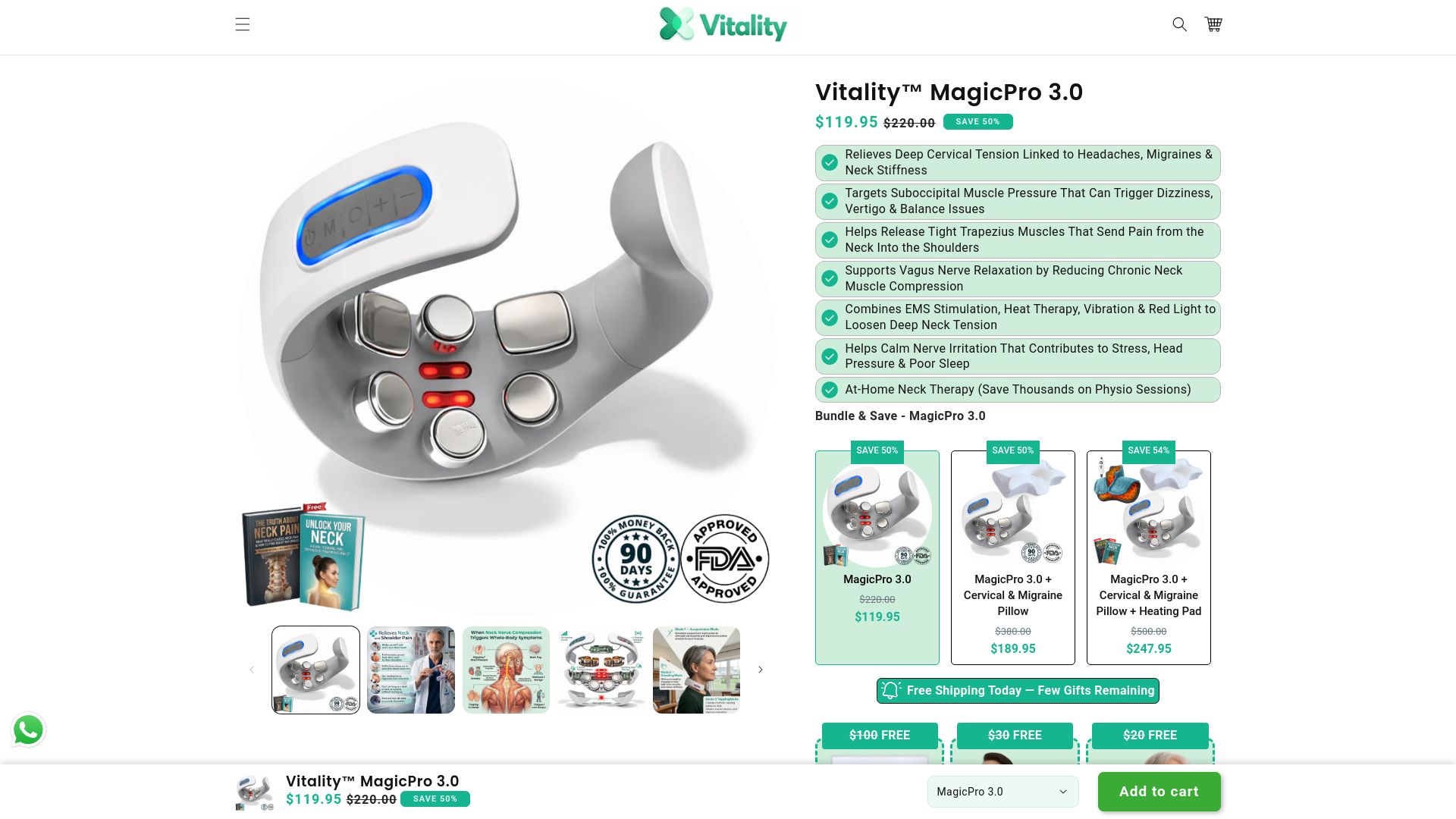
Both devices are doctor-recommended and built around the same multi-modality approach this article describes: symptom control through electrical stimulation and heat, paired with the convenience of battery-powered, wire-free operation. My Vitality also provides educational resources and a physical therapist plan to help you pair device sessions with the active rehab that produces lasting results.
As with any therapeutic device, the MagicPro is an adjunct to care, not a replacement for professional evaluation. If you are experiencing red-flag symptoms, consult a clinician before starting home therapy. For everyone else, explore the MagicPro line and review the included guidance to start your first session with confidence.
This article is for general informational purposes only and does not constitute medical advice. Confirm the suitability of any device for your specific condition with a qualified healthcare provider.
Useful sources and further reading
The following sources informed this article. Systematic reviews and clinical guidance pages are most useful for clinicians; consumer-facing resources from Mayo Clinic and Cleveland Clinic are the clearest starting points for general readers.
- Neck pain: Diagnosis and treatment — Mayo Clinic: Comprehensive consumer-facing clinical guidance on neck pain causes, red flags, and treatment options including passive and active modalities. Best for general readers.
- Transcutaneous electrical nerve stimulation (TENS) — Cleveland Clinic: Authoritative overview of TENS mechanism, session guidance, and clinical applications. Best for understanding electrical stimulation.
- What to know about neck traction — WebMD: Consumer-level explanation of cervical traction, session lengths, and who benefits. Best for understanding traction devices.
- Manual physical therapy for neck disorders: an umbrella review — PMC: Synthesizes systematic reviews on manual therapy for non-specific neck pain, cervical radiculopathy, and cervicogenic headaches. Best for clinicians evaluating evidence quality.
- Effectiveness and safety of manual therapy vs. oral pain medications — BMC/Springer: Meta-analysis comparing non-pharmacological interventions to oral analgesics. Best for clinicians and readers interested in medication alternatives.
- Physical therapy for neck pain — Sword Health: Consumer-accessible overview of exercise-based rehabilitation for neck pain. Best for readers building an active recovery program.
- How often can you use a massage device? — Komoder blog: Practical guidance on session frequency and duration for consumer massage and TENS devices.
- Benefits and risks of manual therapy with exercise for neck pain — Cochrane: Cochrane evidence summary on combined manual therapy and exercise outcomes. Best for clinicians assessing treatment combinations.