


At-home non-traction, multi-therapy neck devices can deliver meaningful short-term pain relief and symptom management for most users when used correctly. The core benefits are well-supported by clinical guidance:
- Pain relief: Reduced neck pain during and after sessions
- Muscle relaxation: Less tension and fewer muscle spasms
- Improved range of motion: Greater flexibility and ease of movement
- Faster recovery support: Shorter symptom duration when combined with active care
- Convenience and consistency: Daily access to therapy without clinic visits
If you experience radiating arm pain, numbness, weakness, or pain that worsens with device use, stop and see a clinician before continuing. For best results, pair device sessions with regular movement breaks and, where possible, guidance from a physical therapist.
Table of Contents
- How do non-traction, multi-therapy neck devices actually relieve pain?
- What do research and clinicians say about at-home neck therapies?
- Who should avoid home neck therapy devices?
- How to use an at-home neck device safely and effectively
- What features should you prioritize when choosing a neck device?
- What results can you realistically expect, and when?
- Key Takeaways
- The case for realistic expectations with at-home neck devices
- Ready to try a multi-therapy neck device at home?
- Sources and further reading
How do non-traction, multi-therapy neck devices actually relieve pain?
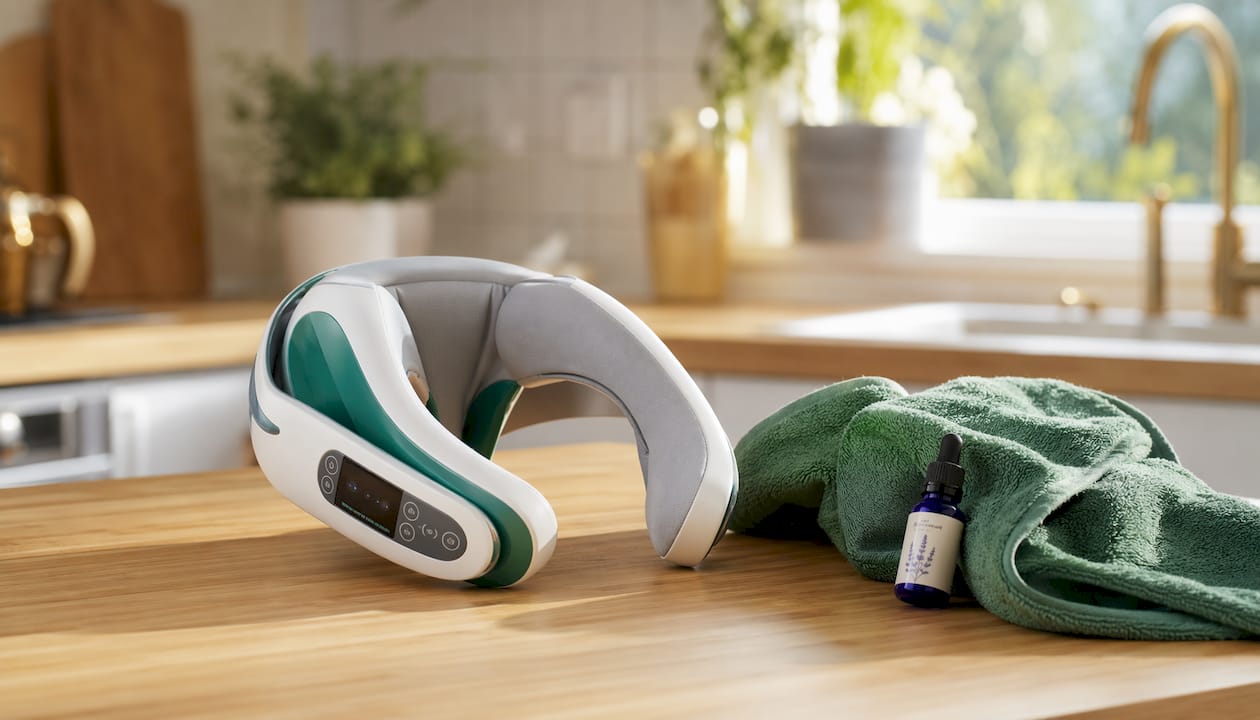
These devices work by combining three distinct mechanisms: neuromodulation via TENS or EMS, thermal therapy through heat, and mechanical stimulation through massage or vibration. Unlike cervical traction, which creates space between vertebrae to reduce nerve pressure, non-traction devices target pain through nerve signal interruption, circulation, and local muscle release.
| Modality | Physiological effect | Typical session guidance |
|---|---|---|
| TENS/EMS | Interrupts nociceptive pain signals; reduces muscle spasm | 10–15 minutes, low-to-moderate intensity |
| Heat therapy | Increases local circulation; loosens stiff tissue | Up to 15 minutes with a protective barrier |
| Massage/vibration | Releases trigger points; reduces muscle guarding | 10–15 minutes, adjustable pressure |
When all three run together, the combined effect tends to be greater than any single modality alone. TENS quiets the pain signal, heat opens blood flow, and massage addresses the physical tension that keeps muscles locked up.
Pro Tip: Start with heat for 2–3 minutes to warm the tissue, then layer in TENS and massage. This sequence makes the muscle more receptive to electrical stimulation and reduces the chance of discomfort at higher intensities.
What do research and clinicians say about at-home neck therapies?
Short-term improvements are commonly reported and supported by clinical guidance, but long-term evidence is limited. At-home devices work best as a supplement to active care, not a replacement for it.
Neck traction treatments typically run 10–15 minutes per session, and many people notice early improvement after just a few sessions. Clinical summaries from the Cleveland Clinic confirm that common short-term benefits include reduced pain, less stiffness, and improved flexibility of cervical muscles for some patients.
Key clinical takeaways:
- Mayo Clinic: TENS shows mixed evidence for neck pain; it may help some users but is not universally effective
- WebMD: Session lengths of 10–15 minutes are standard; early benefit is possible within a few sessions
- Mass General Brigham: Position changes every 20 minutes during work or stationary activity amplify device benefit and address root causes like forward-head posture
- Cleveland Clinic: Non-traction modalities deliver benefit through neuromodulation and thermal changes rather than vertebral separation
Who should avoid home neck therapy devices?
Many people can use non-traction, multi-therapy devices safely, but specific conditions require medical evaluation before starting.
Contraindications to discuss with your clinician first:
A recent neck fracture or unstable spine rules out mechanical stimulation of any kind until cleared by imaging. Active skin infections, open wounds, or inflammation at the treatment site are barriers to device placement. Anyone with an implanted electrical device, including a pacemaker or spinal cord stimulator, should avoid EMS and TENS entirely, as electrical currents can interfere with implant function.
Pregnancy, active cancer in the cervical region, and severe osteoporosis are additional reasons to get medical clearance before use. These are not edge cases; they are the conditions where a device that helps most people could cause real harm.
Houston Methodist specialists also recommend early evaluation when neck pain interferes with daily life or does not respond to initial conservative measures. Imaging such as an X-ray or MRI may be needed to rule out disc herniations or cervical stenosis.
Pro Tip: Test the device on its lowest setting for the first two minutes of your first session. If pain increases at any point, stop immediately and consult your clinician before trying again.
How to use an at-home neck device safely and effectively
Follow simple setup and timing rules to maximize benefit and minimize risk.
Step-by-step session guide:
- Pre-check: Inspect the skin at the placement site. No open wounds, rashes, or active inflammation. Remove jewelry and metal accessories from the neck area.
- Position: Sit upright in a supportive chair or recline slightly. Keep your spine neutral, not flexed forward.
- Place the device: Follow the manufacturer’s placement guide. For most collar-style devices, the electrodes should sit on the lateral neck muscles, not directly over the spine.
- Start low: Begin at the lowest intensity setting. Increase gradually over 2–3 minutes until you feel a comfortable sensation, never pain.
- Session length: Limit sessions to 15 minutes, consistent with heat and therapy guidance from Mass General Brigham. Set a timer.
- Post-session: Perform 2–3 gentle neck stretches immediately after. Slow side-to-side rotation and chin tucks work well.
Safety checklist before each session:
- No open wounds or skin irritation at the placement site
- No fever or active infection
- No implanted electrical device contraindications
- Device fully charged and leads/pads intact
- Session length set to 15 minutes or less
Pro Tip: Schedule sessions during work breaks and build in a 20-minute position change habit throughout your day. The device addresses symptoms; the position habit addresses the cause.
What features should you prioritize when choosing a neck device?
Prioritize safety features and clinically relevant modalities, including EMS/TENS, heat, and massage or vibration, along with easy intensity controls and a clear session timer.
| Feature dimension | What to look for |
|---|---|
| Modalities included | At minimum: heat + EMS/TENS + massage/vibration |
| Session length controls | Preset 10–15 minute timer with auto-shutoff |
| Intensity adjustment | Multiple levels, starting from very low |
| Safety lockouts | Auto-off if device overheats or session ends |
| Clinical endorsements | Physician or PT recommendation noted |
| Warranty and support | Clear return policy; accessible customer service |
Trust signals worth checking:
- Physician or physical therapist recommendation
- Published usage instructions with contraindication guidance
- FCC certification for electrical devices sold in the US
- Clear return or satisfaction policy
- Transparent session length and intensity recommendations
The Vitality™ MagicPro 2.0 and Vitality™ MagicPro 3.0 from My Vitality are in-category examples that combine EMS, heat, and massage in a single compact device designed for 15-minute daily sessions. Both are doctor-recommended and built for home, office, or travel use. You can review the MagicPro device line for specifications and usage guidance.
For a deeper look at how hands-on massage techniques for cervical tension compare with device-based approaches, that resource offers useful context on manual therapy methods.
What results can you realistically expect, and when?
Most users who benefit see immediate to short-term symptom relief. Measurable functional changes often require consistent use plus active care over several weeks.
Within a single session: Reduced pain intensity, a noticeable drop in muscle tension, and a modest improvement in range of motion are common. Heat and massage account for most of this immediate effect.
After a few sessions (typically 2–3): Stiffness tends to decrease more consistently. Users often report that morning tightness is less severe and that turning the head feels easier.
Over 2–6 weeks: Sustained improvement is realistic when device use is paired with movement, ergonomic adjustments, and PT-prescribed exercises. Mayo Clinic guidance confirms that mild-to-moderate neck pain often improves within a few weeks with consistent self-care including heat and guided exercise.
Devices are not a cure. They manage symptoms and support recovery. The users who see the most durable results are those who treat the device as one part of a broader plan that includes posture, movement, and professional input when needed.
Key Takeaways
Non-traction, multi-therapy neck devices provide real short-term pain relief and muscle relaxation, but consistent results require pairing device sessions with movement, ergonomics, and clinical guidance when red flags appear.
| Point | Details |
|---|---|
| Core benefits are short-term | Expect pain relief, reduced tension, and better range of motion within sessions and early weeks. |
| Session length matters | Limit each session to 15 minutes with a protective barrier for heat, per Mass General Brigham guidance. |
| TENS evidence is mixed | TENS may help some users but is not universally effective; combine with heat and massage for broader benefit. |
| Red flags require clinical care | Radiating arm pain, numbness, or worsening symptoms mean stop the device and see a clinician. |
| My Vitality MagicPro devices | The MagicPro 2.0 and 3.0 combine EMS, heat, and massage in one device for 15-minute daily sessions. |
The case for realistic expectations with at-home neck devices
Most articles about at-home neck therapy oversell the devices and undersell the habits. The clinical evidence is clear that devices like TENS and heat therapy offer genuine short-term relief for many people. What gets glossed over is that the users who see lasting improvement are almost always the ones who also changed something about how they sit, move, and hold their head during the day.
A 15-minute session is not a substitute for addressing why the neck got tight in the first place. Forward-head posture from screen time, prolonged static positions, and weak deep cervical flexors are the root causes for most people. A well-designed multi-therapy device handles the symptom side of that equation well. It quiets the pain signal, loosens the tissue, and makes it easier to move. But the position-change habit, the chin tuck exercise, the ergonomic monitor adjustment: those are what prevent the problem from returning every evening.
The best use of a device like the MagicPro 2.0 is as a daily reset, not a daily rescue. Use it consistently, use it at the right intensity, and treat it as part of a plan rather than the whole plan. That framing is what the clinical guidance from Mayo Clinic, Mass General Brigham, and Houston Methodist all point toward, even if they say it in different ways.
Ready to try a multi-therapy neck device at home?
Neck pain that builds through the workday deserves more than a single-function massager. The Vitality™ MagicPro 2.0 combines EMS, heat therapy, and massage in one compact device, designed for 15-minute daily sessions you can fit into a lunch break, a commute, or an evening wind-down. The MagicPro 3.0 builds on that foundation with additional therapy modes for users who want more customization.
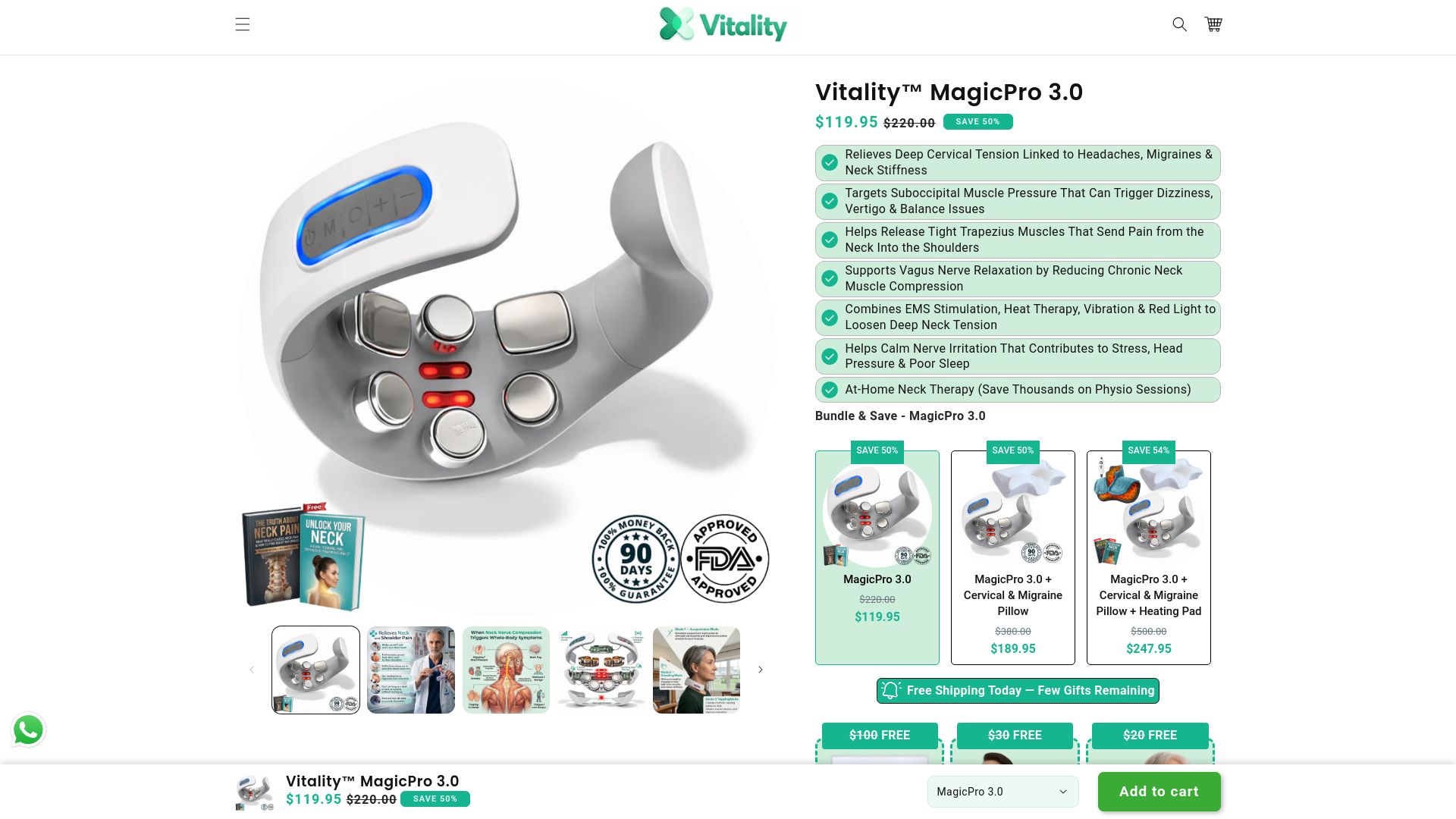
Both devices are doctor-recommended and come with clear usage guidance aligned with the clinical standards covered in this article. Use them as part of a broader plan that includes posture breaks, movement, and professional evaluation if red flags appear. Visit the MagicPro collection to compare both models and find the right fit for your routine.
Sources and further reading
- Mayo Clinic: Neck pain diagnosis and treatment — supports session expectations, TENS evidence, and self-care timelines
- WebMD: Neck traction overview — supports session length (10–15 minutes) and early improvement claims
- Mass General Brigham: Stiff neck remedies — supports heat/ice timing (15-minute limit, barrier use) and position-change guidance
- Cleveland Clinic: Cervical traction — supports benefit claims (reduced pain, stiffness, improved flexibility) and traction vs. non-traction contrast
- Houston Methodist: Neck pain relief — supports escalation guidance and when to seek imaging
- My Vitality MagicPro 2.0 product page — device specifications and usage guidance for the MagicPro 2.0
- My Vitality MagicPro collection — full MagicPro line comparison including MagicPro 3.0
This article is general health information, not medical advice. Confirm current clinical guidelines and your personal suitability with a qualified healthcare provider before beginning any at-home therapy.