


Yes, for many people with morning neck stiffness or chronic tension, a properly fitted cervical pillow can ease pain and improve sleep. The research is supportive but mixed, and most of the measurable benefit shows up after weeks of consistent use, not overnight. The catch: results depend heavily on matching the pillow’s shape and loft to your sleep position, which is where most people get it wrong.
TL;DR:
- Matching pillow shape and loft to your sleep position is critical, with back sleepers needing around 4 inches of central height and side sleepers requiring firmer, taller edges.
- Improvements in neck pain and stiffness typically take 4 to 12 weeks of consistent use, with some benefits detectable after a month, and the best results often appear after three months.
- Proper fit depends on measuring shoulder width and testing alignment before purchase, while patience is essential to avoid abandoning the pillow prematurely.
- Materials like latex, spring hybrids, and gel-infused foams tend to offer better heat regulation for hot sleepers, and regular cover washing is necessary for hygiene.
- Combining a cervical pillow with daytime posture correction, targeted exercises, and therapy enhances long-term relief, as pillows alone cannot address all sources of neck pain.
Table of Contents
- Cervical Pillow Benefits Start With Picking the Right Shape
- How Cervical Pillows Work, According to the Research
- Who Benefits Most, and How to Choose One
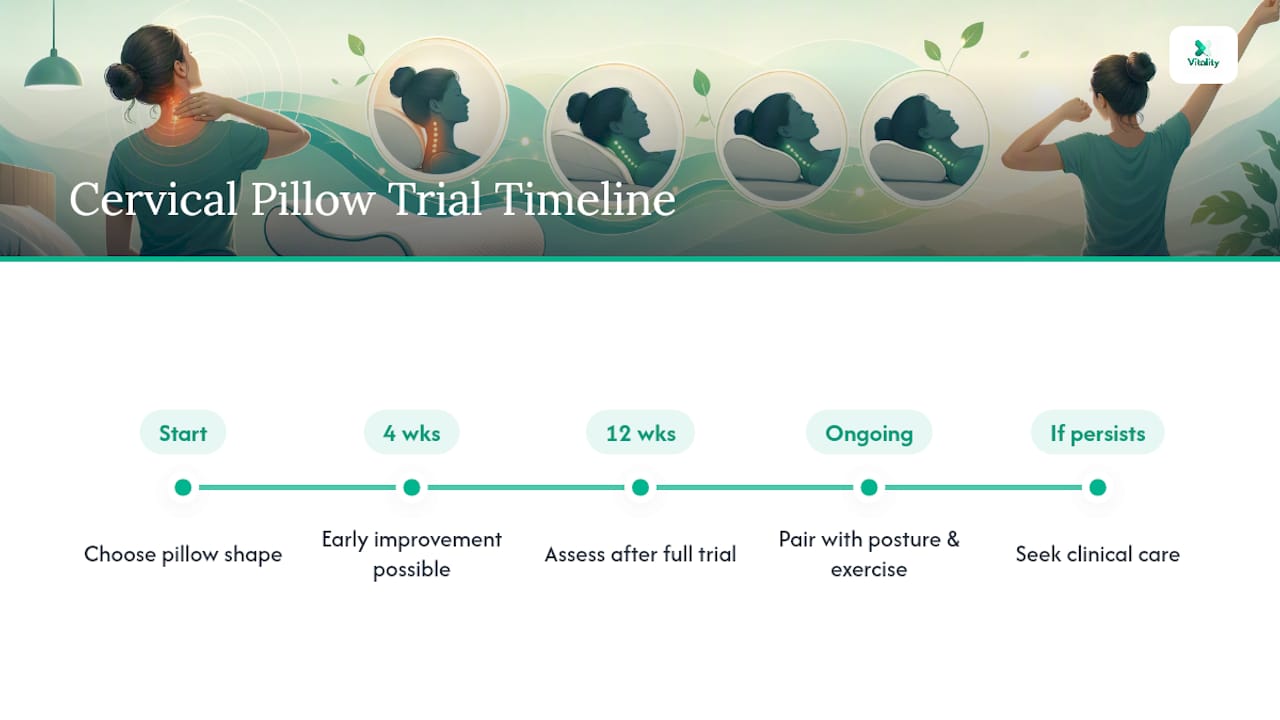
- How Long Before a Cervical Pillow Actually Helps
- Materials, Heat, and Keeping Your Pillow Clean
- Where a Pillow Fits Into a Bigger Pain Relief Plan
- The Bottom Line on Cervical Pillows
- Why “Just Get a Cervical Pillow” Is Incomplete Advice
- A Practical Next Step for Neck Pain That Doesn’t Quit at Bedtime
- Sources
Cervical Pillow Benefits Start With Picking the Right Shape
Cervical pillow benefits depend almost entirely on shape matching your sleep habit. A contour pillow that works beautifully for a back sleeper can leave a stomach sleeper with a stiffer neck than they started with. Before weighing orthopedic pillow benefits against a standard pillow, it helps to know what’s actually on the market.
- Contour pillows have a dip for the head and raised edges for the neck. Best for back and side sleepers who want steady support without much give.
- Roll pillows are cylindrical and placed under the neck alone. Useful as an add-on to a flatter pillow, or for travel.
- Horseshoe/travel pillows wrap around the neck to stop the head from tipping sideways. Built for sitting upright, not overnight sleep.
- Spring or viscoelastic pillows combine springs with a memory-foam-style layer for adjustable rebound. Several clinical trials use this design.
- Water or wedge pillows use a fluid chamber or angled foam to keep height consistent across the night. Good for people who move a lot in their sleep.
- Latex and memory foam variants hold their shape longer under body heat than polyester fill, which matters most for side sleepers who need firmer edge support.
None of these is universally superior. A cervical vs. contour pillow debate usually comes down to one question: does your neck need a dip to rest in, or a roll to push against? Side sleepers generally need more edge height; back sleepers need less depth and more central support; stomach sleepers, frankly, do better switching positions than optimizing pillow shape, since almost no cervical design fully supports that posture.
How Cervical Pillows Work, According to the Research
The idea behind every cervical pillow is the same: keep the cervical spine in a neutral position, the same alignment your neck holds when you stand with good posture. When the head tips too far forward, back, or to one side for hours at a time, neck muscles stay under low-grade tension all night. That tension is a common driver of morning stiffness, tension headaches, and the achy, uneven soreness that isn’t quite pain but isn’t comfort either. A pillow that fills the actual gap between neck and mattress, without pushing the chin up or down, removes that strain instead of forcing muscles to compensate.
The clinical evidence for this mechanism is real, though not uniform.
In a randomized crossover trial, a spring pillow reduced neck pain by a mean difference of 8.7 points and headache by 16.0 points compared with an education-only group, alongside better sleep quality.
- A reanalysis of neck support pillow trials found statistically significant drops in neck disability scores at 12, 24, and 52 weeks.
- A 4-week trial of a semi-customized cervical pillow showed significant reductions in morning pain and disability scores versus a control pillow.
- A small sleep physiology study found higher delta wave ratios and faster skin temperature normalization with a cervical pillow, suggesting deeper sleep stages, though the sample size was limited.
Why don’t all studies agree? Systematic reviews of conservative neck pain management point to inconsistent study design, small samples, and, most importantly, wide variation in how well a given pillow actually fits the person testing it. A pillow that’s too flat for one sleeper is the correct height for another. That variability, not a flaw in the concept itself, explains most of the mixed results.
Who Benefits Most, and How to Choose One
Cervical pillow advantages tend to concentrate in a specific group: people with chronic, diffuse neck pain, recurring morning stiffness, and side or back sleep habits. If your neck pain traces back to a specific nerve root compression or a structural issue like a herniated disc, a pillow alone is unlikely to resolve it, and a clinician’s input matters more than pillow shopping.
For everyone else, choosing well comes down to four decisions:
- Measure your neck and shoulder width. A wider shoulder needs more loft on the side-sleeping edge to keep the spine level.
- Match loft and firmness to position. Around 4 inches of central height suits back sleepers; side sleepers usually need firmer, taller edges.
- Prioritize a real trial period. Look for a return window of at least a few weeks, since first-night comfort rarely predicts long-term fit.
- Check for washable, hypoallergenic covers. Nightly contact with your face and neck makes this a hygiene issue, not a luxury.
Pro Tip: Test alignment before you buy long-term: lie on your back and check that your chin points straight up, not tucked or tilted. Then lie on your side and confirm your ear sits directly over your shoulder. Both checks take ten seconds and tell you more than any product description.
How Long Before a Cervical Pillow Actually Helps
Patience matters more than most buyers expect. Some evidence shows measurable improvement within 4 weeks, but the stronger, more consistent results appear at 12 weeks and beyond, with benefits holding at 24 and 52 weeks in reanalyzed trial data.
The first few nights are often the hardest part. A new contour or firmer support can create unfamiliar pressure points, particularly for people used to sleeping on a flat, worn-out pillow.
- Expect mild soreness or a “getting used to it” feeling for the first several nights.
- Track morning pain on a simple 0 to 10 scale for two to four weeks to spot a real trend, since night-to-night comfort is noisy on its own.
- If a specific height feels wrong, try adjusting gradually rather than abandoning the pillow after two nights.
- A folded towel or thin wedge can temporarily fine-tune height while you decide if the base pillow fits.
Abandoning a cervical pillow after three nights is the single most common reason people conclude “it didn’t work” when the real issue was giving up before week four.
Materials, Heat, and Keeping Your Pillow Clean
Support and heat retention trade off against each other more than most shoppers realize. Comparing cervical pillow vs. memory foam materials in isolation misses the point. Memory foam holds contour well but traps body heat, which matters if you already run warm at night. Latex offers similar contour retention with somewhat better airflow. Spring and viscoelastic hybrids, the design used in several of the clinical trials above, balance support with more breathability than solid foam. Water pillows stay cool but demand more setup and monitoring. Soft synthetic fills feel pleasant on night one but tend to compress fast, letting the head sink past the point of useful support.
- Hot sleepers generally do better with latex, spring hybrids, or gel-infused foam over solid memory foam.
- Anyone with allergy sensitivities should look for hypoallergenic fill and a removable, machine-washable cover.
- Expect a supportive cervical pillow to hold its shape for one to two years with regular use; sagging support is a sign it’s time to replace it.
- Wash covers on a regular schedule and check manufacturer guidance before submerging foam or water inserts.
For readers who like to fine-tune firmness themselves, a guide to pillow inserts covers practical adjustment options worth considering alongside a cervical design.
Where a Pillow Fits Into a Bigger Pain Relief Plan
A cervical pillow addresses eight hours a night. It does nothing for the other sixteen. Clinical guidance consistently treats pillows as one piece of conservative care, not a stand-alone fix, best paired with posture correction, targeted exercises, and, for many people, direct muscle therapy during waking hours.
A cervical pillow supports neutral alignment while you sleep. Daytime tension, screen posture, and muscle tightness need their own attention, which is where heat, stimulation, and massage-based approaches at home come in.
Daytime relief devices that use electrical muscle stimulation, heat, and massage can complement the effects of a good pillow used overnight. Neither replaces professional evaluation if pain is severe, worsening, or accompanied by numbness, weakness, or symptoms radiating down an arm. Those signs call for a clinician, not a shopping decision. Some readers also find that combining heat and cold approaches, as explored in this guide to targeted thermal therapy, rounds out a pillow-based routine.
The Bottom Line on Cervical Pillows
A well-fitted cervical pillow, matched to your sleep position, can meaningfully reduce morning neck pain within four to twelve weeks of steady use. It won’t fix structural nerve issues or replace daytime posture work. Three steps forward: pick a shape based on how you actually sleep, commit to a full trial period before judging it, and pair nightly support with posture habits or exercise, seeking clinical care if pain persists or worsens.
Why “Just Get a Cervical Pillow” Is Incomplete Advice
The evidence here doesn’t support treating cervical pillows as a cure. It supports treating them as one lever among several, and a slower one than most buyers expect. Conventional advice tends to oversell the first two weeks and undersell week eight, which is backwards given what the 12-week reanalysis actually found.
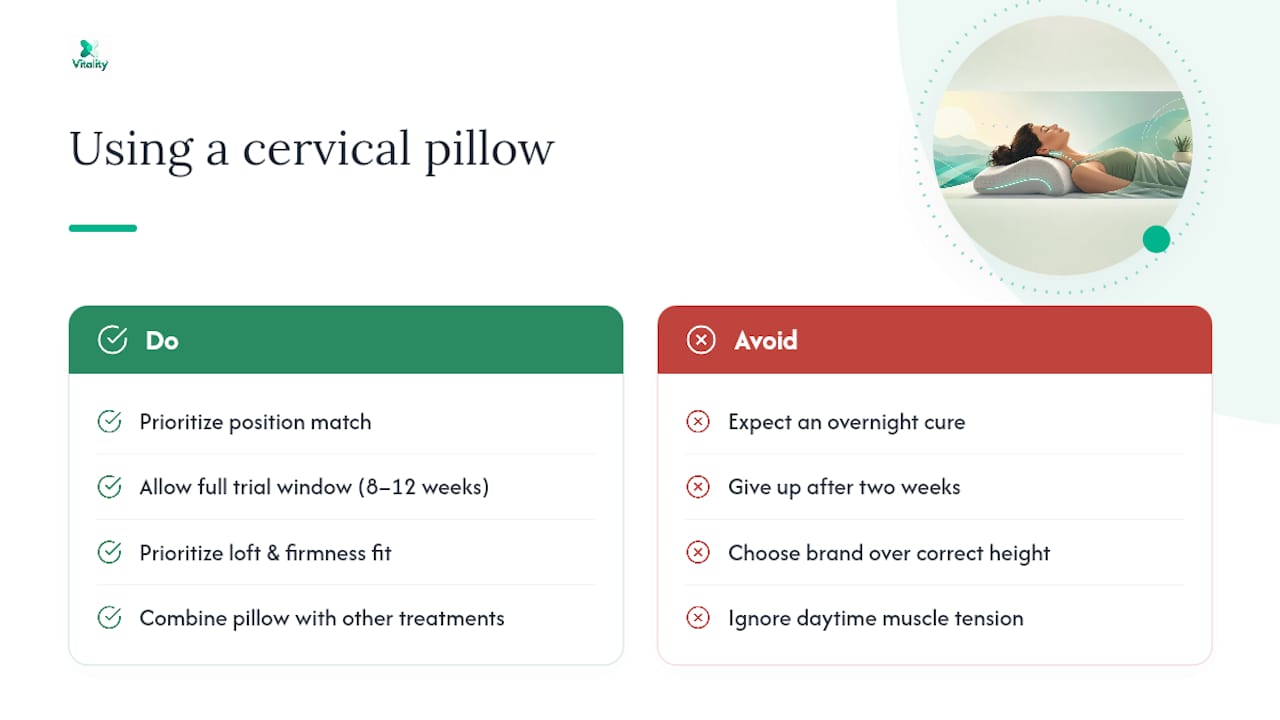
What gets underrated is fit precision. Loft and firmness matched to sleep position explain more of the variation between trial results than any brand’s marketing copy ever will. A $15 pillow with the right height for a side sleeper will outperform a premium pillow with the wrong one.
My honest read: prioritize the position match and the trial window before anything else. Then treat the pillow as half the equation. Daytime muscle tension doesn’t go away because you slept better, which is exactly where a complementary approach, rather than a single product, earns its place. Readers chasing a fast fix should recalibrate. This is a weeks-long process with a real, evidence-backed payoff, not an overnight one.
— Achraf
A Practical Next Step for Neck Pain That Doesn’t Quit at Bedtime
A cervical pillow handles the hours you’re asleep. Some devices handle the other sixteen hours, the time spent hunched over a desk, phone, or steering wheel, where tension actually builds. Some portable devices combine electrical muscle stimulation, heat, and massage into a compact solution designed for use around 15 minutes a day, in various settings such as at a desk, in a car, or on a couch.
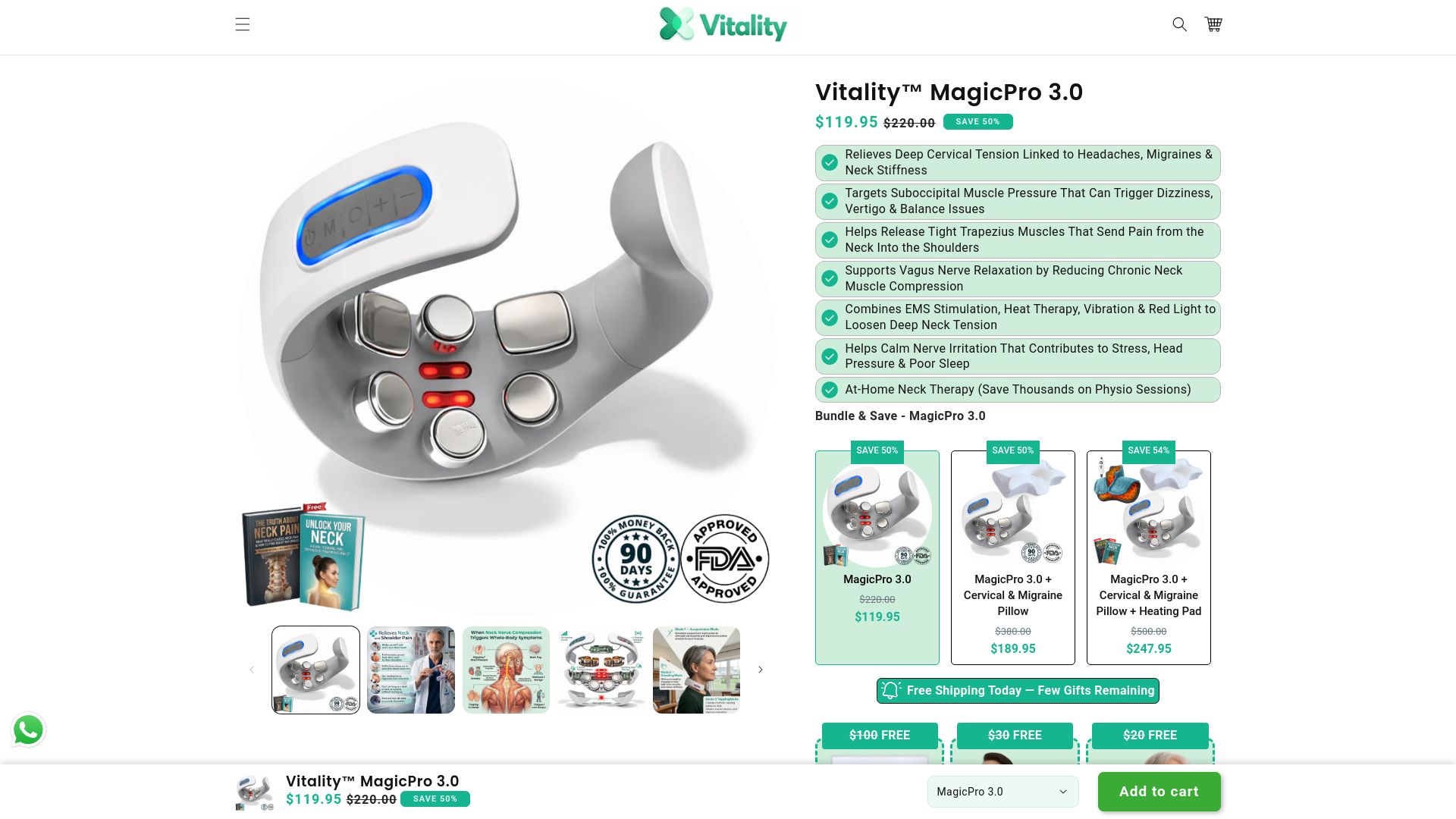
For readers already investing in better sleep posture with a cervical pillow, adding daytime relief closes the loop instead of leaving half the day unaddressed. Explore the MagicPro 2.0 or browse the full collection of Vitality devices to find the option that matches your daily routine and start applying relief where a pillow can’t reach.
Sources
- The Use of Neck Support Pillows and Postural Exercises in the Management of Chronic Neck Pain
- Randomized crossover trial of a spring pillow vs education in chronic nonspecific neck pain
- Evidence summaries and expert consensus on conservative management of neck pain