


For most people with daily neck tension, a hands-free shiatsu wrap with adjustable intensity and heat is the best place to start. It targets muscle-related tightness and offers real, temporary relief, though it won’t fix structural problems like a herniated disc or arthritis. Once you know that, the real work is running your shortlist through a simple decision checklist, which comes next.
TL;DR:
- Adjustable intensity controls with at least three to five levels are essential to accommodate daily variations in neck sensitivity and prevent skipped sessions.
- Multi-modal devices combining heat, massage, and electrical stimulation are more likely to be used consistently and provide better short-term relief.
- Shiatsu wrap massagers deliver the deepest targeted pressure, ideal for chronic upper trapezius tension, but require adjustable intensity to suit individual comfort.
- Portable, cordless models suited for travel or office use tend to be more practical, with longer battery life and smaller size, increasing daily user compliance.
- Most effective sessions last between 5 to 15 minutes at low to moderate intensity, with a gradual increase, and should be discontinued if symptoms worsen or new issues arise.
Table of Contents
- How Do You Choose the Right Neck Massager?
- Types of Neck Massagers and How Each One Works
- Which Neck Massager Fits Your Specific Needs?
- What Does the Evidence Say About Neck Massager Effectiveness?
- How Do You Use a Neck Massager the Right Way?
- Why a Multi-Modal, Hands-Free Device Can Be the Smarter Pick
- Consistency Beats Raw Power
- Consider MagicPro for Daily, Clinician-Aligned Relief
- Primary Sources and Further Reading
- Sources
- FAQ
How Do You Choose the Right Neck Massager?
Choosing a neck massager comes down to matching features to how you’ll actually use the device, not chasing the highest intensity number on the box. A device with ten settings you never touch is worth less than one with three you use every day.
Here’s what actually moves the needle:
- Intensity controls. Look for at least three to five levels, not a single fixed setting. Neck muscles respond differently day to day, and a device stuck on “high” will leave sensitive users skipping sessions entirely.
- Hands-free ergonomics. Strap tension and node placement determine whether you get deep muscle contact or just superficial pressure. A wrap that requires you to hold it in place with your arms defeats the purpose within a week.
- Heat function with auto shutoff. Warmth loosens tissue before mechanical kneading goes to work, and a Forbes review of top-rated neck massagers notes that combining heat with kneading gives you better odds of relief than either feature alone. Auto shutoff protects skin during longer sessions or if you fall asleep.
- Portability and power source. Cordless models see more real-world use because they travel with you to the office or the car, while corded units guarantee steady power but tend to stay parked on a nightstand, according to one wellness roundup on neck and shoulder massagers.
- Materials, cleaning, and return policy. Removable, washable covers matter more than they sound. A generous trial or return window matters even more, since neck fit varies enormously between body types.
- Price-to-use ratio. A $150 device you use daily beats a $40 device that sits in a drawer after two weeks.
When you’re reading specs and reviews, skip past marketing language like “deep tissue” or “professional grade” and look for concrete numbers: how many intensity levels, how many minutes per charge, what the auto shutoff timer is set to. Reviews that mention specific session lengths and skin comfort are more useful than star ratings alone.
Pro Tip: Favor hands-free designs over anything you need to grip or hold in position. A device that fits into a short break at your desk gets used; one that requires two free hands usually doesn’t.
Types of Neck Massagers and How Each One Works
Neck massagers aren’t one category. They split into distinct families, and knowing which one you’re looking at saves you from buying the wrong tool for your specific problem.
- Shiatsu rotating-node wraps. These U-shaped devices use two or four rotating nodes to knead muscle tissue, often in a reversible direction. They deliver the deepest, most targeted pressure of any hands-free option and work well for chronic tension in the upper trapezius and base of the skull. The tradeoff is that some users find the rotation too intense at first, which is why adjustable intensity matters.
- Pillow-style massagers. Shaped like a horseshoe or full pillow, these spread pressure across a wider area, including shoulders and upper back. They’re a solid pick for travel or office chairs since they double as lumbar or headrest support, though they rarely match the node-specific pressure of a shiatsu wrap.
- Wearable collars and EMS/TENS devices. These skip mechanical kneading entirely and use electrical muscle stimulation to trigger contraction and relaxation cycles. They’re hands-free by design and suit people who want short, repeated sessions throughout the day rather than one longer massage.
- Percussion or handheld devices. Built for larger muscle groups like the back and legs, percussion tools can work on the neck but demand caution. The concentrated impact near the cervical spine and carotid area means lower settings and shorter contact time than you’d use elsewhere on the body.
- Manual tools. Handheld hooks, rollers, and massage balls cost little and work well for spot treatment on a single knot. They require your own hands to apply pressure, so they’re better as a supplement to an electric device than a full replacement.
Each type solves a slightly different problem. A construction worker with chronic knots between the shoulder blades needs different pressure than someone with tension headaches from screen time, which is exactly why the next section walks through specific reader profiles.
Which Neck Massager Fits Your Specific Needs?
Matching a device to your actual routine matters more than matching it to a spec sheet. Here’s how to think through your own situation.
- Desk workers with end-of-day tightness. Prioritize a hands-free wrap or pillow-style massager with heat and a quiet motor you can run during a video call without distracting your team. Sessions of 10 to 15 minutes at the end of a workday tend to fit naturally into an existing routine.
- People with deep, recurring knots. A shiatsu wrap with adjustable intensity and reversible rotation gives you the targeted pressure needed to work into stubborn spots along the trapezius. Look for a model with at least three intensity settings so you can build up gradually instead of starting too aggressive.
- Frequent travelers. A compact pillow-style massager or a cordless wearable collar with dependable battery life matters more here than raw power. You want something that survives a carry-on bag and still has charge left after a flight delay.
- Budget-conscious buyers. A heated pillow massager or a set of manual tools, paired with a clear return policy, gives you a lower-risk entry point. Spend less upfront and confirm the retailer will take the device back if the fit or intensity doesn’t work for your neck.
- Seniors and sensitive users. Start with the lowest available intensity setting and confirm the device has a short auto shutoff timer. Anyone with a pacemaker, other implanted device, or a history of cardiac issues should get clearance from a clinician before using EMS or TENS features, since pulse-width and frequency settings can affect comfort and safety in ways a general consumer guide can’t fully address.
Your daily habits matter more here than device horsepower. The strongest massager in the world does nothing if it never leaves the box.
What Does the Evidence Say About Neck Massager Effectiveness?
Massage therapy produces a real, measurable short-term effect on neck pain. A 2013 systematic review found statistically significant immediate improvement compared with inactive therapies, indicating useful short-term pain relief. That’s a meaningful effect size for pain relief research, though the same review notes long-term benefits and comparisons against active treatments like physical therapy remain unclear.
A more recent 2024 systematic review concluded massaging may provide short-term relief but evidence quality is low, and long-term functional benefits remain uncertain. Neither review is a knock against neck massagers. It’s a realistic frame: expect meaningful short-term easing of muscle tension, not a cure for a structural issue.
That distinction matters when it comes to safety. Clinical guidance summarized in a medical overview of neck massager use points out that these devices help muscle-tension symptoms but are unlikely to help pain caused by nerve compression, arthritis, infection, or other structural conditions.
Stop using a neck massager and talk to a clinician if you notice any of the following; if you’re pregnant, consider ways to ease pelvic girdle pain in pregnancy with physio and a simple tracker.
- Numbness, tingling, or weakness radiating down an arm
- Recent neck trauma, whiplash, or a fall
- A known bleeding disorder or blood-thinning medication
- Implanted electrical devices, such as a pacemaker, if the massager uses EMS or TENS
- Pain that worsens instead of easing after a few sessions, or if you’re pregnant (see our neck massager safety guidance for pregnancy)
- A diagnosed herniated disc or other structural spine condition
Statistic Callout: Massage therapy’s short-term effect on neck pain shows a meaningful standardized mean difference versus inactive comparison treatments in controlled trials, according to the 2013 review. This indicates immediate relief but not treatment of underlying causes.
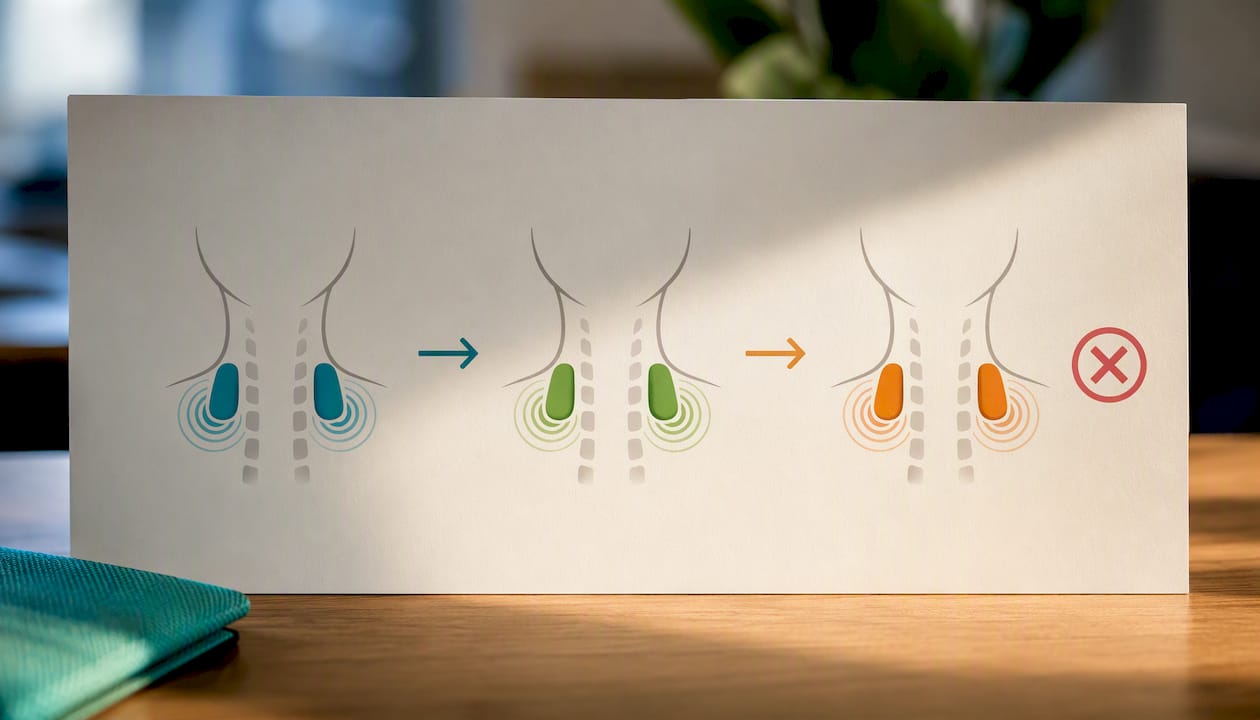
Start low and short. Increase intensity or duration only as your neck tolerates it, and treat any worsening of symptoms as a signal to stop rather than push through.
How Do You Use a Neck Massager the Right Way?
Getting technique right changes how much relief you actually feel, and it takes only a few adjustments to your setup.
- Prep first. Sit upright in a supportive chair, wear loose clothing around your shoulders, and check that the device settings start at the lowest intensity level. Glance at your skin for any irritation, rashes, or open cuts before you begin.
- Plan the session. Begin with 5 to 10 minutes at low intensity for your first few uses, working up toward a 10 to 15 minute session as your neck adjusts. Manufacturer guidance and physical therapists commonly recommend staying in this general range rather than running long sessions repeatedly on the same spot, which can leave tissue overworked. Our guide to safe neck massager duration walks through pacing in more detail.
- Get the hands-free technique right. For U-shaped wraps, pull the handles down with gentle, even tension so the nodes engage the muscle rather than resting loosely against your skin. This is what separates a device that feels like it’s doing something from one that barely registers, according to Healthline’s guidance on neck massager use.
- Maintain and clean regularly. Wash removable covers per the manufacturer’s instructions, keep the charging port dry, and inspect straps and nodes periodically for cracking or wear. A cordless device that’s properly maintained holds its charge and performance far longer than one left plugged in constantly or stored with a low battery.
Why a Multi-Modal, Hands-Free Device Can Be the Smarter Pick
Devices that combine more than one therapeutic approach tend to check more boxes on the checklist above than single-function tools. Certain multi-modal devices combine electrical muscle stimulation, heat, and massage into one compact, hands-free unit built around short daily sessions.
That combination lines up closely with what the checklist calls for:
- Hands-free design addresses the adherence problem: devices that require holding or complicated setup tend to get used less consistently, which undercuts their benefit regardless of how powerful they are.
- Multiple therapeutic modes in one device (EMS, heat, massage) mean you’re not choosing between features. You get the combination a Forbes review already flags as more effective than any single mode alone.
- Intensity control and built-in timers match the safety and escalation guidance covered earlier, letting you start low and adjust gradually.
None of this replaces a clinician’s evaluation for red-flag symptoms. It simply illustrates how one device can satisfy several checklist items at once instead of forcing tradeoffs between them.
Consistency Beats Raw Power
Pick ergonomics and a real trial or return window over the highest intensity number on the box. A device you’ll actually strap on every evening for two weeks will do more for your neck than one with impressive specs sitting in a drawer. Pair it with basic posture awareness, some light stretching, and a clinician’s input if anything feels off. Track how you feel over that trial period before deciding it’s a keeper.
— Achraf
Consider MagicPro for Daily, Clinician-Aligned Relief
If you’re comparing a shiatsu wrap, a pillow-style massager, and a TENS collar and can’t decide between them, My Vitality’s MagicPro devices solve that by combining all three approaches into one unit instead of asking you to pick.
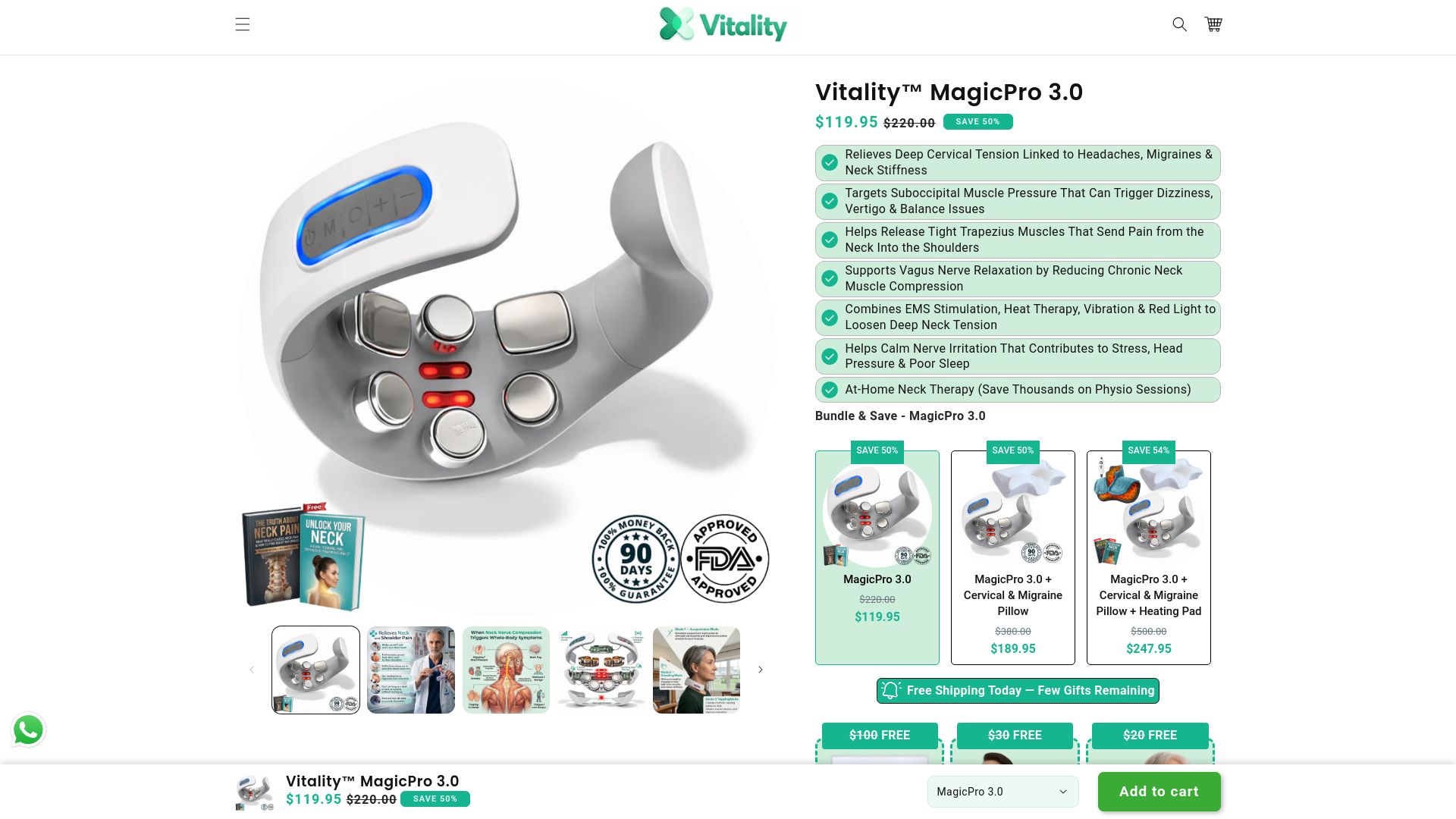
The MagicPro 2.0 and MagicPro 3.0 are built for 15-minute daily sessions that layer electrical muscle stimulation, heat, and massage rather than relying on a single mode. That multi-modal setup means you get the heat-plus-kneading combination research points to, along with EMS, in a compact, hands-free format you can use at a desk, at home, or in the car. These devices support symptomatic relief for muscle tension, not a fix for structural spine conditions, so anyone with red-flag symptoms like numbness, recent trauma, or an implanted electrical device should check with a clinician first. If the fit or feel isn’t right, the purchase is backed by a warranty. Browse the Vitality Devices collection to see which MagicPro model matches your routine.
Primary Sources and Further Reading
- Massage for neck pain: systematic review (2013)
- Cochrane-style review on massage for neck pain (2024)
- Neck massager explained by medical evidence — Acibadem International
- Health
This article is general information, not a substitute for advice from a qualified doctor. Consult a qualified healthcare professional about your own circumstances before acting on anything here.
Sources
- Massage for neck pain: systematic review (2013)
- Cochrane-style review on massage for neck pain (2024)
- Neck massager explained by medical evidence — Acibadem International (2026)
- Health
FAQ
How Do I Choose the Right Neck Massager?
Match the device type to your main problem: shiatsu wraps for deep chronic knots, pillow-style for broad coverage and travel, and EMS/TENS collars for hands-free stimulation throughout the day. Then confirm it has adjustable intensity, heat, an auto shutoff timer, and a real return policy before you buy.
What Is the Best Neck Massager That Actually Works?
There’s no single best model for everyone, but devices combining heat, mechanical massage, and adjustable intensity in a hands-free format consistently perform better in practice because people actually use them daily. Multi-modal options like My Vitality’s MagicPro devices, which pair EMS, heat, and massage, are built around that same principle.
What Is the Best Neck Massager for Neck Pain Caused by Muscle Tension?
For muscle-tension neck pain, a shiatsu wrap or multi-modal device with heat and adjustable intensity tends to work best, backed by evidence showing significant short-term relief from massage therapy. It won’t help pain from nerve compression, arthritis, or other structural causes, so persistent or worsening symptoms need a clinician’s evaluation.
Which Is the Best Neck Massager for Frequent Travelers?
Compact pillow-style massagers or cordless wearable collars with reliable battery life work best for travel since they pack small and don’t depend on finding an outlet. Cordless models generally see more real-world use outside the home than corded ones.
How Long Should I Use a Neck Massager Each Session?
Most guidance points to starting with 5 to 10 minutes at low intensity and building up toward 10 to 15 minutes as your neck tolerates it, rather than running long sessions repeatedly on the same spot. Stop earlier and consult a clinician if you notice worsening pain, numbness, or tingling.