


Neck massagers work for what they’re built to do: easing muscle tension and mild neck pain in the short term. They are not built to fix structural or nerve problems, and no device changes that. The best results come from short, regular sessions on the back of the neck and upper shoulders, not the front or sides, following the safety rules manufacturers print but few people read. If you notice numbness, new dizziness, or spreading weakness, stop using the device and call a clinician.
TL;DR:
- Short-term relief from muscle tension and pain is well supported, but long-term structural or nerve healing remains unproven.
- Devices should be placed on the back of the neck and upper shoulders, avoiding the front or sides to prevent serious health risks.
- Limit sessions to 10-15 minutes, start at the lowest intensity, and use auto-shutoff features to ensure safety during each use.
- Contraindications include recent trauma, spine instability, osteoporosis, and implanted electrical devices, requiring medical clearance beforehand.
- Consistent use alongside posture correction and exercises improves temporary relief, but persistent or worsening symptoms demand professional evaluation.
Table of Contents
- How Do Neck Massagers Work? Mechanisms and Device Types
- What Does the Research Say About Neck Massager Effectiveness?
- What Are the Real Benefits of Using a Neck Massager?
- Are Neck Massagers Safe? Contraindications and Warning Signs
- How to Use a Neck Massager Safely and Effectively
- When Should You See a Doctor Instead of Using a Massager?
- Are Neck Massagers Worth It? The Bottom Line
- A Publisher’s Note on Evidence and Expectations
- A Compact At-Home Option Worth Considering
- Sources
How Do Neck Massagers Work? Mechanisms and Device Types
Every neck massager relies on one or more of four mechanisms: mechanical pressure, vibration, heat, and electrical stimulation. Kneading nodes mimic a therapist’s hands, working knots in the trapezius and levator scapulae. Vibration dulls pain signals through a process called gate control, where the nervous system prioritizes the vibration sensation over the ache underneath it. Heat increases local blood flow, which helps tight muscles let go faster. TENS and EMS units send low-level electrical pulses through the skin, either interrupting pain signals (TENS) or triggering muscle contractions (EMS).
The device shape matters as much as the mechanism, and Healthline’s safety overview is a useful reference point here. Common formats include:
- Shiatsu wraps: U-shaped collars with rotating nodes, usually the gentlest and most versatile option for everyday tension.
- Cervical pillows: Passive support devices that hold neck alignment during rest rather than actively massaging.
- TENS/EMS pads: Small electrode patches that require careful placement, since misuse near the front of the neck carries real risk.
- Percussion guns: Built for large muscle groups like the back and thighs. They deliver too much force for the cervical spine and are generally not recommended there.
Placement is the detail most buyers skip. Devices designed for the posterior neck and upper shoulders sit away from the carotid arteries and airway. Anything positioned near the front or sides of the neck raises the stakes considerably, which is why auto-shutoff timers and adjustable intensity settings aren’t just comfort features. They’re the difference between a relaxing 15 minutes and a preventable trip to urgent care.
What Does the Research Say About Neck Massager Effectiveness?
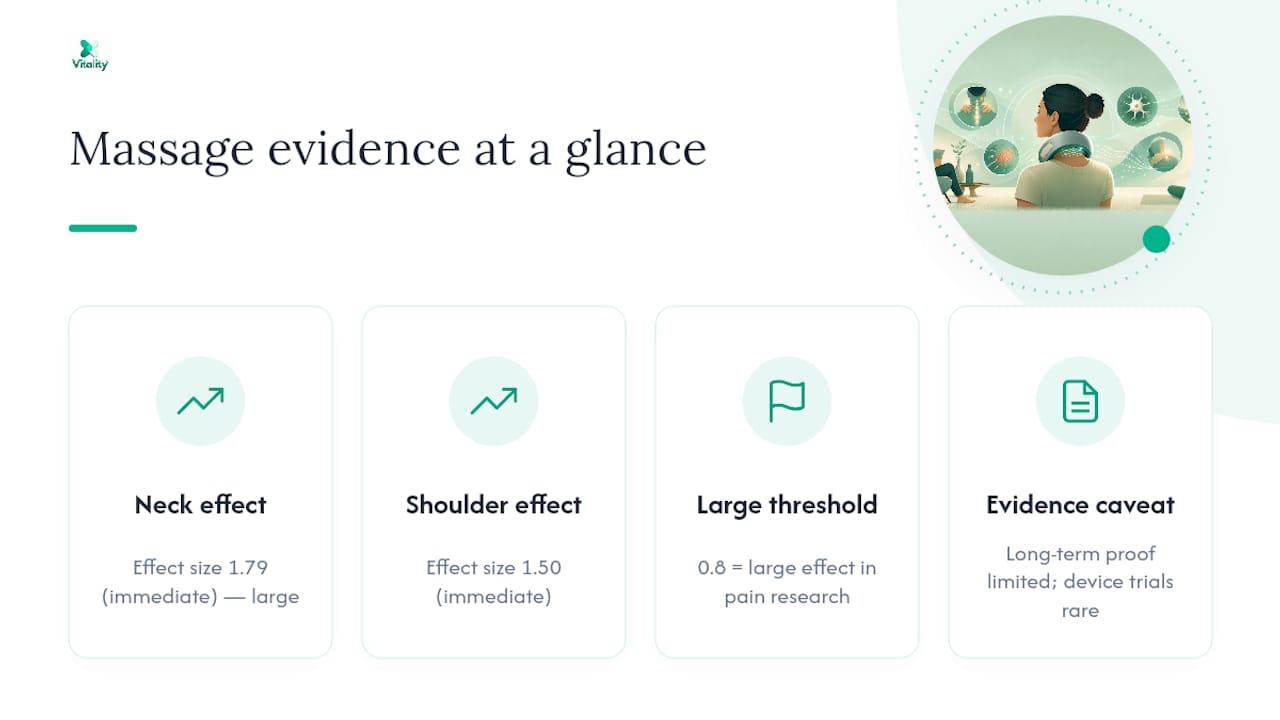
The strongest evidence for massage as a treatment for neck and shoulder pain comes from a 2013 systematic review of 12 high-quality randomized trials, and the numbers are hard to argue with for short-term relief. Researchers found an immediate effect size for neck pain of 1.79 (95% CI, 1.01 to 2.57) and for shoulder pain of 1.50 (95% CI, 0.55 to 2.45), according to the systematic review and meta-analysis. Those are large effect sizes by clinical standards, meaning most participants felt a real, noticeable drop in pain right after treatment.
The immediate relief massage therapy produces for neck and shoulder pain is well documented and clinically meaningful, but evidence that it outperforms active treatments like structured exercise or physical therapy over the long term remains limited.
That distinction between “immediate” and “lasting” is where a lot of marketing claims quietly overreach. The review’s authors delivered strong short-term numbers, not proof that massage alone resolves chronic pain patterns or replaces active rehabilitation. In practice, this looks like a person using a shiatsu massager after a long day at a desk and feeling looser within minutes. It does not look like someone skipping physical therapy for a herniated disc because a massager feels good in the moment.
Immediate relief, by the numbers: an effect size above 0.8 is generally considered large in pain research. The 1.79 figure for neck pain relief sits well above that threshold, which explains why massage remains a first-line comfort measure for muscle tension even as its long-term evidence stays thinner.
Safety data adds a necessary counterweight. A peer-reviewed case report documented a patient who developed carotid thrombosis and an intracranial embolism after a month of neck massager use, with the authors suggesting pulsed microcurrents may have injured the artery’s inner lining. This is a single documented case, not a pattern, and it does not mean neck massagers are broadly dangerous. It does mean the risk isn’t zero, and it explains why posterior-only placement rules exist in the first place.
The evidence gap worth flagging: most strong data comes from therapist-delivered massage in clinical trials, not from consumer devices used at home. Editorial testing from outlets like Consumer Reports fills part of that gap with hands-on device evaluation, but large randomized trials on specific consumer massagers are still rare.
What Are the Real Benefits of Using a Neck Massager?
Used consistently, a neck massager delivers a short list of benefits that hold up under scrutiny:
- Reduced muscle stiffness and tightness, especially after long hours at a screen or behind the wheel.
- Improved short-term mobility, making it easier to turn your head without that catching sensation in the trapezius.
- Better sleep onset, since a relaxed neck and shoulders make it easier to settle into a comfortable position.
- Faster recovery after exercise, when soreness comes from overworked muscle rather than joint or nerve irritation.
These benefits cluster around one theme: mechanical tension, not structural damage. “Tech neck” from hours of phone use, stiffness from a long flight, or the tight shoulders that show up after a heavy workout all respond well to massage, heat, and vibration. A hospital-affiliated explainer makes the boundary explicit: these devices ease symptoms, they don’t treat nerve compression, disc disease, or inflammatory conditions.
Expect the relief to be real but temporary. Pairing a massager with basic posture corrections and neck-strengthening exercises produces better results than the device alone, and our guide to at-home neck therapy devices walks through how these tools fit alongside professional care rather than instead of it.
Are Neck Massagers Safe? Contraindications and Warning Signs
Safety with these devices comes down to a short set of rules, and most safety incidents trace back to someone skipping one of them.
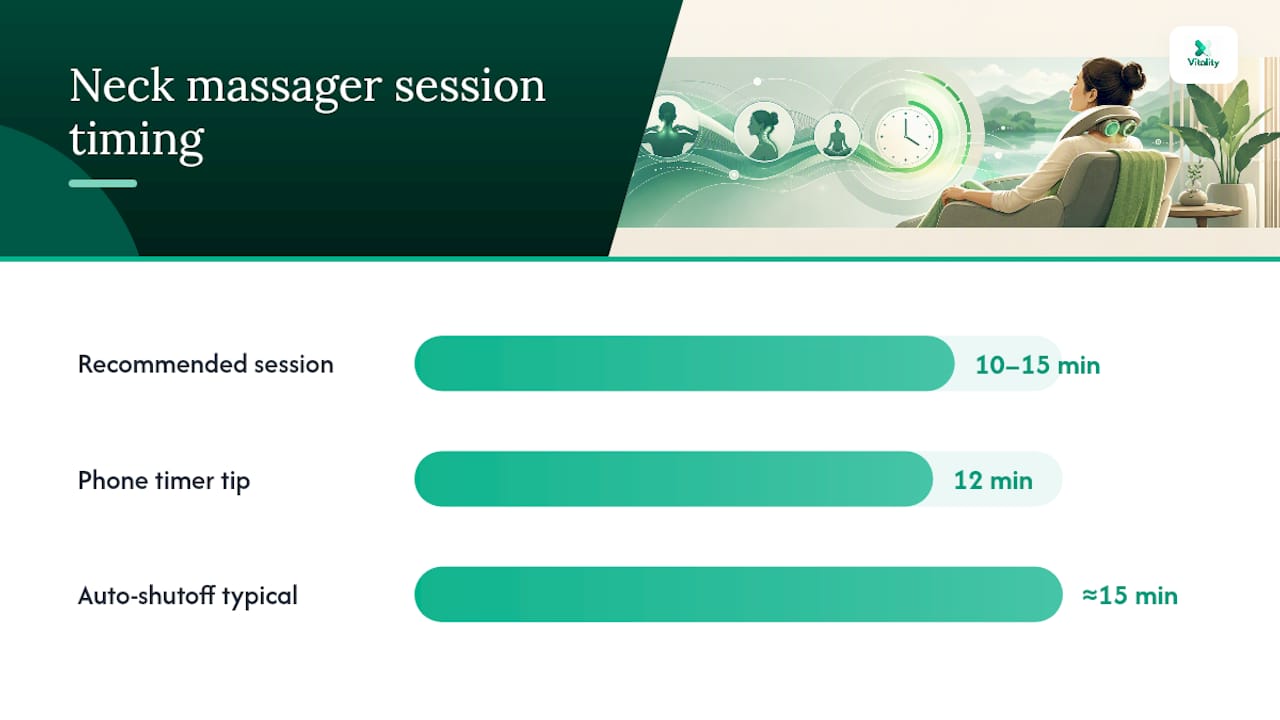
- Keep sessions to 10 to 15 minutes. Longer sessions raise the risk of skin irritation, overstimulation, and muscle soreness that mimics the problem you’re trying to fix.
- Place the device on the back of the neck and upper shoulders only. Avoid the front and sides entirely, where the carotid arteries and airway sit close to the surface.
- Start at the lowest intensity setting. Increase gradually only if the sensation feels comfortable, never as a way to push through pain.
- Stay seated and upright during use. Lying down can shift pad placement toward the front of the neck without you noticing.
- Choose a device with auto-shutoff. A built-in timer, typically around 15 minutes, removes the guesswork and prevents accidental overuse.
Certain people should get medical clearance before trying any electrical or percussive neck device: those with recent neck trauma, cervical spine instability, osteoporosis, bleeding disorders, implanted electrical devices like pacemakers, or known arterial disease. A licensed massage therapist’s review also flags extra caution for older adults, whose skin and vascular tissue tend to be more sensitive to pressure and electrical current. If you’re managing a separate condition that affects bone density or circulation, the contraindication guidance in this vibration plate safety overview covers similar caution points worth reviewing before starting any vibration-based therapy.
Watch for red flags during or after use: increased pain, numbness, tingling, dizziness, or a headache that wasn’t there before. Any of these means stop immediately and check in with a clinician.
Pro Tip: Set a phone timer for 12 minutes before you start. Devices with auto-shutoff protect you from forgetting, but a second timer catches you if you fall asleep mid-session, which happens more often than people admit.
How to Use a Neck Massager Safely and Effectively
Getting real benefit from a neck massager takes less effort than most people assume, and the routine matters more than the device’s price tag.
- Start at the lowest setting for your first few sessions, even if the box says a higher intensity is standard.
- Cap each session at 10 to 15 minutes, and favor short daily use over occasional 30-minute marathons. Consistency does more for muscle relaxation than intensity does.
- Position the device on the posterior neck and upper trapezius, never the front or sides.
- Sit upright rather than reclining, so pads or nodes stay where you placed them.
- Adjust if something feels off. Headaches usually mean the intensity is too high or the session too long. Dizziness or tingling means stop and reassess placement, or skip the device that day entirely.
- Look for auto-shutoff and clear instructions when choosing a device, since these features do more for long-term safety than any marketed “advanced” setting.
Wipe down foam or fabric contact surfaces after each use, and let the device fully dry before storing it. Basic upkeep like this extends the life of the padding and keeps skin contact clean, particularly if more than one person in the household uses the same unit.
When Should You See a Doctor Instead of Using a Massager?
A neck massager is a comfort tool, not a diagnostic one, and some symptoms call for more than comfort. Seek medical evaluation if pain persists or worsens after two weeks of consistent self-care, if pain follows a fall or impact, or if you notice numbness, tingling, or weakness spreading into your arms or hands. Fever, unexplained weight loss, or other systemic symptoms alongside neck pain also warrant a visit rather than another massage session.
A clinician can order imaging, rule out disc or nerve involvement, and build a targeted exercise plan. Before your appointment, note when the pain started, what self-care you’ve tried, and whether anything specific triggers it.
Are Neck Massagers Worth It? The Bottom Line
Neck massagers are worth buying if your goal is short-term relief from muscle tension, tech neck, or travel stiffness, and you’re willing to follow basic safety rules. They’re not worth relying on if your pain stems from a disc problem, nerve compression, or an injury, since no amount of vibration or heat resolves those causes. Pick a device with auto-shutoff, adjustable intensity, and posterior-only design, confirm you have no contraindications, and treat daily dependence on the device as a signal to get evaluated rather than a routine to keep.
A Publisher’s Note on Evidence and Expectations
The gap between what neck massagers promise on packaging and what the research actually supports is smaller than skeptics assume, but it’s real. Massage produces large, measurable short-term relief for tension-driven neck and shoulder pain. That’s not a marketing claim. It’s what a systematic review of a dozen controlled trials found. Where the hype overreaches is long-term structural change, and no honest reading of the evidence supports that leap.
These devices sit inside that honest lane: tools combining electrical muscle stimulation, heat, and massage into a 15-minute daily routine, built for the same short, consistent sessions the research actually supports. Consistency, not intensity, is what separates people who get lasting relief from tension from people who use a device once and give up on it.
— Achraf
A Compact At-Home Option Worth Considering
If you’ve read this far, you already know what a neck massager can and can’t do. The MagicPro line is built around exactly those limits: EMS, heat, and massage combined into one device, sized for a 15-minute session at a desk, in a car, or on a couch. It suits people who want a consistent, low-effort daily habit rather than another gadget that gets used once and forgotten in a drawer.
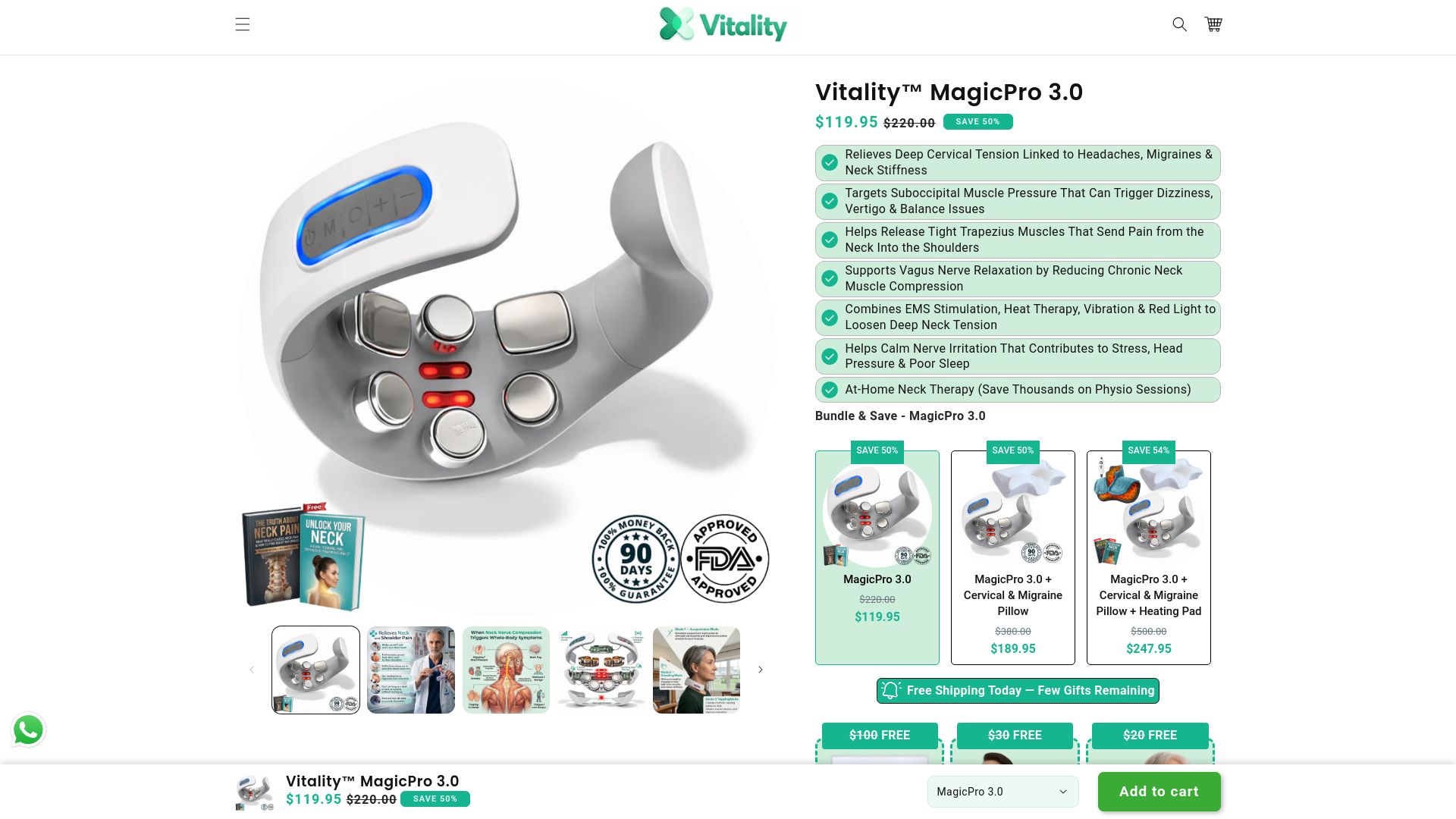
The devices follow the same safety principles covered above: posterior placement, session timers, and adjustable intensity so you control the experience instead of guessing at it. If your neck tension is the mechanical, end-of-day kind rather than a sign of something structural, the MagicPro 2.0 is worth a look, and the full Vitality device lineup gives you a way to compare options before you commit to one.
This article is general information, not a substitute for advice from a qualified doctor. Consult a qualified healthcare professional about your own circumstances before acting on anything here.
Sources
- Massage therapy for neck and shoulder pain: a systematic review and meta-analysis (2013)
- Neck massager: Benefits, risks, and safe use — Healthline (2021)
- 3 Best Neck Massagers of 2026, Tested by Experts — Consumer Reports