


For most people, herniated discs in the neck improve with short-term self-care and guided physical therapy. Start with ice, then heat, keep moving gently, and avoid heavy lifting or sudden neck twisting. Seek urgent care if you notice progressive weakness, loss of hand coordination, or any change in bladder or bowel control.
TL;DR:
- Most herniated cervical discs improve with early self-care, including ice, heat, gentle activity, and avoiding heavy lifting or sudden neck movements.
- Symptoms such as radiating pain, numbness, and muscle weakness usually improve as inflammation subsides, but worsening neurological deficits require immediate medical attention.
- MRI is the preferred imaging method for diagnosis, and most patients respond to conservative treatments within four to six weeks.
- Surgical intervention is reserved for cases with significant or worsening neurological deficits, spinal cord compression, or persistent, severe pain after several months.
- Home devices like electrical stimulation and heat can support recovery but should complement, not replace, physical therapy and medical advice.
Table of Contents
- What Happens When a Cervical Disc Herniates?
- What Symptoms Signal a Herniated Neck Disc, and Which Ones Are Emergencies?
- How Do Doctors Diagnose a Herniated Cervical Disc?
- What Should You Do in the First 48 to 72 Hours?
- Which Conservative Treatments Actually Work?
- When Is Surgery Necessary for a Herniated Neck Disc?
- How Long Does Recovery Typically Take?
- Can At-Home Neck Devices Support Recovery Safely?
- What Actually Matters Most in Recovery?
- A Supportive Tool for the Home-Care Phase
- Where This Guidance Comes From
- Sources
What Happens When a Cervical Disc Herniates?
Your cervical spine is a stack of seven vertebrae, C1 through C7, cushioned by discs that act as shock absorbers between each bone. Each disc has a tough outer ring and a softer, gel-like center. A herniation happens when that center pushes through a weak spot in the outer ring, often after years of gradual wear or a single awkward strain.
The problem isn’t the disc material itself. It’s what the disc touches on its way out. Nerve roots exit the spinal cord between each vertebra, and a herniated disc that presses on one of these roots causes what doctors call radicular pain: sharp, shooting discomfort that travels down the shoulder, arm, or into the fingers, following whichever nerve got pinched.
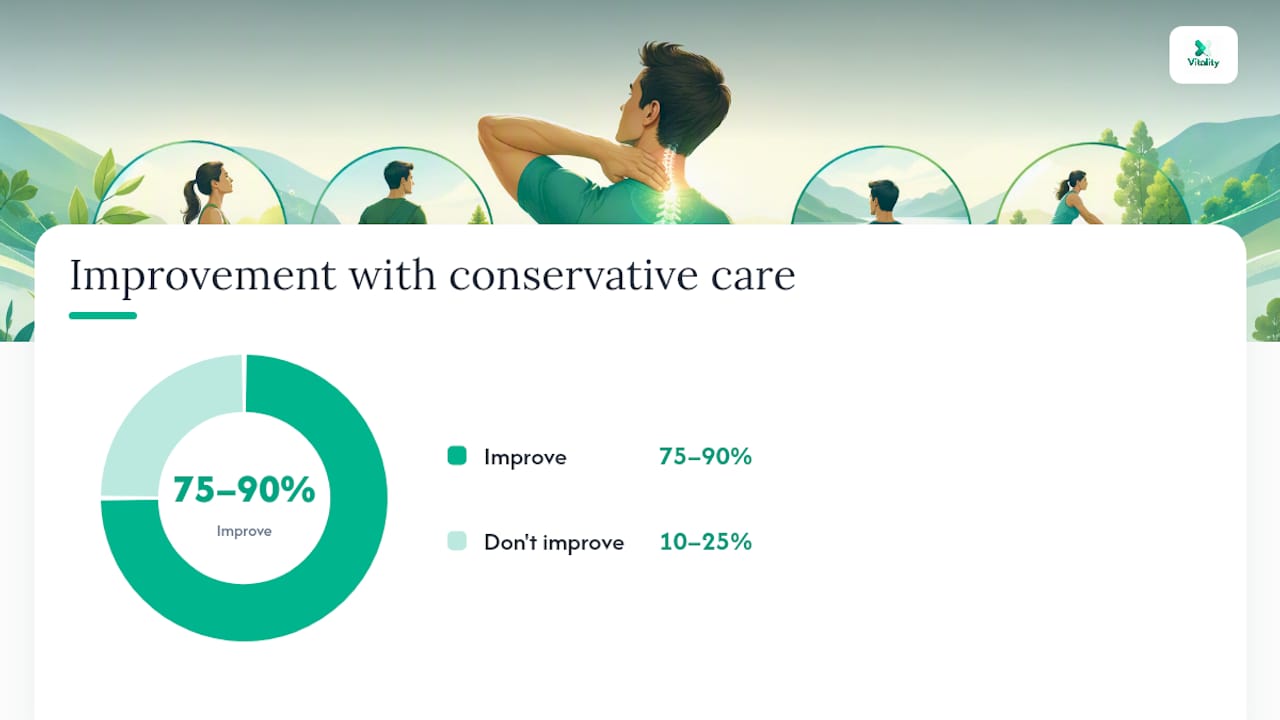
Here’s the part that surprises most people: your body has a built-in repair process. Inflammatory cells gradually resorb the leaked disc material, and swelling around the nerve root subsides over time. That’s why most cervical disc herniation cases improve with non-surgical treatment, with roughly 75 to 90 percent of patients improving through conservative care alone. Your neck often heals itself. It just needs the right conditions and enough time to do it.
What Symptoms Signal a Herniated Neck Disc, and Which Ones Are Emergencies?
Neck pain from a herniated disc rarely stays in one spot. It tends to radiate, and the pattern of that radiation tells you a lot about which nerve is involved.
Typical symptoms include:
- Neck pain that worsens with certain head positions or movements
- Pain, tingling, or burning that travels down one arm toward the hand
- Numbness in specific fingers, depending on which nerve root is compressed
- Muscle weakness when gripping objects or lifting the arm
- A dull ache between the shoulder blades
Most of these symptoms are uncomfortable, not dangerous, and they typically ease as inflammation resolves. A separate category of symptoms needs same-day medical attention:
- Progressive weakness in the arm or hand that worsens over hours or days
- New loss of fine hand coordination, like difficulty buttoning a shirt
- Changes in bladder or bowel control
- Fever combined with neck pain, which can point to infection rather than a disc issue
Keep a simple symptom log: note when pain started, what movements worsen or ease it, and whether numbness or weakness is stable, improving, or getting worse. That timeline is often more useful to a clinician than a detailed pain description.
How Do Doctors Diagnose a Herniated Cervical Disc?
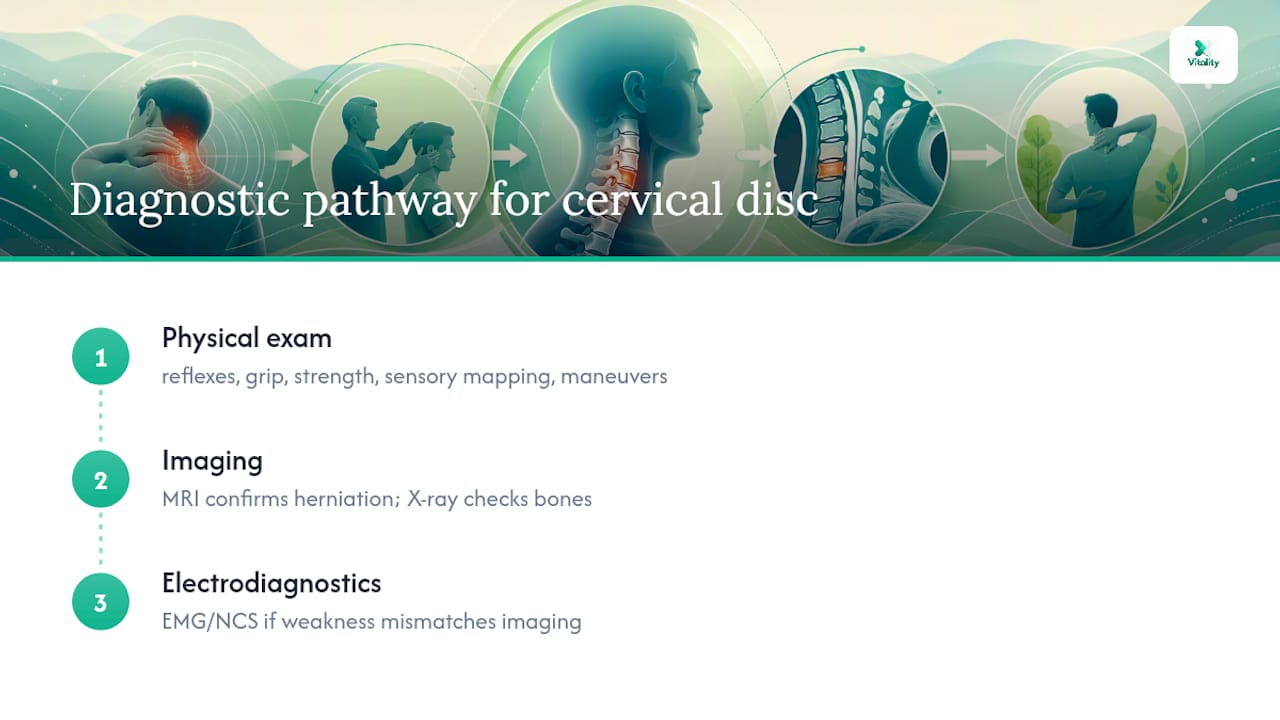
A physical exam usually comes first. Clinicians check reflexes at the elbow and wrist, test grip and arm strength, and map areas of numbness against known nerve patterns. Provocative maneuvers, like tilting your head toward the painful side while a clinician applies gentle pressure, can reproduce radiating pain and help confirm which nerve root is affected.
Imaging comes next, and not all scans are equal here. MRI is the imaging test of choice for confirming a herniated disc and pinpointing the exact nerve root involved. X-rays cannot show a herniated disc directly. They’re mainly useful for ruling out fractures, arthritis, or bone alignment problems that might mimic disc symptoms.
When weakness is significant or doesn’t match the imaging findings, a clinician may order an EMG (electromyography) or nerve conduction study. These tests measure how well electrical signals travel through the nerve, helping distinguish a disc problem from something like carpal tunnel syndrome. Each test exists to answer a specific question, and the answers shape whether you need watchful waiting, physical therapy, or a specialist referral.
What Should You Do in the First 48 to 72 Hours?
The early window after symptoms flare matters. What you do in the first three days sets the tone for the weeks that follow.
- Apply ice for the first 48 to 72 hours. Fifteen to twenty minutes at a time calms acute inflammation around the irritated nerve root.
- Switch to heat once the sharp pain settles. Heat increases blood flow to tight muscles and helps loosen the guarding that often follows a nerve flare.
- Stay gently active. Short walks and light range-of-motion movement beat prolonged bed rest, which can stiffen muscles and slow recovery.
- Use OTC pain relievers as directed. Acetaminophen or an NSAID like ibuprofen can take the edge off; call your clinician before combining medications or if you have kidney, liver, or stomach conditions.
- Consider a soft collar only briefly. Short-term use, around two to four days, can reduce pain during flare-ups, but wearing one longer weakens the neck muscles that need to stay engaged for recovery.
- Adjust your sleep setup. A supportive cervical pillow or rolled towel under the neck helps maintain a neutral head position, which matters most for side sleepers trying to avoid nighttime strain, according to guidance from the Merck Manual.
- Avoid heavy lifting and sudden neck rotation. Reaching overhead, checking a blind spot with a fast head snap, or hauling groceries can reignite nerve irritation just as it starts to calm.
Pro Tip: Set your monitor at eye level and hold your phone up rather than tilting your chin down to read it. That single change removes hours of cumulative forward-neck strain every workday.
Which Conservative Treatments Actually Work?
Once the acute flare settles, physical therapy becomes the backbone of recovery. Good PT doesn’t start with aggressive stretching. It starts with isometric exercises, gentle muscle contractions that build stability without straining the injured area, then progresses toward strengthening and posture retraining as symptoms allow. Movement retraining paired with progressive strengthening is what actually rebuilds the support structure around the disc, not passive treatments alone.
Several modalities support that process, though their evidence strength varies:
- Heat and ice remain the most reliably useful tools for day-to-day symptom control.
- Cervical traction may reduce radicular symptoms by widening the space nerve roots pass through; when clinicians prescribe it, protocols typically use a moderate amount of pull with controlled neck flexion for brief sessions lasting several minutes, always under professional supervision.
- TENS units are popular, but evidence for meaningful relief from disc-related neck pain is limited. Treat electrical stimulation as a helpful adjunct, not a primary fix.
Medications play a supporting role. Short courses of oral steroids can calm severe inflammation in the acute phase, and neuropathic agents like gabapentin sometimes help when nerve pain (rather than muscular pain) dominates the picture. Both require a prescribing clinician who can weigh side effects against benefit.
For pain that resists these steps, image-guided epidural steroid injections deliver anti-inflammatory medication directly to the affected nerve root. Relief typically lasts weeks to months rather than permanently, and injections work best as a bridge that lets you tolerate physical therapy, not as a standalone cure.
Roughly 75 to 90 percent of patients improve with conservative care alone. Conservative treatment is considered insufficient only when neurologic deficits progress, pain remains disabling after several months of consistent effort, or imaging and exam findings clearly point toward a problem that won’t resolve on its own.
When Is Surgery Necessary for a Herniated Neck Disc?
Surgery isn’t the default path. It becomes necessary when a patient shows progressive neurologic deficit (worsening weakness or numbness), signs of myelopathy (spinal cord compression affecting walking or hand coordination), or pain that stays disabling despite thorough nonoperative treatment.
Two procedures come up most often. Anterior cervical discectomy and fusion (ACDF) removes the damaged disc through the front of the neck and fuses the adjacent vertebrae to stabilize the segment. Posterior foraminotomy removes bone or tissue crowding the nerve root from the back of the neck without fusing anything, an option sometimes favored when a single nerve root is clearly the culprit. Disc replacement, which swaps the damaged disc for an artificial one while preserving motion, is another option some surgeons consider for specific cases.
Outcomes are generally favorable for the right candidates, but every procedure carries risks. Ask your surgeon directly about infection rates, adjacent-segment issues down the road, and realistic recovery timelines before deciding.
How Long Does Recovery Typically Take?
Many people notice meaningful improvement within four to six weeks as the body resorbs the leaked disc material and swelling around the nerve root fades. That doesn’t mean you’re back to full activity by week six. It means the sharpest pain and most disruptive symptoms usually start easing in that window.
Rehab milestones typically follow a predictable order: pain control first, then restored range of motion, then progressive strengthening, and finally a return to normal activity, including exercise and work tasks that involve sustained neck positions. Roughly a third of patients still deal with some lingering symptoms beyond the initial recovery window, which is common enough that it shouldn’t be mistaken for a treatment failure.
If your symptoms plateau instead of improving, or if new weakness or numbness appears at any point, that’s the signal to go back for re-evaluation rather than push through on your own.
Can At-Home Neck Devices Support Recovery Safely?
Electrical muscle stimulation, heat, and massage can ease muscle spasm and take the edge off discomfort while your body works through the underlying healing process. Clinicians generally treat electrotherapy as an adjunct rather than a primary fix for cervical radiculopathy, which is exactly the right way to think about any device you use at home.
Before adding one to your routine, run through this checklist:
- Skip EMS devices if you have progressive motor weakness that hasn’t been evaluated
- Avoid electrical stimulation over implanted devices like pacemakers
- Check skin for irritation, rash, or open wounds before applying heat or electrodes
- Start with shorter sessions and lower intensity, then adjust based on comfort
A reasonable starting point is one 15-minute session daily, alongside your prescribed physical therapy exercises and any medication your clinician recommends. Devices that combine PEMF or heat-based modalities have documented uses in pain rehabilitation, though results and appropriate use vary by condition.
Pro Tip: Use a heat-and-massage session right before your PT stretches, not instead of them. Warmed, relaxed muscles move through range-of-motion exercises more comfortably than cold, guarded ones.
What Actually Matters Most in Recovery?
The biggest mistake I see in how people approach a herniated neck disc is treating it as an emergency to fix fast or a life sentence to fear forever. It’s neither. It’s a healing process with a timeline, and rushing it or freezing up out of fear both slow it down.
The conservative-first path works for the overwhelming majority of people, but it demands consistency: daily movement, real physical therapy, not just stretching when it hurts, and honest tracking of whether symptoms trend better or worse. Watch the red flags closely, especially progressive weakness, but don’t let ordinary radiating pain convince you something is catastrophically wrong. Document what you feel, do the unglamorous rehab work, and follow up if a few weeks pass without any improvement.
— Achraf
A Supportive Tool for the Home-Care Phase
Once your clinician has cleared you for self-care and you’re focused on managing day-to-day symptoms, an at-home device can fit naturally into that routine as one part of a broader plan, not a replacement for physical therapy or medical follow-up. My Vitality’s MagicPro 2.0 combines electrical muscle stimulation, heat, and massage into a single 15-minute session, built to travel with you between the couch, the office chair, and the car seat.
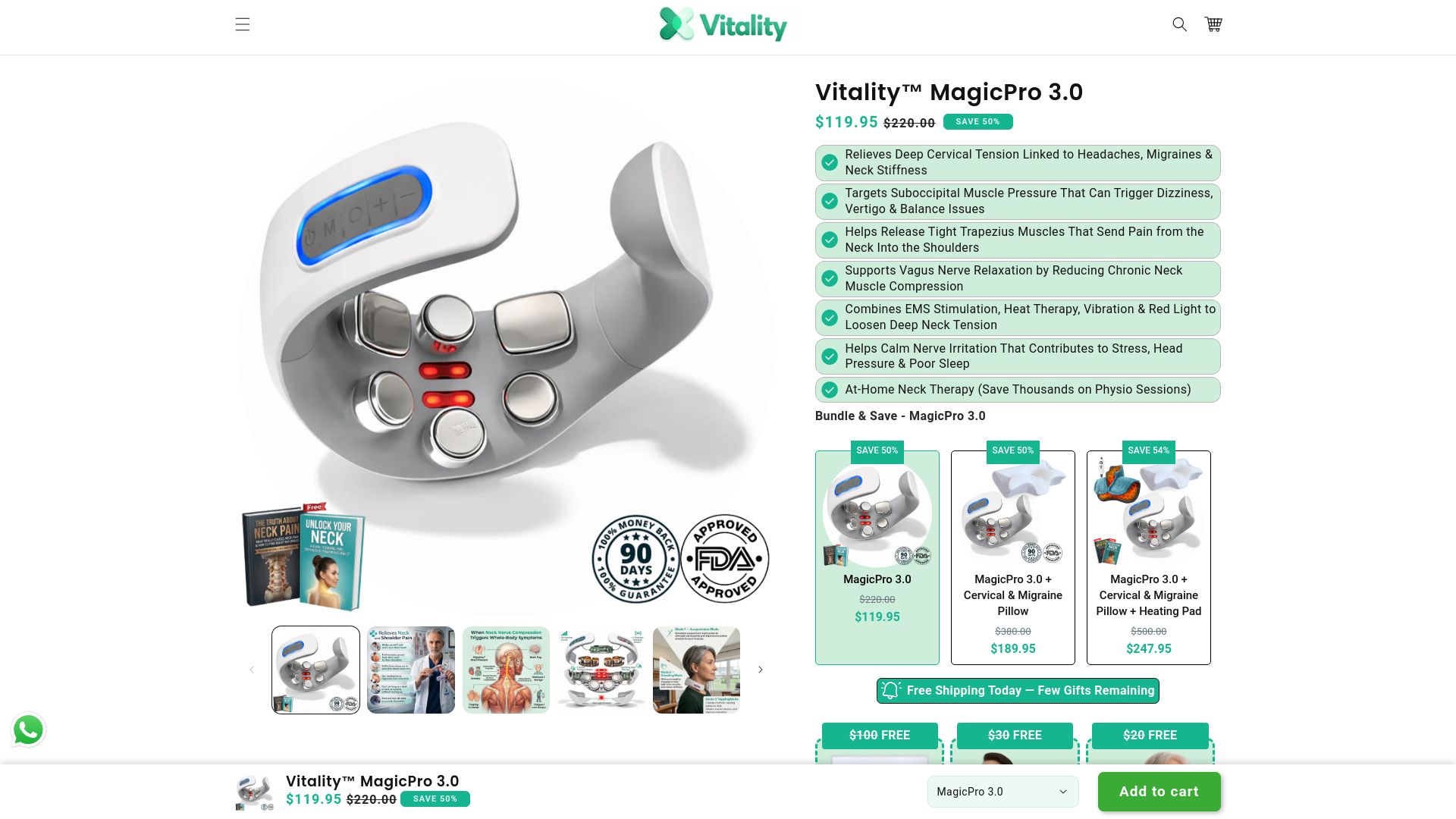
The appeal isn’t a miracle claim. It’s convenience during the parts of recovery that are genuinely tedious, the daily muscle tension, the stiffness after sitting too long, the moments between PT sessions when you need something simple that helps you relax. Some users report improvement in day-to-day neck discomfort when they pair short daily sessions with ergonomic and activity changes. Skip it if you have progressive weakness that hasn’t been checked out, an implanted electronic device, or irritated skin at the treatment site. If none of those apply and you’re looking for a practical adjunct, browse the full Vitality™ device lineup and see which option matches how and where you plan to use it.
Where This Guidance Comes From
This guide draws on clinical references covering diagnosis and conservative care from the Mayo Clinic, surgical indications from the NCBI Bookshelf, and rehabilitation guidance from Harvard Health.
This article is general information, not a substitute for advice from a qualified doctor. Consult a qualified healthcare professional about your own circumstances before acting on anything here.
Sources
- Cervical Disc Herniation — NCBI Bookshelf
- Neck pain - Diagnosis and treatment - Mayo Clinic
- How to soothe a sore neck — Harvard Health