

Neck massagers can ease the muscle tightness and secondary pain that come with a herniated cervical disc, but they cannot repair or reposition the disc itself. Low-intensity percussion devices, shiatsu or heated pillow massagers, and EMS/TENS wearables are generally the safest categories, according to guidance from the Mayo Clinic and RCT evidence on percussion therapy. The one rule that matters most: never apply direct pressure or vibration over the vertebrae. My Vitality’s MagicPro devices follow this exact logic, combining low-intensity settings with muscle-focused relief.
TL;DR:
- Percussion massagers are more effective when used with low frequency, limited to about 33 to 40 Hz, and only for short sessions of around three minutes per muscle group.
- TENS and EMS devices are safer options for herniated disc management because they use electrical pulses instead of mechanical force, reducing risks near the neck.
- Massagers should be used only on neck muscles away from the spine, with gentle strokes, soft attachments, and sessions capped at 15 minutes to prevent nerve irritation.
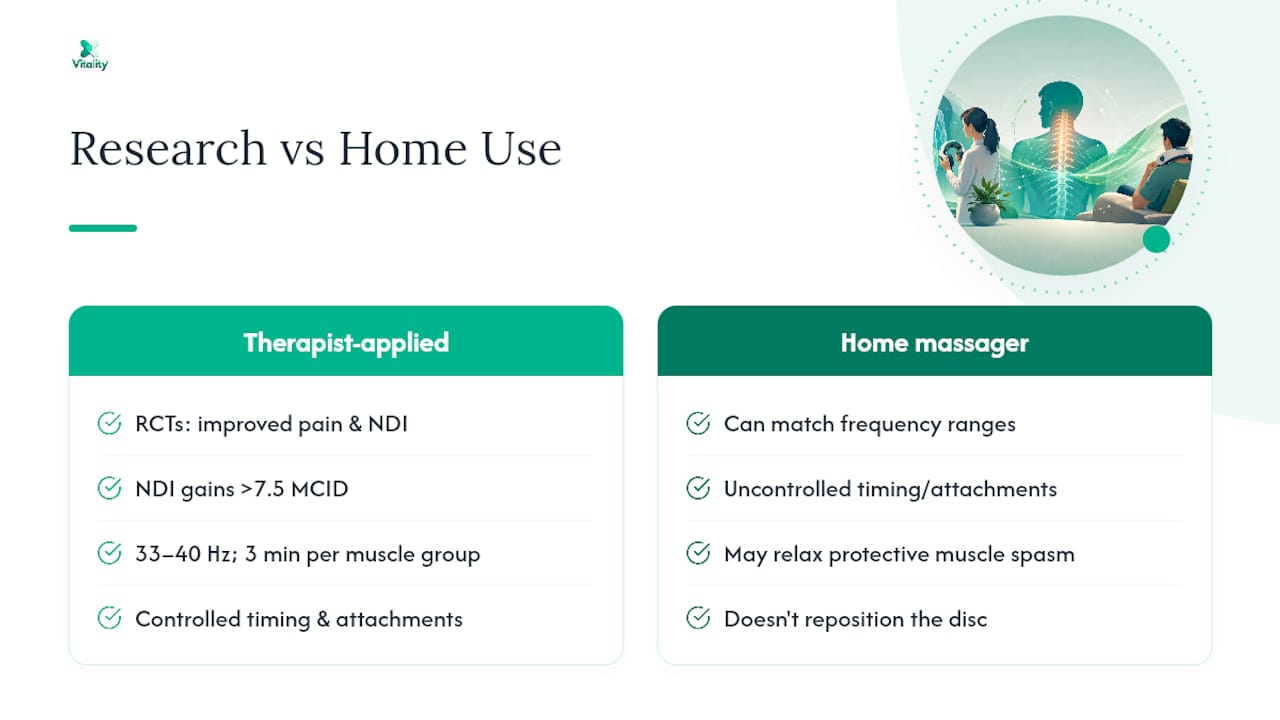
- Evidence shows percussion therapy can improve neck pain and function when applied by professionals, but home use lacks the controlled timing and attachments of clinical treatment.
- Signs such as worsening numbness, arm weakness, or radiating pain require immediate medical attention rather than self-managed massage therapy.
Table of Contents
- Which Neck Massagers Work Best With a Herniated Disc?
- How Do You Use a Neck Massager Safely With a Herniated Disc?
- What Does the Research Actually Show?
- When Should You Stop and See a Clinician Instead?
- Why We Frame Massagers as Support, Not a Cure
- Where the MagicPro Devices Fit Into This Guidance
- Sources
Which Neck Massagers Work Best With a Herniated Disc?
Not every device on the market belongs anywhere near a cervical disc injury. The category matters, and so does the setting you choose within it.
Percussion massagers, also called massage guns, use rapid tapping motion to reach muscle tissue. Clinical trials testing percussion massage therapy (PMT) used frequencies around 33 to 40 Hz for roughly 3 minutes per muscle group, and this approach produced measurable pain reduction when paired with conventional physical therapy, according to a randomized controlled trial published in MDPI. The catch is technique. These devices were designed for large muscle groups like the quads and calves, not the delicate anatomy around your cervical spine, so the head you use and the pressure you apply matter as much as the device itself.
Shiatsu and kneading pillows work through slower, rolling pressure, often with a heat option built in. They’re gentler by design, which makes them a reasonable starting point for someone who wants relaxation without the intensity of percussion.
TENS and EMS wearables use electrical pulses rather than mechanical force, which changes the risk profile entirely. They stimulate nerve signals and muscle fibers without any direct compressive force on the neck, making them one of the lower-risk categories for people managing disc symptoms.
Avoid these regardless of device type:
- Direct contact over the spine or bony vertebrae
- High-intensity settings anywhere near the neck
- Continuous sessions longer than 15 minutes
- Any attachment designed for deep tissue on large muscle groups
How Do You Use a Neck Massager Safely With a Herniated Disc?
Safety comes down to dose and placement, not the brand of device you buy.
- Start at the lowest intensity setting and keep sessions to 10 to 15 minutes. Build up gradually only if you notice no increase in symptoms.
- Limit frequency to once or twice daily at first. This mirrors the shorter, controlled timings therapists use in clinical protocols rather than open-ended home use.
- Target the trapezius, levator scapulae, and paravertebral muscles, not the spine itself. These muscle groups tighten protectively around a herniated disc and respond well to gentle work.
- Choose soft or flat attachments and move in strokes that run parallel to the muscle fibers, never perpendicular and never pressing straight down on the spine.
- Pair the massager with heat, posture correction, and gentle mobility work rather than relying on it alone.
Stop immediately if you notice increased radicular pain (pain shooting into the arm), new numbness, tingling, or any weakness in your hand or arm. Those signs mean the massager is doing more than easing muscle tension. They can point to nerve involvement, and that calls for a clinician, not a longer session.
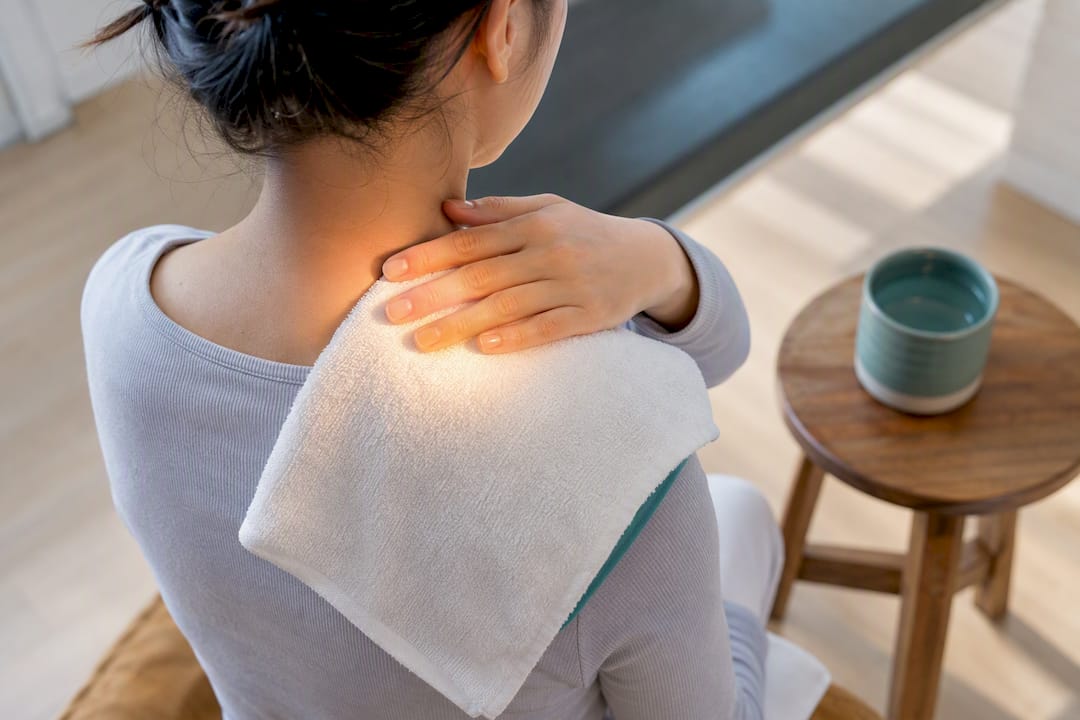
Pro Tip: Warm the muscles with a heating pad for five minutes before you start massaging. Warm tissue responds better to gentle pressure and tends to loosen faster than cold, tense muscle.
What Does the Research Actually Show?
The evidence for percussion and vibration therapy around cervical disc herniation is more specific than most product marketing suggests, and it comes with real limits.
A randomized controlled study found that adding instrument-assisted soft tissue mobilization and percussion massage therapy to conventional treatment produced significantly greater improvements in pain and neck disability than conventional therapy alone, according to research published in the Journal of Orthopaedic Surgery and Research.
The reported reductions in neck disability index scores exceeded the minimal clinically important difference threshold, meaning the improvement wasn’t just statistically measurable. Patients could actually feel and function differently.
A separate trial testing local vibration therapy at 33 to 40 Hz, applied for 3 minutes per muscle group across multiple weekly sessions, found the vibration group showed superior improvement in activity-related pain compared to conventional physiotherapy alone, per the MDPI randomized controlled trial.
Statistic callout: NDI improvements exceeding the 7.5-point minimal clinically important difference threshold signal a change patients notice in daily life, not just a number on a chart.
There’s a catch worth sitting with. These trials used therapist-applied devices with controlled timing, specific attachments, and professional oversight. Home massagers can mimic the frequency ranges, but clinicians caution that massage relaxes protective muscle spasm around the disc. It doesn’t reposition the disc or reverse the herniation itself, a distinction the Orthopedic Institute of NJ emphasizes for anyone considering a massage gun for disc-related pain.
When Should You Stop and See a Clinician Instead?
A neck massager is a support tool, not a substitute for medical evaluation when symptoms escalate.
Certain signs mean you should stop self-treatment and get evaluated right away:
- Progressive weakness in your arm, hand, or grip
- Severe or worsening pain radiating down the arm
- Any change in bowel or bladder function
- Numbness that spreads or intensifies over days
Mild, non-radiating neck pain that responds to rest and gentle care is reasonable to manage at home for a short period. But persistent or worsening symptoms warrant a physical therapist, and sudden neurological changes warrant urgent evaluation by a spine specialist, according to the Mayo Clinic’s clinical guidance on herniated disks. Massagers fit best within a supervised plan that may include TENS, targeted exercise, and periodic reassessment, typically showing gradual improvement over several weeks rather than overnight relief.
Why We Frame Massagers as Support, Not a Cure
Most product marketing around neck massagers overpromises. It’s easy to sell a device as pain relief without saying the quiet part: nothing mechanical will undo a disc herniation. The research backs a narrower claim, and it’s still a meaningful one. Percussion and vibration therapy, applied correctly, measurably calm the muscle guarding that makes disc pain worse.
That’s the gap most guides skip. A massager that relaxes your trapezius doesn’t fix your C5-C6 disc, but it can break the pain-tension cycle that keeps you stiff and guarded for weeks. My Vitality builds its MagicPro devices around that exact limitation, favoring low-intensity, muscle-focused settings over aggressive deep-tissue modes. For anyone with moderate to severe symptoms, especially arm weakness or numbness, talk to a physical therapist or spine specialist before adding any device to your routine.
— Achraf
Where the MagicPro Devices Fit Into This Guidance
Everything covered above points to one conclusion: the safest neck massagers use low intensity, soft contact, and built-in limits rather than raw power. That’s the design logic behind My Vitality’s Vitality™ MagicPro 2.0.
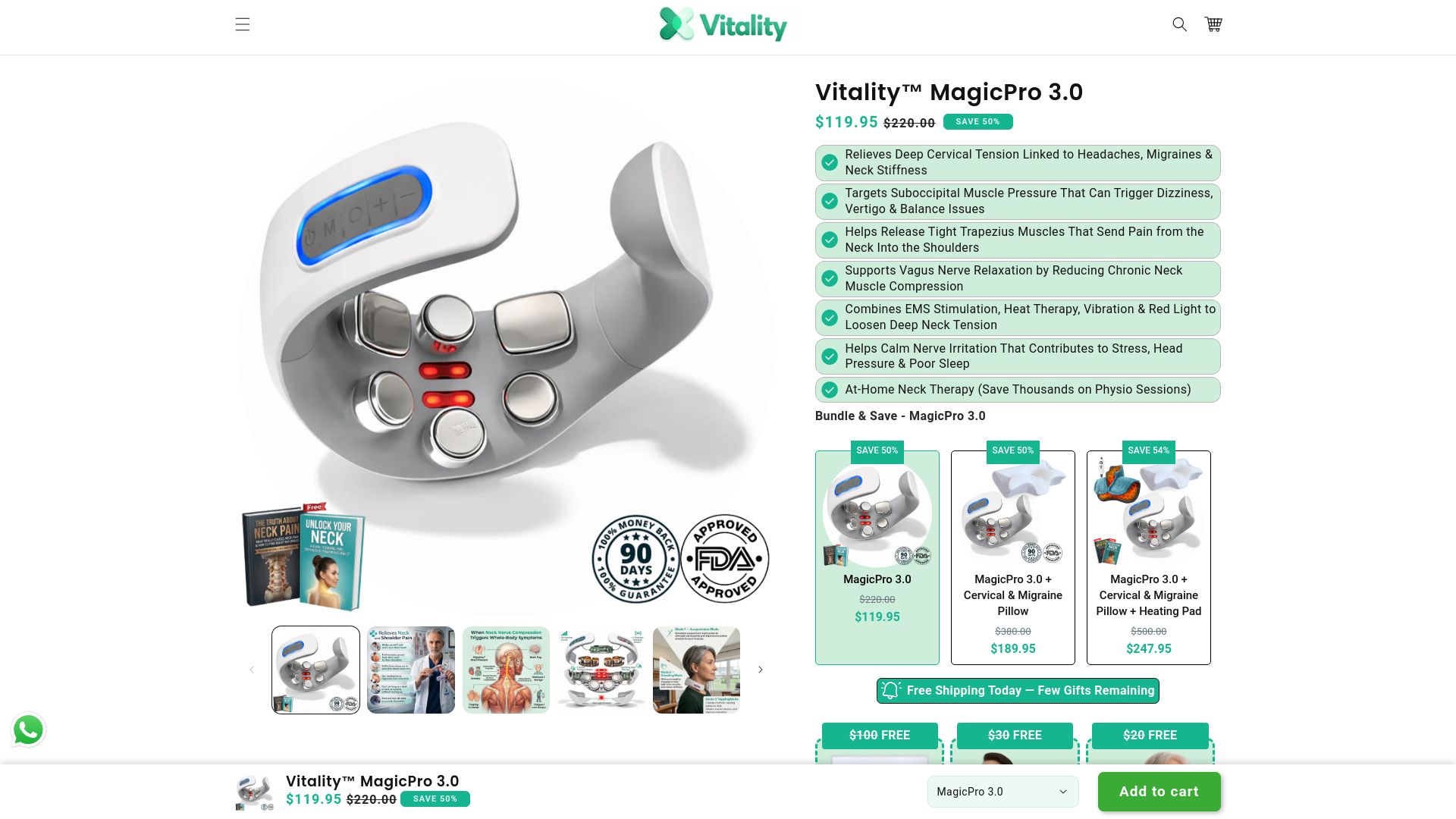
The MagicPro combines electrical muscle stimulation, heat, and gentle massage in a single wearable, delivering relief in 15-minute daily sessions instead of hours of guesswork with generic devices. Its timed sessions and low-intensity modes match the safe-use points in this guide directly: no marathon sessions, no aggressive deep-tissue settings, no risk of overdoing it on a bad day. The soft-contact design sits against the muscles around your neck rather than pressing into bone, which is exactly where clinical guidance says relief should be targeted.
If you’re managing neck stiffness alongside a herniated disc diagnosis and want a device built around that caution rather than around raw intensity, the MagicPro 3.0 offers the same core approach with expanded settings. Either model works well as a daily companion to a physical therapy plan. Check the product page for current specs and start with the lowest setting on day one.
Sources
- Instrument-assisted soft tissue mobilization and percussion massage therapy in cervical disc herniation: a randomized controlled study
- Effect of Local Vibration Therapy on Pain, Joint Position Sense, Kinesiophobia, and Disability in Cervical Disc Herniation: A Randomized Controlled Trial
- Herniated disk - Symptoms and causes | Mayo Clinic
- Do Massage Guns Work: Helpful Recovery Tool or Just a Trend? | Orthopedic Institute of NJ