


For pinched nerve neck relief in the first 48–72 hours, do these five things: modify activity to avoid heavy lifting and twisting, apply ice for 15–20 minutes at a time, take an OTC anti-inflammatory such as ibuprofen with food, perform only pain-free gentle neck movements, and rest in a supported position. That is the short version. Everything below explains how to do each step safely, what to expect over the coming weeks, and when to call a clinician.
Stop immediately if any movement causes radiating pain down your arm, spreading numbness, or new weakness in your hand. Those are your body’s clearest signals that the nerve is being further compressed.
Most people with mild to moderate symptoms notice meaningful improvement within 2–3 weeks of consistent self-care. If you are not improving after one to two weeks of home care, schedule a clinician visit rather than waiting it out.
Quick first-48-hour checklist:
- Reduce or pause activities that require looking down for long periods, carrying bags on one shoulder, or reaching overhead
- Ice the painful area: 15–20 minutes on, at least 40 minutes off, up to three times per day
- Take ibuprofen or naproxen sodium at the labeled dose with food if you have no contraindications
- Perform chin tucks and gentle neck tilts only within a pain-free range
- Sleep with a supportive cervical pillow that keeps your neck in a neutral position
Pro Tip: If ibuprofen and naproxen both upset your stomach, acetaminophen is a reasonable substitute for pain control, though it does not reduce inflammation the way NSAIDs do.
Key Takeaways
Most people with a pinched nerve in the neck recover fully with consistent, pain-free self-care and guided exercise within several weeks to a few months, without surgery.
| Point | Details |
|---|---|
| Start with ice, then heat | Ice for the first 48–72 hours to reduce swelling; switch to heat afterward to relax muscle spasm. |
| Pain-free movement is the rule | Chin tucks, neck tilts, and nerve glides should never increase radiating arm pain or numbness. |
| Over 85% resolve without surgery | Cleveland Clinic data shows most cervical radiculopathy cases improve with nonsurgical care within several weeks to a few months. |
| Red flags need same-day care | Progressive arm weakness, grip loss, or bowel/bladder changes require prompt medical evaluation, not more self-care. |
| My Vitality as a daily adjunct | The MagicPro 3.0 bundle combines EMS, heat, and massage for 15-minute sessions that support recovery alongside exercises and PT. |
Table of Contents
- What exercises give you pinched nerve neck relief at home?
- How do ice, heat, sleep position, and ergonomics help you recover?
- What medications and medical treatments are available?
- What does the evidence say about at-home devices for neck nerve pain?
- When should you see a doctor for neck nerve pain?
- How can you prevent a recurrence long-term?
- What is the realistic recovery timeline for a pinched nerve in the neck?
- Why trust this guide: sources and limitations
- A practical perspective on building a home routine that actually sticks
- The My Vitality at-home option for daily neck nerve support
- Sources
What exercises give you pinched nerve neck relief at home?
Pain-free movement is the single most important rule here. If a movement increases arm tingling, radiating pain, or numbness, stop it. Work only within a range that feels neutral or mildly uncomfortable, never sharp or electric.
Chin tucks
- Sit upright in a chair with your back supported.
- Look straight ahead and gently draw your chin straight back, as if making a “double chin.”
- Hold for 3–5 seconds. Release slowly.
- Repeat 10 times. Do 2–3 sets per day.
This movement gently decompresses the lower cervical joints and retrains the deep neck flexors that tend to weaken when you are in pain.
Neck tilts (lateral flexion)
- Sit tall. Drop your right ear toward your right shoulder slowly.
- Stop when you feel a mild stretch on the left side of your neck. Do not force it.
- Hold 20–30 seconds. Return to center.
- Repeat on the left side. Do 3 repetitions per side.
Neck rotation
- Sit upright. Slowly turn your head to the right until you feel a gentle stretch.
- Hold 5 seconds. Return to center.
- Repeat to the left. Do 5 repetitions per side, twice daily.
Only rotate as far as the movement stays pain-free. A small range done consistently beats a forced range done once.
Cervical nerve glide (slider)
This movement mobilizes the nerve itself, reducing adhesions that can amplify pain signals.
- Sit upright. Tilt your head to the left (ear toward shoulder).
- At the same time, extend your right arm out to the side with your wrist bent back (fingers pointing to the floor).
- Hold 2–3 seconds. Return both to neutral simultaneously.
- Repeat 8–10 times. Do 1–2 sets per day on the affected side.
Stop if you feel an electric or shooting sensation down the arm. A mild “pulling” sensation along the arm is normal; sharp pain is not.
Progression notes
Start with range-of-motion movements (chin tucks, tilts, rotation) in the first week. Add nerve glides in week two if the basic movements are pain-free. Introduce gentle strengthening, such as isometric neck holds and shoulder blade squeezes, in week three or later, once acute pain has settled. Increase repetitions by two to three per session every few days, not all at once.
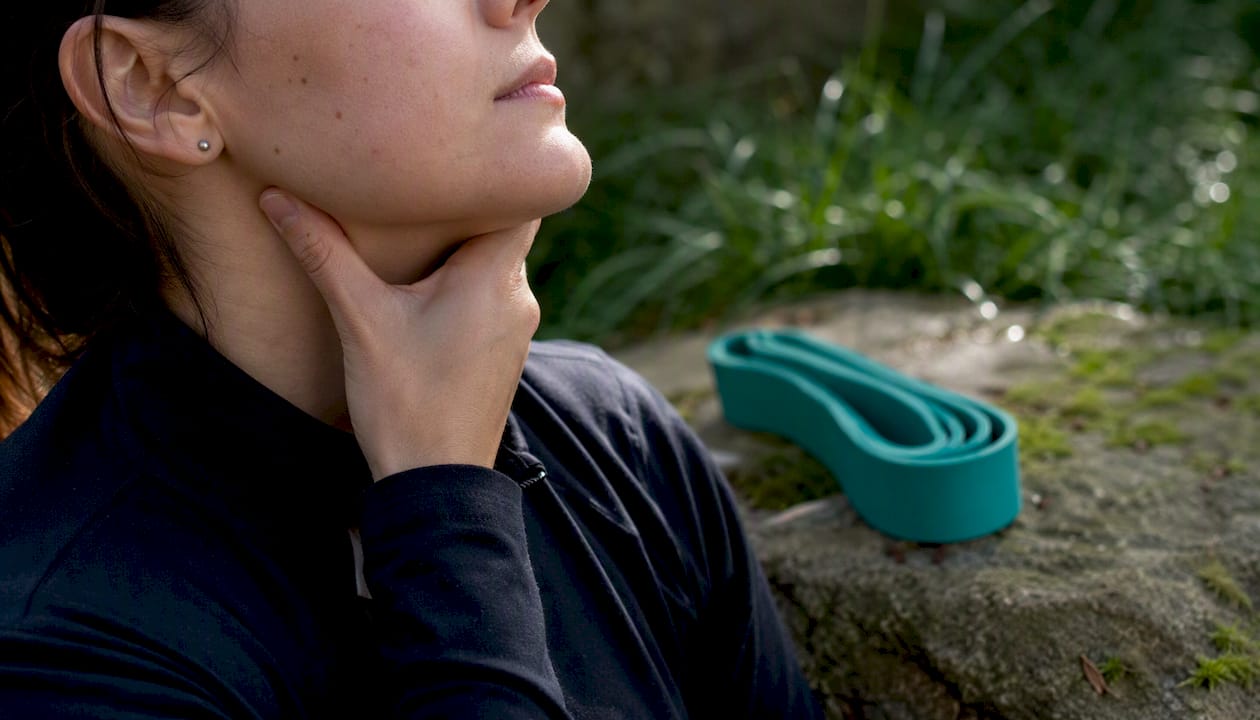
Pro Tip: Breathe out slowly during the stretch phase of each exercise. Holding your breath increases muscle tension and can make nerve irritation worse. Pair each exhale with the movement to keep the surrounding muscles relaxed.
Physical therapy takes this progression further with manual therapy and tailored loading. Harvard Health notes that guided exercise and PT are primary conservative treatments, and that any exercise should remain pain-free throughout.
How do ice, heat, sleep position, and ergonomics help you recover?
Ice vs. heat timing
Use ice during the first 48–72 hours. Cold reduces local swelling and slows the inflammatory signals that amplify nerve pain. Apply a cloth-wrapped ice pack for 15–20 minutes, then remove it for at least 40 minutes before reapplying. Never place ice directly on skin.
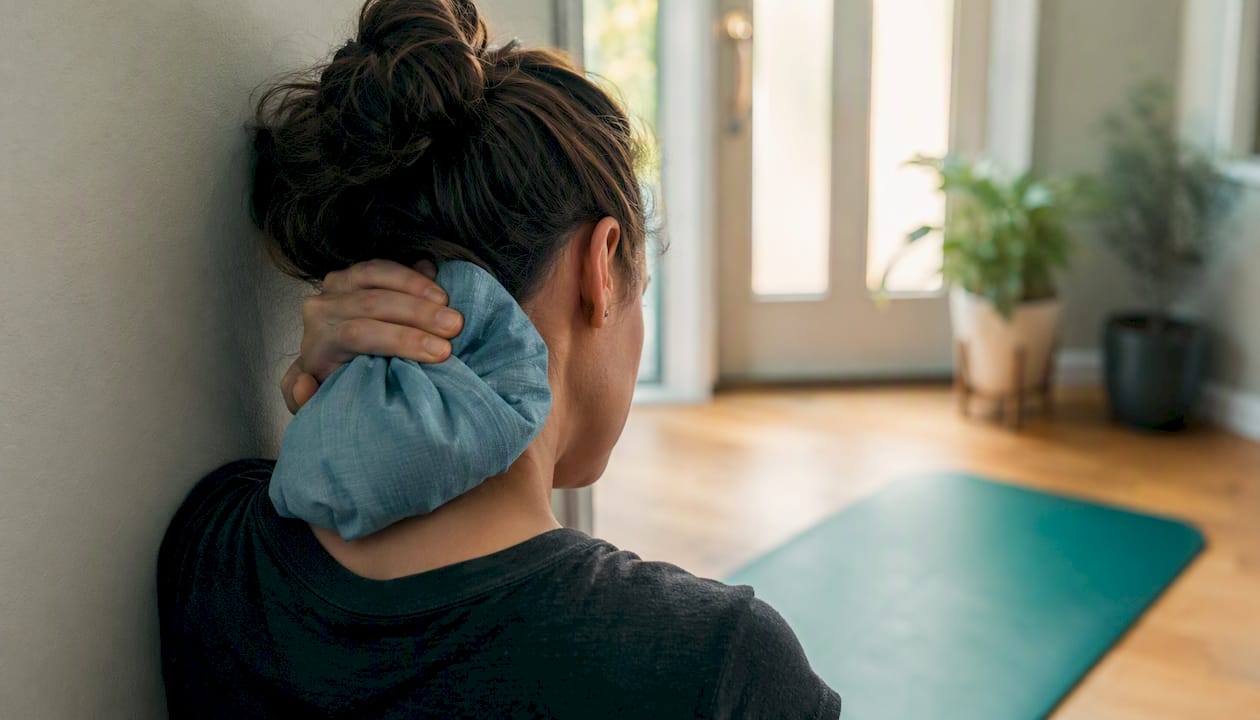
After the acute phase, switch to heat. Warmth relaxes the surrounding muscles that often go into protective spasm around an irritated nerve, and it increases circulation to the area. A heating pad on a low setting for 15–20 minutes works well. Mayo Clinic recommends this ice-then-heat sequence as a standard self-care approach for neck pain.
Activity modification
Stay gently active, but avoid the tasks that provoke symptoms. Harvard Health advises prioritizing activity modification over passive rest during the first weeks. Specifically:
- Avoid: heavy lifting, carrying a bag on the affected shoulder, overhead reaching, and prolonged looking down at a phone or laptop
- Keep doing: short walks, light household tasks, and the pain-free exercises above
- Limit: driving for long stretches in the first week, especially if shoulder-checking causes radiating pain
For the first six weeks, avoid any task that requires you to load the neck under rotation or lateral bend simultaneously.
Ergonomic checklist
Workstation:
- Monitor at eye level so your head is not tilted down or up
- Keyboard and mouse positioned so your elbows stay at roughly 90 degrees
- Chair with lumbar support and armrests that allow your shoulders to relax
Phone use:
- Use a headset or speakerphone; cradling a phone between ear and shoulder is one of the fastest ways to aggravate a cervical nerve
- Hold your phone at eye level when reading or texting
Sleep position:
- Sleep on your back or side, not your stomach (stomach sleeping forces the neck into prolonged rotation)
- Use a cervical pillow that supports the natural curve of your neck; your head should not tilt up or drop down when you are lying on your side
Healthline confirms that posture changes and targeted stretches are among the most consistently helpful home remedies for mild pinched nerve symptoms.
What medications and medical treatments are available?
Over-the-counter options
NSAIDs such as ibuprofen (Advil, Motrin) and naproxen sodium (Aleve) reduce both pain and inflammation. They work best when taken consistently at the labeled dose for several days rather than only when pain spikes. Acetaminophen (Tylenol) controls pain but does not address inflammation. Both carry safety limits: avoid NSAIDs if you have kidney issues, a history of GI bleeding, or are on blood thinners, and stay within the daily dose ceiling for acetaminophen.
Prescription medications
When OTC options are insufficient, a clinician may consider:
- Oral corticosteroids (a short “Medrol dose pack”): a 5–7 day tapering course that reduces nerve inflammation quickly. Useful for acute, severe radicular pain. Not appropriate for long-term use.
- Gabapentin or pregabalin: neuropathic agents that calm abnormal nerve firing. Common side effects include drowsiness and dizziness, which can limit daytime use.
- Amitriptyline or duloxetine: low-dose antidepressants with established neuropathic pain benefit. Duloxetine tends to be better tolerated for daytime use; amitriptyline is often used at night because of its sedating effect.
Interventional options
An epidural steroid injection (ESI) delivers corticosteroid directly to the inflamed nerve root. Clinicians typically consider it when radicular arm pain is severe and has not responded to four to six weeks of conservative care. An ESI can provide meaningful short-term relief and may allow a patient to engage more fully in physical therapy. It is not a cure, and repeat injections are limited.
Physical therapy
PT is the primary conservative pathway for cervical radiculopathy. A physical therapist will assess your movement patterns, identify which nerve root is involved, and build a program of manual therapy, traction, and progressive strengthening. Harvard Health identifies PT and guided exercise as the best-evidenced non-surgical options. Expect to attend sessions multiple times per week for a few weeks.
Soft cervical collar
A soft collar can reduce movement-related irritation during the acute phase. However, MedlinePlus advises limiting collar use to short periods of roughly 2–4 days, because continuous wear weakens the neck muscles that support recovery. Use it for specific high-risk tasks (long car rides, for example), not all day.
Surgery
Surgery is considered when neurological deficits are progressive (worsening arm weakness, loss of hand grip) or when symptoms remain severe after 6–12 weeks of consistent conservative care. The most common procedure for cervical radiculopathy is anterior cervical discectomy and fusion (ACDF). Over 85% of cases resolve without surgery within 8–12 weeks of nonsurgical treatment, so surgery remains a last resort for most people.
What does the evidence say about at-home devices for neck nerve pain?
Consumer devices marketed for neck pain fall into three broad categories: TENS units, home cervical traction devices, and multimodal units that combine electrical muscle stimulation (EMS), heat, massage, and sometimes vibration or red light therapy.
What the evidence actually shows
TENS (transcutaneous electrical nerve stimulation) may reduce pain perception in the short term by modulating pain signals at the spinal cord level. However, Harvard Health notes that clinical evidence for long-term TENS benefit in cervical radiculopathy specifically is limited. TENS can be a useful adjunct for temporary symptom management, but it does not address the underlying nerve compression.
Home cervical traction devices gently distract the cervical joints, which can temporarily reduce disc pressure on a nerve root. Some people find meaningful short-term relief. Evidence quality is moderate, and technique matters: too much force or the wrong angle can worsen symptoms.
Multimodal devices that layer heat, EMS, and massage address several mechanisms at once: heat relaxes muscle spasm, EMS stimulates circulation and muscle activation, and massage reduces soft-tissue tension. This combination may support the conditions needed for nerve healing as an adjunct to exercise and PT.
Device selection checklist
Before using any at-home device for neck nerve pain:
- Confirm the device carries relevant safety certifications (FDA-cleared or CE-marked where applicable)
- Get clinician approval before starting, especially if you have a pacemaker, are pregnant, have open skin or wounds in the treatment area, or have a history of seizures
- Start at the lowest intensity setting and increase only if the session remains pain-free
- Stop use immediately if you notice increased radiating pain, new numbness, or skin irritation
- Treat device sessions as an adjunct to your exercise routine, not a replacement for it
Pro Tip: Pair a 10–15 minute device session with your heat phase (after the first 48–72 hours) and follow it immediately with your chin tucks and nerve glides. The warmth and muscle stimulation prime the tissue for movement, which tends to make the exercises more comfortable.
When should you see a doctor for neck nerve pain?
Urgent red flags — seek care the same day
These symptoms indicate potential serious neurological compromise and require prompt evaluation:
- New or rapidly progressive weakness in the arm, hand, or fingers
- Loss of grip strength that is getting worse, not better
- Bowel or bladder changes (incontinence or retention) alongside neck pain
- Fever combined with severe neck pain and stiffness (possible infection)
- Sudden, severe neurological loss after a fall or trauma
Routine care — schedule within one to two weeks
- Radiating arm pain or numbness that has not improved after one to two weeks of consistent self-care
- Progressive numbness or tingling that is spreading rather than staying localized
- Pain severe enough to interfere with sleep or basic daily function
- Any symptom that is clearly worsening rather than plateauing
What to expect at a clinician visit
A focused neurological exam will assess your reflexes, muscle strength, and sensation in the arm and hand to identify which nerve root is likely involved. Mayo Clinic outlines that imaging options include MRI (the preferred study when structural compression is suspected) and EMG (electromyography) when there is diagnostic uncertainty about nerve function. X-rays may rule out fracture or significant degenerative changes. Most clinicians will recommend conservative management first unless red flags are present.
How can you prevent a recurrence long-term?
Recovery from a pinched nerve is only half the work. The other half is building the habits that reduce the chance of it happening again.
Mini strengthening plan
Start gentle strengthening in week three or four, once acute pain has settled. Focus on two muscle groups: the deep neck flexors and the upper back (scapular stabilizers).
- Deep neck flexor activation: chin tucks with a 10-second hold, 3 sets of 10, daily
- Shoulder blade squeezes: pull shoulder blades together and down, hold 5 seconds, 3 sets of 15, three times per week
- Band pull-aparts: using a light resistance band, pull the band apart at chest height with straight arms, 3 sets of 15, three times per week
- Wall angels: stand with your back against a wall and slowly slide your arms up and down in a “snow angel” motion, 2 sets of 10, daily
Add resistance gradually. If a movement causes radiating arm symptoms, reduce the load or range before progressing.
Daily posture and ergonomic habits
- Set a phone or computer reminder to check your head position every 30–45 minutes during desk work
- Keep your phone at eye level; every inch your head tilts forward adds significant load to the cervical spine
- Use a headset for calls longer than two minutes
- Replace a flat or worn pillow with a contoured cervical pillow that keeps your neck in a neutral curve overnight
Lifestyle factors
Regular aerobic activity (walking, swimming, cycling) maintains disc hydration and reduces systemic inflammation. Managing sleep quality and stress matters too: poor sleep and chronic stress both lower pain thresholds and slow tissue recovery. Maintaining a healthy weight reduces compressive load on the cervical discs over time.
Long-term schedule
- Weeks 1–2: pain-free range-of-motion exercises daily
- Weeks 3–6: add gentle strengthening three times per week
- Week 6 onward: maintain a mobility routine daily and strength work two to three times per week indefinitely
What is the realistic recovery timeline for a pinched nerve in the neck?
Most people want to know one thing: how long will this last? The honest answer depends on severity, but the data is reassuring.
According to the Cleveland Clinic, over 85% of cervical radiculopathy cases resolve with nonsurgical care within 8–12 weeks. Mild cases often improve much faster. Mayo Clinic notes that most mild to moderate neck pain improves within 2–3 weeks with consistent self-care.
NCBI clinical overviews confirm that radicular pain from herniated disc, spinal stenosis, or degenerative changes typically responds well to conservative-first management, with the majority of patients avoiding surgery.
| Time window | Typical symptoms | Expected next step |
|---|---|---|
| Days 1–3 | Acute pain, muscle spasm, sharp radiating arm pain | Ice, activity modification, OTC anti-inflammatories, pain-free movement |
| Week 1–2 | Pain beginning to localize, less constant radiation | Add gentle stretches and nerve glides; continue ice/heat cycle |
| Weeks 3–6 | Radiation reducing, function improving | Begin gentle strengthening; consider PT if not yet enrolled |
| Weeks 6–12 | Most cases substantially improved | Progress strengthening; if not improving, discuss imaging or injection with clinician |
| Beyond 12 weeks | Persistent or worsening symptoms | Specialist referral; consider MRI, EMG, or interventional options |
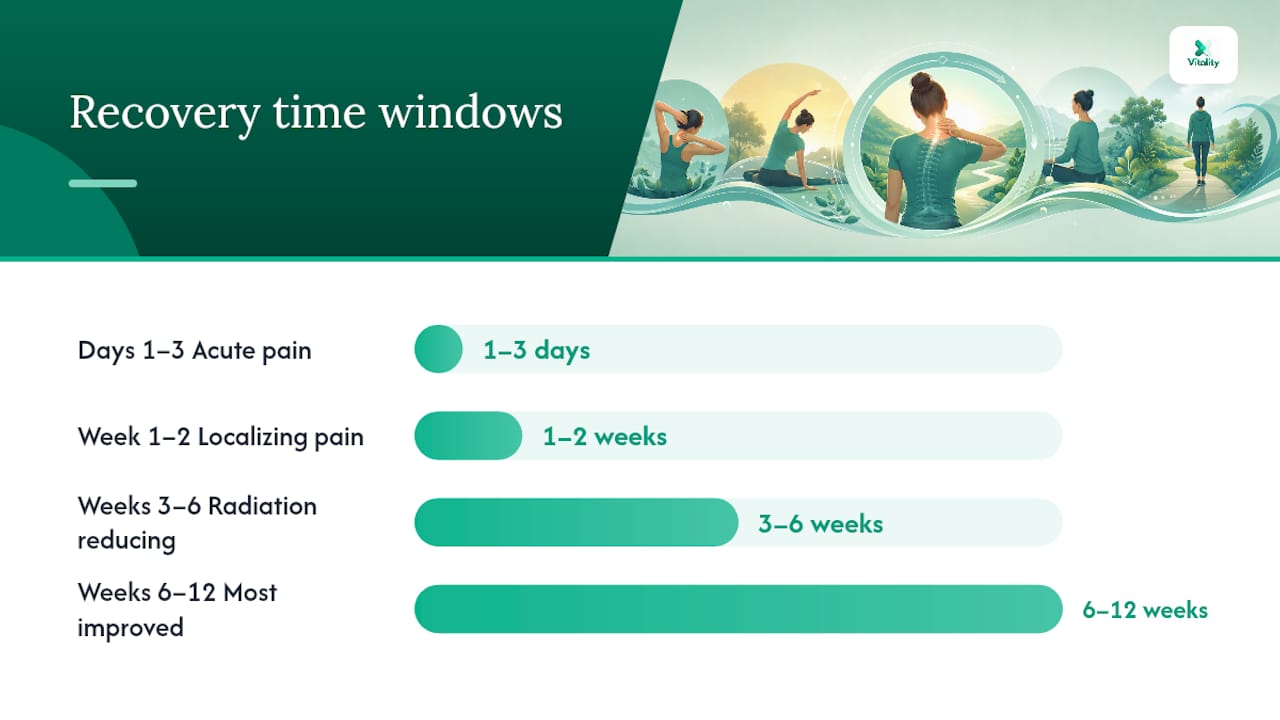
Symptoms that plateau or worsen after six weeks of consistent conservative care warrant a clinician reassessment rather than continued waiting.
Why trust this guide: sources and limitations
This guide draws on the following major medical authorities:
- Cleveland Clinic: Cervical Radiculopathy
- Mayo Clinic: Neck Pain Diagnosis and Treatment
- Harvard Health: Pinched Nerve Strategies and Treatments
- MedlinePlus: Neck Pain or Spasms Self-Care
- Healthline: Pinched Nerve Remedies
- NCBI Bookshelf: Clinical Overview of Radiculopathy
Limitations: This guide is informational and does not replace a clinical diagnosis. Pinched nerve symptoms overlap with other conditions, including thoracic outlet syndrome, rotator cuff pathology, and peripheral neuropathy. If you have any of the urgent red flags listed above, or if your symptoms are not improving, consult a licensed clinician. Medical review is recommended for anyone with persistent or severe symptoms before beginning a new exercise or device program.
A practical perspective on building a home routine that actually sticks
The most common reason home care fails is not the wrong exercises. It is inconsistency. A five-minute chin-tuck routine done every morning before coffee beats a perfect 30-minute session done twice a week when you remember.
The readers who recover fastest tend to pair their exercises with an existing daily cue: brushing teeth, making coffee, or sitting down at their desk for the first time each morning. That pairing removes the decision of when to do it, which is where most routines break down. Short device sessions fit the same way: 15 minutes during a lunch break or while reading in the evening adds up without requiring a schedule overhaul.
Track small wins rather than waiting for complete relief. Noticing that your arm tingling is less frequent on day five, or that you slept through the night without waking from pain, tells you the approach is working before the big symptoms fully resolve. Those signals matter.
Devices are adjuncts, not cures. Use them to make movement more comfortable, not as a reason to skip the exercises. And if you are three weeks in with no meaningful change, that is the right moment for a clinician check-in, not week twelve.
For practical tips on fitting short therapy sessions into a busy day, the Vitality multitasking guide covers specific strategies for working sessions around your schedule without disrupting it.
The My Vitality at-home option for daily neck nerve support
Consistent daily sessions are what move the needle in cervical nerve recovery, and that is exactly where My Vitality’s MagicPro 3.0 bundle fits in. The bundle combines EMS, heat, and massage in one compact device alongside a cervical pillow and heating pad, giving you three therapeutic modalities in a single 15-minute session you can do at home, at your desk, or while traveling.
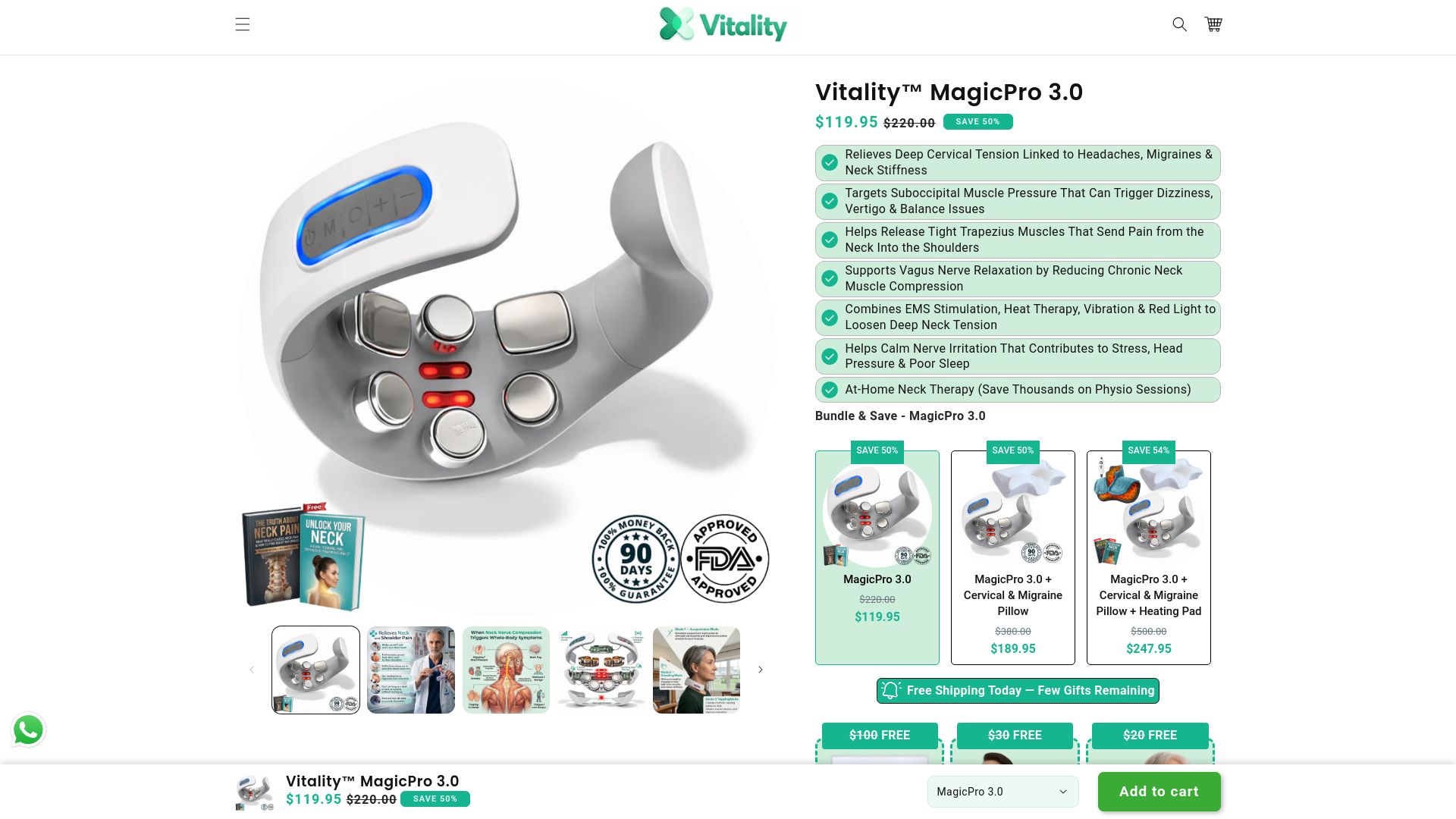
The MagicPro 3.0 is designed as an adjunct to your exercise and PT plan, not a replacement for it. Use it on a pain-free setting, start at the lowest intensity, and stop if you notice any increase in radiating arm symptoms. It is not appropriate for use over open skin, near a pacemaker, or during pregnancy. The included cervical pillow supports the neutral neck position that protects the nerve overnight, which is one of the most overlooked parts of recovery.
Browse the full range of Vitality devices to find the option that fits your current stage of recovery, or go directly to the MagicPro 3.0 bundle to get started today.
Sources
The resources below are the primary authorities behind the guidance in this article. Each is freely accessible and goes deeper on specific aspects of cervical nerve pain.
- Cervical radiculopathy (pinched nerve) — Cleveland Clinic
- Neck pain — Diagnosis and treatment — Mayo Clinic
- Got a pinched nerve? Strategies and treatments for pain relief — Harvard Health
- Neck pain or spasms — self care: MedlinePlus Medical Encyclopedia
- Pinched nerve remedies: 11 at-home treatments — Healthline
- NCBI Bookshelf — Clinical overview
This article is general information, not a substitute for advice from a qualified doctor. Consult a qualified healthcare professional about your own circumstances before acting on anything here.