


What are the most effective gentle neck pain relief techniques?
The most effective gentle neck pain relief techniques combine cold and heat therapy, targeted range-of-motion exercises, posture corrections, and breathing-based relaxation. Most mild to moderate neck pain responds well to these methods within a few days to weeks, without requiring medical intervention.
Here is a quick reference for the core approaches:
- Cold therapy first: Apply an ice pack wrapped in a towel for 15–20 minutes several times daily during the first 48 hours to reduce inflammation.
- Heat therapy after: Switch to warm compresses or a heating pad after 48–72 hours to relax stiff cervical muscles and improve circulation.
- Gentle movement: Slow head tilts, chin tucks, and shoulder rolls help restore range of motion without overloading the neck.
- Posture corrections: Adjust screen height, chair support, and phone habits to reduce daily strain on the cervical spine.
- Relaxation techniques: Diaphragmatic breathing and progressive muscle relaxation lower overall muscle tension.
- Professional care: Seek medical evaluation if pain persists beyond six weeks or if neurological symptoms appear.
Effective home remedies for gentle neck pain relief
Cold and heat therapy remain the most accessible starting points for soft neck pain relief at home. Ice therapy during the first 48 hours numbs acute pain and limits inflammation. After that window, heat opens up blood vessels, loosens tight cervical muscles, and makes subsequent stretching far more comfortable.
Beyond temperature therapy, a few other home remedies consistently help:
- Over-the-counter pain relievers: NSAIDs like ibuprofen (Advil, Motrin) or naproxen (Aleve) address both pain and inflammation. Acetaminophen (Tylenol) works for pain alone. Follow label dosing and do not exceed recommended limits.
- Gentle massage: A partner can gently knead the sore muscles along the sides of the neck and upper shoulders. Massage therapy helps break up tension knots and improves local circulation.
- Sleep setup: Using multiple pillows can misalign the cervical spine overnight. A single supportive neck pillow and a firm mattress keep the spine in a neutral position and reduce morning stiffness.
- Activity modification: Reduce heavy lifting and avoid twisting movements for the first few weeks. Staying gently active, rather than resting completely, speeds recovery.
Pro Tip: Alternate cold and heat on the same day during the transition period (around day 2–3): cold in the morning to manage any residual inflammation, heat in the evening before bed to relax muscles and improve nighttime neck pain relief.
Safe and gentle neck stretches you can do at home
Gentle neck exercises for chronic stiffness work best when started as soon as acute pain begins to ease. Begin with just 2–3 repetitions of each movement, then gradually increase toward 10 repetitions as tolerance builds. Rushing this progression is one of the most common mistakes people make.
The following movements form a solid 15-minute neck pain relief routine:
- Slow head tilt (side to side): Let your head drop gently toward one shoulder, hold for 3 seconds, return to center, and repeat on the other side. Keep shoulders relaxed and down.
- Chin tuck: Pull your chin straight back (not down) to create a slight double chin. This realigns the cervical vertebrae and relieves pressure on the upper neck joints.
- Gentle rotation: Turn your head slowly to the right until you feel a mild stretch, hold 3 seconds, then return and repeat left. Never force the range.
- Shoulder rolls: Roll both shoulders backward in slow, full circles, 5–10 times. This releases tension in the upper trapezius muscles that connect directly to the cervical spine.
- Upper trapezius stretch: Tilt your head to one side and place the same-side hand gently on top of your head for a light added stretch. Hold 20–30 seconds per side.
A warm shower or heating pad applied for 10 minutes before stretching makes the cervical muscles more pliable and reduces discomfort during movement. For desk workers specifically, neck mobility exercises done every hour or two can prevent the gradual stiffening that builds up through the workday.

How posture and ergonomics reduce daily neck strain
Poor posture is one of the most consistent drivers of chronic neck discomfort, and it rarely comes from dramatic events. Habits like cradling a phone between your shoulder and ear, or looking down at a tablet lying flat on your lap, create sustained tension in the cervical muscles that accumulates over months. The good news is that small, deliberate adjustments produce real relief.
Key ergonomic changes to make now:
- Monitor height: Position your screen so the top third sits at eye level. Looking down even slightly for hours at a time loads the cervical spine considerably.
- Chair setup: Use a chair with a straight back, adjustable seat height, and armrests. Your feet should rest flat on the floor.
- Phone use: Use a headset or speakerphone instead of cradling the handset. For texting, raise the phone toward eye level rather than dropping your chin.
- Movement breaks: Take a break every hour to stand, stretch, and reset your posture. Static positions, even comfortable ones, increase cervical muscle tension over time.
- Sleep position: The key factor for nighttime neck pain relief is spinal alignment. Sleep on your back or side with a pillow that keeps your head level with your shoulders. Avoid sleeping on your stomach, which forces the neck into prolonged rotation.
Understanding how prolonged sitting stiffens the neck helps you recognize the pattern before pain sets in, not after.

When should you see a doctor for neck pain?
Most neck pain resolves with self-care, but certain symptoms require prompt medical attention rather than home management. Neurological signs are the clearest signal that something beyond a muscle strain may be involved, and waiting can delay treatment for conditions that need it.
Seek medical evaluation if you experience any of the following:
- Arm pain, numbness, or tingling: These symptoms can indicate a herniated cervical disc pressing on a nerve root.
- Weakness in the arms or hands: Muscle weakness alongside neck pain suggests possible nerve or spinal cord involvement.
- Drop attacks or sudden loss of balance: These are among the “5 D’s” red flags that clinicians use to screen for serious cervical conditions.
- Fever, headache, and neck stiffness together: This combination may indicate bacterial meningitis and requires emergency care.
- Pain that persists beyond six weeks despite consistent self-care, or pain severe enough that you cannot sit still.
- Chest pain or pressure alongside neck pain: This combination warrants immediate cardiac evaluation.
For persistent muscular neck pain that does not resolve on its own, a physical therapist can identify the underlying cause and design a targeted exercise program. Self-care has clear limits, and recognizing them early leads to better long-term outcomes.
Expert insights on safe therapy use and movement for neck pain
Clinicians consistently emphasize one principle above all others: stay active, but stay within your pain tolerance. NHS guidance sets a practical benchmark: keep exercise-related pain within a 0–5 range on a 10-point scale. If discomfort climbs above that threshold, slow down the movement speed or reduce the number of repetitions rather than stopping entirely.
A few other clinically grounded points are worth knowing:
- Soft neck collars have a narrow window of usefulness. They can relieve acute discomfort for short periods, but prolonged use weakens the cervical muscles and can worsen chronic pain over time. Use one only briefly and remove it regularly to keep the muscles engaged.
- Heat before exercise, cold after: Warming the cervical muscles before stretching improves flexibility. Applying cold after a session can reduce any post-exercise soreness, particularly for people managing long-term neck discomfort.
- Gradual progression prevents flare-ups. Starting with low-intensity movements and increasing repetitions slowly is more effective than pushing through pain early on.
Pro Tip: Keep a simple pain log for the first two weeks of your exercise routine. Note your pain score before and after each session. A consistent pattern of post-exercise improvement, even if the session itself is uncomfortable, tells you the approach is working.
For people returning to physical activity after a neck strain, active recovery principles help maintain momentum without risking a setback.
How breathing and relaxation reduce cervical muscle tension
Muscle tension in the neck rarely exists in isolation. When the body is under stress, the trapezius and levator scapulae muscles tighten reflexively, compressing the cervical joints and amplifying pain signals. Breathing-based techniques interrupt this cycle directly.
Diaphragmatic breathing, sometimes called belly breathing, is the most accessible tool. Inhale slowly through the nose for four counts, letting the abdomen expand rather than the chest. Hold briefly, then exhale for six counts. This activates the parasympathetic nervous system, which signals the body to release muscular tension. Even five minutes of this practice before a stretching session measurably reduces baseline muscle tightness.
Progressive muscle relaxation pairs well with breathing work. Starting from the shoulders, deliberately tense each muscle group for five seconds, then release completely. Moving from the shoulders down through the arms and hands shifts attention away from the neck and helps the cervical muscles let go of held tension. Practices like tai chi, qigong, and yoga combine slow movement, deep breathing, and relaxation in a single session, and Mayo Clinic notes they can reduce neck pain and improve flexibility over time.
Precautionary measures to avoid worsening pain during exercises
The single most common mistake people make with neck exercises is starting too aggressively. Pain during movement is feedback, not something to push through. A few clear precautions protect against setbacks.
- Never force range of motion. Move only as far as you can without sharp or shooting pain. Mild tension is acceptable; sharp, electric, or radiating sensations are not.
- Avoid high-impact activities early. Contact sports, heavy weight lifting, and racquet sports place sudden, unpredictable loads on the cervical spine. These are best avoided for the first several weeks after a flare-up.
- Warm up before every session. Cold muscles are less pliable and more prone to strain. A warm shower or a heating pad applied for 10 minutes before stretching reduces injury risk.
- Stop if neurological symptoms appear. Tingling, numbness, or weakness in the arms during exercise means stopping immediately and consulting a healthcare provider before continuing.
- Do not use a neck collar as a substitute for movement. Immobilization feels protective but delays recovery. The goal is gradual, pain-monitored movement, not avoidance.
Posture during exercise matters as much as the exercise itself. The role of posture in chronic pain extends into how you hold your body during stretches. Slouched shoulders or a forward chin during a neck rotation, for example, can load the wrong structures and reduce the benefit of the movement entirely.
Vitalitytherapy MagicPro devices offer at-home relief in 15 minutes
If you want to go beyond stretches and home remedies, Vitalitytherapy’s MagicPro devices bring three clinically recognized therapies together in one compact unit: electrical muscle stimulation (EMS), targeted heat, and massage. Each session takes just 15 minutes, making it practical for daily use whether you are at home, at a desk, or traveling.
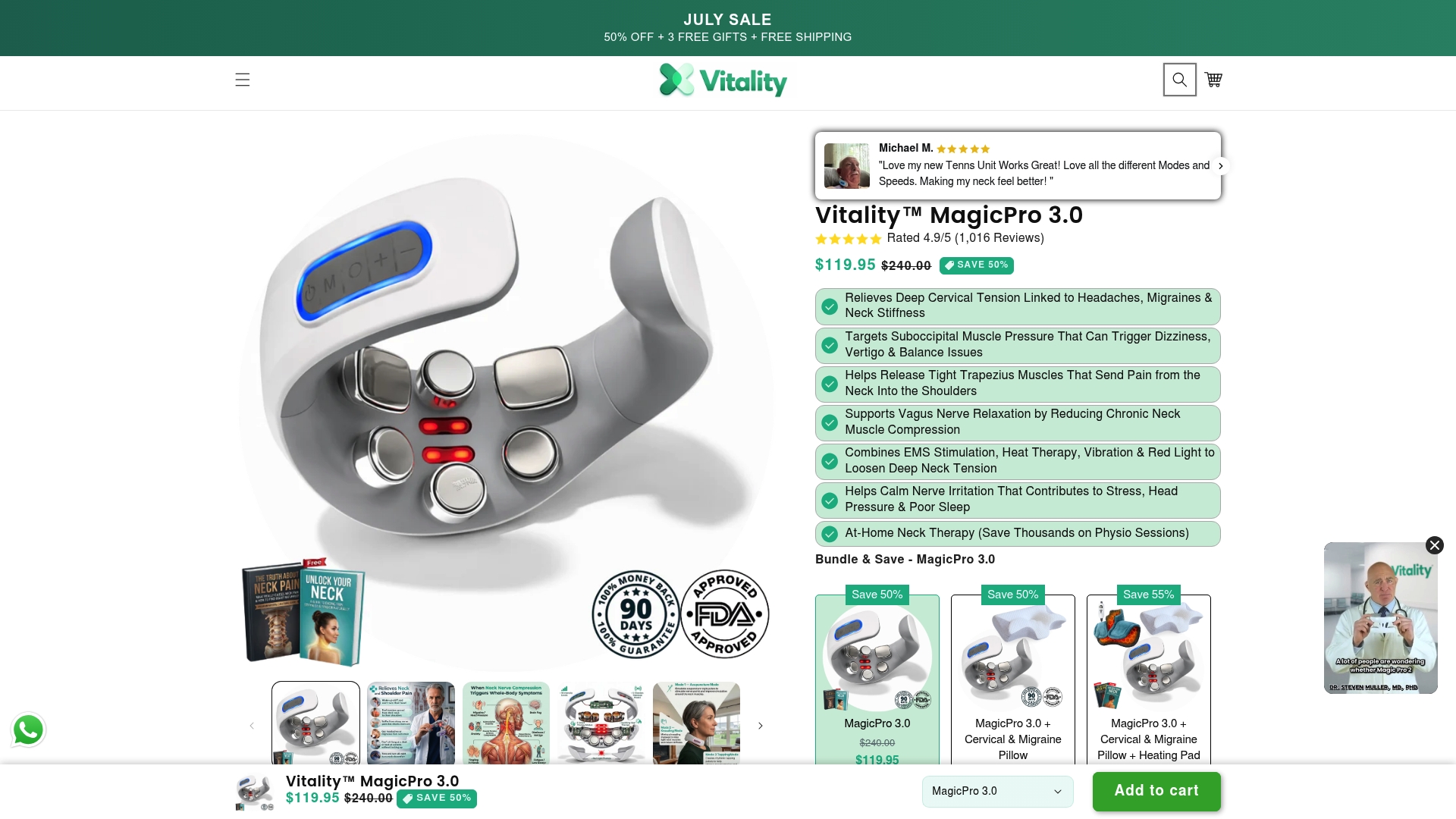
The MagicPro™ 2.0 is doctor-recommended and designed for people who need consistent, gentle relief from cervical tension and stiffness. The MagicPro™ 3.0 builds on that foundation with an upgraded therapy profile suited for those managing more persistent discomfort. Both devices are built around the same principle: multiple therapeutic approaches in a single session, without the need for a clinic visit. Explore the full MagicPro collection or go directly to the MagicPro™ 2.0 product page to see specifications and doctor endorsements.
Key Takeaways
Gentle neck pain relief works best when cold and heat therapy, gradual exercise, posture correction, and relaxation techniques are combined consistently from the first day of symptoms.
| Point | Details |
|---|---|
| Cold then heat | Apply an ice pack wrapped in a towel for 15–20 minutes several times daily during the first 48 hours to reduce inflammation. After this period, switch to heat therapy such as warm compresses or a heating pad to relax stiff cervical muscles and improve circulation. |
| Gradual exercise | Start with 2–3 repetitions of gentle movements and gradually increase to 10 repetitions as tolerated, maintaining daily practice to avoid flare-ups. |
| Pain scale monitoring | Keep exercise-related discomfort within a 0–5 range on a 10-point scale. |
| Posture and ergonomics | Take a movement break every hour and align your screen at eye level to reduce chronic strain. |
| Vitalitytherapy MagicPro | Doctor-recommended devices combining EMS, heat, and massage for 15-minute daily neck relief. |