


Improper exercise form redirects mechanical load into the cervical spine and small neck muscles, causing overload, compression, and pain. The good news: neck pain from exercise most often comes from correctable technique faults, not structural weakness, which means fixing your movement is the primary solution.
The mechanical chain, fast:
- Your head has a significant weight that increases load on the cervical spine. Even a small forward shift multiplies the load on your cervical spine.
- Poor shoulder or thoracic position forces the neck to compensate, absorbing load it was never designed to carry alone.
- That overload strains the upper trapezius, levator scapulae, and deep neck flexors, producing pain, stiffness, and tension.
Immediate actions if you are already hurting:
- Stop the movement that triggered the pain.
- Return your head to a neutral position: ears over shoulders, chin slightly tucked.
- Reduce your load or switch to a lower-demand exercise variation.
- Run a quick mobility check: can you turn your head side to side without sharp pain?
- If you have radiating pain, numbness, or weakness in your arms, seek medical evaluation now.
Pro Tip: If your neck hurts after a specific exercise, film your next set from the side. A two-second video review often reveals the exact fault, whether it is a forward chin jut, a shrug, or a collapsed upper back.
Table of Contents
- Why Poor Form Creates Neck Strain: Anatomy and Load Transfer
- Common Exercise Mistakes That Load Your Neck
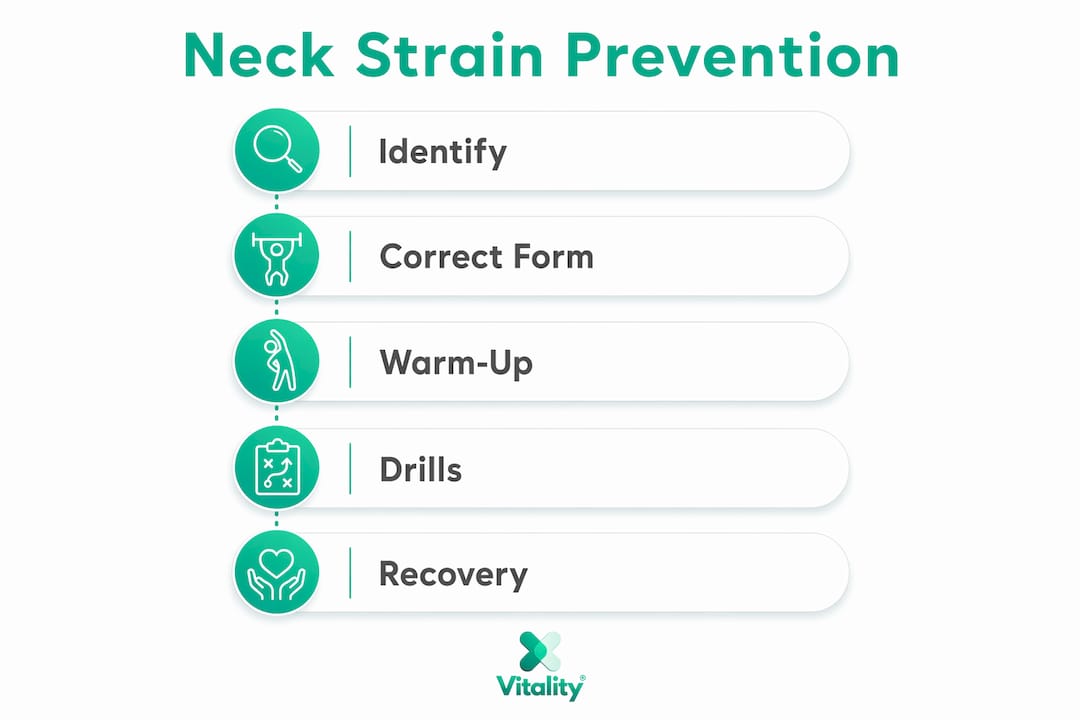
- How to Prevent Neck Strain: Warm-Up, Drills, and a Sample Routine
- What to Do Right After You Strain Your Neck
- Can Heat, Massage, and EMS Help Your Neck Recover?
- Key Takeaways
- The Part Most Exercisers Miss
Why Poor Form Creates Neck Strain: Anatomy and Load Transfer
The cervical spine is made up of seven vertebrae stacked between the skull and the upper thoracic spine. Surrounding them are layers of muscle: the upper trapezius and levator scapulae handle gross movement and elevation, while the deep neck flexors (longus colli, longus capitis) provide fine positional control and stability. When these deeper muscles are weak or fatigued, the superficial muscles take over and stay contracted, producing the familiar ache at the base of the skull and across the shoulders.
Think of a balanced head as a golf ball sitting centered on a tee. Forward head posture shifts that golf ball forward, dramatically increasing the moment arm and the compressive load on the cervical discs and soft tissues. A head that drifts just a few centimeters forward can multiply the effective load on the neck several times over.
The thoracic spine plays a bigger role than most exercisers realize. When the mid-back is stiff or rounded, the neck compensates by extending or rotating beyond its safe range. The cervical spine ends up doing the thoracic spine’s job, and that is when strain accumulates.
| Biomechanical factor | Key figure / threshold |
|---|---|
| Resting head weight | Approximately 4–5 kilograms |
| Sedentary sitting threshold linked to higher neck-pain risk | More than 6 hours/day |
Poor posture also degrades the deeper supporting muscles over time. When those muscles lose positional sensing, the nervous system over-contracts superficial muscles to compensate, creating a cycle of fatigue, shortening, and chronic tension.
Pro Tip: Before blaming a client’s neck for persistent pain, assess thoracic mobility first. A stiff T-spine is often the hidden driver. Restore mid-back rotation and extension, and the neck frequently sorts itself out.
Common Exercise Mistakes That Load Your Neck
Most neck strain in the gym traces back to a handful of repeatable errors. Recognizing them by name makes them easier to correct.

Craning during crunches and planks. Pulling the head forward with your hands during a crunch, or letting the chin drop toward the floor in a plank, loads the cervical extensors and flexors simultaneously. The corrective cue is simple: keep a fist’s width of space between your chin and your chest. If the neck still fatigues, switch to a dead bug or a pallof press until core strength catches up.
Looking up during overhead presses. Tipping the head back to watch the bar travel overhead jams the cervical facet joints and compresses the posterior neck. Keep your gaze forward and your chin neutral throughout the press. If a heavy barbell overhead press consistently triggers neck pain, a landmine press or a seated dumbbell press with a supported back is a lower-risk alternative while you rebuild thoracic mobility.
Shrugging during rows and pulls. When the upper traps dominate a row or a lat pulldown, the neck gets dragged into elevation and compression. The cue: “pull your shoulder blades down and back before you pull the bar.” Feeling the mid-back work before the arms move is the goal.
Tensing the neck to brace. During heavy lifts, some people clench the neck and jaw to create perceived stability. This shifts load upward into the cervical spine. Teaching diaphragmatic bracing, where you breathe into your belly and brace through the core, removes the neck from the equation entirely.
Non-gym contexts matter too. Runners who jut the chin forward to push through fatigue load the same posterior neck structures as a bad overhead press. Cyclists in an aggressive aero position hold the neck in sustained extension for long periods. Swimmers who rotate the head too far or too abruptly during breathing can strain the cervical rotators. In each case, the fix is the same: restore neutral head position and address the upstream mobility or strength deficit.
How to Prevent Neck Strain: Warm-Up, Drills, and a Sample Routine
Prevention starts before the first working set. A short, targeted warm-up addresses the three most common upstream contributors: thoracic stiffness, weak scapular stabilizers, and restricted neck range of motion.
Warm-up checklist (5–7 minutes):
- Thoracic extension over a foam roller: 8–10 reps, pausing at each segment.
- Cat-cow: 10 slow reps, focusing on upper-back extension rather than lumbar movement.
- Scapular wall slides: 10 reps, keeping the lower back flat and the arms in contact with the wall.
- Gentle neck circles and side-to-side rotation: 5 reps each direction, pain-free range only.
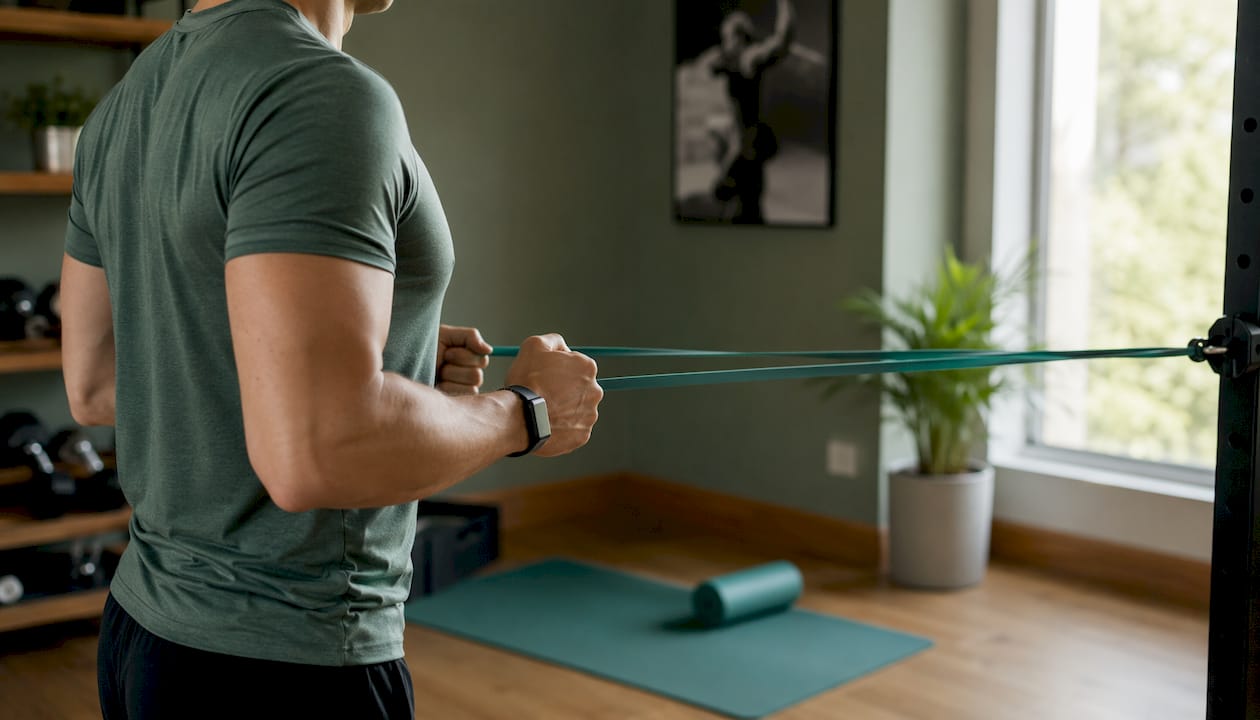
Corrective drills. Scapular retraction drills, performed with a resistance band or cable at chest height, teach the mid-back to initiate pulling movements before the upper traps engage. Two sets of 15 slow, controlled reps before any row or pull session resets the motor pattern quickly. T-spine rotations in a quadruped position (thread-the-needle) improve thoracic rotation and reduce the compensatory demand on the cervical spine. Chin tuck progressions, starting supine and progressing to seated and then standing, rebuild deep neck flexor endurance without loading the superficial muscles.
Sample micro-routine (add to any training day):
Perform scapular wall slides (2 sets of 12), followed by quadruped thread-the-needle (2 sets of 8 per side), then standing chin tucks against a wall (2 sets of 10, 3-second hold). The whole sequence takes under six minutes and directly addresses the most common technique faults that send load into the neck. For deeper corrective strategies, reactive neuromuscular training methods can also help retrain the stabilizers that protect the cervical spine under load.
| Position | Incorrect cue | Corrected cue |
|---|---|---|
| Head position | Chin jutting forward or tipped back | Ears stacked over shoulders, chin gently tucked |
| Shoulder position | Shrugged toward ears, upper traps dominant | Shoulder blades depressed and retracted before movement |
| Bracing | Jaw and neck clenched for stability | Diaphragmatic breath, core braced, neck relaxed |
What to Do Right After You Strain Your Neck
Acting quickly after a neck strain reduces recovery time and lowers the risk of a minor injury becoming a chronic problem.
Immediate self-care steps:
- Stop the activity. Continuing through sharp or worsening neck pain risks turning a muscle strain into something more serious.
- Rest for 20–30 minutes, but avoid complete immobility. Gentle movement within a pain-free range keeps circulation moving.
- Apply ice for the first 24–48 hours (15–20 minutes on, at least 40 minutes off) to limit inflammation. After 48 hours, heat can help relax muscle tension.
- Perform slow, gentle range-of-motion movements: up and down, side to side, ear to ear. These gently stretch the neck muscles without loading them.
- Over-the-counter analgesics such as ibuprofen or acetaminophen can reduce pain and inflammation for short-term relief. Follow label dosing.
- Modify activity for a few days: avoid heavy overhead work, high-impact movements, and any exercise that reproduces the pain.
Recovery timeline. Most mild muscle strains improve over days to a few weeks with consistent self-care. If symptoms are not improving after a week, or if they are getting worse, that is a signal to see a clinician. Persistent symptoms or neurological signs suggest structural or nerve involvement that needs professional assessment. For active recovery ideas that support healing without aggravating the neck, the active recovery neck pain guide from My Vitality covers practical options.
Red flags requiring urgent medical evaluation: radiating pain into the arms or legs, numbness or tingling, muscle weakness, a severe headache that came on suddenly, or intense neck pain following a fall or trauma. Do not wait on these symptoms.
This article is general information, not medical advice. Confirm your specific situation with a qualified healthcare professional.
Can Heat, Massage, and EMS Help Your Neck Recover?
Restorative therapies work best as adjuncts to movement correction, not replacements for it. That said, heat, gentle massage, and targeted electrical stimulation can meaningfully reduce muscle tension and inflammation and support rehabilitation when paired with the corrective work above.
Heat increases local circulation and relaxes muscle guarding, making it particularly useful in the subacute phase (after the first 48 hours). Massage reduces myofascial tension and can interrupt the over-contraction cycle that develops when deeper supporting muscles lose proprioception. Electrical muscle stimulation (EMS) delivers targeted nerve signals to contracted muscles, promoting relaxation and reducing pain perception without requiring movement.
What to look for in a portable neck therapy device:
- Adjustable EMS intensity so you can start low and progress as comfort allows.
- Integrated heat to complement the electrical stimulation.
- Multiple massage modes (pulse, knead, scrape) to address different tissue layers.
- Compact, wearable design for use at home, at a desk, or during travel.
- Clear safety guidelines, including contraindications for pacemakers and pregnancy.
My Vitality’s MagicPro 2.0 combines EMS, heat, and massage in a single portable device designed for exactly this kind of adjunct recovery. It is doctor-recommended and built for 15-minute daily sessions, fitting into a recovery plan without disrupting a training schedule. For hands-on manual therapy as a complement, therapeutic massage from a qualified practitioner can address deeper tissue tension that devices alone may not fully resolve.
Pro Tip: Use a heat or EMS session after your corrective drills, not before a heavy workout. Applying heat before loading can temporarily reduce tissue stiffness in a way that masks pain signals you need to feel.

Key Takeaways
Improper form strains the neck by shifting mechanical load onto the cervical spine and small neck muscles, and correcting technique, building mid-back stability, and using restorative therapies together produces the best outcomes.
| Point | Details |
|---|---|
| Form drives most neck pain | Technique faults and poor posture, not inherent weakness, cause most exercise-related neck strain. |
| Head weight amplifies load | The head weighs approximately 4–5 kilograms; even a small forward shift multiplies cervical compression significantly. |
| Thoracic mobility is the upstream fix | Stiff mid-back forces the neck to compensate; restore T-spine mobility before targeting the neck directly. |
| Recovery is usually days to weeks | Mild strains improve with self-care; persistent or neurological symptoms need professional evaluation. |
| Devices support, not replace, correction | Heat, massage, and EMS devices are effective adjuncts when paired with corrective movement work. |
The Part Most Exercisers Miss
The most common pattern seen in people dealing with recurring neck pain during training is not a weak neck. It is a strong neck doing a job that belongs to the mid-back. The upper traps and cervical extensors are working overtime because the thoracic spine is stiff, the scapular stabilizers are undertrained, and the core bracing strategy relies on tension in the wrong places.
Fixing this rarely requires stopping training. It requires slowing down, reducing load temporarily, and spending a few minutes per session on the drills that most people skip because they feel too easy. Scapular wall slides and chin tucks are not glamorous, but they consistently resolve the mechanical imbalance that keeps the neck in pain.
Restorative tools like the My Vitality MagicPro 2.0 are genuinely useful during recovery, particularly for reducing the muscle guarding that makes it hard to move freely. But they work best when the movement correction is happening in parallel. Relief without correction is temporary. Correction with support is lasting. For more on how sitting posture habits feed into the same mechanical pattern, that guide from My Vitality is worth reading alongside this one.