


The strongest instagram.com alternatives, grouped by goal: photographers get the most from Pixelfed, VSCO, or Flickr; privacy-first users belong on Mastodon, Pixelfed, or Mirlo; creators and portfolio builders do well with Pinterest, Behance, or VSCO; low-pressure sharing fits BeReal, Mirlo, or Tumblr; and private photo archives are best handled by Immich or LibrePhotos. Pew Research’s 2025 data on Americans’ social media use shows platform loyalty is shifting, especially among younger adults who want less algorithmic pressure and more control over their feeds.
Here is what to do right now:
- Photographers: Try Pixelfed or VSCO for one week. Both preserve image quality and skip the Reels-first algorithm.
- Privacy-first users: Sign up on a Mastodon or Pixelfed instance, then cross-post from Instagram for two weeks before committing.
- Creators: Set up a Behance or Pinterest profile and link it from your Instagram bio today.
- Low-pressure sharing: Install BeReal or Mirlo and invite your closest contacts before going public.
- Private archives: Deploy Immich on a home server or a cloud VPS, then stop uploading to Instagram entirely.
Key Takeaways
The strongest Instagram alternatives in 2026 match your specific goal: open-protocol platforms for portability and privacy, photography-first sites for image quality, and self-hosted tools for private archives.
| Point | Details |
|---|---|
| Photographers: start here | Pixelfed (ad-free, chronological, open-source) and Flickr (high-res galleries, EXIF) outperform Instagram on image quality. |
| Privacy-first users | Mastodon and Mirlo remove ads, data harvesting, and engagement metrics by design, not just policy. |
| Creators and portfolio builders | Pinterest drives strong referral traffic; Behance and Dribbble serve professional portfolio presentation. |
| Private archives | Immich and LibrePhotos offer full-resolution self-hosted backups with local ML, no social feed required. |
| My Vitality | My Vitality’s MagicPro devices support the physical wellbeing that screen-heavy social media use can strain, particularly neck tension from extended phone use. |
Table of Contents
- How the top Instagram alternatives compare at a glance
- ## 1. Decentralized photo sharing with ActivityPub: Pixelfed and Mastodon
- ## 2. Bluesky and photo-first clients: Flashes and Pinksky
- ## 3. Photography-first platforms: VSCO, Flickr, 500px, Glass, and Grainery
- ## 4. Low-pressure and authenticity-first apps: BeReal, Mirlo, and Tumblr
- ## 5. Nostr and protocol-agnostic networks: maximum decentralization, real trade-offs
- ## 6. Private backups and self-hosted archives: Immich and LibrePhotos
- ## 7. How to choose the right Instagram alternative for your goals
- ## 8. Distraction-free and private-first projects worth knowing
- ## 9. An editor’s honest take on testing these platforms
- A different kind of relief from screen fatigue
- Sources
How the top Instagram alternatives compare at a glance
Most of these platforms offer an official iOS and Android app. Immich and LibrePhotos run as self-hosted web apps with companion mobile clients for automatic phone backup.
## 1. Decentralized photo sharing with ActivityPub: Pixelfed and Mastodon
ActivityPub is an open web standard that lets separate servers communicate as one network. When you post on Pixelfed or Mastodon, your content is visible to users on thousands of other compatible servers without any single company controlling the feed. TechCrunch notes that these fediverse apps are carving out real niche audiences, even if they are not yet Meta-scale.
Pixelfed is the closest structural match to Instagram in the fediverse. It defaults to a chronological, ad-free feed, preserves original image quality, and runs on open-source code anyone can audit or host. You pick an instance (a server run by a community or individual), and your account can follow people across the entire fediverse. There are no sponsored posts, no Reels algorithm, and no data sold to advertisers.
Mastodon is the broader federated social network that powers much of the fediverse. It is not photo-first by design, but many photography-focused Mastodon instances exist. Mastodon’s own documentation is clear: your home instance sets local moderation rules, and federation lets your account interact across servers while each community enforces its own standards. That means moderation quality varies, and you should read an instance’s rules before signing up.
Key trade-offs to know:
- Portability: You can migrate your account and follower graph between instances, which no centralized platform allows.
- Discoverability: Smaller user base means less organic reach than Instagram, at least initially.
- Moderation: Instance admins set the rules. A well-run instance is tightly moderated; a poorly run one is not.
- No ads, no data harvesting: Both platforms are funded by donations or instance subscriptions, not advertising.
Pro Tip: Before joining any Pixelfed or Mastodon instance, check its “About” page for active moderation, a clear code of conduct, and a recent post history. A dormant or unmoderated instance is a poor home base.
## 2. Bluesky and photo-first clients: Flashes and Pinksky
Bluesky runs on the AT Protocol, a different open standard from ActivityPub. The key difference: one Bluesky account works across any AT Protocol client, so you can switch apps without losing your posts or followers. TechCrunch’s reporting highlights Flashes and Pinksky as two photo-first clients built on this model.
Flashes is built specifically for photo and short-video posting within the Bluesky network. Its interface mirrors Instagram’s grid layout and posting flow. Posts made in Flashes appear on Bluesky’s main feed too, so you are not siloed into one app’s audience. It is early-stage, which means the feature set is still growing, but the core photo-sharing experience is solid.
Pinksky takes a slightly different angle, reproducing the tappable Stories browsing behavior that Instagram users know well. It sits inside the Bluesky client ecosystem and focuses on smooth photo browsing rather than short video. Both apps are free and available on iOS and Android.
The practical trade-off with AT Protocol clients is discoverability. Bluesky’s total user base is growing but still smaller than Instagram’s. Cross-client visibility helps, but if your audience is entirely on Instagram today, expect a slower rebuild on any Bluesky client.
Pro Tip: Post your Bluesky handle in your Instagram bio and Stories for at least two weeks before reducing your Instagram posting frequency. This gives your existing audience a clear path to follow you.
## 3. Photography-first platforms: VSCO, Flickr, 500px, Glass, and Grainery
When image fidelity and portfolio presentation matter more than follower counts, these platforms outperform Instagram on every relevant axis. Metricool’s roundup calls out VSCO and Pinterest as strong creator alternatives, particularly for referral traffic and aesthetic curation.
VSCO is the editing-first choice. Its desktop-grade filters, color grading tools, and community of serious creators make it the go-to for photographers who want their work to look intentional. The free tier is functional; VSCO Membership at a subscription unlocks the full editing suite and advanced community features.
Flickr remains the most mature photo-hosting platform on this list. It stores full EXIF data, supports high-resolution uploads, and organizes work into albums and community groups. The free tier limits storage to 1,000 photos; Flickr Pro removes that cap and strips ads through a paid subscription. For photographers who want their work archived properly and discoverable by other photographers, Flickr still holds up.
500px targets professional and semi-professional photographers who want licensing and marketplace features alongside a social feed. The platform lets you sell licenses directly, which Instagram never offered. The free tier is available; paid plans start at a monthly subscription fee.
Glass strips away engagement metrics entirely. No likes, no follower counts on the feed, no algorithmic sorting. It is subscription-only at $4.99/month, which keeps the community small and serious. If you shoot for the craft rather than the audience, Glass fits.
Grainery is narrower still: a subscription community built specifically around film photography. The feed is curated, the community is tight, and the aesthetic is consistent. It is not a replacement for Instagram’s scale, but it is a better home for film photographers than any algorithmic platform.
Key considerations for photographers choosing between these:
- RAW and high-res support: Flickr and 500px are known to support full-resolution files; VSCO emphasizes mobile-optimized editing tools.
- Marketplace and monetization: 500px offers licensing; the others do not.
- Community size: Flickr and VSCO have the largest existing communities; Glass and Grainery are intentionally small.
- Cost: Glass and Grainery are subscription-only; Flickr and 500px have free tiers with limits.
## 4. Low-pressure and authenticity-first apps: BeReal, Mirlo, and Tumblr
These three platforms share one design philosophy: reduce the pressure to perform. They do it differently, but the result is a noticeably calmer experience than Instagram’s engagement-optimized feed.
BeReal sends a daily notification at a random time, giving you two minutes to post a simultaneous front-and-back camera shot. No filters, no retakes, no scheduling. The format makes performative posting structurally difficult. It is best for close friends who want a low-stakes daily check-in rather than a curated public presence.
Mirlo goes further. Mirlo’s design removes likes, public comments, and infinite scroll entirely. Every account requires phone verification, ensuring zero bots or fake profiles. There is no engagement metric to chase, no algorithmic reward for posting more. It is private-first by architecture, not just by policy. For users who left Instagram specifically because of anxiety around metrics, Mirlo is the most structurally different option on this list.
Tumblr occupies a different space. It is not metrics-free, but its reblog culture and long-form creative posting create a different kind of community than Instagram’s grid. Niche fandoms, artists, and writers have maintained active Tumblr communities for years. The free tier is ad-supported; Tumblr offers an ad-free subscription option for users willing to pay a monthly fee.
Pro Tip: If you are moving to Mirlo or BeReal for mental health reasons, tell your close contacts directly before you migrate. These platforms have no discovery algorithm, so your audience only finds you if you tell them where to go.
Trade-offs worth knowing:
- BeReal’s audience is primarily younger adults; reach outside that demographic is limited.
- Mirlo’s small user base means you are building a network from scratch.
- Tumblr has existing communities but inconsistent moderation history.
- None of these platforms offer the creator monetization tools that Instagram does.
## 5. Nostr and protocol-agnostic networks: maximum decentralization, real trade-offs
Nostr gives you one account, one cryptographic key, and access to every app built on the protocol. There is no central server, no company that can ban your account or change the rules. Nos is one of the more polished Nostr clients, but dozens of apps use the same protocol.
The practical difference from ActivityPub or AT Protocol: Nostr has no moderation layer by default. Each client app handles filtering independently, which means spam and low-quality content are more common, especially on newer clients. The user base is also smaller than Bluesky or Mastodon, and onboarding requires managing a cryptographic key, which is a real friction point for non-technical users.
Who should try Nostr now:
- Developers and technically confident users who want to experiment with maximum portability.
- Users in regions where centralized platforms face censorship risk.
- Anyone building on open protocols who wants to understand the ecosystem.
Who should wait:
- Casual users who want a ready-made community and easy onboarding.
- Photographers who need reliable image hosting (Nostr’s image support varies by client).
- Anyone whose primary goal is audience growth.
Statistic callout: Open protocols like Nostr, ActivityPub, and the AT Protocol all share a core benefit: your identity and content are not locked to one company’s servers. If a platform shuts down or changes its terms, your data and connections move with you.
The practical recommendation: keep Instagram active while you experiment with Nostr. The protocol is promising, but the ecosystem is still maturing. A two-platform approach lets you test without losing your existing audience.
## 6. Private backups and self-hosted archives: Immich and LibrePhotos
If your main use of Instagram is storing and sharing photos with family, a self-hosted archive does the job better and more privately than any social platform. Selfhosting Immich and LibrePhotos specifically for this use case, emphasizing local ML organization and full-resolution storage.
Immich is the more actively developed of the two. It runs on your own server or a cloud VPS, automatically backs up your phone’s camera roll, and uses local machine learning to group photos by face and location. You can share albums via a private link without creating a public profile. No ads, no data collection, no algorithm deciding which photos to surface.
LibrePhotos is open-source and web-based, with a timeline view, face detection, and album sharing. It is slightly less polished than Immich but fully functional and free to self-host. Both tools require some technical setup: a server, Docker, and basic command-line comfort.
Pro Tip: Run Immich for private backups and Pixelfed for public sharing. This combination gives you full-resolution private archives alongside a public photography presence, without handing either to a centralized platform.
The cost of self-hosting is real: a Raspberry Pi or a small cloud VPS runs at a low monthly cost, plus your time for setup and occasional maintenance. For users who already manage a home server, the marginal cost is low. For everyone else, weigh that against the privacy benefit before committing.
## 7. How to choose the right Instagram alternative for your goals
The right platform depends on what you actually want from Instagram. Most people want one of five things: better image quality, more privacy, less algorithmic pressure, a specific community, or private storage. Pick your primary goal first, then filter by the criteria below.
- Define your primary goal. Photography portfolio, private sharing, creator monetization, community, or archive? One goal, one platform to start.
- Check protocol and portability. ActivityPub (Pixelfed, Mastodon) and AT Protocol (Bluesky, Flashes) let you move your account. Centralized platforms (VSCO, Flickr, BeReal) do not. If portability matters, start with an open-protocol option.
- Audit the data policy. Look for a clear privacy policy, open-source code (auditable), and an explicit statement on data selling. Platforms with no privacy policy or vague “we may share with partners” language are red flags.
- Test for two weeks with cross-posting. Keep your Instagram account active and post the same content to your new platform. Watch where engagement comes from and whether your audience follows.
- Evaluate discoverability. Search for your own content on the new platform. If you cannot find yourself easily, your audience cannot either. Smaller platforms require active community participation to build reach.
- Check moderation and community health. Read the platform’s community guidelines. Search for recent posts in your niche. A platform with weak moderation or an inactive community in your area of interest is a poor long-term home.
- Decide on cost. Free tiers often come with storage limits or ads. Subscription platforms (Glass, Grainery, Flickr Pro) tend to attract more serious users and offer cleaner experiences.
Red flags to watch for: no data export option, no stated privacy policy, aggressive push notifications designed to maximize time-on-app, and no active moderation team.
Pro Tip: Announce your new handle on Instagram Stories and in your bio before you reduce posting frequency. A pinned post saying “Find me on [platform] at [handle]” takes 30 seconds and retains far more followers than a silent migration.
## 8. Distraction-free and private-first projects worth knowing
The most undercovered category in most Instagram alternative roundups is platforms designed to reduce engagement hooks by architecture, not just by policy. Mirlo is the clearest example. Its no-likes, no-public-comments model is not a feature toggle; it is the entire product philosophy. Phone verification for every account means the community is smaller but more authentic.
Immich and LibrePhotos belong in a separate mental category: they are not social platforms at all. They are private photo management tools that happen to replace one of Instagram’s most common use cases, storing and organizing personal photos. The distinction matters because users who conflate “Instagram alternative” with “social feed replacement” often overlook the self-hosting option entirely.
Key research-backed points:
- Private-first apps reduce the anxiety loop created by public engagement metrics. No likes means no checking for likes.
- Self-hosted tools give you full-resolution originals with no compression, which every major social platform applies to uploaded images.
- Open-source status is the most reliable privacy signal. You can read the code, or trust that others have.
Pro Tip: Before trusting any platform’s privacy claims, check three things: Is the code open-source and auditable? Does the privacy policy explicitly say data is not sold to third parties? Is the platform funded by subscriptions or donations rather than advertising? All three together is a strong signal; any one missing is worth investigating.
## 9. An editor’s honest take on testing these platforms
Testing these platforms means actually using them, not just reading their marketing pages. The methodology here covered hands-on sign-up and posting on Pixelfed, Bluesky (via Flashes), VSCO, Flickr, Mirlo, and BeReal; reading the protocol documentation for ActivityPub, AT Protocol, and Nostr; and checking app availability and update history on the App Store and Google Play.
The honest recommendation by reader type:
- Photographers: Start with Pixelfed for public sharing and Flickr for archiving. Both are free to start, and the image quality difference versus Instagram is immediately visible.
- Privacy-first users: Mastodon or Pixelfed on a well-moderated instance. Read the instance rules before signing up.
- Casual users: BeReal for daily friends-only sharing, or Tumblr if you want a creative community.
- Creators: Pinterest for referral traffic, Behance for portfolio presentation. Both integrate with existing workflows better than most alternatives.
- Private archives: Immich paired with Pixelfed covers both private storage and public sharing without any centralized platform holding your originals.
The platforms that surprised me most were Mirlo (genuinely calmer experience than anything else tested) and Glass (the subscription model creates a noticeably more serious photography community). Neither will replace Instagram’s scale, but both deliver on their specific promise.
A different kind of relief from screen fatigue
Switching platforms helps. But hours of scrolling, posting, and editing on a phone still take a physical toll, particularly on your neck and shoulders. Chronic neck tension from extended screen use is one of the most common complaints among people who spend significant time on social media.
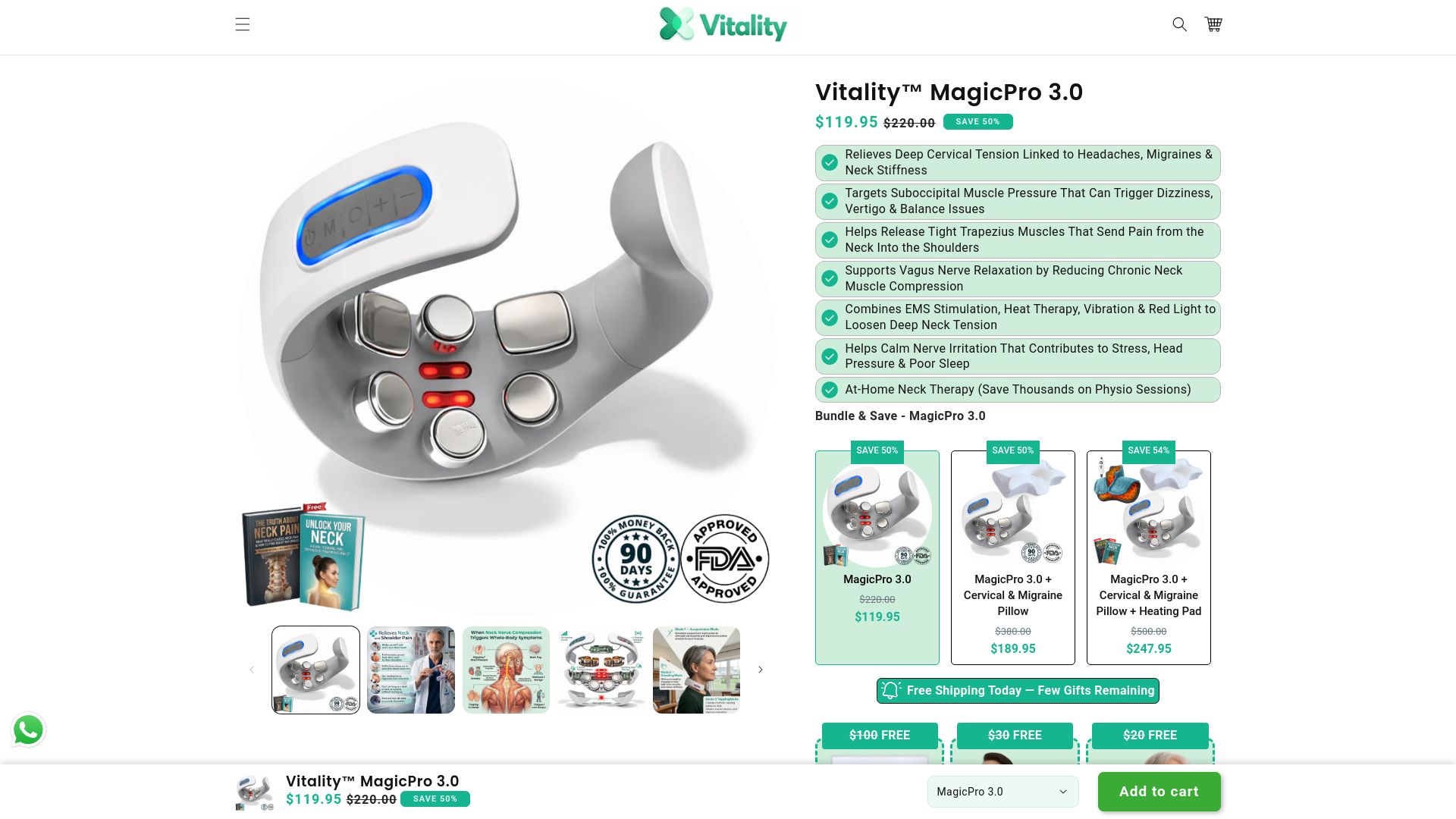
My Vitality’s MagicPro 2.0 combines electrical muscle stimulation, heat, and massage in a single wearable device that delivers targeted neck relief in 15 minutes. It is doctor-recommended, portable enough to use at your desk or on the couch, and designed for people who need real relief without a clinic visit. The MagicPro 3.0 adds vagus nerve stimulation for users dealing with tension-related stress and sleep disruption alongside neck pain.
If you are spending more time on your phone testing new platforms, your neck will notice. Give it the same attention you are giving your social media strategy. Check out the Vitality MagicPro devices and see which fits your routine.
Sources
These are the primary sources used to vet the platforms above. Each link goes directly to official documentation, project pages, or credible reporting.
- These apps are building Instagram alternatives on open protocols | TechCrunch
- Selfhosting
- Pixelfed
- Mirlo — Social without distraction
- Mastodon - Decentralized social media
- Americans’ social media use, 2025 | Pew Research Center
- Nos
- Top Alternatives to Instagram You Should Try in 2026 | Metricool