


The fastest, most practical way to get reliable neck pain relief at home or on the go is a compact, multi-therapy device that combines electrical muscle stimulation (EMS/TENS), heat, and targeted massage in a single wearable unit. These portable multi-therapy devices deliver clinic-style modalities in sessions as short as 15 minutes, fit easily into a bag or desk drawer, and work whether you’re commuting, at your desk, or winding down at home.
Three reasons this approach works:
- Short sessions, real results. Short sessions of combined EMS, heat, and massage can produce measurable short-term relief without blocking your schedule.
- Travel-ready form factor. A neck-worn device is lightweight, charges via USB-C, and doesn’t require a clinic visit.
- Multiple mechanisms, one device. Addressing nerve signals, muscle tone, and local circulation together tends to produce faster, more consistent comfort than any single therapy alone.
Table of Contents
- What are multitasking multi-therapy devices and how do they help?
- What should you look for when buying a portable neck device?
- How do you use a multi-therapy device safely and get the best results?
- Why are Vitality’s MagicPro devices a strong choice for neck pain?
- What results can you realistically expect, and how quickly?
- What’s your final checklist before buying?
- Key Takeaways
- A realistic picture of daily device use
- My Vitality MagicPro devices: where to buy and what to know
- Useful sources and further reading
What are multitasking multi-therapy devices and how do they help?
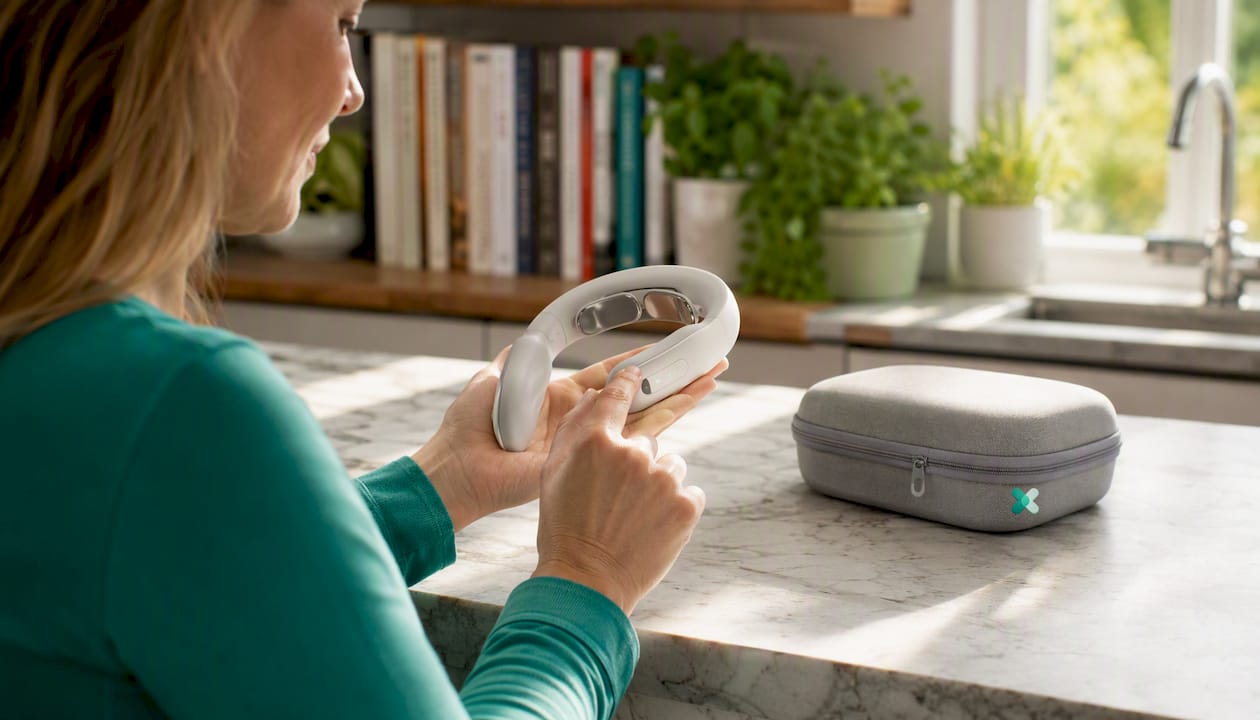
A multi-therapy (multimodal) portable device is a wearable unit that applies two or more therapeutic modalities simultaneously. Portability matters because consistent daily use drives results — a device you can wear at your desk or during a commute gets used far more often than one that requires a dedicated clinic visit.
Non-drug pain management resources, including MedlinePlus, list electrical stimulation among effective at-home options for pain relief. Here’s how each modality contributes:
- EMS/TENS (electrical stimulation). Sends low-level electrical pulses through the skin to interrupt pain signals and stimulate muscle fibers, producing immediate to short-term relief.
- Heat therapy. Gentle warmth increases local blood flow, relaxes tight muscle fibers, and makes surrounding tissue more receptive to other therapies.
- Massage/percussion. Mechanical pressure reduces muscle knots, eases stiffness, and supports circulation without medication.
- Vibration. Low-frequency vibration can calm overactive nerve endings and reduce perceived tension in the neck and shoulders.
- Red light therapy. LEDs in the 600–650nm range support local circulation and tissue recovery at a cellular level.
The synergy is the point. Combining modalities that act on different pain mechanisms — nerve signaling, circulation, and mechanical relaxation — tends to produce faster symptom relief and better adherence because sessions stay short and comfortable. Evidence reviews consistently show that multimodal approaches produce stronger functional gains than single-modality treatment for musculoskeletal pain.
What should you look for when buying a portable neck device?
Not all devices are equal. Use this checklist to compare options quickly.
Core features to evaluate
- Therapy types included. Prioritize devices that combine at least EMS/TENS and heat; massage and red light are strong additions.
- Intensity range and session timer. Look for at least 10–15 intensity levels and an adjustable timer (10–30 minutes).
- Form factor and weight. A neck device should sit comfortably without manual support. A lightweight design is practical for extended wear.
- Battery life and USB-C charging. Aim for several hours of battery life and USB-C for universal compatibility.
- Fit and adjustability. Adjustable contact pads or flexible arms accommodate different neck sizes and shapes.
- Replaceable, washable pads. Electrode pads degrade over time. Replaceable pads maintain conductivity and hygiene.
- Control interface. A wireless remote or simple button controls are preferable to phone-dependent app-only setups for daily use.
- Travel safety. Most low-power wearable TENS/EMS devices are permitted in carry-on luggage, but confirm with your airline for international travel.
Price, warranty, and value
Entry-level devices (under $80) often include only one or two modalities and limited intensity settings. Mid-range devices ($80–$200) typically combine three or more therapies with better build quality and longer warranties. At the higher end, you get more precise intensity control, longer battery life, and stronger customer support. A 30-day return window and at least a one-year warranty are reasonable minimums regardless of price.
| Dimension | What to compare |
|---|---|
| Therapy types | EMS/TENS, heat, massage, vibration, red light |
| Portability | Weight, form factor, cordless design |
| Battery/charging | Hours per charge, USB-C vs. proprietary |
| Session length/intensity | Timer range, number of intensity levels |
| Price/warranty | Return window, warranty length, pad replacement cost |
| Best for | Travel, home use, chronic vs. occasional pain |
Pro Tip: If you use the device primarily at your desk or during short commutes, prioritize a fast charge time and a simple one-button interface over advanced app features. If chronic daily pain is your main concern, focus on intensity range and replaceable pad availability.
How do you use a multi-therapy device safely and get the best results?
Safe use is straightforward when you follow the manufacturer’s guidance and a few universal principles.
Dos and don’ts
- Do start at the lowest intensity and increase gradually over several sessions.
- Do confirm electrode placement matches the manufacturer’s diagram before each session.
- Do clean and dry the skin before applying the device.
- Do replace electrode pads when adhesion weakens — worn pads reduce effectiveness and can cause skin irritation.
- Don’t use the device on broken, irritated, or inflamed skin.
- Don’t exceed the recommended daily session time listed in the manual.
- Don’t use EMS/TENS devices over the front of the neck or throat area.
Safety note: Do not use an EMS/TENS device if you have a pacemaker or other implanted cardiac device, are pregnant, or experience unexplained neurological symptoms such as numbness, tingling, or sudden weakness. Consult a clinician before use if any of these apply to you.
Practical multitasking ideas
A morning session while reading or having coffee is a consistent routine many people stick with. A short office-break session — device on, intensity low, while reviewing email — adds a second daily window without disrupting work. My Vitality’s blog on multitasking during therapy covers specific positioning tips for seated office use and commuting.
Pro Tip: Pair a device session with two or three gentle chin tucks or shoulder rolls immediately after. The heat and EMS prime the muscles for movement, and the light mobility work extends the relief window.
Why are Vitality’s MagicPro devices a strong choice for neck pain?
My Vitality’s MagicPro 2.0 and MagicPro 3.0 are designed specifically for neck pain and map directly to the buying criteria above.
Feature and spec overview
- Therapies included. Both devices combine electrical muscle stimulation, heat, and massage. The MagicPro 3.0 also incorporates vagus nerve wellness functionality, extending its application beyond standard neck pain relief.
- Session length. Designed for daily sessions of about 15 minutes — short enough to fit any schedule.
- Portability. Compact, cordless, and neck-worn. No external unit to carry.
- Charging. USB-C charging for universal compatibility at home, in the office, or while traveling.
- Doctor-recommended therapies. My Vitality describes both devices as utilizing clinically proven technology with clinician endorsement.
- Customer satisfaction. Customers report significant improvement in neck discomfort and overall well-being after regular use.
| Feature | MagicPro 2.0 | MagicPro 3.0 |
|---|---|---|
| Therapy types | EMS, heat, massage | EMS, heat, massage, vagus nerve |
| Form factor | Wearable neck device | Wearable neck device |
| Session length | about 15 minutes | about 15 minutes |
| Charging | USB-C | USB-C |
| Best for | Daily home/travel neck relief | Neck pain + broader wellness support |
| Where to buy | MagicPro 2.0 | MagicPro 3.0 |
Review the warranty terms and return policy on the product pages before purchasing. My Vitality sells directly through its official store, which is the recommended purchase path for U.S. buyers.
What results can you realistically expect, and how quickly?
Setting clear expectations helps you stay consistent and know when to reassess.
- Within a session (minutes). EMS and heat typically produce noticeable muscle relaxation and reduced tension during or immediately after a session. Electrical stimulation can provide immediate to short-term relief when applied correctly.
- Short-term (2–6 weeks). With regular daily sessions, most people notice reduced morning stiffness, fewer tension flares, and easier head rotation. Evidence reviews suggest trialing multimodal approaches for 4–12 weeks to assess meaningful functional improvement.
- Tracking progress. A simple pain tracking app or written diary helps you spot trends — less stiffness on mornings after consistent use, for example. Concrete data makes it easier to decide whether to continue, adjust, or consult a clinician.
- When to reassess. If pain worsens, spreads, or is accompanied by numbness, headaches, or arm weakness, stop use and see a clinician. A portable device is an adjunct to care, not a substitute for professional evaluation of serious symptoms.
What’s your final checklist before buying?
Run through these questions before completing a purchase.
Decision checklist:
- Does the device fit your neck size and shape comfortably?
- Does it include at least EMS/TENS and heat?
- Is there a clear return window (30 days minimum) and warranty (one year minimum)?
- Are replacement electrode pads available and affordable?
- Does the battery last long enough for your typical daily use?
- Is the charging method (USB-C preferred) compatible with your existing cables?
- Does the brand provide clear safety guidance and contraindication information?
Red flags to avoid:
- Vague therapy claims with no explanation of the modalities included.
- No stated return policy or warranty terms on the product page.
- Non-replaceable electrode pads with no replacement parts available.
- Battery life under 1.5 hours with no published charge time.
- No contraindication or safety guidance anywhere on the site.
- Pressure tactics or countdown timers replacing substantive product information.
If you have a pre-existing cardiac condition, are pregnant, or experience unexplained neurological symptoms, consult a clinician before purchasing any electrotherapy device.
Key Takeaways
Compact multi-therapy devices combining EMS/TENS, heat, and massage deliver the most practical, evidence-backed neck pain relief for daily home and travel use.
| Point | Details |
|---|---|
| Choose multimodal over single-therapy | Devices combining EMS, heat, and massage address multiple pain mechanisms simultaneously for faster relief. |
| Session length matters | Daily sessions of about 15 minutes are sufficient to produce measurable short-term improvement in stiffness and comfort. |
| Check warranty and pads before buying | A 30-day return window, one-year warranty, and replaceable electrode pads are the minimum acceptable specs. |
| Track progress over 2–6 weeks | Use a pain diary or app to measure stiffness and function; reassess if symptoms worsen or spread. |
| My Vitality MagicPro devices | The MagicPro 2.0 and 3.0 combine doctor-recommended therapies in a portable, USB-C-charged neck device for home and travel use. |
A realistic picture of daily device use
A morning session of about 15 minutes before the workday starts is a genuinely sustainable routine. Device on, intensity at a comfortable level, coffee in hand. The neck muscles are often at their stiffest first thing, so that timing tends to produce the most noticeable immediate relief. A second short session during a midday break adds consistency without eating into productive time. What keeps people going isn’t dramatic overnight change — it’s the small, accumulating wins: turning your head more easily, fewer tension headaches by week three, less stiffness after a long drive. Those small markers are worth noting. They’re the signal that the approach is working and worth continuing.
My Vitality MagicPro devices: where to buy and what to know
Neck pain relief shouldn’t require a clinic appointment or a complicated setup. My Vitality’s MagicPro 2.0 and MagicPro 3.0 put doctor-recommended, multi-therapy treatment in a device that fits in your bag and charges from any USB-C port. That’s the practical difference: clinic-grade modalities, no scheduling required.
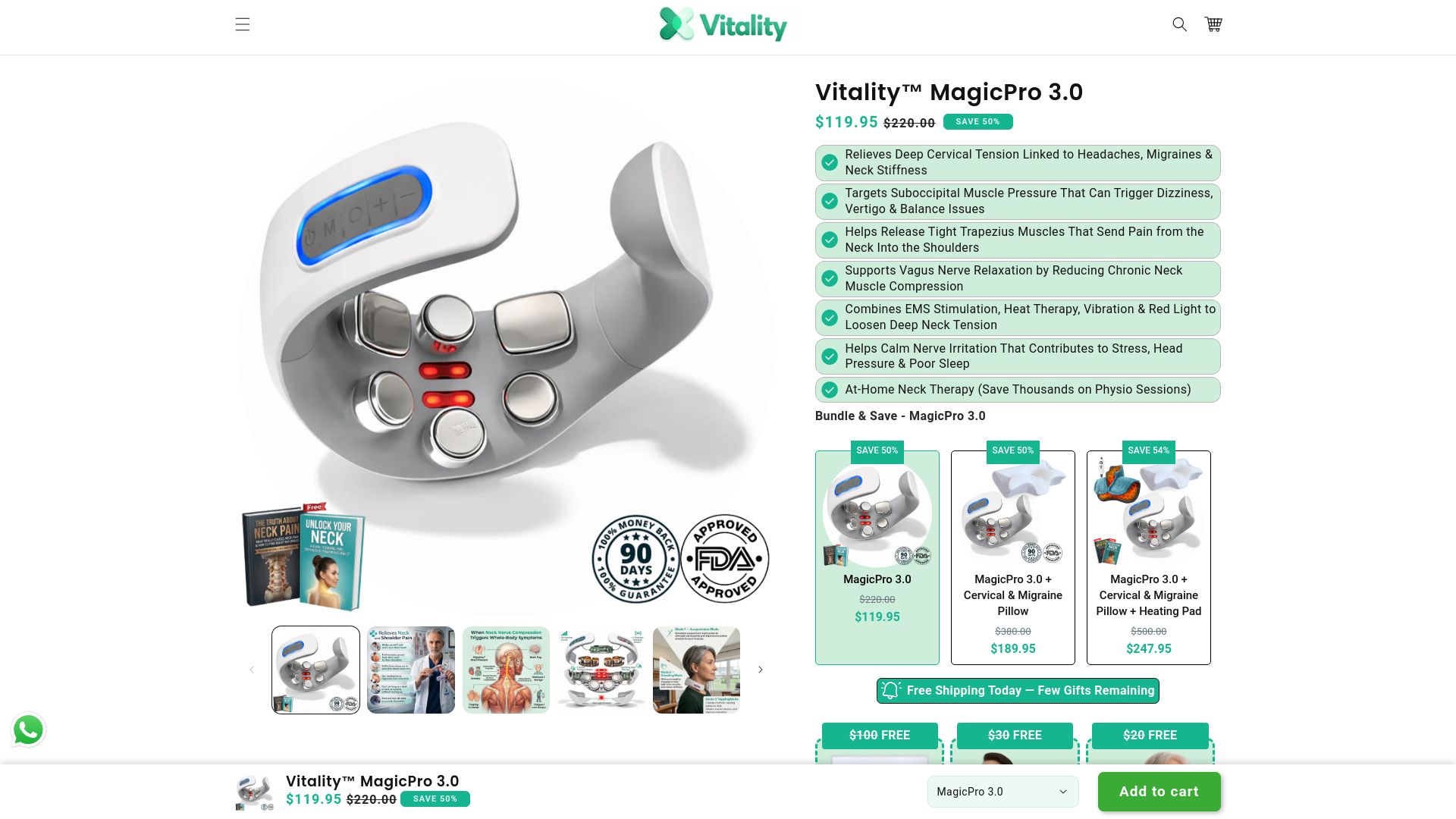
Both devices are available directly through the My Vitality store. The MagicPro 2.0 is the focused neck pain device; the MagicPro 3.0 adds vagus nerve wellness support for broader daily use. Before you complete your order, review the warranty terms and return policy on the product page, confirm replacement pad availability, and register your device after purchase to activate warranty coverage. Official accessories — replacement pads and chargers — are available through the My Vitality store to keep your device performing at its best.
This article provides general information and is not a substitute for professional medical advice. Confirm whether a device is appropriate for your specific condition with a qualified clinician.
Useful sources and further reading
- Vitality™ MagicPro 2.0 product page — official specs, purchase, and warranty details
- Vitality™ MagicPro 3.0 product page — vagus nerve wellness device details
- How to multitask during neck pain therapy — My Vitality blog: daily routine integration tips
- How wearable therapy devices work for neck pain — My Vitality blog: mechanism and pad care guidance
- Non-drug pain management — MedlinePlus — neutral clinical overview of non-pharmacologic options
- 8 non-invasive pain relief techniques — Harvard Health — evidence summary for heat, massage, and electrical stimulation
- Nonopioid therapies for pain management — CDC — clinical guidance on non-drug approaches
- Pain tracking app guide for caregivers — practical tool for monitoring symptom changes over time