


Does multitasking during neck pain therapy actually help?
The short answer: it usually works against you. Systematic reviews confirm that therapy works best when you maintain a neutral neck position and stay relaxed, not when you are distracted by other tasks. Electrical muscle stimulation, heat, and massage all depend on cervical muscles being loose and receptive. The moment you tense up to check a notification or crane your neck toward a screen, that therapeutic window narrows.
That said, not all multitasking is equally harmful. The key is matching the activity to the therapy’s demands.
Compatible low-intensity activities during therapy:
- Listening to a podcast or audiobook while seated upright
- Light, eyes-forward reading with the device resting on a supported neck
- Breathing exercises or mindful relaxation techniques that deepen muscle release
- Passive listening to music or a guided meditation
Activities that compromise therapy outcomes:
- Scrolling a phone held below eye level
- Typing on a laptop balanced on your lap
- Any task requiring you to turn, tilt, or hold your head in a fixed off-neutral position
Clinical guidelines recommend focused 10–15 minute sessions rather than multitasking through intensive device therapy. Treat those minutes as protected time, and the results tend to follow.
Table of Contents
- Why multitasking can slow your progress
- Best practices for using neck therapy devices while managing daily activities
- When you need a professional diagnosis alongside your device
- Vitalitytherapy’s MagicPro devices make focused therapy practical
- Key Takeaways
Why multitasking can slow your progress
Your nervous system is the gatekeeper
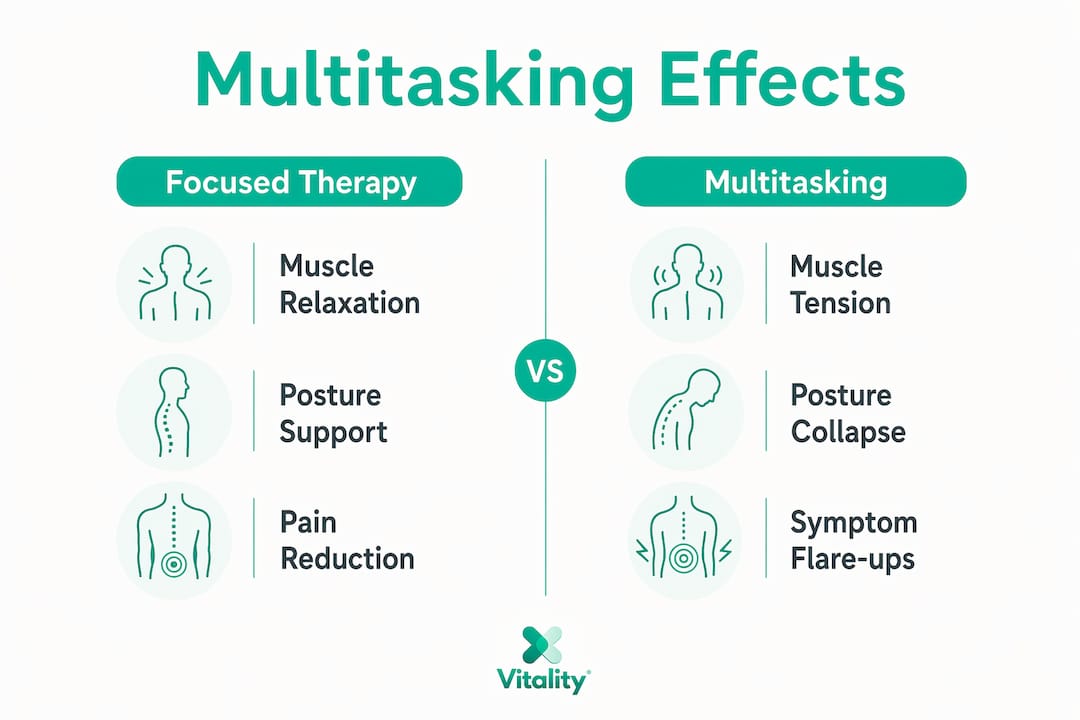
Multitasking keeps the nervous system in an alert state. When that happens, muscles cannot fully relax during massage or heat therapy. Professional massage therapists describe a “window of opportunity” for muscle release that closes the moment the nervous system stays activated. Device-based therapies face the same physiological ceiling.
Posture collapses faster than you think
Bad posture during multitasking aggravates neck muscle tension even while a therapy device is running. Looking down at a phone, for example, shifts the effective load on cervical muscles dramatically. A neutral head position, ears directly over the shoulders, is what allows electrical stimulation and heat to reach the right tissue without compensatory tension fighting back.
Specific activities to avoid during device therapy sessions:
- Heavy screen use requiring downward or sideways head tilt
- Physical tasks that demand neck rotation or sustained forward lean
- Stressful work calls or video meetings that raise mental alertness
- Eating meals that require you to look down repeatedly
Symptom flare-ups are a real risk
Pushing through therapy while distracted can trigger the opposite of relief. Experts emphasize desensitization goals and warn against sessions that provoke flare-ups. For people managing chronic neck pain, a session that worsens symptoms sets recovery back further than skipping the session entirely.
Best practices for using neck therapy devices while managing daily activities

Scheduling matters more than most people realize. Blocking a dedicated 15-minute window, rather than squeezing therapy into a busy task, produces more consistent relief. Consistent, low-intensity therapy with frequent breaks outperforms sporadic, high-intensity sessions done while distracted.
Practical setup tips:
- Sit in a chair with full back support so your head rests naturally over your spine
- Position any screen at eye level before starting the device
- Use a neck posture brace during recovery periods between sessions to reinforce neutral alignment
- Set a timer so you are not tempted to check your phone mid-session
The Vitality MagicPro™ 2.0 and MagicPro™ 3.0 are designed with exactly this workflow in mind. Both devices combine electrical muscle stimulation, heat, and massage in a compact, wearable form that fits around the neck without requiring you to hold anything. That hands-free design makes it genuinely easier to stay still and relaxed. The MagicPro™ 3.0 adds upgraded stimulation modes for people whose chronic pain has not responded to lower-intensity settings.
Pro Tip: Set your device session for right after a short walk or light stretching. Warmed-up cervical muscles respond more readily to electrical stimulation and heat, and your nervous system is calmer after gentle movement than after sitting at a desk for hours.
What to do during a session instead of multitasking:
- Focus attention on the sensation of the device working through the cervical muscles
- Practice slow nasal breathing, which lowers nervous system alertness and deepens muscle release
- Use the session as a mental reset, not a productivity window
Applying heat too early after a new injury can worsen inflammation. If your pain is recent, use the device’s stimulation or massage modes first and hold off on heat until 48–72 hours have passed.
When you need a professional diagnosis alongside your device
Device-based therapy is a management tool, not a cure. That distinction shapes how you use it. Patients often misunderstand device therapy as a standalone fix, when it works best as one layer of a broader plan.
Neck pain falls into several categories: nociceptive pain from tissue damage, nociplastic pain from a sensitized nervous system, and nerve-related pain from compression or irritation. The wrong therapy for the wrong pain type can make symptoms worse. A massager that helps a tight muscle may aggravate a compressed nerve root.
Signs that professional evaluation should come before or alongside device use:
- Pain radiating into the arm, hand, or fingers
- Numbness, tingling, or weakness in the upper limbs
- Symptoms that worsen after device sessions rather than improving
- Persistent pain lasting more than three weeks without clear improvement
- Pain accompanied by fever, unexplained weight loss, or severe headache
A thorough clinical exam covers posture assessment, range of motion, nerve signs, and how pain responds to repeated movement. That process tells you which device settings are worth using and which ones to avoid. Effective therapy requires matching treatment to pain type, and that matching requires a real exam, not trial and error.
Combining device therapy with professional guidance, whether from a physical therapist, chiropractor, or physiatrist, produces better outcomes for complex or chronic cases than either approach alone.
Vitalitytherapy’s MagicPro devices make focused therapy practical
Fifteen minutes of focused, well-positioned therapy beats an hour of distracted use. That is the core principle behind the Vitality MagicPro™ 2.0 and MagicPro™ 3.0 devices.
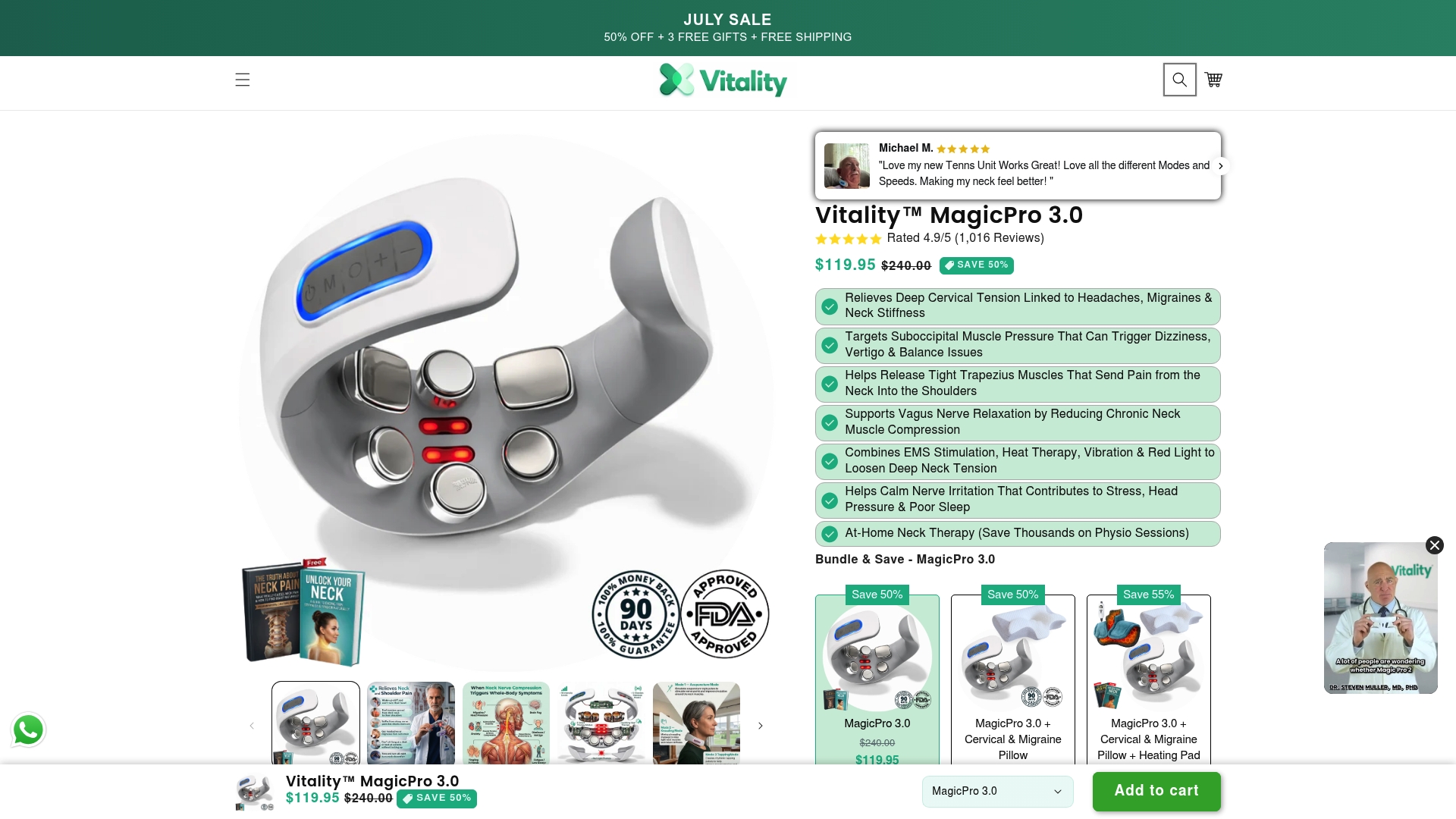
Both devices deliver electrical muscle stimulation, heat, and massage simultaneously, targeting the cervical muscles that carry the most tension. The wearable, wireless design means you can use them at home, at your desk, or while traveling without needing to stay plugged in or hold a device in place. Doctor-recommended and built around clinically proven technology, they are engineered for people who want real relief without rearranging their entire day.
Customers report meaningful improvement in neck discomfort and overall well-being after consistent daily use. The MagicPro™ 2.0 is the entry point for at-home therapy, while the MagicPro™ 3.0 offers expanded stimulation modes for more persistent or chronic pain. Explore the full MagicPro device lineup and find the right fit for your needs.
Key Takeaways
Multitasking during device-based neck pain therapy reduces effectiveness by preventing the muscle relaxation and neutral posture that electrical stimulation, heat, and massage require to work.
| Point | Details |
|---|---|
| Multitasking reduces therapy outcomes | Distraction prevents full muscle relaxation and compromises the neutral neck position devices need to work. |
| Nervous system state matters | An alert nervous system closes the window for muscle release during heat and massage therapy. |
| Focused short therapy sessions work best | Clinical guidelines favor dedicated, low-intensity sessions over multitasking through therapy. |
| Professional diagnosis guides device use | Matching therapy to pain type, nociceptive, nociplastic, or nerve-related, prevents worsening symptoms. |
| Vitalitytherapy MagicPro devices | The MagicPro™ 2.0 and 3.0 combine EMS, heat, and massage in a wearable design built for focused daily sessions. |