


Most people get the best results from neck massager sessions lasting 10–20 minutes, once or twice daily for gentle devices. Many devices auto-shutoff at 15 minutes, and that limit is there for good reason.
Here is the quick breakdown:
- Gentle/heat devices: 10–15 minutes, once or twice daily
- Shiatsu wrap massagers: 15–20 minutes, once daily or up to twice for mild sessions
- Percussion massage guns: 30–90 seconds per muscle spot, not continuous
- EMS/TENS devices: 10–15 minutes per session, up to twice daily
One safety rule applies to every device type: keep the massager on the back of the neck and upper shoulders. Never apply it to the sides or front of the neck.
Key Takeaways
Safe, effective neck massager use comes down to keeping sessions short (10–20 minutes), matching duration to your device type, and stopping well before tissue irritation sets in.
| Point | Details |
|---|---|
| Session length | Keep sessions to 10–20 minutes; 15 minutes is the common auto-shutoff and a reliable target. |
| Daily frequency | Gentle devices: once or twice daily. Deep shiatsu or percussion: 2–3 times per week maximum. |
| Percussion timing | Use 30–90 seconds per muscle spot only; never hold a percussion device stationary on one area. |
| Anatomical caution | Apply only to the back of the neck and upper shoulders; never to the sides or front. |
| My Vitality MagicPro | Built-in session controls and adjustable intensity align with the 15-minute safety-first protocol. |
Table of Contents
- Why do most neck massagers stop after 15 minutes?
- How long should you use each type of neck massager?
- When is it unsafe to use a neck massager?
- How to use a neck massager safely, step by step
- How to recognize overuse and what to do about it
- Why short sessions work: the physiology behind the 10–20 minute rule
- What most people get wrong about neck massager timing
- My Vitality’s MagicPro devices are built for the 15-minute protocol
- Sources
Why do most neck massagers stop after 15 minutes?
The 15-minute auto-shutoff on many neck massagers is not arbitrary. It reflects three real engineering and safety concerns: battery run time, motor heat buildup, and the risk of prolonged deep compression on soft tissue.
Motors generate heat during sustained use. Without a shutoff, that heat transfers to your skin, raising the risk of surface burns or irritation, especially with heat-enabled devices. Forbes Vetted’s testing identifies the 15-minute auto-shutoff as both a safety feature and a practical session cap, noting it appears consistently across well-reviewed devices.
From a battery standpoint, most portable neck massagers are designed for one or two full sessions per charge. Running a device past its thermal limit shortens motor life and degrades battery cycles faster.
If you need a second session, wait at least 30 minutes before restarting. That gap lets the motor cool and gives your tissue a short recovery window before more stimulation.
Pro Tip: If your device shuts off mid-session and you still feel tight, do a few slow neck rolls instead of immediately restarting. Gentle movement after massage helps circulation continue without adding more mechanical load.
How long should you use each type of neck massager?
Device type matters more than most people realize. A shiatsu wrap and a percussion gun work through completely different mechanisms, so the same 20-minute rule does not apply to both.
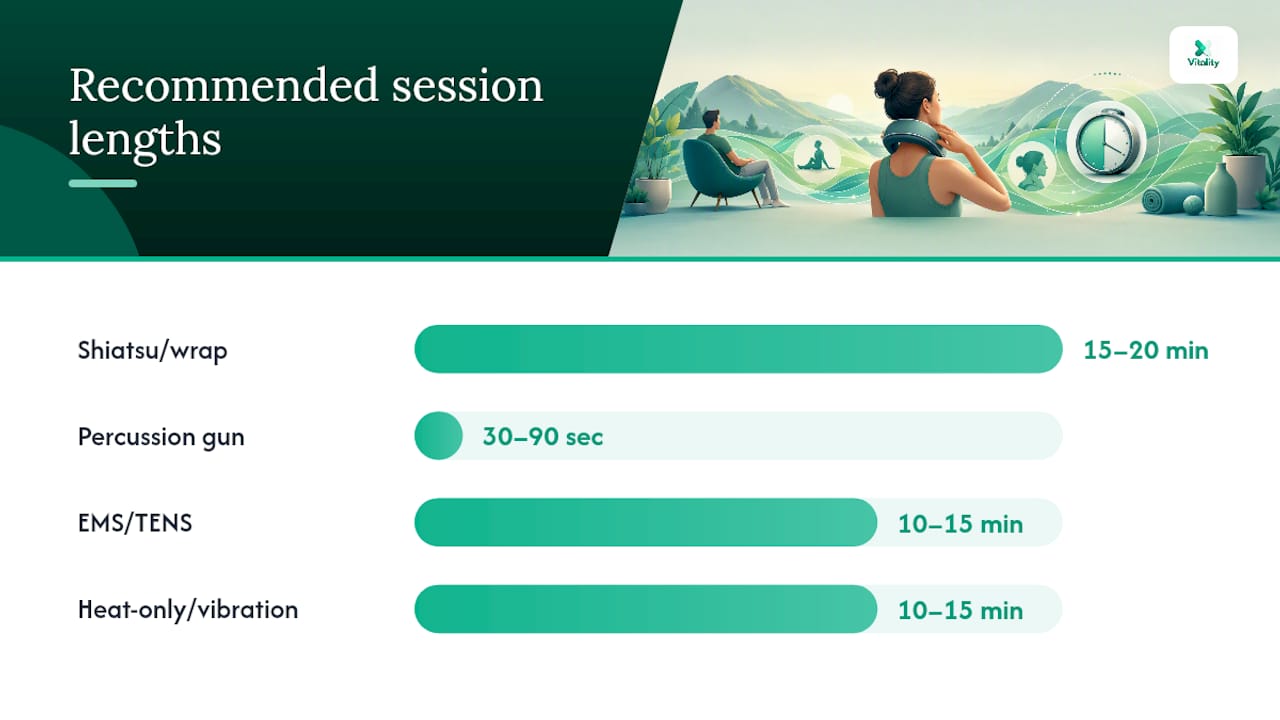
| Device Type | Session Length | Frequency | Best For |
|---|---|---|---|
| Shiatsu/wrap | 15–20 min | Once daily | General stiffness, muscle knots |
| Percussion gun | 30–90 sec per spot | 2–3x per week | Targeted deep tissue release |
| EMS/TENS | 10–15 min | Up to twice daily | Nerve-related tension, chronic pain |
| Heat-only/vibration | 10–15 min | Once or twice daily | Mild tension, relaxation |
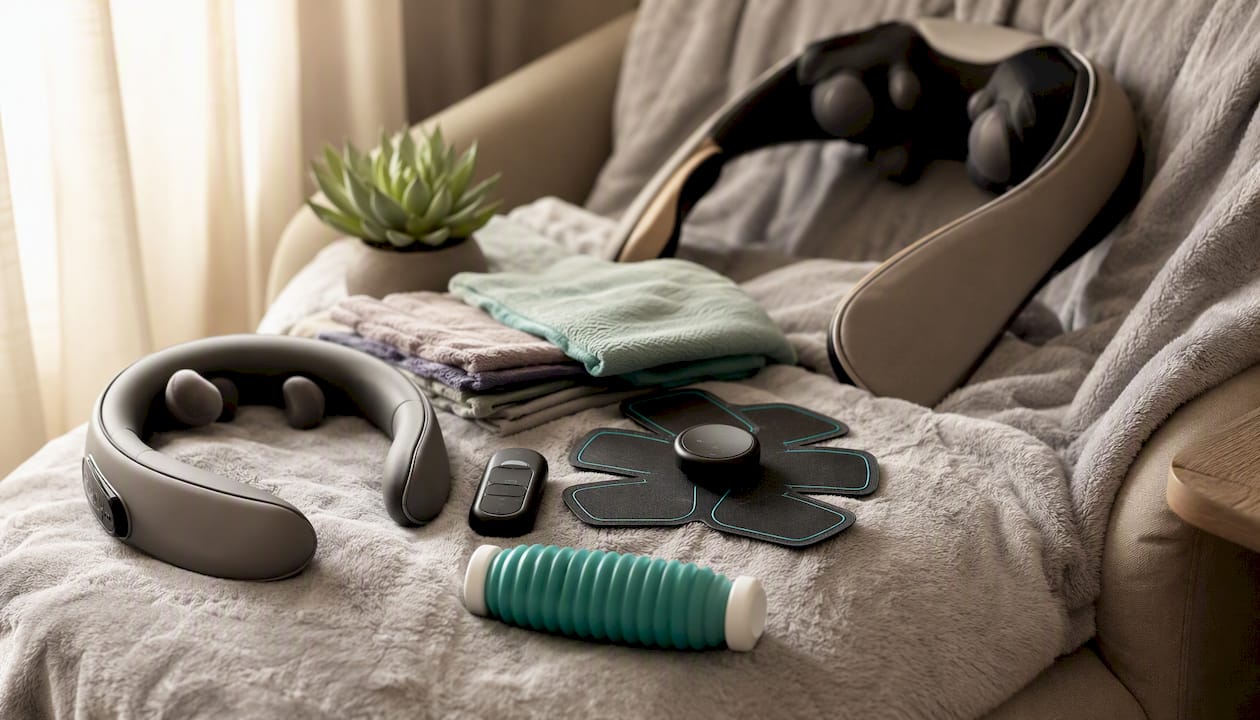
ProGearVault’s usage guide confirms that daily gentle sessions are acceptable for maintenance, while deeper shiatsu or percussion sessions work better limited to a few times per week.
A few device-specific notes worth keeping in mind:
- Percussion guns should never be held stationary on one spot. Keep the head moving in slow circles. Thirty to ninety seconds per muscle group is enough; device-type protocols are clear that longer percussion exposure increases bruising risk.
- Heat functions carry their own limit. Skin irritation and mild burns can occur with heat sessions beyond 15–20 minutes. Never fall asleep with a heat device active.
- EMS/TENS devices are gentler on tissue but should still be avoided over broken skin, rashes, or near implanted electronic devices like pacemakers.
When is it unsafe to use a neck massager?
Some conditions make neck massager use genuinely risky, not just uncomfortable. Knowing the difference protects you.
Absolute contraindications (do not use):
- Recent stroke or transient ischemic attack (TIA)
- Diagnosed carotid artery disease
- Active infection, open wounds, or skin breakdown in the neck area
- Implanted devices (pacemakers, spinal cord stimulators) near the treatment area
- Active cancer in the cervical region
Use with caution and consult your provider first:
- Pregnancy (especially first trimester)
- Osteoporosis or known cervical instability
- Blood clotting disorders or anticoagulant therapy
- Acute disc herniation with radiating arm symptoms
The anatomical caution that matters most: Consumer Reports’ clinicians explicitly warn against applying any massager to the sides or front of the neck. The carotid arteries, jugular veins, and vagus nerve branches all run through that area. Pressure there can trigger dangerous reflex responses or dislodge arterial plaque.
Pro Tip: If you are unsure whether a condition disqualifies you, a single 10-minute telehealth call with your primary care provider is faster and cheaper than managing a preventable injury.
How to use a neck massager safely, step by step
A consistent routine reduces risk and improves results. Follow this checklist each session.
- Start at the lowest intensity setting. Your tissue needs time to adapt, especially in the first week.
- Position the device on the back of the neck or upper trapezius. Avoid the sides and front entirely.
- Keep the device moving. Physical therapist Brian Chech, cited by Consumer Reports, recommends moving the device rather than holding it on one spot to reduce irritation risk.
- Set a timer for 10–15 minutes. Let the auto-shutoff do its job if your device has one.
- Finish with light stretching. Two or three slow neck tilts and shoulder rolls help the muscles settle after stimulation.
Dos:
- Hydrate before and after sessions; circulation increases during massage and your tissue benefits from fluid.
- Alternate intensity across days. Use a lighter setting on consecutive days rather than always maxing out.
Don’ts:
- Do not press the device directly into the cervical spine bones.
- Do not use heat mode while lying down if there is any chance you will fall asleep.
- Do not increase intensity if soreness from the previous session has not fully resolved.
Practical guides recommend starting with 5–10 minute sessions and building gradually to 15–20 minutes over the first week or two. That stepwise approach lets you track how your tissue responds before committing to longer or more intense sessions.
Pro Tip: Keep a simple log for the first seven days: session length, intensity level, and how your neck feels two hours afterward. Patterns show up quickly, and you will know within a week whether to scale up or pull back.
How to recognize overuse and what to do about it
Overuse does not always feel dramatic. Sometimes it just feels like your neck is more sore the next morning than it was before you started.
Signs your tissue is irritated:
- Local pain that is noticeably worse after a session, not better
- Visible bruising or swelling at the treatment site
- Soreness that lasts more than 24–48 hours after a session
- New numbness, tingling, or weakness in the arms or hands
- Headache that starts or worsens after use
Immediate steps if you notice these signs:
- Stop using the device immediately.
- Apply a cold compress (not ice directly on skin) for 10–15 minutes if bruising or swelling is present.
- Rest the area for at least 48 hours before any further massage.
- Avoid anti-inflammatory medications unless your clinician has already recommended them for this condition.
When to contact a clinician or go to urgent care:
- Neurological symptoms (numbness, weakness, coordination changes) that persist beyond a few hours
- Dizziness, fainting, or visual changes during or after use
- Severe swelling or skin discoloration
- Any symptom that feels new and does not resolve with rest
Why short sessions work: the physiology behind the 10–20 minute rule
Short sessions are not a conservative overreaction. They reflect how muscle tissue actually responds to mechanical stimulation.
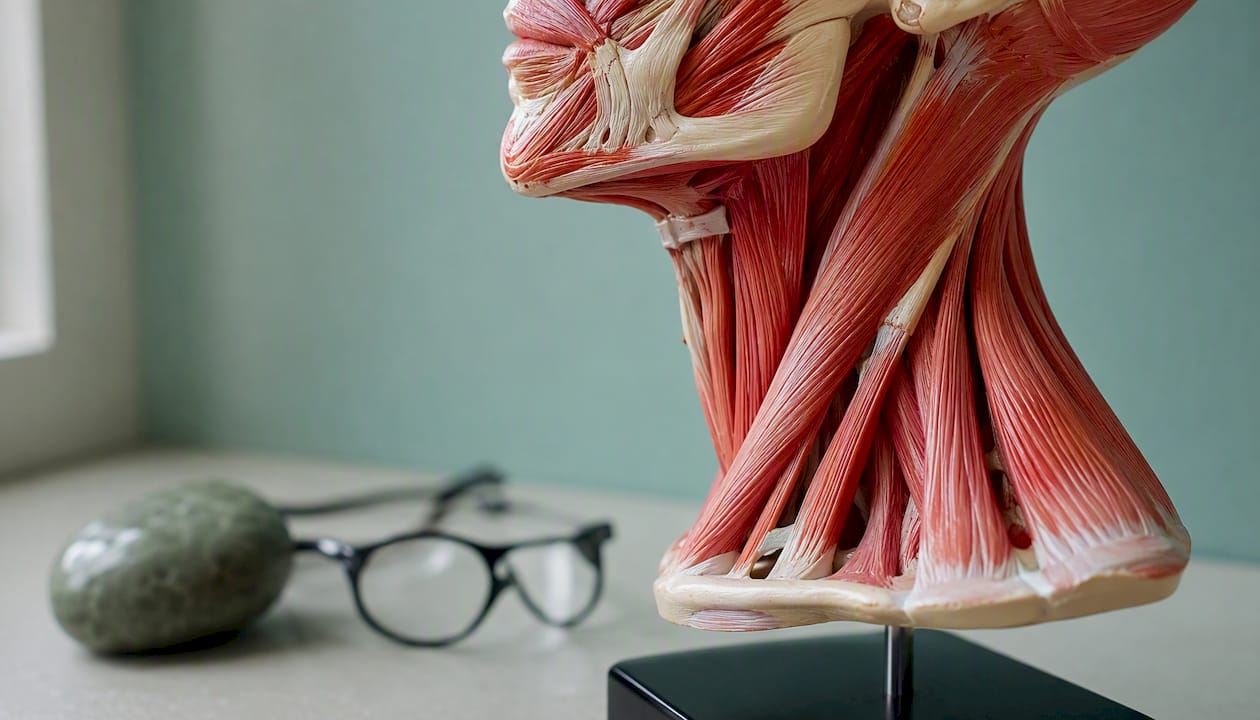
Massage increases local circulation and helps relax muscle fibers held in sustained contraction. That process happens relatively quickly, within the first 10–15 minutes of moderate stimulation. Beyond that window, continued pressure does not add proportionally more benefit. Instead, it starts to stress the tissue, triggering a mild inflammatory response that can leave the area more sensitive, not less.
Health used 15–20 minute sessions when evaluating devices and specifically highlighted the 15-minute auto-shutoff as a meaningful safety feature during product testing. That real-world benchmark from evaluators aligns with the clinical reasoning above.
For deeper sessions using shiatsu or percussion, recovery windows matter. Deep kneading can create minor micro-stress in muscle fibers, similar in principle to a light workout. Allowing roughly 48 hours between intense sessions gives tissue time to recover and respond positively rather than accumulating irritation.
The 15-minute benchmark is not just a manufacturer default. It is where clinical guidance, real-world testing, and device engineering all converge.
What most people get wrong about neck massager timing
The most common mistake is treating more time as better. People buy a device, feel relief in the first session, and assume doubling the duration will double the benefit. It rarely does, and often reverses it.
What actually works is consistency over intensity. A 12-minute session every day tends to produce more lasting relief than a 30-minute session twice a week, because the tissue gets regular circulation and relaxation without the inflammatory rebound that follows prolonged deep pressure.
There is also a timing question worth considering: when during the day is best? Morning sessions can reduce overnight stiffness and improve range of motion before your workday. Evening sessions help release tension accumulated during the day and can support better sleep. Neither is strictly superior; the best time is the one you will actually stick to.
One thing My Vitality’s MagicPro devices get right is building the 15-minute session limit into the device design itself. When the device aligns with the protocol, you do not have to rely on willpower to stop at the right time.
My Vitality’s MagicPro devices are built for the 15-minute protocol
Relief in 15 minutes is not a marketing claim. It is what the clinical guidance actually recommends, and it is exactly how the Vitality™ MagicPro 2.0 is designed to work.
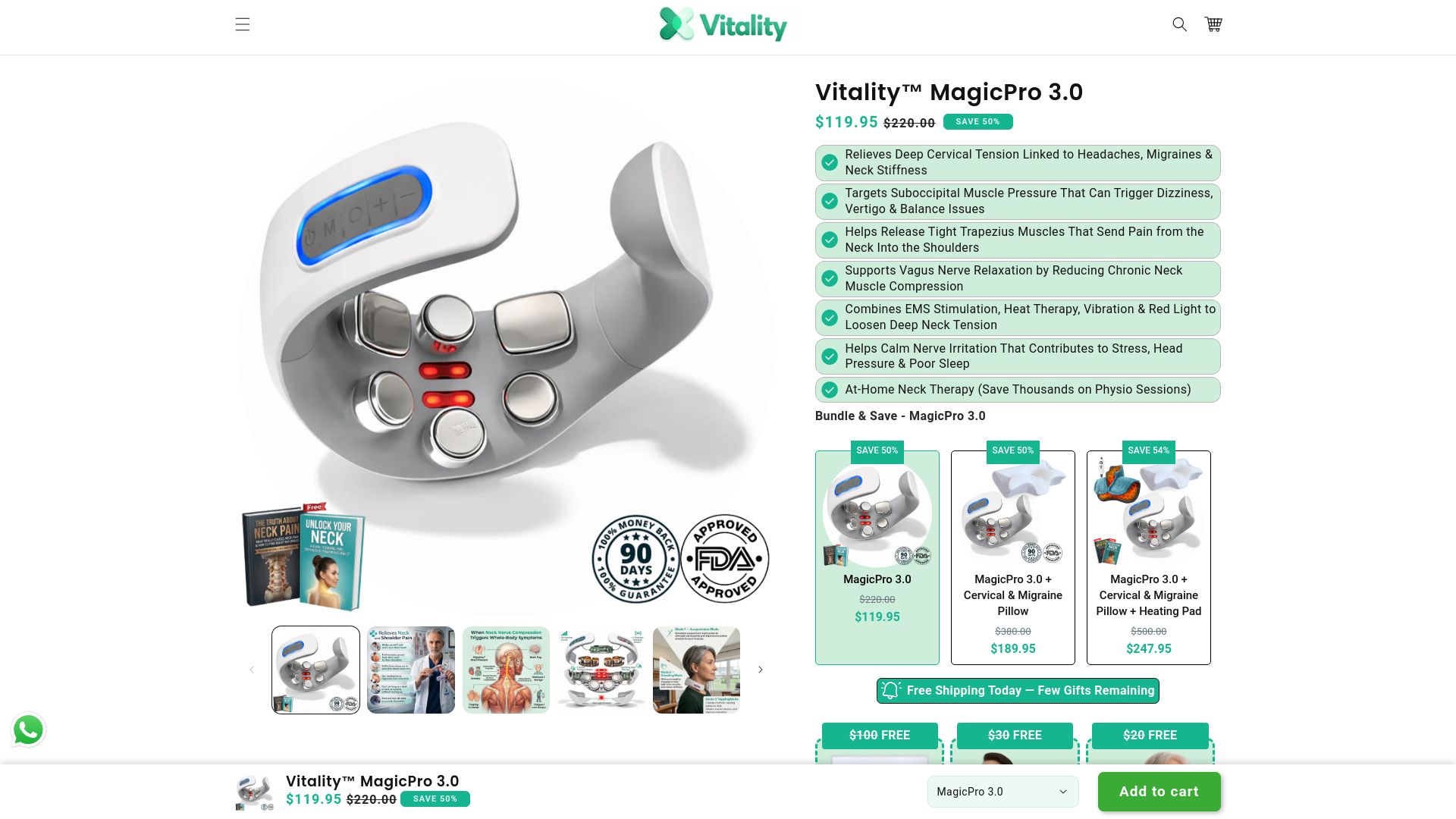
The MagicPro 2.0 and MagicPro 3.0 combine electrical muscle stimulation, heat therapy, and massage in one compact device. The built-in session controls align with the safety-first protocol covered in this article: adjustable intensity, heat limits, and a design that fits your neck without requiring you to hold it in place. That matters when you are trying to stay consistent with daily short sessions at home, at your desk, or while traveling.
Both devices are doctor-recommended and built for people who want real relief without a clinic visit. Check out the full Vitality™ device lineup and find the option that fits your routine.
Sources
The following sources informed the guidance in this article:
- 3 Best Neck Massagers of 2026, Tested by Experts - Consumer Reports
- Health
- The Ultimate Neck Massager Guide for Lasting Pain Relief in 2026
- How Often Should You Use a Neck Massager? (2026 Guide) - ProGearVault
- Best Neck Massagers 2026 - Forbes Vetted
This article is general information, not a substitute for advice from a qualified doctor. Consult a qualified healthcare professional about your own circumstances before acting on anything here.