


The fastest safe way to get neck pain relief between destinations is a three-step staged protocol: apply cold during the initial acute phase of pain, switch to short heat sessions as inflammation calms, and run brief mobility resets every 45–60 minutes throughout your trip. This approach aligns with MedlinePlus, Harvard Health, and Mayo Clinic guidance, and it maps directly to what compact therapy devices can deliver in short sessions on the go.
Three items to pack right now:
- A small reusable ice pack or cold gel wrap for the first day or two of acute pain, which you can find through reliable mobility equipment solutions in Vancouver
- A portable heat pad or travel-sized heat device for sessions once inflammation settles
- A cervical travel pillow that supports the natural curve of your neck, not one that pushes your head forward
Pro Tip: Short device sessions paired with movement beat long passive heat or ice applications every time. Use 10–15 minutes of device-assisted relief, then move your neck through small, gentle ranges before sitting still again.
Table of Contents
- What should you do right away between stops?
- How to do a 5-minute mobility reset in transit
- What features should a travel-ready neck device have?
- How to use portable devices safely between destinations
- When should you stop self-treating and see a doctor?
- How to pack your devices for air travel
- Why the staged approach works: a quick evidence summary
- Key Takeaways
- What actually works when you’re moving between destinations
- My Vitality’s travel-ready devices fit this protocol
- Selected sources and further reading
What should you do right away between stops?
Cold first, then heat is the evidence-backed sequence for acute neck pain. For the first 48–72 hours, apply ice or a cold pack wrapped in a thin cloth for 15–20 minutes at a time. Never place ice directly on skin, and avoid falling asleep with any cold or heat device in place.
Once the sharp, inflamed phase passes, short low-heat sessions help relax tight muscles and improve circulation. A warm pack or a compact heat device works well during a long layover or rest stop. Keep sessions to 15–20 minutes and check your skin regularly for redness.
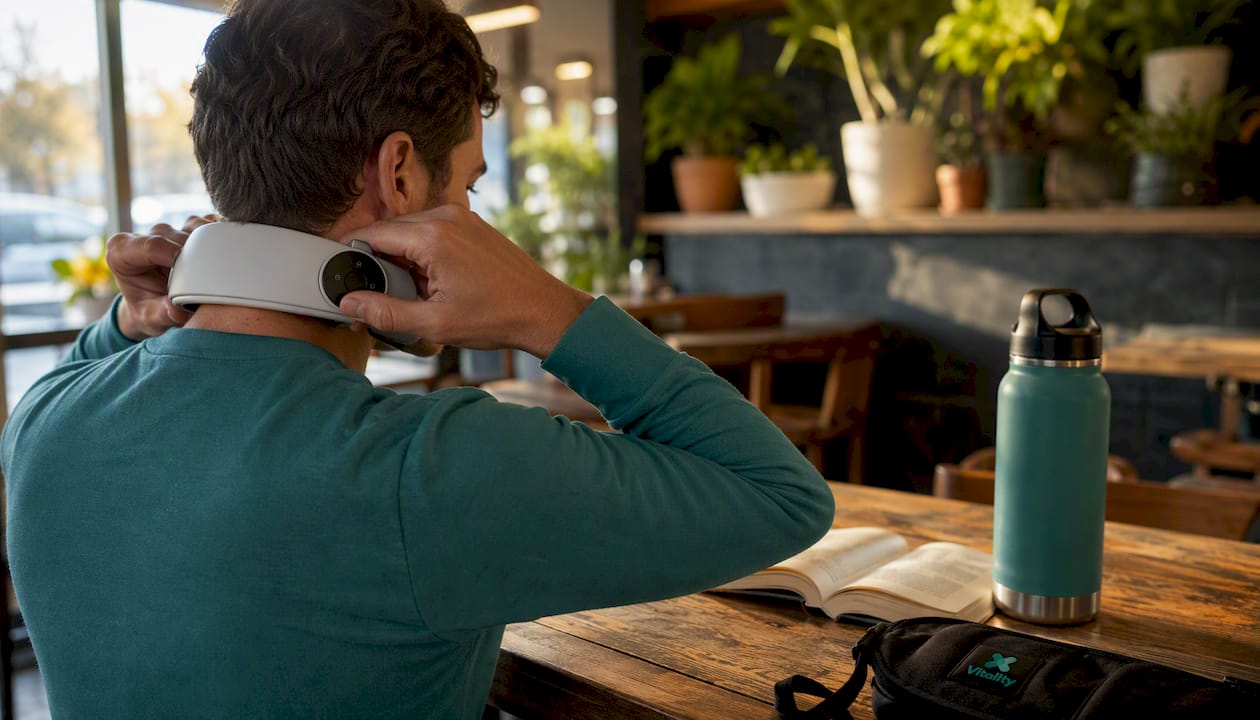
Positioning matters as much as temperature. Keep your head supported so your ears stay roughly over your shoulders. A chin tuck, where you gently draw your chin straight back without tilting your head down, reduces forward head load and takes pressure off the cervical joints. Adjust your headrest or use a rolled towel behind your neck if your seat doesn’t support you well.
One safety note: avoid wearing a cervical collar for more than brief periods. Prolonged collar use can weaken the muscles that support your neck, which makes the underlying problem worse over time.
Red flag reminder: If your pain is severe, accompanied by fever and neck stiffness, or comes with numbness, weakness, or loss of bowel or bladder control, stop self-treating and seek urgent medical care immediately.
How to do a 5-minute mobility reset in transit
Scheduled micro-mobility is the most reliable way to prevent stiffness from building during long sitting periods. Aim to run this sequence every 45–60 minutes when possible.
- Chin tucks (10 reps): Sit tall. Gently draw your chin straight back, hold for 2 seconds, release. Keep your gaze level throughout.
- Small-range rotations (5 each side): Slowly turn your head to the right about halfway, pause, return to center, then left. Never force the end range.
- Lateral tilts (5 each side): Drop your right ear toward your right shoulder, hold 3 seconds, return. Repeat on the left. Keep your shoulders relaxed and level.
- Shoulder drops (10 reps): Shrug both shoulders up toward your ears, hold 2 seconds, then let them drop fully. This releases upper trapezius tension.
- Thoracic extension cue (3 reps): Clasp your hands behind your head, gently open your elbows wide, and lift your chest slightly. Hold 5 seconds. This counters the forward slump that loads your cervical spine.
Avoid ballistic or bouncing stretches. If you have any tingling, numbness, or shooting pain into your arm during any movement, stop that motion and note it for your clinician. Large-range cervical rotations are also best avoided when neurological signs are present.
What features should a travel-ready neck device have?
Not every neck therapy device belongs in a carry-on. Here’s what to check before you buy:
- Size and weight: Under 1.5 lbs and compact enough to fit in a personal item bag without taking up half the space
- Battery type: Rechargeable lithium-ion is standard; check that the watt-hour (Wh) rating falls within FAA carry-on limits (typically under 100 Wh for most consumer devices)
- Session run time: At least 15 minutes per charge cycle, ideally 20–30 minutes so you get a full session without scrambling for an outlet
- Therapy modes: Look for devices that combine heat, electrical muscle stimulation (EMS) or TENS, and massage or vibration in one unit; single-mode devices are less versatile for travel
- Red light capability: Useful for multi-week home courses, but pilot wearable studies suggest measurable benefit requires two to four weeks of consistent use, so set realistic expectations for a single trip
- Protective case: A hard or semi-rigid case protects electrodes and charging ports during transit
- Warranty and return policy: Look for at least a 30-day satisfaction window and a clear warranty on the device itself
Budget ranges vary. Entry-level single-mode massagers typically run under $50 but offer limited therapy options. Mid-range multi-mode devices with heat and EMS generally fall in the $80–$150 range. Travel-optimized premium units with multiple modalities, longer battery life, and a carrying case sit above that.
Pro Tip: Ask whether the device has FDA-registered or FDA-cleared language in its product listing. This signals the manufacturer has met basic safety and labeling standards, which matters when you’re using electrical stimulation near your spine.
How to use portable devices safely between destinations
Timing your device sessions around travel phases makes a real difference in how much relief you get.
- Before boarding: A 10–15 minute heat or EMS session in the terminal reduces baseline tension before you sit in a constrained position for hours
- During long waits or layovers: Use your device seated in a quiet area; avoid using it while walking, standing in lines, or in crowded spaces where you can’t monitor skin contact
- After arriving: A short session combined with the mobility reset above helps your neck decompress from the trip
Dos and don’ts for in-transit device use:
- Do keep sessions to 15–20 minutes and check your skin for redness or irritation after each use
- Do pair every device session with at least 5 minutes of gentle movement afterward
- Don’t use heat or EMS devices while sleeping or unattended
- Don’t use EMS or TENS devices if you have a pacemaker, are pregnant, have open wounds or broken skin in the treatment area, or are running a fever
Physical therapy strengthens the posture-support muscles that prevent pain from recurring. Portable devices are most effective as symptom control between destinations, not as a replacement for guided exercise and PT when pain is persistent.
When should you stop self-treating and see a doctor?
Seek urgent care immediately if you experience any of the following:
- Severe neck pain after a fall, collision, or impact
- Fever combined with neck stiffness and headache (possible meningitis)
- New numbness, tingling, or weakness in your arm or hand
- Loss of bowel or bladder control
- Extreme instability or sudden increase in your head’s range of motion after injury
“If your neck pain is so severe you can’t sit still, or if it is accompanied by fever, headache, and neck stiffness, pain traveling down one arm with weakness or numbness, or loss of bowel or bladder control — contact a medical professional right away.” — Harvard Health
For pain that worsens despite self-care, or persists and radiates beyond a couple of weeks, book a post-travel primary care or physical therapy visit. Most mild to moderate neck pain resolves within 2–3 weeks with consistent self-care, but pain that doesn’t follow that timeline needs professional evaluation.
How to pack your devices for air travel
Packing smart keeps your devices accessible and avoids TSA delays.
- Always carry battery-powered therapy devices in your carry-on bag, never in checked luggage
- Spare lithium-ion batteries must also travel in carry-on; pack them in their original packaging or a battery case to prevent short-circuiting
- A semi-rigid protective case keeps electrodes, gel pads, and charging cables organized and prevents damage
- A small reusable cold pack (gel-based, non-liquid when frozen) generally clears TSA; confirm it is fully frozen or declare it at the checkpoint
- A compact thermal wrap or self-heating patch is a low-hassle alternative to powered heat devices for short flights
For discreet in-transit use, a travel pillow placed around your neck can partially shield a compact device from view and reduce contact with seat surfaces. Keep your charging cable and a small power bank accessible so you can recharge between sessions during long travel days.
Why the staged approach works: a quick evidence summary
The cold-to-heat-to-mobility sequence has consistent support across major clinical sources.
- Ice for 48–72 hours: MedlinePlus recommends ice for the first 48–72 hours of acute neck pain, then heat such as warm showers or heating pads
- Staged heat transition: Harvard Health supports cold for intense early pain, then heat after a day or two, followed by gentle stretching and strengthening
- Recovery timeline: Mayo Clinic notes most mild-to-moderate neck pain improves within 2–3 weeks with self-care
- Red light expectations: A 2025 wearable pilot study used two-week and four-week checkpoints, confirming that red light therapy requires a multi-week course for measurable benefit
| Recommendation | Timeframe | Source |
|---|---|---|
| Apply cold (ice/cold pack) | First 48–72 hours of acute pain | MedlinePlus |
| Transition to heat | After acute phase settles | Harvard Health |
| Expect self-care resolution | Within 2–3 weeks (mild-moderate) | Mayo Clinic |
| Red light therapy benefit window | Two to four weeks of consistent use | 2025 wearable pilot study |
TENS and EMS have limited but real evidence for short-term neck pain relief. They work best as symptom control paired with movement, not as standalone treatments.
Key Takeaways
The most effective travel neck pain protocol combines staged cold-to-heat therapy, frequent micro-mobility resets frequently during long sitting periods, and a compact multi-mode device that fits your carry-on.
| Point | Details |
|---|---|
| Cold first, then heat | Use ice for the first 48–72 hours of acute pain, then switch to short heat sessions. |
| Micro-resets every 45–60 minutes | Chin tucks, shoulder drops, and small rotations prevent stiffness from building during long sits. |
| Pack smart for air travel | Carry battery devices and spare lithium batteries in your carry-on; never check them. |
| Know your red flags | Fever with neck stiffness, arm numbness, or post-trauma pain require urgent care, not self-treatment. |
| My Vitality devices fit this protocol | The MagicPro 2.0 and MagicPro 3.0 combine heat, EMS, and massage in one compact unit suited for travel sessions. |
What actually works when you’re moving between destinations
Most travel neck pain advice focuses on what to do at the destination. The harder problem is what to do in the hours between stops, when you’re stuck in a seat and your options are limited.
Short, repeated device sessions consistently outperform one long passive application. A 15-minute heat-and-EMS session before boarding, followed by a mobility reset mid-flight, does more than 45 minutes of continuous heat in the terminal. The neck responds better to stimulus-and-movement cycles than to prolonged immobilization, which is also why travel posture habits matter as much as any device.
One thing most travelers underestimate: the first night at a new location is often when pain spikes. A changed pillow height or angle can undo a day of careful management. Bringing a compact cervical pillow or a folded towel to adjust hotel pillow height is a simple move that most people skip and then regret. Plan your sleep support before you arrive, not after you wake up stiff.
Avoid over-relying on a cervical collar, even a soft one. Brief use for acute flares is fine, but wearing one for hours during travel weakens the stabilizing muscles you need for recovery. Pair any support with movement, not instead of it.
My Vitality’s travel-ready devices fit this protocol
Travelers dealing with neck pain need a device that actually fits in a bag and delivers real relief in 15 minutes. The Vitality™ MagicPro 2.0 and Vitality™ MagicPro 3.0 combine electrical muscle stimulation, heat, and massage in one compact unit, designed to be used at home, at work, or between destinations. The Vitality™ Adaptive Therapy System extends that coverage to the lumbar region for travelers whose pain spreads lower.
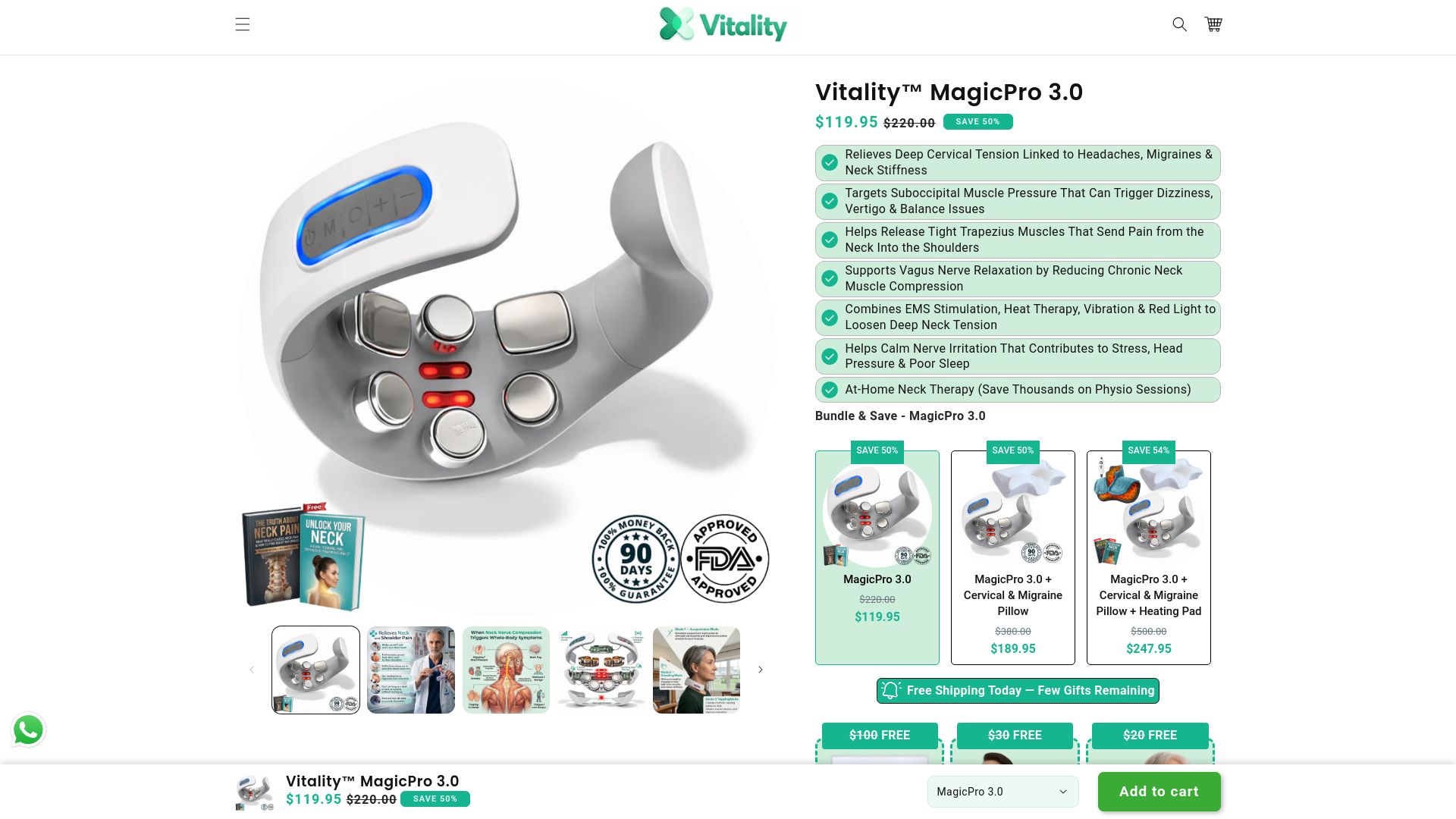
Each device is doctor-recommended and built around 15-minute daily sessions, which maps directly to the pre-boarding and post-arrival timing described above. My Vitality backs its devices with a satisfaction-focused warranty and a return policy that removes the risk from trying a new device on your next trip. Visit the My Vitality store to find the right device for your travel kit and start your first session before your next departure.
Selected sources and further reading
Use these sources to verify the clinical claims in this article and read deeper on any topic.
- MedlinePlus: Neck pain or spasms — self care — backs ice/heat staging and collar caution
- Harvard Health: How to soothe a sore neck — staged cold-to-heat protocol and gentle mobility transition
- Harvard Health: When to seek immediate medical attention for neck pain — red-flag symptom list
- Mayo Clinic: Neck pain diagnosis and treatment — PT role, 2–3 week recovery timeline, device-as-complement guidance
- Mayo Clinic: When to see a doctor for neck pain — urgent care criteria
- Confluent Health: How to avoid neck pain while traveling — micro-mobility and travel support rationale
- 2025 wearable red light pilot study — multi-week usage windows for photobiomodulation
For persistent or severe symptoms, consult a licensed physical therapist or physician. This article provides general information, not personalized medical advice.