


The best immediate approach for arthritis-related neck pain is to start with self-care and ergonomic fixes, add short-term medicines during flares, and use physical therapy to build lasting improvement. Injections or device-based adjuncts come next if conservative care isn’t enough.
Relief options generally fall into six categories:
- Self-care and ergonomic adjustments
- OTC medications and short-term supports
- Physical therapy and structured exercise
- Heat, cold, and at-home modalities
- Interventional procedures for persistent cases
- Consumer devices as adjuncts, not replacements
Most people should try self-care and PT first, save medication for active flares, and treat injections or surgery as a later resort. Seek medical evaluation right away for arm or leg weakness, numbness, or bladder changes.
Key Takeaways
Lasting relief from arthritis-related neck pain comes from combining active rehabilitation with short-term supports, not from any single treatment alone.
| Point | Details |
|---|---|
| Start with self-care | Fix workstation ergonomics, take movement breaks, and use a supportive pillow before anything else. |
| Use medication for flares | Reserve NSAIDs and acetaminophen for active pain, and check safety with your doctor if on other medications. |
| Prioritize physical therapy | Isometric holds, range-of-motion work, and scapular strengthening address the root mechanics behind the pain. |
| Time your heat and cold | Ice the first 48 to 72 hours after a flare, then switch to heat for ongoing stiffness. |
| Consider My Vitality as an adjunct | The MagicPro 2.0 and MagicPro 3.0 combine heat, massage, and stimulation to ease tension between active treatment sessions. |
Table of Contents
- Self-Care and Ergonomic Changes to Try Today
- Medications and Short-Term Supports for Flares
- Physical Therapy: The Core of Lasting Relief
- Interventional Treatments and When They Make Sense
- At-Home Modalities: Heat, Cold, TENS, and Devices
- How to Choose What to Try Next
- Where Vitality Fits Alongside Medical Care
- What Actually Moves the Needle Long Term
- Ease Neck Tension Between Your Active Treatment Sessions
- Frequently Asked Questions
- Sources
Self-Care and Ergonomic Changes to Try Today
Neck arthritis pain often responds to changes you can make before your next appointment. The joints in your neck don’t need heroics; they need less strain, more movement, and better support while you sleep.
- Raise your monitor to eye level so you’re not tilting your chin down for hours.
- Switch to a headset for calls instead of cradling a phone against your shoulder.
- Use a laptop riser if you work from a couch or kitchen table.
- Adjust your chair so your forearms rest level with your desk.
- Set a timer for movement breaks every 30 to 45 minutes.
- Choose a supportive pillow that keeps your neck neutral, not stacked pillows that push your chin toward your chest.
Frequent movement and better workstation habits genuinely help. Ergonomic adjustments and regular position changes reduce strain on already-irritated joints and are considered foundational for long-term management, not just a short-term fix.
Most mild cases improve within two to three weeks of consistent self-care. If pain hasn’t budged by then, that’s your signal to see a clinician rather than keep waiting it out.
Pro Tip: Sleep on your back or side with one pillow that fills the gap under your neck. Stomach sleeping forces your neck into rotation for hours, which aggravates already stiff joints.

Medications and Short-Term Supports for Flares
Over-the-counter options remain the first line for most flares. Acetaminophen and NSAIDs like ibuprofen or naproxen each work differently: acetaminophen blocks pain signals, while NSAIDs reduce inflammation directly at the joint.
- Acetaminophen is generally gentler on the stomach but won’t touch inflammation.
- Ibuprofen and naproxen reduce swelling but carry GI, kidney, and cardiovascular cautions, especially with long-term or high-dose use.
- Short courses of oral steroids or muscle relaxants are sometimes prescribed for severe flares, though sedation and dependency risks limit their use.
- Soft cervical collars can rest an irritated neck for a day or two, but prolonged wear risks weakening the very muscles that support your spine.
Clinical guidance has moved away from long-term muscle relaxant or opioid use in older adults specifically because of side-effect risk, favoring targeted, short courses instead. If you take other chronic medications, check with a pharmacist or doctor before adding NSAIDs. The interactions with blood thinners and blood pressure medications are common enough to matter.
Physical Therapy: The Core of Lasting Relief
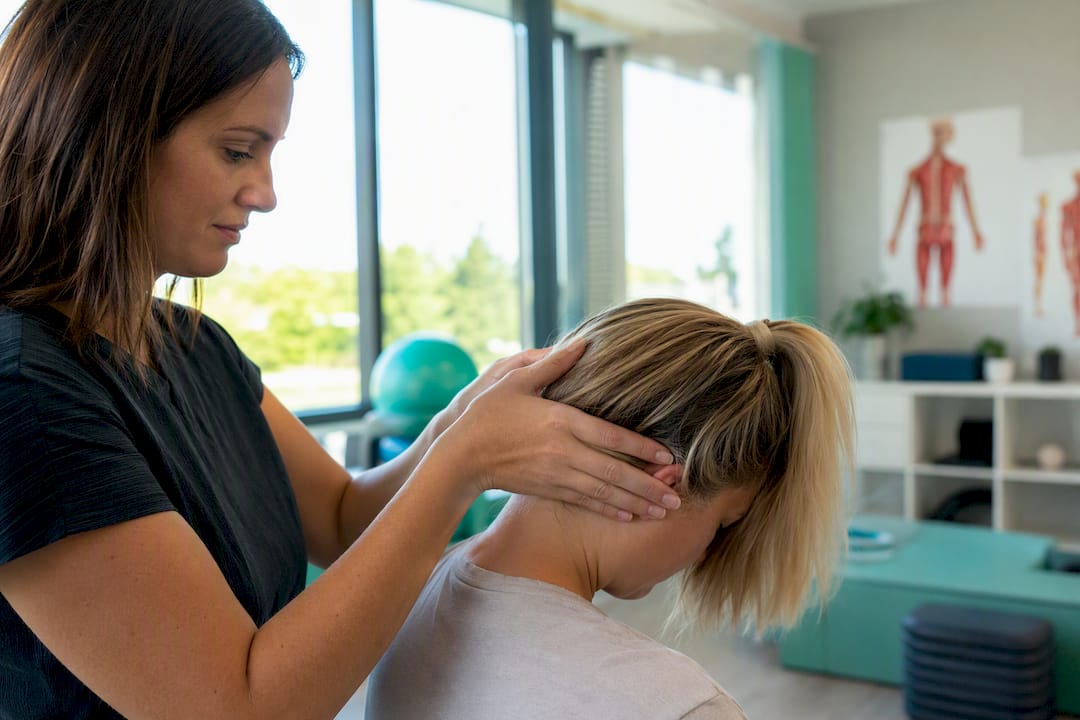
Physical therapy addresses what medication and ergonomics can’t: the actual mechanics behind your pain. A physical therapist evaluates posture, muscle imbalances, and range of motion, then builds a plan around correcting them rather than just masking symptoms.
Typical PT programs include:
- Isometric neck holds. You press your head gently against your hand without moving, building strength without stressing the joints.
- Gentle range-of-motion exercises. Slow tilts and rotations that restore flexibility without forcing it.
- Scapular stabilization work. Strengthening the shoulder blades takes pressure off the neck, since poor shoulder posture often drives neck strain.
- Graduated aerobic activity. Walking or swimming supports joint health broadly, which matters for arthritis management overall.
Physical therapy is one of the most effective nonsurgical treatments for people with ongoing neck arthritis pain, and consistency matters more than intensity. Two or three sessions a week, paired with daily home exercises, tends to outperform sporadic effort.
Pro Tip: Ask your therapist to show you which exercises to skip during a flare. Pushing through acute pain with strengthening work usually backfires and sets you back further than resting for a day or two would.
Interventional Treatments and When They Make Sense
When conservative care stalls after several weeks, interventional options enter the conversation. These aren’t first-line treatments. They’re reserved for people whose pain persists despite honest effort with self-care, medication, and PT.
- Epidural or facet steroid injections deliver anti-inflammatory medication directly to the irritated area, often providing weeks to months of relief.
- Medial branch blocks temporarily numb the nerves feeding a specific facet joint to confirm it’s the pain source before further treatment.
- Radiofrequency ablation follows a successful medial branch block, using heat to disrupt those same nerve signals for longer-lasting relief, sometimes six months to a year.
- Surgery is uncommon and generally reserved for neurologic compromise, such as nerve compression causing weakness, or spinal instability.
Conservative treatment resolves most cases of cervical spondylosis, which is why specialists typically exhaust nonsurgical options first. Any injection or procedure decision deserves a direct conversation with a spine specialist about realistic benefit versus risk.
At-Home Modalities: Heat, Cold, TENS, and Devices
Timing matters more than most people realize with heat and cold. Ice works best in the first 48 to 72 hours after a flare starts, calming inflammation while it’s most active. After that window, heat takes over, relaxing tight muscles and improving blood flow to the area. Never sleep with a heating pad or ice pack directly against your skin. Burns and nerve irritation happen more often than people expect.
- TENS units deliver a mild electrical current that can distract nerve signals from pain, but evidence for lasting benefit is limited, and clinicians generally treat them as an adjunct rather than a stand-alone fix.
- Massage and acupuncture help some people relax tense muscles around the neck, though results vary and expectations should stay realistic.
- Chiropractic care and gentle traction offer relief for some patients, particularly when paired with active exercise rather than used alone.
- Consumer neck devices that combine electrical stimulation, heat, and massage can support your routine between PT sessions, but they work best alongside movement and strengthening, not instead of it.
The common thread across every modality here: none of them correct the underlying mechanics driving your pain. They buy comfort while your body does the real work of healing and strengthening.
How to Choose What to Try Next
Match your next step to how your pain is behaving, not to what worked for someone else.
- Rate how much pain interferes with daily tasks like driving, working, or sleeping.
- Give self-care and gentle movement two to three honest weeks before judging results.
- Note whether OTC medication helps at all. No response is useful information for your doctor.
- Bring a list of questions to any appointment: What’s the likely cause? What’s a realistic timeline? What should I avoid?
- Watch for red flags that override this whole checklist: arm or leg weakness, numbness, bowel or bladder changes, fever, or unexplained weight loss. Any of these warrants urgent evaluation, not a wait-and-see approach.
Where Vitality Fits Alongside Medical Care
People asking about neck pain relief deserve honesty about what supports recovery and what merely feels good in the moment. Guided, gentle exercise remains central to managing arthritis pain long-term, and no device replaces that work.
Adjunctive tools have a real place in a treatment plan when they’re framed correctly: something that eases tension between PT sessions or takes the edge off a flare, not something that fixes the underlying joint changes on its own.
My Vitality’s MagicPro 2.0 and MagicPro 3.0 combine electrical muscle stimulation, heat, and massage into a 15-minute daily session designed to ease tension between active treatment sessions. Neither device is a substitute for physical therapy or medical evaluation, particularly if you’re experiencing any of the red-flag symptoms above. Used as a supplement to the plan your clinician or physical therapist builds with you, it can make the harder work of strengthening and mobility feel more manageable day to day.
What Actually Moves the Needle Long Term
Most people chasing neck arthritis relief want the fastest fix, but the data keeps pointing somewhere less exciting: building strength and movement capacity beats any single passive treatment. Heat, TENS, and massage feel good and have a place, but they don’t correct the mechanical patterns driving the pain in the first place.
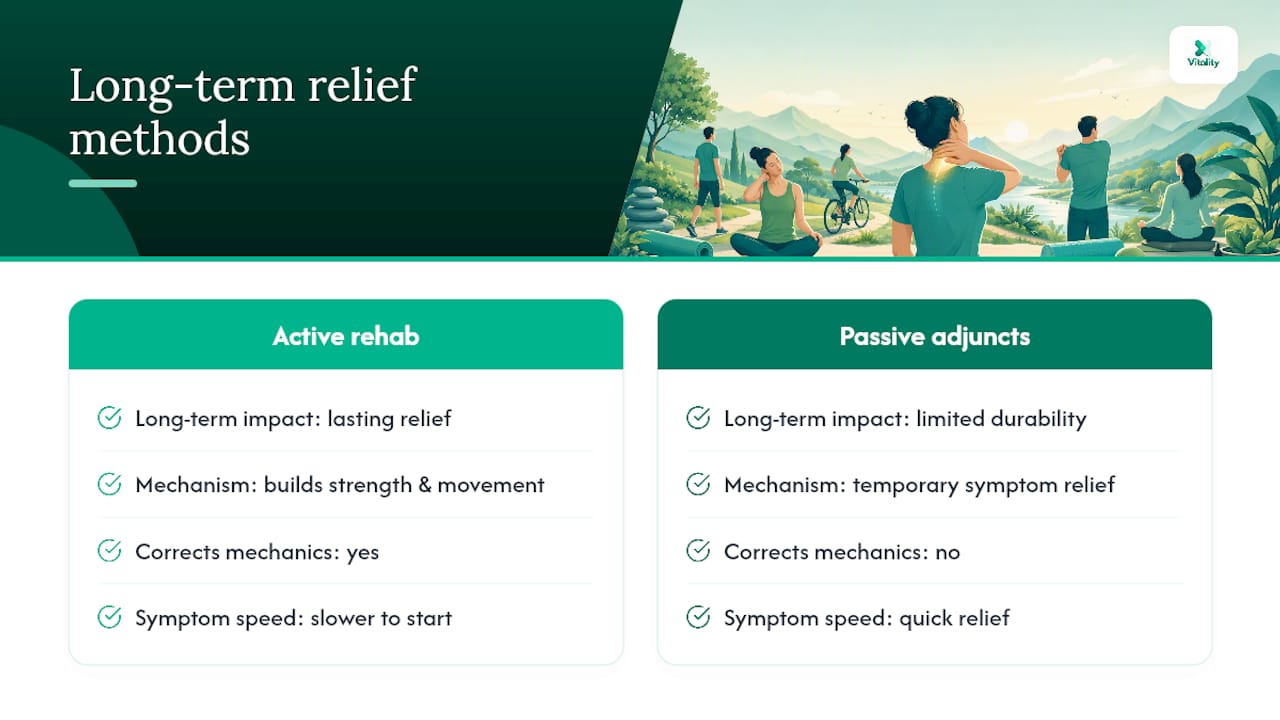
Adjunctive tools can speed up how quickly you feel comfortable enough to do the rehab work. That’s their real value. They’re not a shortcut around it.
Ease Neck Tension Between Your Active Treatment Sessions
If you’ve made it this far, you already know that lasting relief depends on active work: PT, movement, and consistent ergonomic habits. What most treatment plans miss is a way to ease tension in the fifteen minutes before or after that work, without another appointment or another pill.
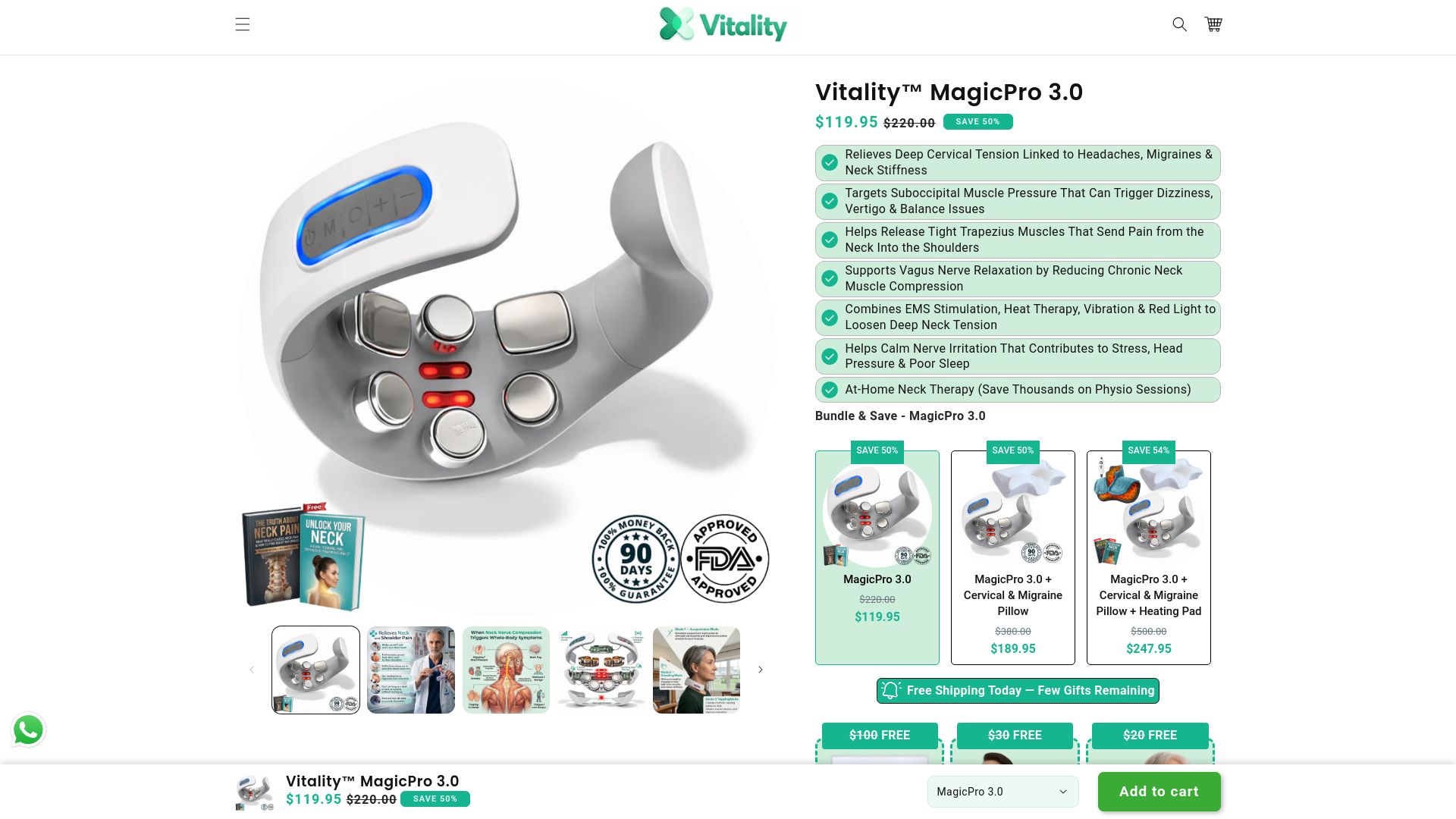
My Vitality’s MagicPro 2.0 and MagicPro 3.0 devices combine electrical muscle stimulation, heat, and massage into a single session you can run at your desk, in the car, or before bed. Unlike a heating pad or a TENS unit alone, the combined approach targets both circulation and muscle tension in one 15-minute routine, which fits realistically into a day that already includes exercises and appointments.
If you’re managing a flare right now or simply want a dependable adjunct to your PT routine, browse the Vitality™ Devices collection and find the option that matches how and where you plan to use it.
Frequently Asked Questions
What is the fastest way to relieve arthritis neck pain? Ergonomic fixes, movement breaks, and OTC medication typically bring the fastest relief for a new flare. Most mild cases often improve within a few weeks with consistent self-care.
Are neck massagers actually effective for arthritis pain? Devices combining heat, massage, and electrical stimulation can ease tension and support comfort between physical therapy sessions, though they work best alongside active exercise rather than as a stand-alone treatment.
When should I worry about neck pain from arthritis? Seek prompt medical evaluation if you notice arm or leg weakness, numbness, bowel or bladder changes, fever, or unexplained weight loss alongside your neck pain.
Is heat or ice better for arthritis neck pain? Ice works best in the first 48 to 72 hours after a flare starts. After that, heat helps relax muscles and improve blood flow for ongoing stiffness.
Do I need physical therapy for neck arthritis, or can I manage it at home? Physical therapy is one of the most effective nonsurgical treatments for persistent neck arthritis pain. Home care helps with mild or occasional flares, but ongoing or worsening pain usually benefits from a therapist’s guidance.
This article is general information, not a substitute for advice from a qualified doctor. Consult a qualified healthcare professional about your own circumstances before acting on anything here.
Sources
- Practical tips and simple exercises to prevent neck pain — Harvard Health
- Neck pain - Diagnosis and treatment — Mayo Clinic
- Transcutaneous electrical nerve stimulation (TENS) — Cleveland Clinic