


Yes, home treatment helps most people with cervical radiculopathy, and conservative care resolves the majority of cases without surgery. Start now: check for red flags, apply ice during the first acute days, avoid positions that trigger arm symptoms, and begin gentle chin tucks. If you see no improvement within 4 to 8 weeks, or notice new weakness or numbness, move to a clinical evaluation.
TL;DR:
- Most cervical radiculopathy cases improve with conservative home care within 6 to 12 weeks, avoiding the need for surgery in over 85% of instances.
- Red-flag symptoms such as worsening weakness, numbness, or loss of bladder control require immediate medical evaluation, especially if they progress after several weeks of self-care.
- Ice packs should be used during the first 48 hours to control swelling, followed by heat to reduce muscle tightness, while activity should be paced to avoid aggravating symptoms.
- Effective exercises include chin tucks, neural gliding, and scapular squeezes, which should be stopped if they increase numbness or weakness.
- Proper posture during work and sleep, along with passive tools like heat or TENS, support recovery but do not replace active movement and targeted therapies.
Table of Contents
- What Safe Self-Care for Cervical Radiculopathy Actually Targets
- What Symptoms Mean You Should Stop and Call a Doctor?
- Immediate Steps to Calm a Cervical Radiculopathy Flare
- Which Exercises Help Cervical Radiculopathy Nerve Pain?
- How Posture and Sleep Position Affect Neck Nerve Pain
- Do Heat Pads, TENS, and Neck Devices Help Cervical Radiculopathy?
- When Should You See a Doctor for Cervical Radiculopathy?
- What I Tell Patients About Realistic Recovery Timelines
- Adding MagicPro to Your Home-Care Routine
- Where to Read More on Cervical Radiculopathy Treatment
- Sources
- FAQ
What Safe Self-Care for Cervical Radiculopathy Actually Targets
Home care for cervical radiculopathy has one job: calm the irritated nerve root and protect motion while your body heals. That means reducing inflammation around the compressed nerve, keeping the joints mobile, and gradually restoring strength in the neck and shoulder blade muscles that support your spine. The StatPearls clinical reference frames the goal as creating space for nerve recovery through posture correction and controlled movement, not through force.
Several common habits work against that goal:
- Forceful self-manipulation or “cracking” the neck to relieve tightness
- Wearing a soft collar all day, every day, for weeks at a time
- Continuing any activity that reproduces numbness, tingling, or arm weakness
- Staying completely still out of fear of making things worse
Short-term supports, ice packs, brief heat sessions, or a soft collar worn for a few hours are meant to bridge you into active rehab. They are not the rehab itself.
What Symptoms Mean You Should Stop and Call a Doctor?
Before you try any exercise or self-care step, run through a quick mental checklist. Most neck-related arm pain is mechanical and safe to manage at home, but a small subset of cases needs urgent attention.
Clinicians flag these red-flag symptoms as reasons to seek immediate assessment rather than home care:
- New or worsening balance problems when walking
- Severe hand clumsiness, like dropping objects or trouble with buttons
- Loss of bladder or bowel control
- Progressive weakness in your arm or hand that keeps getting worse over days
Statistic to know: roughly 90% of people with cervical radiculopathy reach good to excellent outcomes with nonsurgical care, which is exactly why ruling out the rare red-flag case matters so much before you commit to a home program.
You can do two simple checks yourself: squeeze a rolled towel with each hand and compare grip strength, then stand on one leg with your eyes closed for a few seconds to gauge balance. If either check reveals a clear, one-sided deficit, stop home care and get evaluated.

Immediate Steps to Calm a Cervical Radiculopathy Flare
The first days of a flare call for a specific sequence, not a guessing game.
- Ice first, heat later. Use ice for 15 to 20 minutes several times a day during the first 48 hours to control acute swelling around the nerve root. After that window, switch to heat to ease the muscle guarding that tends to build up around an irritated joint.
- Use OTC anti-inflammatories carefully. Over-the-counter NSAIDs can take the edge off short-term pain and swelling. Oral steroids are sometimes prescribed for more severe flares, but that decision belongs with a clinician, not a home protocol.
- Reserve the soft collar for brief stretches. A few hours of collar support during a bad flare can rest irritated tissue, but prolonged collar use weakens the neck muscles you need for long-term stability. Treat it as a short-term tool, not daily wear.
- Pace your activity instead of stopping it. Avoid the specific motions that spike your arm pain, but keep walking, keep working, and keep moving in ranges that feel tolerable.
Pro Tip: Log which positions trigger symptoms for the first week. That short list becomes your personal guide for what to avoid while you build back tolerance.
Which Exercises Help Cervical Radiculopathy Nerve Pain?
Targeted movement is where most of the real recovery work happens. These exercises are widely used in physical therapy and considered low-risk home interventions when you respect the safety cues below.
- Chin tucks (cervical retraction). Sit tall, keep your eyes level, and draw your chin straight back as if making a double chin. Hold for 3 to 5 seconds, do 10 reps, 3 to 4 times a day. This is often the single most effective starting exercise for cervical nerve pain.
- Neural gliding (nerve flossing). Move your arm and neck through a slow, controlled sequence that gently mobilizes the nerve without stretching it hard. A brief tingle is acceptable; sustained or worsening numbness is not.
- Home traction. A supine head-hang off the edge of a bed or a simple towel-traction setup can mimic some benefits of clinic traction. Evidence on traction is mixed, though some trials show benefit when combined with supervised physical therapy. Limit sessions to a few minutes and track how you respond before repeating.
- Isometric holds. Press your palm against your forehead, side of your head, and back of your head, holding each for 5 to 10 seconds without letting your head move. This builds strength without loading the joints.
- Side tilts and shoulder blade squeezes. Gentle side-to-side tilts restore lateral motion, while scapular squeezes rebuild the postural muscles that often go weak alongside nerve irritation.
Stop or scale back any exercise the moment it increases numbness or produces new weakness rather than the expected mild, temporary tingling.
How Posture and Sleep Position Affect Neck Nerve Pain
Small, repeated stresses on your neck throughout the day often do more damage than any single bad moment. Fixing your workstation and sleep setup removes a steady source of nerve irritation.
- Set your monitor at eye level so you are not tilting your chin down or craning up for hours at a time.
- Choose a chair with real back support, and keep your forearms supported when typing.
- Hold your phone and tablet at eye level instead of dropping your chin toward your chest.
- Sleep on your back or side with a contour pillow that keeps your ears roughly over your shoulders; avoid stomach sleeping, which forces your neck into rotation all night.
- Take a movement break every 30 to 45 minutes, and turn your whole trunk to look sideways rather than twisting just your neck.
Do Heat Pads, TENS, and Neck Devices Help Cervical Radiculopathy?
Passive tools have a real, supported role, they just are not the whole plan. Ice reduces acute swelling, heat eases chronic muscle tension, massage improves local blood flow, and electrical stimulation can interrupt pain signals long enough for you to move more comfortably.
- Ice: best in the first 48 hours of a flare
- Heat: best for lingering muscle tightness once acute swelling settles
- Massage: loosens the guarding muscles around the neck and shoulder blades
- Electrical stimulation (EMS/TENS): can ease pain during and after a session, making exercise easier to tolerate
Devices combining heat, massage, and electrical stimulation tend to provide meaningful short-term relief, but that relief should feed into an active strengthening routine rather than replace it. Devices combining EMS, heat, and massage can fit this adjunctive role, layering therapies into short daily sessions designed to fit around an exercise schedule.
Pro Tip: Follow the manufacturer’s guidance on intensity and session length for any electrical stimulation device, and stop immediately if symptoms worsen rather than push through.
When Should You See a Doctor for Cervical Radiculopathy?
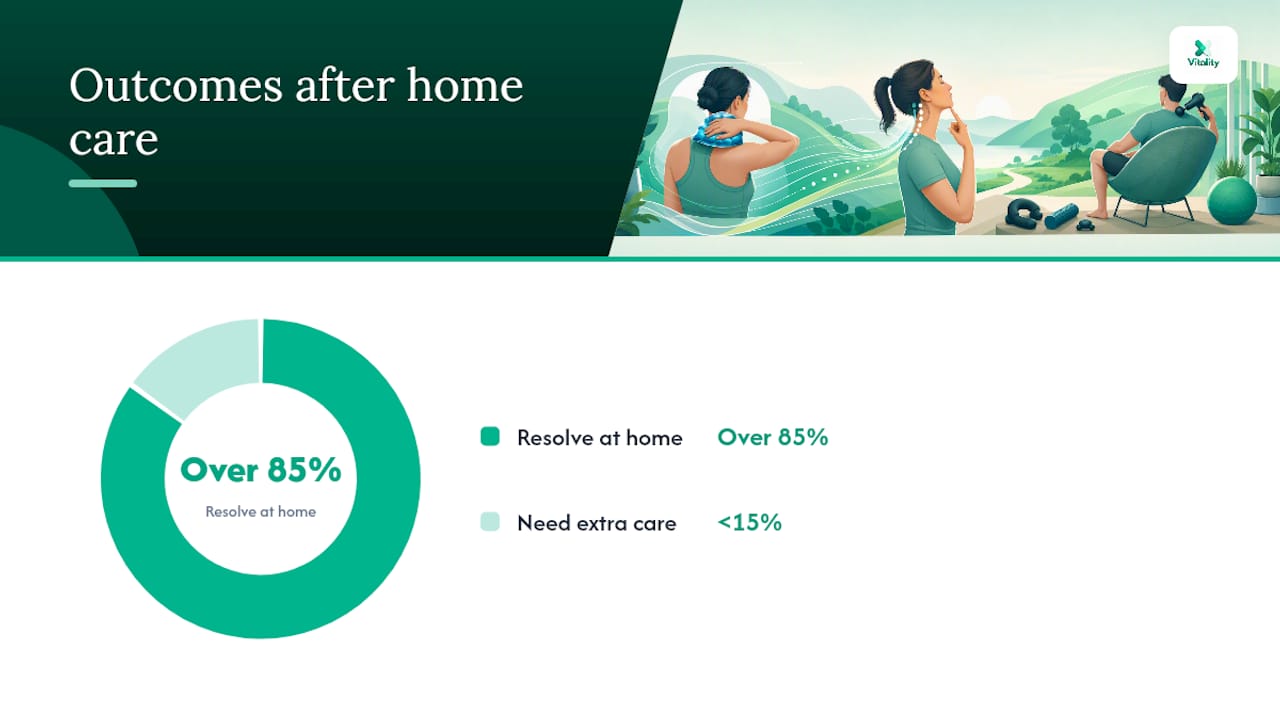
Most people improve within 6 to 12 weeks of starting conservative care. Over 85% of acute cases resolve without needing injections or surgery, which is why home treatment deserves a real trial before jumping to more invasive options.
Escalate to a clinician if:
- You see no meaningful improvement after 4 to 8 weeks of consistent home care
- Weakness or numbness progresses instead of settling
- Pain becomes severe enough to disrupt sleep or daily function most days
When home care stalls, the next tier includes structured physical therapy, an epidural steroid injection for select cases, and, for progressive neurological deficits, a surgical referral. That path exists for a minority. Most readers following a staged home program will not need it.
What I Tell Patients About Realistic Recovery Timelines
Most people I talk to expect either instant relief or a permanent problem, and the truth sits between those two extremes. Nerve irritation calms on a schedule measured in weeks, not days, and the people who recover fastest are the ones who combine passive relief with consistent, boring, daily exercise. A device that eases pain for 15 minutes matters less than what you do with the other 23 hours and 45 minutes.
Your practical checklist: rule out red flags first, start ice or heat based on your flare stage, run through chin tucks and gentle gliding daily, and call a clinician if 4 to 8 weeks pass without progress. That sequence, followed honestly, covers most of what recovery actually requires.
— Achraf
Adding MagicPro to Your Home-Care Routine
Once your exercise plan is in place, a passive device fills the gap that chin tucks and traction cannot: fast, hands-free symptom relief you can use at your desk or on the couch.
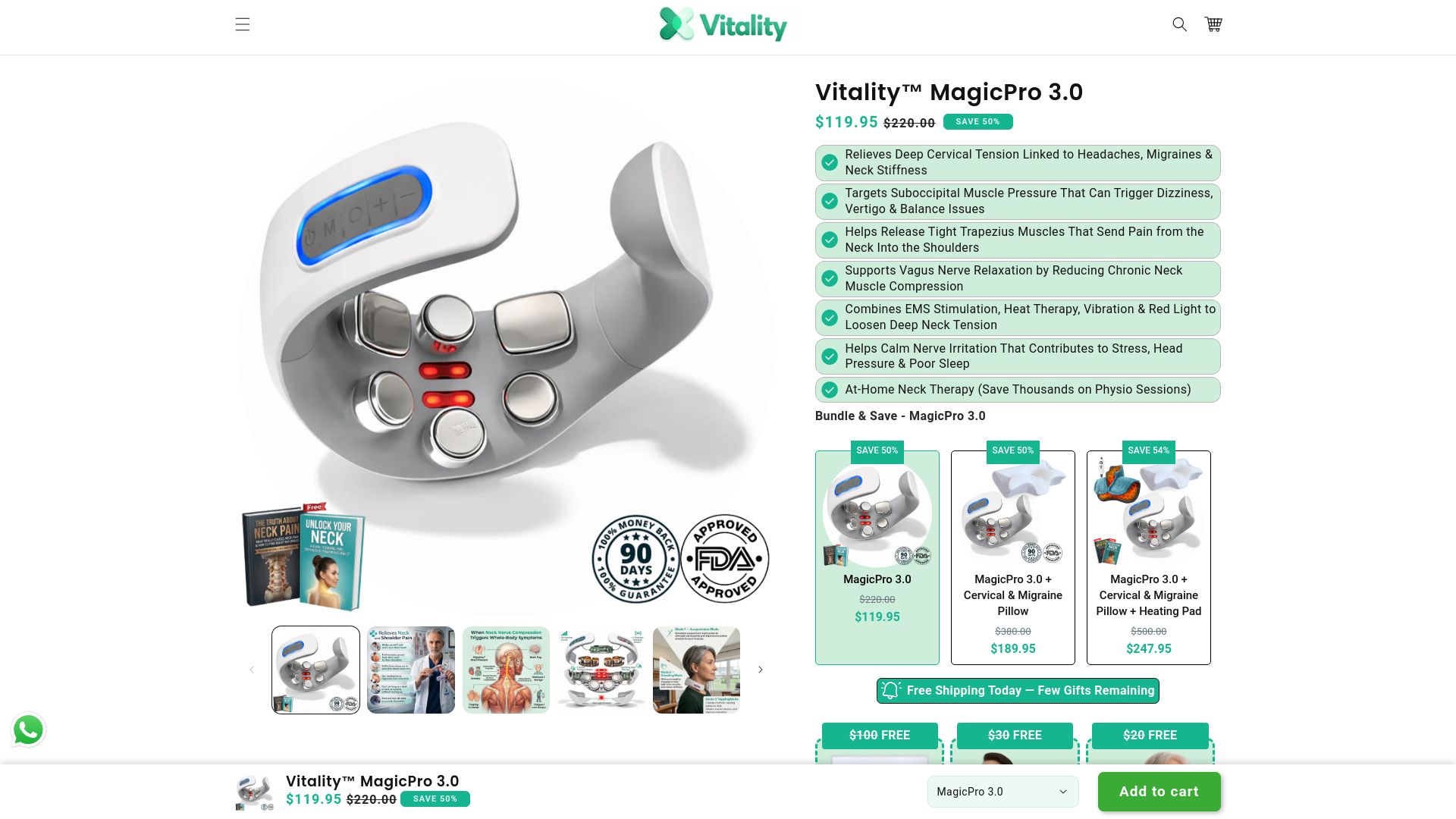
Some devices combine electrical muscle stimulation, heat, and massage into single wearable sessions that run about 15 minutes. That is short enough to fit before or after chin tucks and neural gliding, giving a calmer neck going into the exercises that actually rebuild strength. These devices do not replace urgent care for red-flag symptoms or a structured PT referral if a flare stalls past 8 weeks, but as a daily adjunct to an active home program, they cover the passive-relief piece without requiring a clinic visit. Check the MagicPro 2.0 product page to see which sessions fit your daily routine, or browse the full Vitality device lineup to compare options before you order.
Where to Read More on Cervical Radiculopathy Treatment
- Management of Cervical Radiculopathy (PMC) for outcome data on conservative versus surgical care
- Cervical radiculopathy, StatPearls for clinical guidance on red flags and exercise
- Cervical Radiculopathy, Cleveland Clinic for recovery timelines and nonsurgical options
- Targeted heat and cold pack guidance for practical thermal therapy tips
Bring these sources to your next appointment if you want your clinician’s take on how they apply to your specific case.
This article is general information, not a substitute for advice from a qualified doctor. Consult a qualified healthcare professional about your own circumstances before acting on anything here.
Sources
- Management of Cervical Radiculopathy — PMC
- Cervical radiculopathy - StatPearls - NCBI Bookshelf
- Cervical Radiculopathy (Pinched Nerve in Neck) — Cleveland Clinic
FAQ
Will Cervical Radiculopathy Go Away On Its Own?
For most people, yes. Over 85% of acute cases improve within 8 to 12 weeks using conservative measures like rest, NSAIDs, and gentle exercise.
What Is the Fastest Way to Relieve a Pinched Nerve in the Neck?
Ice during the first 48 hours, followed by chin tucks and gentle neural gliding, tends to produce the quickest symptom relief, especially when combined with short-term OTC anti-inflammatories.
What Triggers Cervical Radiculopathy Flare-Ups?
Prolonged forward head posture, looking down at phones or laptops, sudden neck extension or rotation, and poor sleep positions are common triggers that irritate an already compressed nerve root.
What Are the Dos and Don’ts for Cervical Radiculopathy?
Do keep moving with symptom-safe exercise, use ice or heat appropriately, and adjust your workstation. Don’t crack your neck forcefully, wear a collar all day, or push through exercises that cause worsening numbness or weakness.
Can a Home Device Like MagicPro Help With Cervical Radiculopathy?
Devices combining heat, massage, and electrical stimulation can ease muscle tension and pain as a daily adjunct, but they work best paired with an active exercise program rather than used alone.