


Most neck pain responds to a simple, layered approach: rest the area briefly, apply ice for the first 48 to 72 hours then switch to heat, take an over-the-counter pain reliever as directed, and start gentle range-of-motion movement as soon as sharp pain eases. Skip heavy lifting and awkward sleeping positions while you recover.
- Short rest, not full bed rest
- Ice for 48–72 hours, then heat
- OTC pain reliever per label directions
- Gentle neck stretches and shoulder rolls
- Avoid heavy lifting and prolonged immobility
Call a clinician right away if you develop fever, sudden weakness or numbness in an arm or leg, or neck pain following a serious fall. Otherwise, take heart: Mayo Clinic notes that most mild to moderate neck pain resolves within 2 to 3 weeks with basic self-care, and small ergonomic fixes go a long way toward keeping it from coming back.
Pro Tip: Set a phone reminder every 45 minutes for the first two days. A quick posture check and a few shoulder rolls prevent the stiffness that builds when you forget you’re guarding the pain.
Key Takeaways
Most neck pain improves within 2 to 3 weeks using ice then heat, OTC medication, gentle movement, and ergonomic fixes, without needing a doctor visit.
| Point | Details |
|---|---|
| Follow the ice-to-heat switch | Use ice for 48–72 hours after pain starts, then move to heat to relax muscles. |
| Stay active, skip bed rest | Gentle movement and light activity speed recovery better than prolonged rest. |
| Fix your workstation | Eye-level monitors, headsets, and better chairs prevent recurring strain. |
| Know the red flags | Fever, spreading weakness, or pain after trauma means it’s time to call a clinician. |
| Consider a supportive device | Vitality MagicPro 2.0 and 3.0 combine heat, massage, and EMS for daily at-home relief. |
This article is general information, not a substitute for advice from a qualified doctor. Consult a qualified healthcare professional about your own circumstances before acting on anything here.
Table of Contents
- Common, Non-Urgent Causes of Neck Pain
- At-Home Neck Pain Treatment: Ice, Heat, and OTC Options
- Neck Stretches and Exercises You Can Do at Home
- Ergonomic Fixes That Prevent Neck Pain From Coming Back
- When Neck Pain Needs Prompt Medical Attention
- Neck Pain Recovery Timeline: What to Expect
- Other Neck Pain Treatments and What the Evidence Says
- A Two-Week Self-Care Plan for Neck Pain at Home
- A Practical At-Home Device Option Worth Knowing About
- Sources
Common, Non-Urgent Causes of Neck Pain
Before you treat neck pain at home, it helps to know what usually causes it. Most cases trace back to something mechanical, not something dangerous.
- Muscle strain from screen time, phone cradling, or awkward desk posture
- A poor sleeping position or an unsupportive pillow
- Stress and tension that build up in the shoulders and upper back
- Minor sprains or overuse from exercise or repetitive motion
Degenerative changes like arthritis can also cause chronic neck stiffness, but they’re usually manageable with the same conservative care outlined below. If your pain is mild and you can’t pinpoint an exact cause, home treatment is still a reasonable first move.
At-Home Neck Pain Treatment: Ice, Heat, and OTC Options
Timing matters more than most people realize. For the first 48 to 72 hours after pain starts, ice is the better choice because it limits inflammation. Wrap a cold pack in a thin towel and apply it for 15 to 20 minutes at a time. After that window, switch to heat, a warm compress or heating pad, to relax tight muscles and encourage blood flow. Always keep a cloth barrier between skin and either source to avoid burns or frostbite.
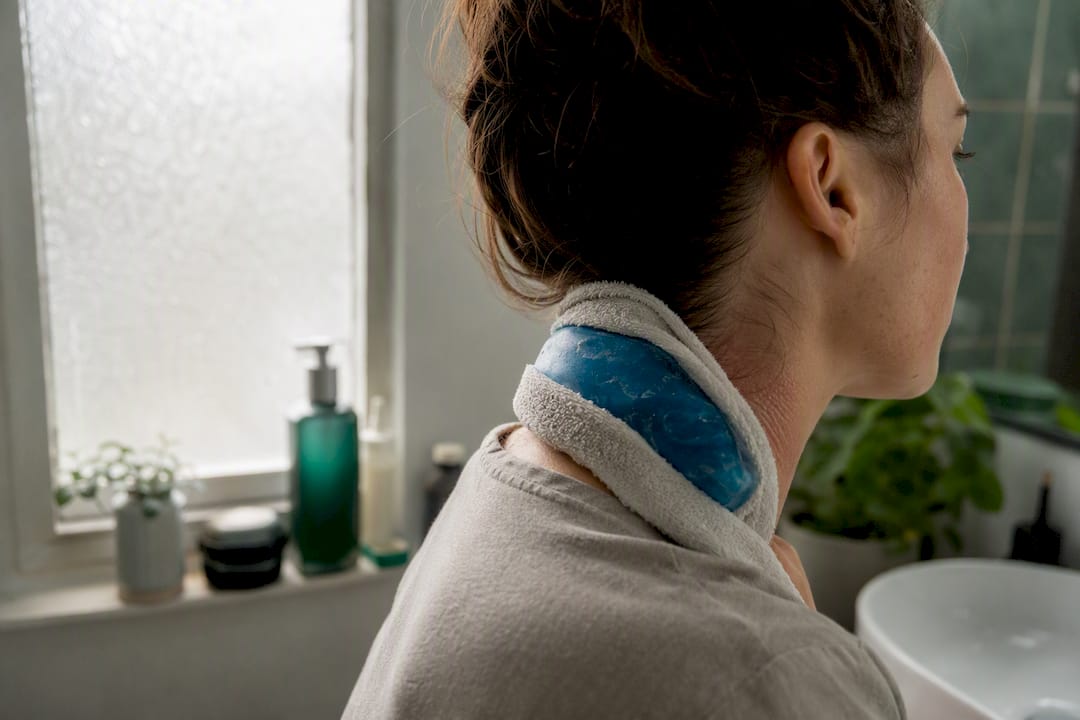
For over-the-counter neck pain relief, NSAIDs like ibuprofen or naproxen reduce both pain and inflammation, while acetaminophen addresses pain without the anti-inflammatory effect. Follow label dosing closely, and check with a pharmacist if you take blood thinners, have kidney issues, or plan to use NSAIDs for more than a few days. Long-term daily use of any OTC pain reliever deserves a conversation with a clinician, not a habit.
Topical analgesics, menthol rubs, capsaicin creams, or lidocaine patches, offer a milder option with fewer systemic side effects. Skip them on broken or irritated skin, and patch-test if you have sensitive skin or known allergies.
Pro Tip: Pair heat with gentle movement rather than stillness. A warm shower followed by slow neck rotations tends to loosen tissue faster than heat alone, and it beats wearing a collar all day, which can weaken neck muscles over time.

Neck Stretches and Exercises You Can Do at Home
Movement, not stillness, drives most neck pain relief exercises. Harvard Health recommends easing into stretching once the sharpest pain has faded, then building strength gradually.
- Neck range-of-motion: Slowly turn your head side to side and tip it forward and back, five reps each direction.
- Chin tucks: Pull your chin straight back to create a “double chin,” hold for five seconds, repeat ten times.
- Shoulder rolls: Roll shoulders backward in a slow circle, ten reps.
- Levator scapulae stretch: Turn your head toward one armpit and gently pull with the same-side hand, hold 20 seconds per side.
- Upper-back mobility: Interlace fingers behind your head and gently arch your upper back over a chair edge.
If you’re in the acute phase, shrink the range of motion and cut reps in half. Stop immediately if you feel numbness, radiating weakness, or sharp pain, those aren’t normal stretching sensations. Most people can do this sequence once or twice daily, adding reps as stiffness eases. If pain hasn’t budged after two weeks of consistent effort, a physical therapist can tailor the plan further.
Ergonomic Fixes That Prevent Neck Pain From Coming Back
Preventing neck pain naturally often comes down to how your workspace is set up, not just how you stretch. Small adjustments to monitor height, phone habits, and seating reduce the repetitive strain that causes most flare-ups in the first place.
- Position your monitor so the top of the screen sits at eye level
- Use a headset or speakerphone instead of cradling your phone
- Prop tablets and laptops at roughly a 45 degree angle
- Choose a chair with real lumbar support and adjust armrests so shoulders stay relaxed
| Habit Change | Why It Helps |
|---|---|
| Micro-breaks every 45 minutes | Interrupts sustained muscle tension before it sets in |
| Updated eyewear for screen distance | Stops the forward head tilt that comes from squinting |
| Supportive pillow matched to sleep position | Keeps the cervical spine neutral overnight |
To check your setup in two minutes: sit as you normally would, then notice whether your ears line up over your shoulders. If your head juts forward toward the screen, raise your monitor and pull your chair closer.
When Neck Pain Needs Prompt Medical Attention
Home care works for the vast majority of neck pain, but certain symptoms mean it’s time to stop self-treating.
- Fever alongside neck pain or stiffness
- Unexplained weight loss
- Progressive weakness or numbness spreading down an arm or leg
- Loss of bowel or bladder control
- Neck pain following a serious fall, car accident, or other trauma
- Pain that worsens when lying down or wakes you from sleep
Cleveland Clinic advises that neck pain accompanied by numbness, weakness, fever, or pain radiating into the arms warrants medical evaluation, since these signs can point to nerve compression or infection rather than simple muscle strain.
If you notice any of the above, call your clinician the same day, or call 911 for sudden severe weakness, loss of bladder control, or major trauma. For concerning but non-emergent symptoms, book an appointment within the week rather than waiting it out.
Neck Pain Recovery Timeline: What to Expect
Most people notice some easing within 48 to 72 hours of starting ice, gentle movement, and OTC medication. By one week, stiffness should be loosening; by two to three weeks, many mild to moderate cases resolve substantially with consistent self-care.
- Days 1–3: pain starts to settle
- Week 1: range of motion improves
- Weeks 2–3: most cases feel largely resolved
If you’re not seeing steady improvement by week two, that’s your cue to check in with a clinician rather than pushing through indefinitely.
Other Neck Pain Treatments and What the Evidence Says
Massage, physical therapy, chiropractic adjustment, TENS units, acupuncture, and cervical traction all show up in neck pain treatment at home routines and in-office plans. Massage and physical therapy both offer short-term relief and teach movement patterns that support long-term function. Chiropractic adjustment and acupuncture help some people but carry more variable evidence. TENS units provide temporary pain gating with minimal risk.
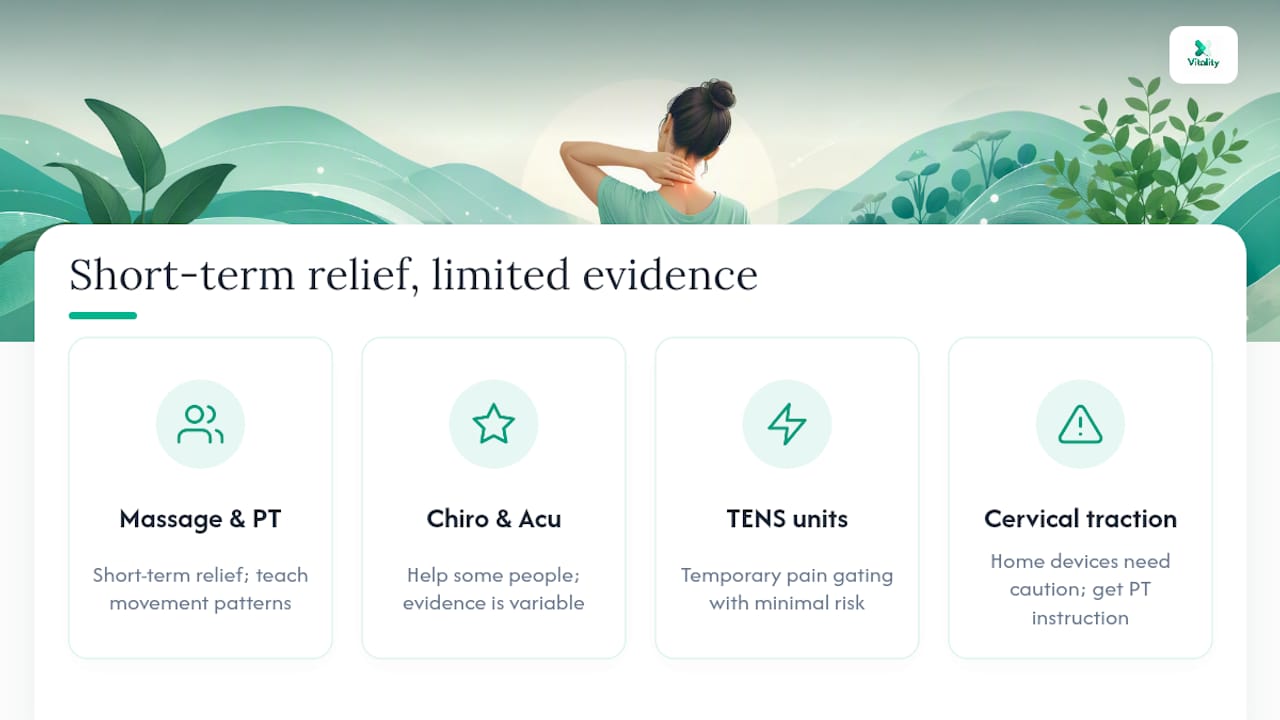
The honest picture: good-quality research supporting durable long-term benefit from any single treatment remains limited, even though many of these approaches genuinely ease symptoms in the short run. Home traction devices deserve caution, they can apply excessive or improper force without professional guidance, so get instruction from a physical therapist before trying one solo.
Pro Tip: Think of these therapies as add-ons, not replacements, for the fundamentals: movement, heat/ice timing, and ergonomic fixes still do the heavy lifting.
A Two-Week Self-Care Plan for Neck Pain at Home
- Days 0–3: Ice the area, keep activity light, and move gently through pain-free range of motion.
- Days 4–14: Apply heat before exercise, progress through the stretching sequence above, fix your workstation setup, and use OTC medication as needed.
Devices that combine heat, massage, and electrical muscle stimulation, such as Vitality MagicPro 2.0 or Vitality MagicPro 3.0, can slot into this routine once acute inflammation has settled. Stop and reassess if pain worsens or new symptoms appear; staying active tends to outperform bed rest at every stage of recovery.
Why a Stepwise, Home-First Approach Makes Sense
Neck pain rarely comes from one cause, so treating it in layers, calming inflammation, restoring movement, then fixing daily habits, matches how the pain actually develops. Watch for red flags throughout, and lean on trustworthy resources like Vitality Therapy’s educational materials to guide safe self-monitoring along the way.
A Practical At-Home Device Option Worth Knowing About
If you want more structure than ice packs and stretching alone provide, a combined therapy device fills that gap without requiring an appointment.
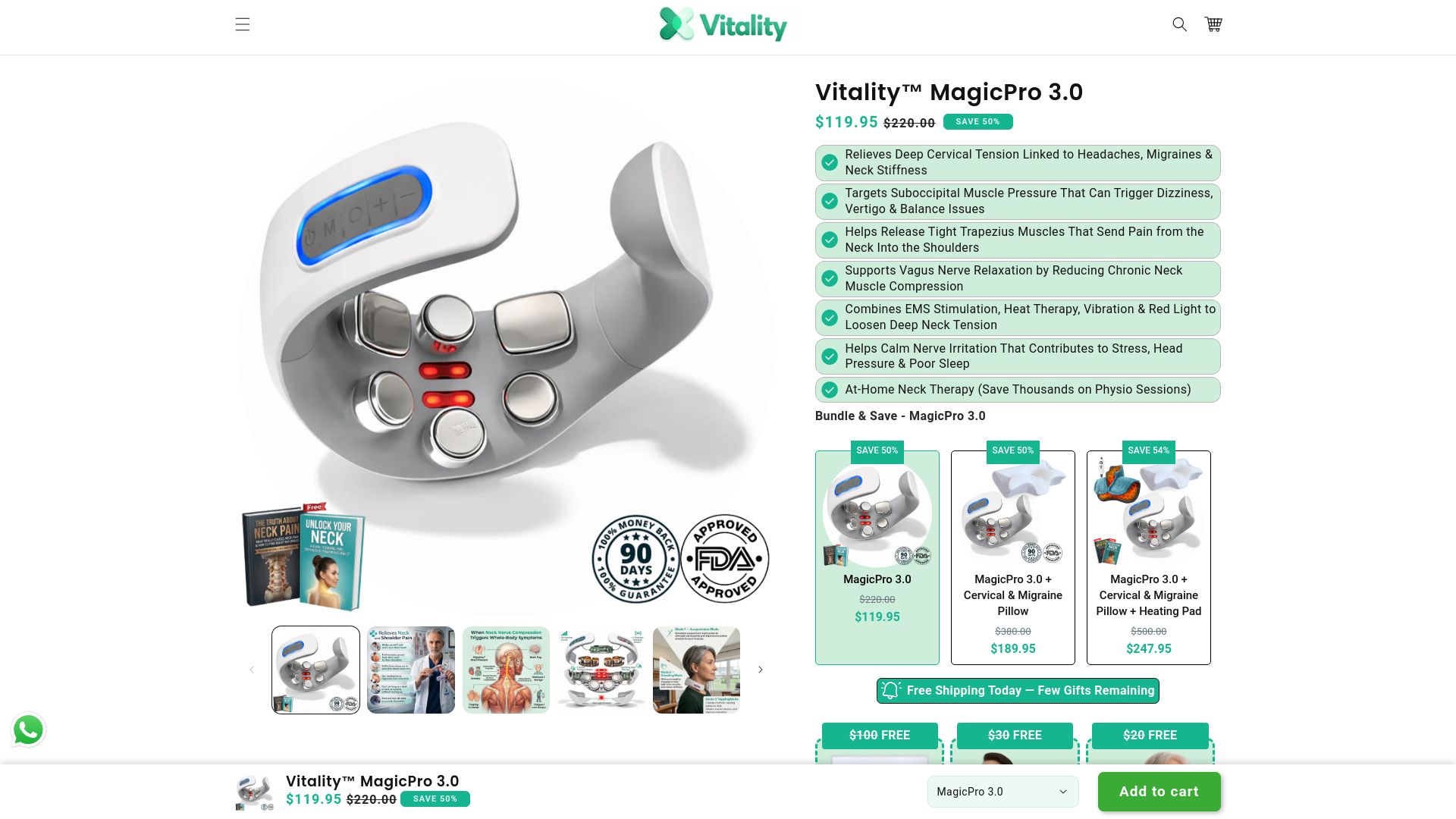
Vitality MagicPro 2.0 pairs electrical muscle stimulation with heat and massage in a single 15 minute session, built for people who want relief between stretches rather than a full replacement for them. Vitality MagicPro 3.0 adds red light therapy for those managing tension tied to vagus nerve activity and broader stress-related tightness. Both are designed for daily use at a desk, in the car, or at home, so the routine actually sticks.
Follow the included instructions, avoid use if you have an implanted electrical device like a pacemaker, and stop immediately if pain worsens or you notice any red-flag symptom covered above, that calls for a clinician, not a device. For everyone else dealing with ordinary muscle tension and stiffness, it’s a reasonable next step. Check current options on the Vitality MagicPro 2.0 product page or browse the full Vitality device lineup to see which fits your routine.
Sources
- Neck pain - Diagnosis and treatment - Mayo Clinic
- Neck Pain - Cleveland Clinic
- Neck pain or spasms - self care: MedlinePlus
- Neck pain or spasms - self care: MedlinePlus Medical Encyclopedia (NCBI Bookshelf)