


Start at your device’s lowest intensity level and run a 15-minute EMS plus heat program. That baseline is safe and effective for most neck stiffness once the pads sit correctly against your skin. For frequency, a range around 1 to 10 Hz works well for relaxation and circulation, while 20 to 50 Hz suits stronger muscle contraction when tension runs deeper.
Vitality™ MagicPro 2.0 and Vitality™ MagicPro 3.0 are both built around this exact format: EMS, heat, and massage running together in a single 15-minute session, so you’re not guessing at separate settings for each function.
- Power off the unit completely before you reposition any pad.
- Never use an EMS neck device while sleeping or driving.
- Raise intensity only one or two levels at a time, and stop at the first strong twitch.
Quick baseline: low frequency, low pulse width, lowest comfortable intensity, 15 minutes, pads placed symmetrically on either side of the spine.
TL;DR:
- Use low frequency (1 to 10 Hz) for general stiffness and rotate to higher frequencies (20 to 50 Hz) only for deeper muscle contraction, staying within tolerable limits.
- Position pads on the posterior or lateral neck with symmetrical, full contact, avoiding the front throat and carotid areas, and keep the neck relaxed during sessions.
- Gradually increase intensity until you feel a comfortable muscle twitch, not pain, and run sessions between 10 to 20 minutes daily, with 15 minutes as a standard.
- Avoid EMS therapy if you have a pacemaker, are pregnant, have open wounds, reduced sensation, or epilepsy, and always consult a doctor if unsure.
- Combining EMS with heat and massage in a consistent routine over two to three weeks provides better results than relying solely on EMS, especially with devices like the MagicPro series.
Table of Contents
- What Are the Best EMS Settings for Neck Pain?
- How Do You Place Electrodes for Neck Pain?
- Who Should Avoid Using an EMS Neck Device?
- How Should Settings Change for Different Neck Pain Types?
- Can You Combine EMS With Heat or Massage for Better Results?
- Device Care and Travel Tips for Portable EMS Units
- What Actually Matters More Than the Perfect Setting
- Why the MagicPro Line Fits This Combined-Therapy Approach
- Key Takeaways
- Sources
What Are the Best EMS Settings for Neck Pain?
The right setting depends on what your neck actually needs that day. Loose, achy stiffness responds well to low frequency. Sharp, knotted tension usually calls for something a bit stronger, applied for less time.
Frequency is the number of electrical pulses per second, measured in hertz (Hz). Lower frequencies, generally 1 to 10 Hz, produce a gentle, wave-like sensation that encourages blood flow and eases general tightness. Higher frequencies, from 20 Hz up past 50 Hz, cause the muscle to contract more forcefully, which helps with deeper, guarded tension but should be approached carefully in the neck given how many sensitive structures sit nearby.
Pulse width, sometimes called pulse duration, controls how long each electrical pulse lasts. A wider pulse width recruits more muscle fibers and produces a stronger contraction. For the neck, keep this conservative. You don’t need face-and-body-level pulse widths here; the neck muscles are smaller and more easily overstimulated than the quads or glutes.
Intensity is the setting most people get wrong. The rule is simple: dial up until you feel the first clear, comfortable muscle twitch, then stop. Pain is never the target. If a session ever feels sharp or uncomfortable, back off two levels immediately.
- Set frequency low (1 to 10 Hz) for general stiffness and circulation.
- Increase toward 20 to 50 Hz only for focused, tolerable contraction work.
- Keep pulse width on the lower end of your device’s range.
- Raise intensity gradually until you feel a first twitch, not pain.
- Run the program for 10 to 20 minutes, with 15 minutes as your daily target.
On combined devices like the MagicPro line, preset modes already map to these parameter goals. A “relax” or “circulation” mode is tuned to that low-frequency, low-intensity zone, while a “massage” or “deep tension” mode shifts toward higher frequency and slightly more assertive pulse width.
Pro Tip: Run the same preset for at least five sessions before switching. Your neck muscles need a few repeat exposures to tell you whether a setting is actually working, not just whether it feels new.
How Do You Place Electrodes for Neck Pain?

Placement determines whether a session works at all. The two effective zones are the posterior neck, along either side of the spine, and the lateral neck, along the muscles running down from behind the ears. Never place pads or wraps over the throat or the carotid area at the front of the neck.
Wrap-style massagers differ from adhesive gel pads in one key way: wraps distribute contact across a shaped surface, while gel pads need direct, flat skin contact to conduct properly. Either way, the sequence stays the same:
- Power the device off first.
- Position the pads or wrap symmetrically over the target muscles.
- Check for full, even contact against the skin.
- Power on at the lowest intensity, then adjust.
Pinching, uneven sensation, or a pad that slips mid-session all signal a fit problem, not an intensity problem. Reposition first. If a gel pad feels weak or patchy, a light misting of water often restores conduction before you assume the unit is broken.
Pro Tip: Keep your neck relaxed, not braced, during the session. A tensed neck fights the device’s contractions, which is often why sessions feel pinchy or ineffective even with good pad placement.
Run through this before every session: pads clean and slightly moist, skin clean and dry, device off during positioning, intensity reset to zero before power on.
Who Should Avoid Using an EMS Neck Device?
Certain people should skip EMS neck devices entirely or check with a physician first. That list includes anyone with a pacemaker or other implanted electrical stimulator, anyone who is pregnant, anyone with open wounds or broken skin in the treatment area, anyone with reduced skin sensation, and anyone with epilepsy.
- Pacemaker or implanted stimulator: avoid EMS entirely without physician clearance.
- Pregnancy: consult a doctor before use, particularly near the neck and upper spine.
- Open wounds, rashes, or broken skin: never place pads over damaged skin.
- Reduced sensation (neuropathy, nerve damage): you may not feel warning signs of overstimulation.
- Epilepsy: check with a physician, since electrical stimulation carries added risk.
Beyond who should avoid it, everyone benefits from a few standing rules: never use the device while sleeping or driving, always power off before repositioning pads, and keep the skin at the treatment site clean and dry before each session. Rotate pad position slightly session to session, and stop immediately if you notice redness that doesn’t fade, burning, or new numbness. That warrants a call to your doctor, not a lower intensity setting and a second attempt.
It’s worth being honest about what the science actually shows. A systematic review of electrotherapy for neck pain found the overall quality of evidence is low to very low, and EMS doesn’t consistently beat placebo across trials, in part because many studies never reported precise EMS parameters at all. That doesn’t mean EMS is useless. It means you should treat it as a genuinely useful adjunct to other care, not a guaranteed fix, and set expectations accordingly.
How Should Settings Change for Different Neck Pain Types?
Not every neck problem calls for the same session. Matching your settings to the actual symptom pattern is what separates a device that “sort of helps” from one that becomes part of your daily routine.
- General stiffness or postural tension (the kind from a long day at a desk): stay low frequency, keep sessions on the longer end of your range, and pair with heat from the start. Comfort matters more than intensity here.
- Trigger points or tight knots: place pads directly over the knot, use a slightly higher but still comfortable intensity, and keep the burst shorter. Follow up with manual pressure or a gentle stretch once the session ends.
- Migraine-related neck discomfort: stick to gentle, low-contraction modes and avoid any strong pulses near the sides of the neck. Slow breathing during the session tends to help more than pushing intensity.
- Acute pain (new, sharp, recent onset): favor shorter sessions, lower intensity, and more frequent heat. Chronic pain (weeks or months of low-grade tension) tolerates longer sessions and can handle the higher end of the frequency range once you’ve built tolerance over several sessions.
Know when to stop adjusting settings and get a second opinion instead: no improvement after two to three consistent weeks, any numbness or tingling radiating down an arm, or pain that’s getting worse rather than better. Those are signs for a physical therapist, not a higher intensity dial.
Can You Combine EMS With Heat or Massage for Better Results?
Pairing modalities beats running EMS alone,
the research on composite devices. A study comparing combined EMS, heat, and air massage against single EMS found the combined approach cut pain significantly more and left users more satisfied with both usability and results.
A simple daily sequence works well:
- Warm up with two to three minutes of gentle neck stretching.
- Run your 15-minute EMS plus heat program.
- Finish with light mobility movements, slow rotations and tilts, while the muscle is still warm.
EMS also pairs well with structured exercise; learn more about how clinical NMES-based treatments combine stimulation with exercise at Emsculpt NEO – Functional Wellness in Wayzata, MN. A randomized trial adding NMES to a therapeutic exercise program found better pain scores, cervical rotation range of motion, and deep neck flexor endurance compared to exercise alone. If you’re already working with a physiotherapist, ask whether EMS sessions fit alongside your existing plan rather than replacing it.
Device Care and Travel Tips for Portable EMS Units
Reliable results depend on basic upkeep as much as correct settings. Charge your device fully between uses and avoid letting the battery sit empty for long stretches. Store it somewhere with moderate temperature, not a hot car or a freezing garage.
- Clean skin before every session and keep pads free of lotion or oil residue.
- Rehydrate gel pads with water or the recommended gel when conduction feels weak, and replace pads once they stop adhering well.
- Pack a protective case and a spare set of pads when traveling.
- Skip sessions in a moving vehicle if it means you can’t monitor the device safely.
What Actually Matters More Than the Perfect Setting
The obsession with finding one “correct” EMS setting misses the bigger point. The evidence on electrotherapy for neck pain is genuinely mixed, which means no single frequency or pulse width is going to work like a magic number for everyone. What actually moves the needle is consistency: the same 15-minute session, most days, with heat and massage layered in rather than EMS running solo.
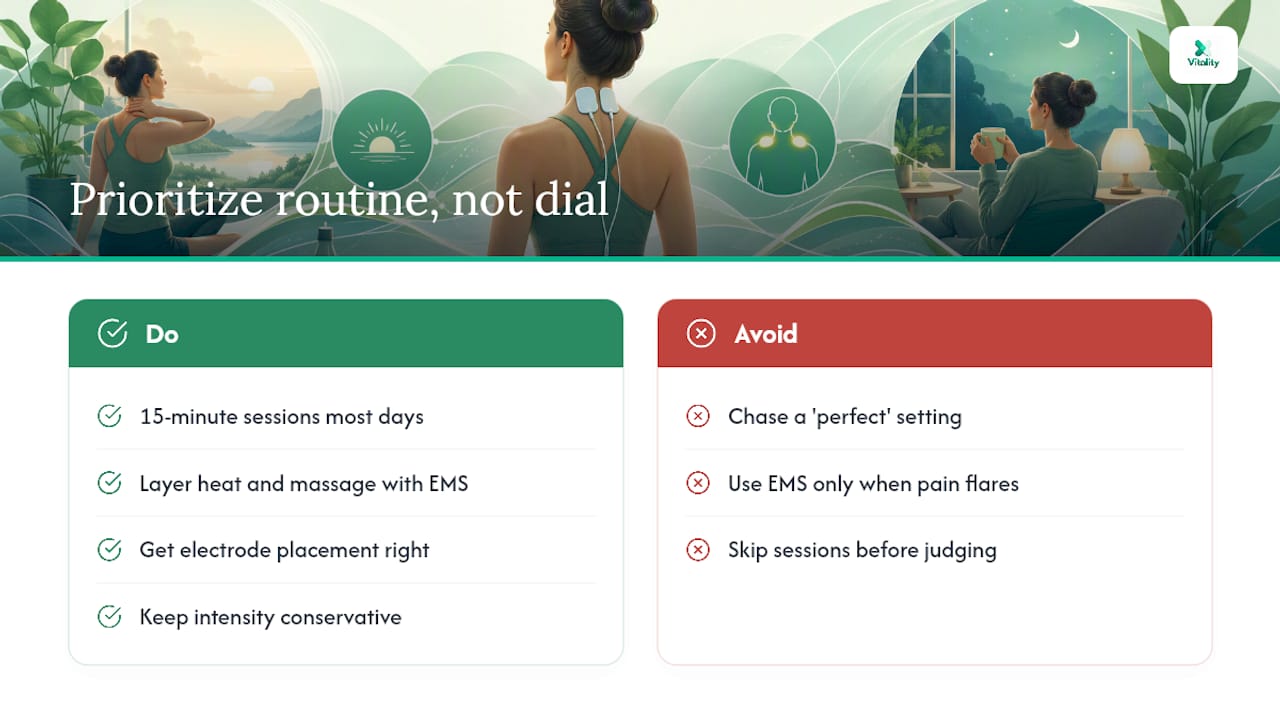
Conventional advice tends to treat EMS as an isolated fix, something you turn to only when pain flares. That’s backwards. The research on combined EMS, heat, and massage devices points toward better results specifically because those modalities work together, not because any one of them is doing the heavy lifting alone.
If you take one thing from all this, prioritize the routine over the dial. Get your placement right, keep intensity conservative, and give a combined program two to three weeks before judging whether it’s working. Chasing a perfect number while skipping sessions is the real reason most people give up on EMS before it has a chance to help.
— Achraf
Why the MagicPro Line Fits This Combined-Therapy Approach
Everything this guide recommends, low starting intensity, 15-minute sessions, and pairing EMS with heat rather than using it alone, is exactly how Vitality™ MagicPro 2.0 and Vitality™ MagicPro 3.0 are built to run. Both devices combine electrical muscle stimulation, heat, and massage into one program instead of asking you to manage three separate tools and three separate settings.
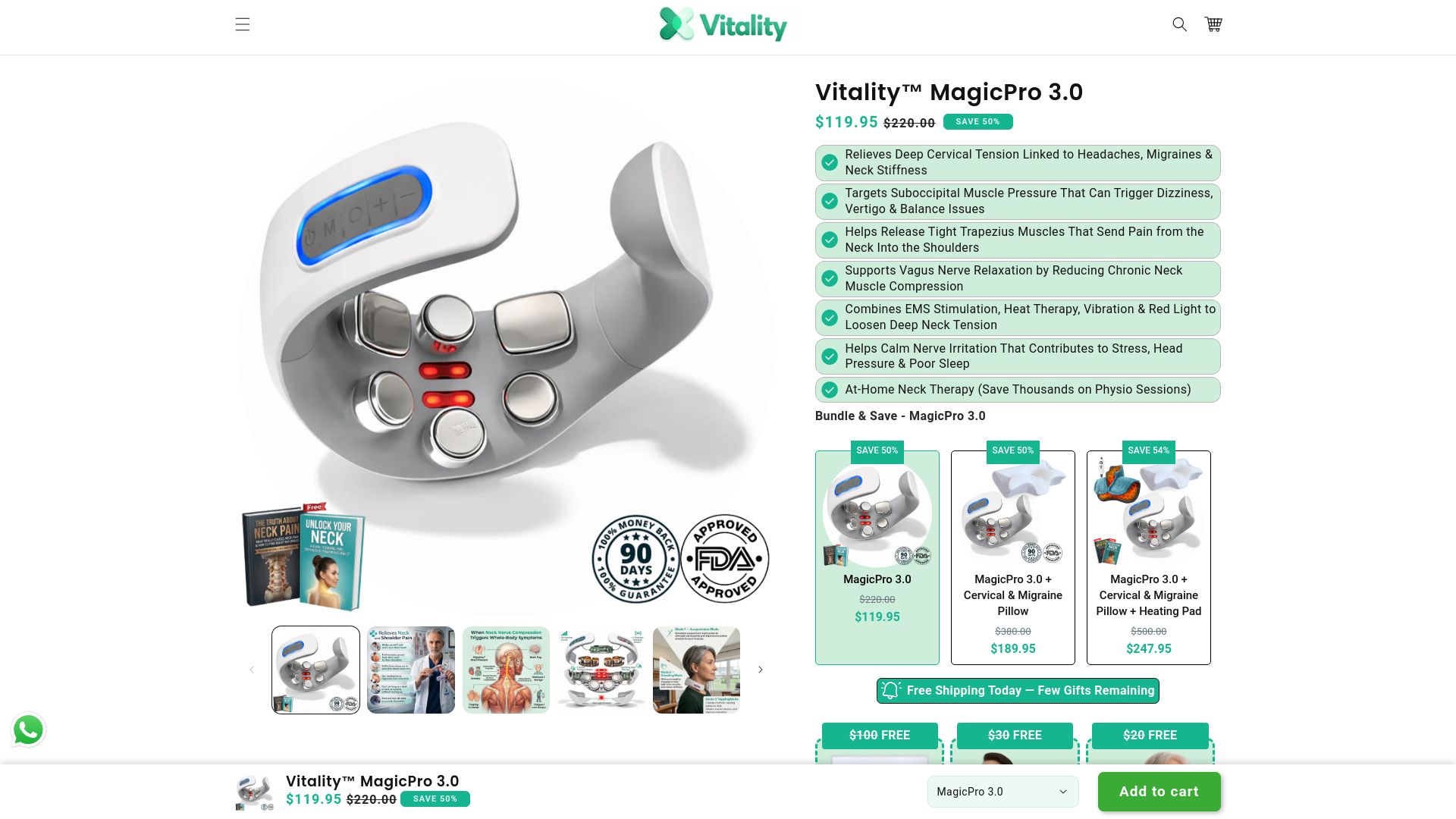
My Vitality’s devices are doctor-recommended, and customers consistently report meaningful improvement in neck discomfort after building the 15-minute daily habit this article describes. If you want the full specs and current pricing, check the Vitality™ MagicPro 2.0 product page or the Vitality™ MagicPro 3.0 for the vagus nerve wellness variant. Every order comes with clear pad-care instructions and a straightforward warranty and return policy, so you can start at the lowest setting tonight and adjust from there with confidence.
Key Takeaways
Effective EMS neck therapy depends less on finding one perfect setting and more on consistent 15-minute sessions that combine EMS with heat and correct pad placement.
| Point | Details |
|---|---|
| Start low, always | Begin at the lowest intensity with 1 to 10 Hz frequency, and raise it only after the first comfortable twitch. |
| Match settings to symptoms | Use lower frequency and longer sessions for stiffness; slightly higher intensity in short bursts for trigger points. |
| Placement beats power | Posterior and lateral neck placement works best; keep pads away from the throat and carotid area entirely. |
| Treat EMS as an adjunct | Evidence for EMS on neck pain is low quality overall, so pair it with exercise or manual therapy rather than relying on it alone. |
| Combined therapy wins | Devices like the Vitality™ MagicPro 2.0 and MagicPro 3.0 build EMS, heat, and massage into one 15-minute daily program. |
This article is general information, not a substitute for advice from a qualified doctor. Consult a qualified healthcare professional about your own circumstances before acting on anything here.