


Ice the area for 15 to 20 minutes every few hours for the first 48 to 72 hours, keep moving gently within a pain-free range, and reach for an OTC anti-inflammatory if your doctor has cleared you to use one. This combination calms swelling early and keeps stiffness from setting in.
- Apply ice wrapped in a thin towel, several times a day, for the first few days.
- Modify activity instead of stopping it completely. Rest the neck, not your whole routine.
- Protect your skin from direct cold exposure and check it between icing sessions.
Seek immediate medical care if you notice numbness, arm or leg weakness, fever, or any loss of bladder or bowel control. Those symptoms point to something beyond a simple muscle strain and need urgent evaluation.
Key Takeaways
Reducing inflammation in a strained neck muscle works best with early ice, gentle movement, and ergonomic correction rather than prolonged rest or immobilization.
| Point | Details |
|---|---|
| Ice first, then heat | Use ice for several days, then switch to heat once acute swelling subsides. |
| Keep moving | Gentle, pain-free motion beats bed rest and speeds recovery. |
| Watch for red flags | Numbness, weakness, fever, or bladder changes require prompt medical evaluation. |
| Expect 2 to 3 weeks | Most mild-to-moderate strains resolve with consistent self-care within this window. |
| Layer in support | Devices like the Vitality MagicPro 2.0 or MagicPro 3.0 can add heat, EMS, and massage alongside exercise and ergonomic fixes. |
Table of Contents
- What Causes Neck Strain and How to Tell It Apart From Nerve Pain
- The First 48 to 72 Hours: What to Do and What to Skip
- Stretches and Exercises That Restore Motion
- When to See a Doctor and How Long Recovery Really Takes
- Clinical Treatments When Home Care Isn’t Enough
- Everyday Changes That Prevent Neck Strain From Coming Back
- Where At-Home Devices Fit Into a Recovery Plan
- How Vitality Devices Support a Home Recovery Routine
- Sources
What Causes Neck Strain and How to Tell It Apart From Nerve Pain
Most neck strain starts with something mundane. Hours hunched over a phone, a rough night’s sleep in an awkward position, a sudden twist reaching for something in the back seat. Weak upper-back muscles make the neck do work it wasn’t built for, and that overload is where the ache begins.
Muscle strain usually feels like a dull, localized soreness that gets worse with certain movements, like turning to check a blind spot or looking down at a screen. It tends to sit in one spot and responds to rest, ice, and gentle stretching.
Nerve or root irritation behaves differently. It radiates, often down an arm, and brings numbness, tingling, or actual weakness in the hand or fingers. That distinction matters because treatments for muscular pain (ice, movement, OTC medication) don’t address a pinched nerve.
- Muscular pain: local, achy, worse with specific motions, better with rest and heat.
- Nerve-related pain: radiating, includes numbness or weakness, doesn’t improve with typical home care.
Pro Tip: Slowly turn your head side to side and tilt it forward and back. If the pain stays put and doesn’t shoot down your arm, you’re most likely dealing with a muscular issue, not a nerve problem.
The First 48 to 72 Hours: What to Do and What to Skip
The early window after a strain sets the tone for how fast you recover. Ice comes first. Apply cold for 15 to 30 minutes several times a day, always with a cloth barrier between the ice pack and your skin. After 48 to 72 hours, once acute swelling has calmed, switch to heat to loosen tight muscles and bring blood flow back into the area.
- Ice for the first two to three days, then transition to heat as stiffness (not swelling) becomes the main issue.
- Take an OTC NSAID like ibuprofen or naproxen, or acetaminophen if NSAIDs aren’t right for you, following the label directions and your doctor’s guidance.
- Consider a topical analgesic for localized relief without the systemic effects of oral medication.
- Keep moving. Gentle, pain-free motion beats total stillness for calming inflammation and preventing stiffness.
- If you use a soft collar, limit it to two to four days. Prolonged collar use weakens the muscles it’s supposed to support.
Avoid the temptation to overcorrect. Skip heavy lifting, don’t immobilize the neck for days on end, and resist stacking pillows or sleeping in twisted positions that strain the area further.
- Don’t lift anything heavy or overhead until pain has meaningfully eased.
- Don’t rely on a collar past the first few days.
- Don’t sleep propped up on multiple pillows or in a position that keeps your neck bent.
Stretches and Exercises That Restore Motion
Once the sharpest pain has faded, usually a few days in, movement becomes your best inflammation-reduction tool. Physical therapy and targeted stretching improve posture, strength, and flexibility, and you don’t need a clinic to start the basics at home.
- Chin tucks: Pull your chin straight back, like making a double chin, hold 5 seconds, repeat 10 times.
- Gentle neck tilts: Ear toward shoulder, hold briefly, switch sides, 5 to 10 reps.
- Shoulder rolls: Slow, full circles, 10 forward and 10 backward, to loosen the surrounding muscles.
- Scapular squeezes: Pull shoulder blades together, hold 5 seconds, 10 reps, to build the upper-back support your neck relies on.
- Thoracic mobility drills: Gentle upper-back rotations while seated to reduce compensatory neck strain.
Start small. A pain-free range of motion is the goal, not a full stretch on day one. Add reps or range gradually over days, not hours, and stop immediately if you feel tingling, numbness, or shooting pain.
Pro Tip: Warm the area with a heating pad for five minutes before stretching, and breathe slowly through each movement. Tense breathing tightens the same muscles you’re trying to release.

When to See a Doctor and How Long Recovery Really Takes
Most neck strains are self-limiting, but certain symptoms mean home care isn’t enough. Watch for progressive numbness or weakness, fever, unrelenting severe pain, or new bowel or bladder changes. Any of these warrants prompt evaluation rather than more waiting.
- Numbness or weakness spreading into the arm or hand
- Fever alongside neck pain or stiffness
- Pain that keeps intensifying instead of easing after several days
- New bladder or bowel control issues
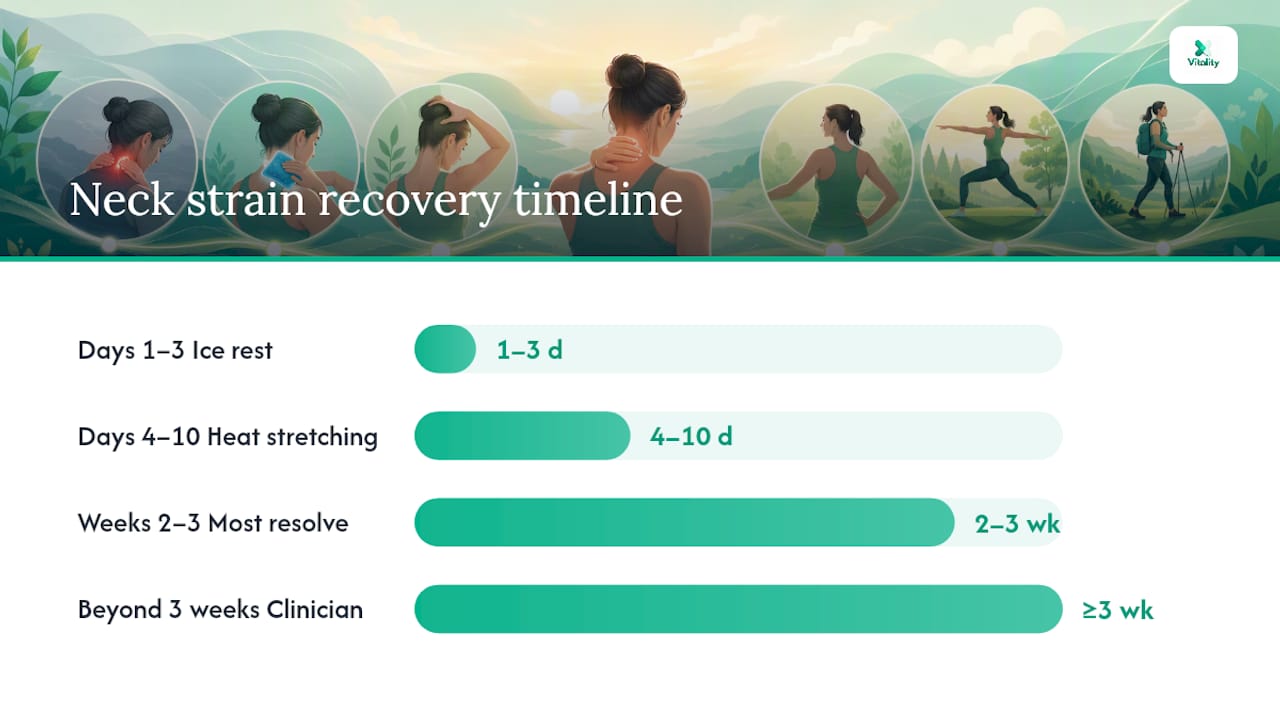
| Timeframe | What to Expect |
|---|---|
| Days 1 to 3 | Peak inflammation; ice, relative rest, gentle motion |
| Days 4 to 10 | Swelling subsides; heat, stretching, light activity resume |
| Weeks 2 to 3 | Most mild-to-moderate strains largely resolve with self-care |
| Beyond 3 weeks | Persistent pain warrants a clinician visit and possible PT referral |
A clinician visit for lingering pain usually starts with a physical exam and conservative management. Imaging or specialist referral tends to come later, and only when symptoms suggest something beyond a simple strain.
Clinical Treatments When Home Care Isn’t Enough
When pain lingers past a few weeks or home measures plateau, a clinician has more tools to offer. Guided physical therapy remains the backbone of most treatment plans, pairing hands-on correction with a structured exercise progression.
- Physical therapy combining stretching, strengthening, and posture correction
- Short-term muscle relaxants for significant spasm
- Steroid injections for persistent pain or when nerve irritation is present
- Dry needling or manual therapy to release tight, guarded muscle tissue
- Massage therapy to improve circulation and reduce muscle tension
Injections and stronger medications generally come into play when pain persists well beyond the typical recovery window or when radicular symptoms (numbness, radiating pain) suggest nerve involvement rather than pure muscle strain. Surgery is rare for muscular neck strain. It’s reserved for cases involving structural issues like disc herniation with significant nerve compression, not for garden-variety muscle overuse.
Everyday Changes That Prevent Neck Strain From Coming Back
Recovery is only half the job. Preventing a repeat episode means changing the habits that caused it in the first place. Raising your monitor to eye level and taking regular breaks from forward-head posture makes a measurable difference over weeks, not just days.
- Position your monitor at eye level and use a headset for calls instead of cradling a phone.
- Take a movement break every 30 to 45 minutes if you work at a desk.
- Choose a pillow that supports the natural curve of your neck, and skip stacking multiple pillows.
- Build upper-back and core strength consistently. It reduces the load your neck carries every day.
Ergonomic fixes alone rarely hold up over time. Pairing them with ongoing scapular and upper-back strengthening gives your neck the structural support to handle daily stress without reverting to strain.
Where At-Home Devices Fit Into a Recovery Plan
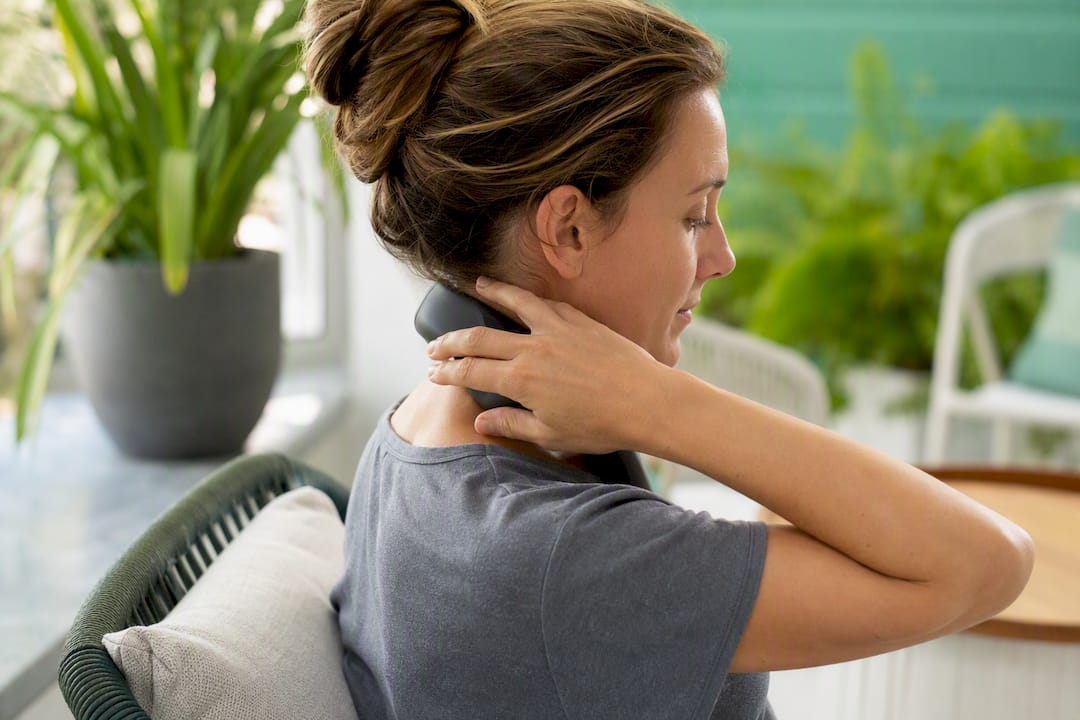
Guidelines consistently point to a multimodal approach: movement, ergonomic correction, and therapeutic modalities working together, not any single fix in isolation. Devices that combine electrical muscle stimulation, heat, and massage, like the Vitality MagicPro 2.0 and MagicPro 3.0, fall into that modality category.
- Heat and massage functions can ease muscle guarding between stretching sessions.
- EMS may provide symptomatic relief, similar to how TENS units are used in clinical settings.
- These tools work best layered onto an active plan, not used as a standalone fix.
Be honest with yourself about what a device can and can’t do. It can ease discomfort in the moment. It won’t correct years of forward-head posture or rebuild scapular strength on its own.
Pro Tip: Use a device like this after your stretching routine, when muscles are already warm and more receptive to relaxation, rather than as a replacement for the exercises themselves.
A Practical Note on Getting Better, Not Just Feeling Better
Favor movement early. Neck muscles that stay still too long get weaker, not stronger, and that delays real recovery. Small, consistent daily progress, a few minutes of stretching, a posture check, a short walk, beats sporadic bursts of effort every time.
How Vitality Devices Support a Home Recovery Routine
The stretches and ergonomic fixes above do the heavy lifting for long-term recovery. What they don’t do is give you fast, hands-off relief during the moments your neck feels tightest, first thing in the morning, mid-afternoon at your desk, or after a long drive.
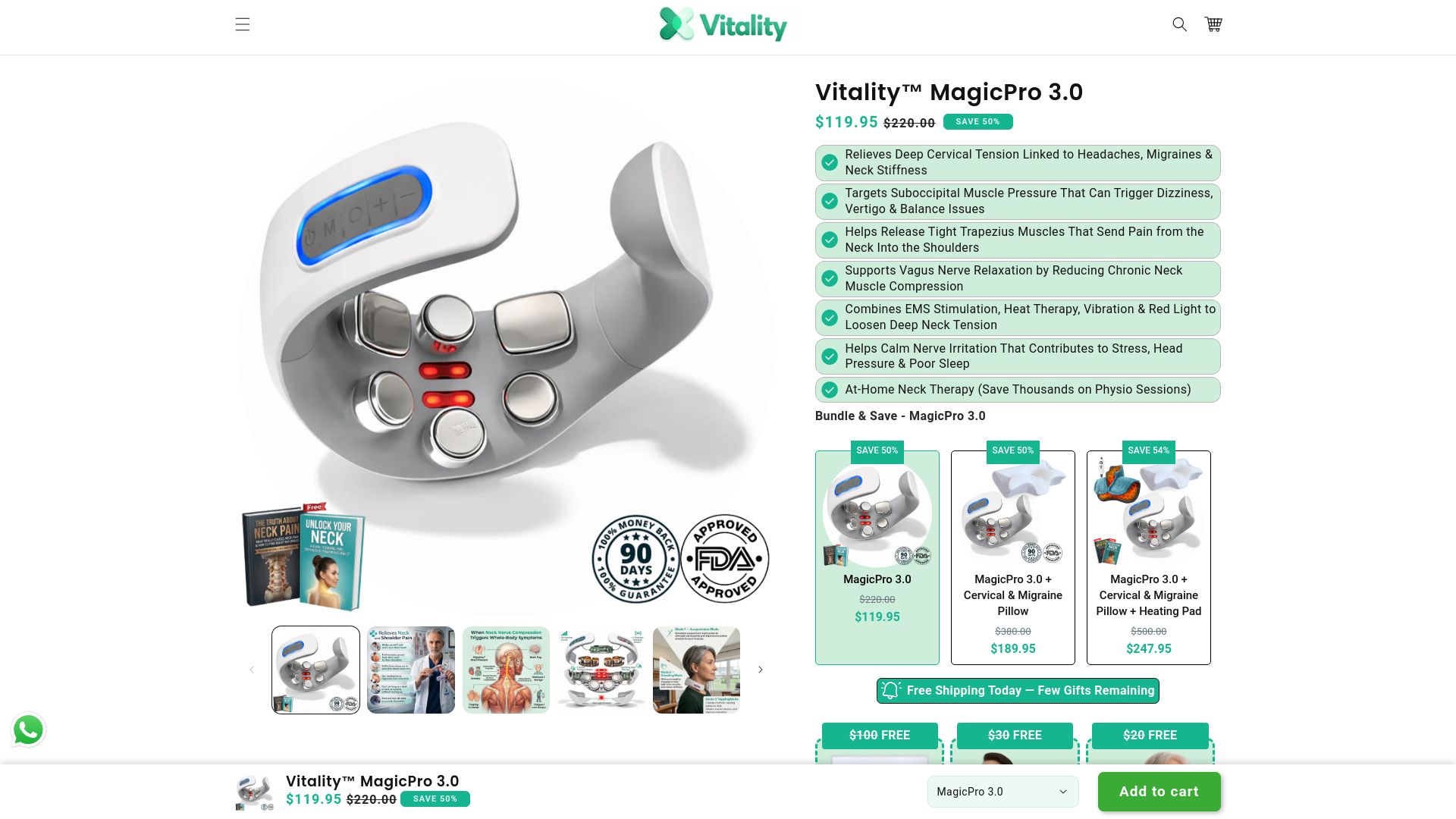
That’s where a device like the Vitality MagicPro 2.0 comes in. It layers electrical muscle stimulation, heat, and massage into one 15-minute session, giving you a modality option to pair with the ice, heat, and exercise routine already covered here. The newer Vitality MagicPro 3.0 adds vagus nerve support for readers whose neck tension shows up alongside stress or sleep disruption. Use either one after your stretching routine or during a work break, never as a substitute for medical care if you’re showing any red-flag symptoms. It’s an adjunct, not a cure, and works best alongside the movement and ergonomic changes already in your plan. Browse the full Vitality device lineup to see which option fits your routine, and check current warranty terms before you buy.
Sources
- Multimodal management guidance (NCBI Bookshelf)
- How to soothe a sore neck (Harvard Health)
- Neck Pain: 6 Common Causes and Treatments (Cleveland Clinic)
- Neck sprains and strains (AAOS/OrthoInfo)
This article is general information, not a substitute for advice from a qualified doctor. Consult a qualified healthcare professional about your own circumstances before acting on anything here.