


Start with a 60 to 90 second tennis-ball press on the piriformis, the muscle deep in your glute where sciatic pain often begins. Sit on the ball, lean into the tender spot, and breathe through the pressure rather than fighting it. Stop immediately if you feel sharp, shooting pain, numbness, or new weakness. The full sciatica home massage routine below builds on this single move with tools, timing, and safety rules for daily use.
TL;DR:
- Massage targeting the piriformis and deep glute can reduce muscle guarding and alleviate nerve compression caused by tight hip muscles.
- Using tools like tennis or lacrosse balls enhances deep tissue release in hard-to-reach areas, but pressure should be gentle and avoidance of the spine is essential.
- Warm-up with heat before massage and apply ice if inflammation or sharp pain occurs to optimize tissue response and prevent worsening symptoms.
- Home massage is effective primarily for muscle-related pain, but symptoms like numbness, weakness, or loss of bladder control require immediate medical attention.
- Routine sessions of 10 to 20 minutes daily are recommended, with patience and restraint, and tools or devices can support consistent relief.
Table of Contents
- How Massage Helps Relieve Sciatica Symptoms
- Where Should You Massage for Sciatica Relief?
- Step-by-Step Sciatica Home Massage Routine
- Which Tools Work Best for Massaging Sciatica at Home?
- When Should You Stop and See a Doctor?
- What Does the Research Actually Say?
- A Coaching Note on Getting This Right
- A Hands-Free Option for Daily Relief
- Sources
- FAQ
How Massage Helps Relieve Sciatica Symptoms
Massage works on sciatica through three mechanisms: it reduces muscle guarding around the irritated nerve, increases blood flow to speed tissue recovery, and triggers endorphin release that dulls pain perception. When the piriformis or surrounding hip muscles tighten around the sciatic nerve, that guarding often makes the pinch worse. Loosening those muscles with sustained pressure can ease the squeeze.
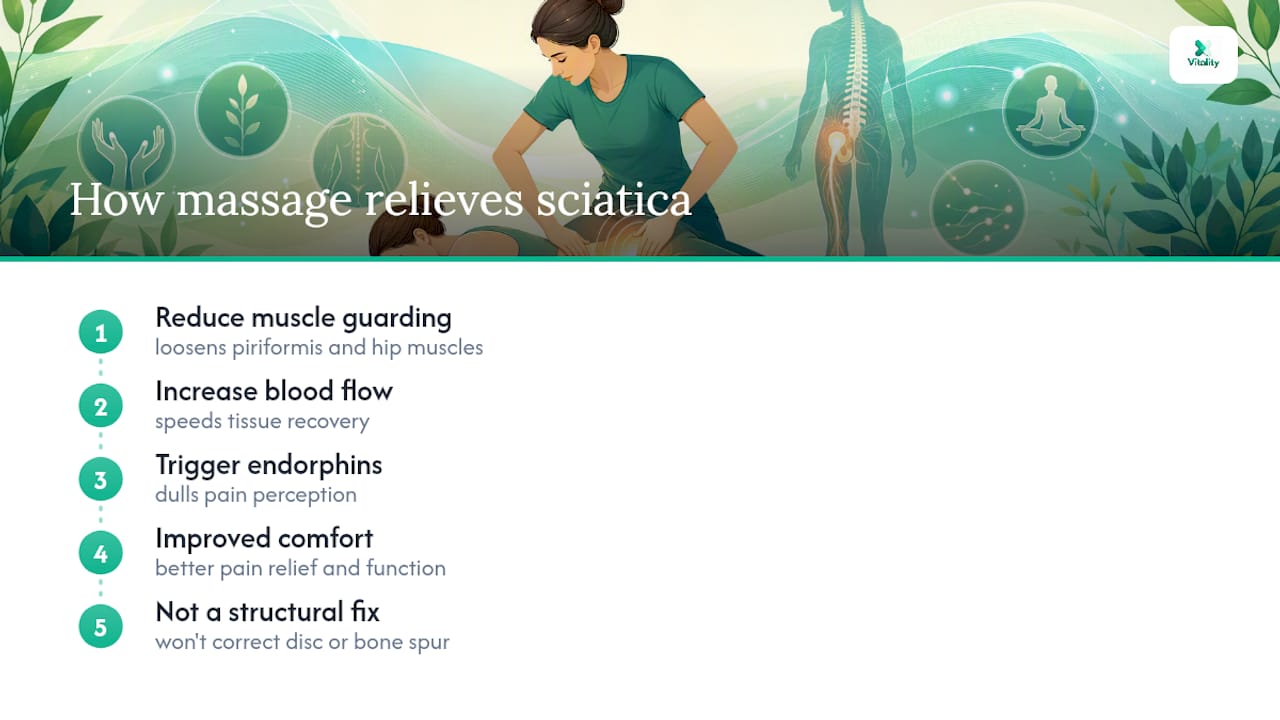
Harvard Health Publishing notes that a large majority of people with sciatica improve without surgery, often within a few weeks, using home self-care. Massage is one piece of that self-care, not a fix for the underlying cause. If a herniated disc or bone spur is compressing the nerve, massage won’t correct the structural problem. It will, however, calm the muscle tension that amplifies pain around it.
Some research on deep tissue techniques found effects on lower back pain comparable to anti-inflammatory medication in certain cases, according to a study referenced in clinical literature. That’s a meaningful signal, but results vary by technique and by what’s actually causing your pain. The realistic goal: better comfort and function, especially when massage pairs with heat, gentle movement, or a physical therapist’s guidance.
Where Should You Massage for Sciatica Relief?
The sciatic nerve runs from your lower back, through the glutes, under (or sometimes through) the piriformis muscle, and down the back of the thigh. Compression anywhere along that path can trigger the burning, tingling, or shooting pain people call sciatica. Targeting the muscles around this path, not the spine itself, is where self-massage does its work.
Focus on these spots:
- Piriformis and deep glute: Sit cross-legged or lean back on a ball placed just below your hip bone, roughly where your back pocket sits. If standing up from a seated position aggravates your pain, this muscle is often involved.
- Posterior hip and outer glute: A few inches out from the piriformis, toward the hip joint, where tightness often refers pain down the leg.
- Hamstrings: The back of the thigh, from just below the glute crease to above the knee.
- Lower back muscles (not the spine): The soft tissue running alongside the spinal column, never directly on the vertebrae.
Avoid pressing directly on the spine or any bony prominence. Clinical guidance from a physical therapy resource on sciatica specifically warns against rolling over the spinal column, recommending you work the surrounding soft tissue instead.
Step-by-Step Sciatica Home Massage Routine
Warm up first. Walk for five minutes or apply a heating pad to your lower back and glutes. Warm tissue is more pliable, which means less resistance and less chance your muscles clench defensively when you apply pressure.
Then move through this sequence:
- Tennis-ball piriformis press. Sit on the floor or a firm chair, place the ball under your glute at the tender spot, and lean your weight onto it. Hold steady pressure for 60 to 90 seconds per side rather than rolling aggressively. Spine-Health’s guidance on DIY trigger-point release backs this pause-and-hold approach over constant motion.
- Seated chair-ball method. If floor sitting is uncomfortable, wedge the ball between your glute and a chair back or wall. Stabilizing the ball this way gives you more control over pressure and prevents sudden spikes of intensity.
- Foam-roller glute pass. Sit on the roller, cross one ankle over the opposite knee, and roll slowly from the top of the glute to just above the hip crease. Five to eight slow passes per side is enough. Skip rolling if you feel any radiating pain rather than local muscle soreness.
- Hands-on kneading for hamstrings and outer hip. Use your fist or forearm to knead the back of the thigh and the outer hip in slow, firm strokes. This is a good area to work with your hands since it’s easier to control depth than with a ball.
- Gentle stretches after massage. Finish with a seated piriformis stretch (cross one ankle over the opposite knee and lean forward) and a standing hamstring stretch, holding each for 20 to 30 seconds.
Pro Tip: Apply heat before you massage to loosen the tissue, and switch to ice afterward if you notice inflammation or any sharp, lingering pain. Harvard Health recommends limiting ice massage to circular motions of a short duration, with appropriate breaks between sessions to protect the skin.
Keep total sessions between 10 and 20 minutes. Daily sessions are fine if your body tolerates them well; if you feel more sore than relieved the next day, drop to every other day and let the tissue recover.
Which Tools Work Best for Massaging Sciatica at Home?
Your hands alone can accomplish a lot, but a few simple tools make it easier to hit the deep glute and hip muscles that hands struggle to reach with consistent pressure.
- Tennis ball: Best for pinpoint work on the piriformis and small trigger points. Cheap, portable, and easy to control.
- Lacrosse ball: Firmer and smaller than a tennis ball, good once you’ve built some tolerance and want more precise pressure.
- Foam roller: Better for broader glute and hamstring work where you want even coverage rather than one deep point.
- Massage gun: Useful for larger muscle groups like the hamstrings and outer hip, but keep it on the lowest intensity setting near the sciatic nerve’s path and never hold it over one spot for more than a few seconds.
- Lumbar or hip massage device: A hands-free option with built-in heat and consistent pressure patterns, which helps if grip strength or mobility makes manual tools hard to manage.
Whatever you use, start at the lowest intensity and increase only if there’s no sharp pain. Never work over an area that feels numb or weak. That’s a sign of nerve involvement, not muscle tightness, and pressure there can make things worse.
When Should You Stop and See a Doctor?
Home massage is for muscle-related sciatic pain. Certain symptoms mean you need medical attention, not more self-massage.
Stop and call a clinician if you notice:
- New or worsening numbness or weakness in your leg or foot
- Loss of bowel or bladder control
- Rapidly worsening leg weakness, especially if you’re having trouble walking
- Severe, unrelenting pain that doesn’t ease with rest or position changes
If massage itself increases sharp or shooting pain rather than easing tension, stop right away. HealthPartners is direct about this: escalating sharp pain during self-treatment is a signal to get a professional diagnosis, not to push through it. If you already have imaging showing a herniated disc or confirmed nerve compression, use gentler pressure and loop in a physical therapist before trying anything more aggressive.
Conservative care, including massage, heat, and gentle movement, is a reasonable first step for most new sciatica episodes. If symptoms haven’t improved after a few weeks, or if any red flag above shows up sooner, it’s time for a referral and possibly imaging.
What Does the Research Actually Say?
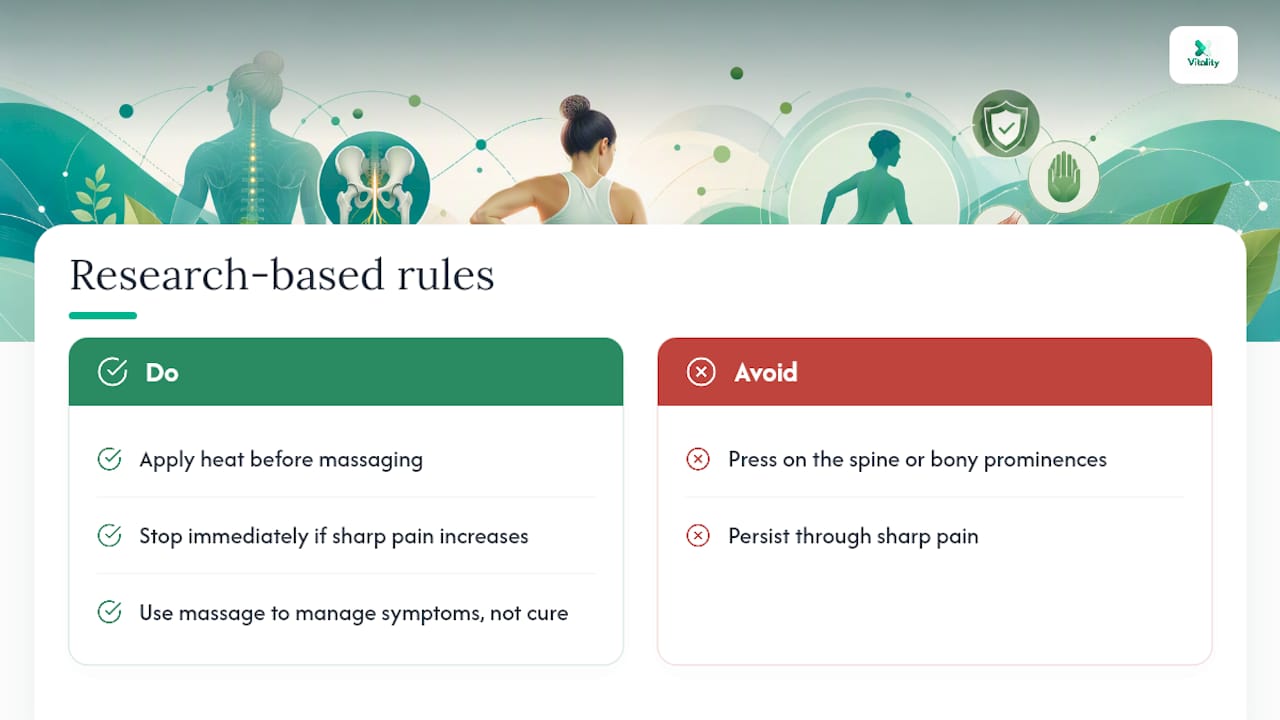
The guidance in this routine isn’t guesswork. Harvard Health’s self-care recommendations back the 90% recovery statistic and the ice-massage timing above. The American Massage Therapy Association frames massage as symptom management, not a cure, which matches what clinical reviews on PMC find: real but variable symptomatic relief depending on technique. The practical rules of thumb that come out of this research are simple. Heat before you work, avoid the spine and bony prominences, and stop the moment sharp pain increases instead of easing.
A Coaching Note on Getting This Right
Short, frequent sessions beat one long, aggressive one every time. Ten focused minutes a day, done with patience, will outperform a single 40-minute session that leaves you sorer than before. Consistency and restraint matter more than how hard you press.
— Achraf
A Hands-Free Option for Daily Relief
Manual self-massage works, but it takes time, space, and a working set of hands and shoulders to do it well every day. If you’re managing sciatica alongside neck tension, limited mobility, or just want consistent daily therapy without setting up a tennis ball and a chair each time, a hands-free device fills that gap.
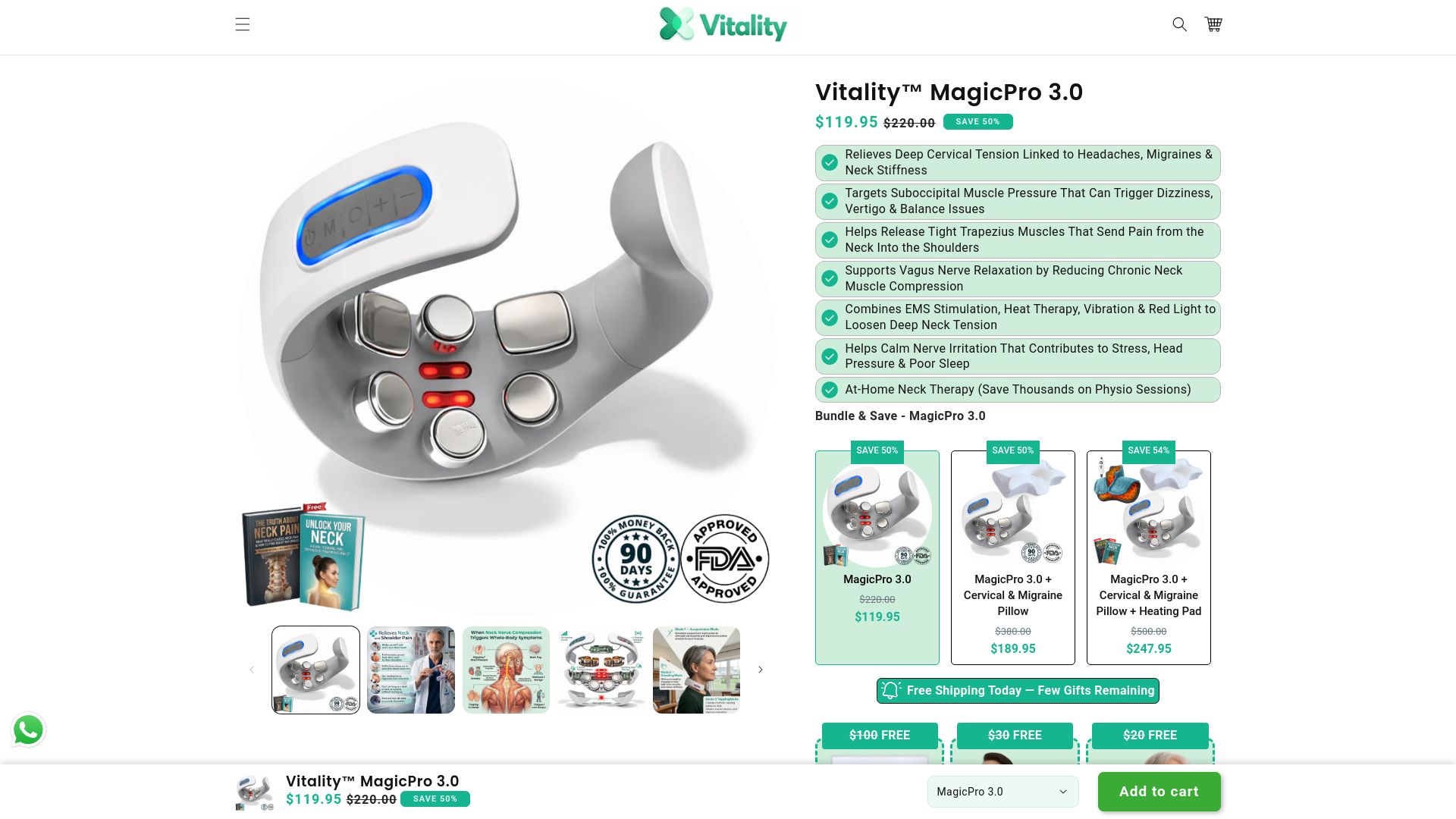
These devices combine heat, massage, and electrical muscle stimulation in short, timed sessions, designed for neck relief and usable for general muscle relaxation between manual sessions. It’s a good fit if you struggle to hold pressure steady with your hands, or if you simply want a device you can use while working or relaxing rather than setting aside a dedicated massage session. Check out the MagicPro 2.0 or browse the full line of Vitality devices to see which option fits your daily routine.
Sources
For deeper reading, see Harvard Health’s sciatica self-care guide, the AMTA’s massage and sciatic nerve overview, and this piriformis syndrome resource if your symptoms point to that muscle specifically. See a clinician for an actual diagnosis if you’re unsure what’s driving your pain.
This article is general information, not a substitute for advice from a qualified doctor. Consult a qualified healthcare professional about your own circumstances before acting on anything here.
- Sciatica home remedies and self-care — Harvard Health Publishing
- Massage Therapy for Sciatic Nerve Pain — AMTA / Massage Today
- NCBI PMC review — relevant clinical literature on massage and back pain
FAQ
Can a Pinched Sciatic Nerve Be Massaged Out?
Massage can’t physically pull a nerve out of a pinch, but it can relax the muscles compressing it, particularly the piriformis, which often reduces symptoms even when the underlying structural cause remains.
How Do You Unpinch the Sciatic Nerve at Home?
You can’t manually “unpinch” a nerve, but loosening tight muscles around it with tennis-ball pressure, gentle stretching, and heat often reduces the compression enough to ease pain and improve movement.
What Is the Best Stretch for Sciatica Pain?
There’s no single miracle stretch, but the seated piriformis stretch (crossing one ankle over the opposite knee and leaning forward) is one of the most consistently recommended moves for releasing the muscle most often linked to sciatic compression.
Where Do You Rub for Sciatica Pain?
Focus on the deep glute and piriformis, the outer hip, and the back of the thigh, always avoiding direct pressure on the spine itself.
How Often Should You Do a Sciatica Home Massage?
Daily 10 to 20 minute sessions work well for most people, though every-other-day sessions are smarter if you notice increased soreness rather than relief the following day.