


Most headaches paired with neck tightness are tension-type headaches or cervicogenic headaches caused by the neck itself, and both usually respond to simple self-care. Rest, a short period of heat or cold, and an appropriate over-the-counter pain reliever handle the majority of cases quickly. Seek urgent care if the pain is sudden and severe, comes with fever and a stiff neck, or includes numbness, vision changes, or repeated vomiting.
TL;DR:
- Up to 38% of people experience tension-type headaches annually, which commonly respond to self-care like heat or cold, pain relievers, and posture adjustments.
- Cervicogenic headaches originate from structural neck issues such as arthritis or injury, with pain typically starting at the base of the skull and worsening with neck movement.
- Red flags such as sudden severe pain, vision changes, or fever with neck stiffness indicate the need for urgent medical evaluation.
- Long-term management may include physical therapy, preventive medications, trigger-point injections, or biofeedback for chronic or recurring headaches.
- Combining at-home therapies like electrical stimulation, heat, massage, and posture correction often yields better results than single approaches alone.
Table of Contents
- What Causes Tension Headaches From Neck Tightness
- What Do Tension and Cervicogenic Headaches Feel Like?
- How Doctors Diagnose Neck-Related Headaches
- Fast Relief You Can Try at Home Today
- Longer-Term Treatment and Prevention Strategies
- Where At-Home Multi-Modal Therapy Fits In
- A Practical Plan for Getting Your Headaches Under Control
- Try MagicPro as Part of Your Neck Care Routine
- Sources
- FAQ
What Causes Tension Headaches From Neck Tightness
Muscle tension in the neck and shoulders is the usual starting point. Stress, poor posture at a desk, hours of screen work, clenched jaw muscles from TMJ, dehydration, and disrupted sleep all tighten the muscles that support your skull, and that tightness refers pain upward.
Doctors used to describe this purely as muscle contraction. The current view adds a second layer: your nervous system can become sensitized, meaning pain signals get amplified even after the muscle tension eases. This is why tension-type headaches can linger or return even when your posture has improved.
Common triggers worth tracking:
- Stress and mental fatigue
- Sitting with your head forward over a screen for long stretches
- Poor sleep position or an unsupportive pillow
- Jaw clenching or teeth grinding (TMJ)
- Dehydration and skipped meals
Cervicogenic headaches work differently. Instead of starting in the muscles, they originate from a structural problem in the cervical spine, such as arthritis, a disc injury, or old trauma. The neck is the actual source of the pain, not just a tender bystander, and treatment usually has to address that structure directly.
What Do Tension and Cervicogenic Headaches Feel Like?
A tension-type headache typically feels like a dull, steady pressure. Many people describe a tight band wrapped around the head, with tender neck and shoulder muscles that ache when touched. Episodes can last from less than an hour to several days, and the pain usually stays on both sides of the head.
By the numbers: Tension-type headaches affect up to 38% of people in a given year, making them far more common than cervicogenic headaches.
Cervicogenic headache follows a different pattern. Pain often starts at the base of the skull and spreads to one side of the head, and turning or tilting your neck usually makes it worse. That neck-movement connection is a useful clue for telling the two apart.
Call for urgent evaluation if you notice:
- A sudden, severe headache unlike any you have had before
- Numbness, weakness, slurred speech, or vision changes
- Fever combined with a stiff neck
- Headaches that keep getting worse over days or weeks
- Repeated vomiting with the headache
How Doctors Diagnose Neck-Related Headaches
Before your appointment, jot down when the headaches started, how often they occur, what seems to trigger them, what has helped or failed so far, and how much they interfere with work or sleep. This history does most of the diagnostic heavy lifting.
- Physical exam. Your clinician will check for trigger points in the neck and shoulder muscles and test your range of motion, since limited movement points toward a cervicogenic source.
- Ruling out look-alikes. Migraine, cluster headache, and sinus issues can mimic tension-type pain, so the exam also screens for those.
- Imaging, when warranted. MRI or CT scans are reserved for cases with red flags or atypical features. A straightforward tension headache does not usually need a scan at all.
Cervicogenic headache can be genuinely tricky to pin down because its symptoms overlap so closely with tension-type and migraine patterns. A careful history and the neck-movement response often does more to confirm it than any single test.
Fast Relief You Can Try at Home Today
Most mild to moderate episodes respond to a handful of proven basics, applied in the right order.
- Choose an OTC pain reliever wisely. Acetaminophen, ibuprofen, and naproxen all work for tension-type pain, but using them more than a couple of times a week risks medication-overuse headache, where the treatment itself starts causing more pain.
- Apply heat or cold for 15 to 20 minutes. Heat relaxes tight muscles and improves blood flow; cold numbs acute soreness and calms inflammation. Either one, kept to that window, avoids skin irritation and rebound tension.
- Fix your screen setup. Raise your monitor to eye level, support your lower back, and take a 30 second movement break every 30 minutes.
- Move your neck gently. Slow chin tucks, side-to-side tilts, and shoulder rolls loosen tight muscles without straining them. Stop if any motion sharpens the pain instead of easing it.
- Add self-massage and hydration. Gentle pressure on the base of the skull, plenty of water, and a consistent sleep schedule all support recovery.
- Slow your breathing. Four seconds in, six seconds out, for two minutes. This calms the sympathetic nervous system that keeps muscles clenched under stress.
Pro Tip: Set a timer for your heat or cold application. Fifteen to twenty minutes is the sweet spot, and it’s easy to lose track once the relief sets in.
Longer-Term Treatment and Prevention Strategies
When headaches come back week after week, self-care alone often isn’t enough. This is where structured treatment and prevention planning earn their place.
Physical therapy targets the actual mechanics behind recurring pain, correcting muscle imbalances and restoring neck mobility through a guided exercise program. For frequent or chronic cases, a clinician may also discuss preventive medications such as amitriptyline, venlafaxine, beta-blockers, or certain anticonvulsants, taken daily rather than only during an attack.
Other options a specialist might raise:
- Trigger-point injections for stubborn muscle knots
- Occipital nerve blocks for cervicogenic pain
- Acupuncture as an adjunct treatment
- Biofeedback to help you recognize and release muscle tension
- Cognitive behavioral therapy for stress-driven headache patterns
Nonpharmacologic approaches like these frequently appear as first-line options in treatment guidelines, not just as a backup plan.
A simple prevention checklist covers most of the ground: maintain good posture, exercise regularly, protect your sleep, manage stress deliberately, and set up your workstation so your neck stays neutral for most of the day.
Where At-Home Multi-Modal Therapy Fits In
Combining approaches tends to outperform any single treatment on its own. Manual therapy, exercise, and behavior change together produce better long-term results than reaching for just one tool. That principle is the reasoning behind pairing electrical muscle stimulation with heat and massage in a single home session.
- Electrical stimulation encourages the muscles around the neck and shoulders to release tension they’ve been holding all day.
- Heat improves local circulation, which supports the same relaxation process.
- Massage adds mechanical relief to areas that stay tender between treatments.
Doctor-recommended, multi-modal home devices like this can serve as a helpful adjunct to the routine your physical therapist or doctor sets up. They are not a substitute for evaluating red-flag symptoms or for clinician-directed care when headaches are frequent or severe.
A Practical Plan for Getting Your Headaches Under Control
Start with the immediate relief steps above, then track how often the headaches hit and how long they last for two to four weeks. If they’re frequent, worsening, or paired with any red flag, see a primary care provider rather than waiting it out. Most people notice real improvement within a few weeks once posture, sleep, and stress get addressed together, and physical therapy or an at-home adjunct device can support that progress. Watch your OTC use closely. Reaching for pills more than a couple of times a week is the fastest way to trade one headache problem for another.
— Achraf
Try MagicPro as Part of Your Neck Care Routine
You can work on neck tension between physical therapy visits, without booking a separate appointment or clearing your calendar. The MagicPro 2.0 combines electrical muscle stimulation, heat, and massage into one 15 minute session you can run at your desk, in the car, or on the couch.
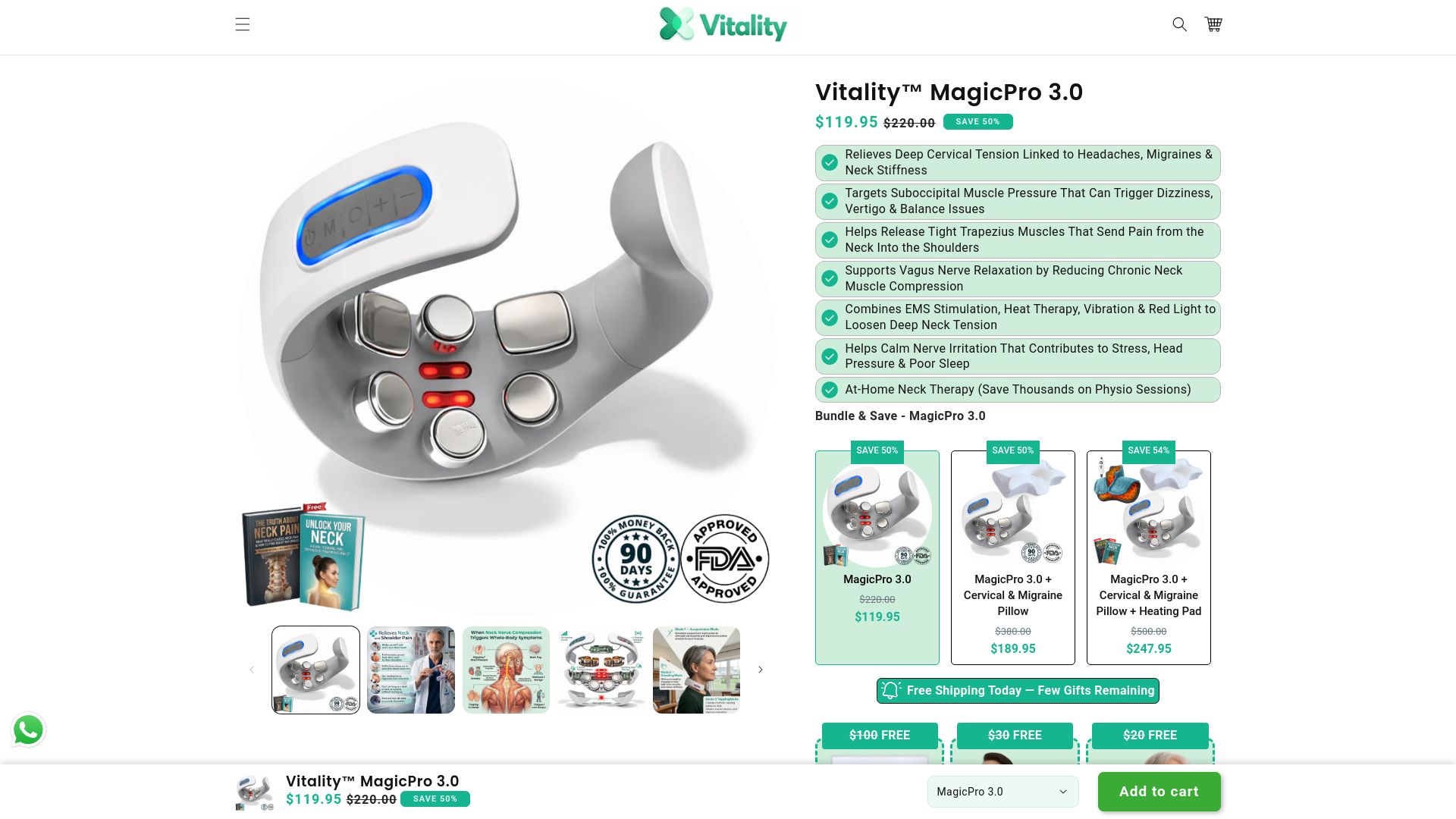
It’s built as an adjunct, not a diagnosis tool. If your headaches match any of the red flags covered earlier, see a doctor first. But for the muscle tension and tightness behind most neck-related headaches, a short daily session can fit naturally alongside the stretches, posture fixes, and preventive steps outlined above. Browse the full lineup of My Vitality devices and pick the option that matches how and where you plan to use it.
Sources
- Tension headache: MedlinePlus Medical Encyclopedia
- Tension headache - Diagnosis and treatment - Mayo Clinic
- A headache that starts in your neck - Harvard Health
FAQ
How do you get rid of a tension headache in your neck quickly?
Apply heat or cold to the neck and shoulders for 15 to 20 minutes, take an appropriate OTC pain reliever if needed, and gently stretch the neck with slow chin tucks and shoulder rolls.
Where on the head does a tension headache typically feel?
Most people feel a dull, band-like pressure across both sides of the head, often paired with tenderness in the neck and shoulder muscles.
Why does my neck pain give me a headache?
Tight neck and shoulder muscles refer pain upward into the head, and in some cases a structural neck problem directly triggers the headache, which is the mechanism behind cervicogenic headache.
What are cervicogenic headaches?
Cervicogenic headaches are secondary headaches that originate in the cervical spine, often causing one-sided pain that starts at the base of the skull and worsens with neck movement.