


A neck massager is conditionally safe during pregnancy for most low-risk pregnancies, provided you use gentle settings, keep sessions short, and avoid the front of the neck and abdomen. If you have a high-risk pregnancy or any concerning symptoms, talk to your prenatal clinician before using one. The sections below cover safe settings, device risks, red flags, positioning, and gentler alternatives.
TL;DR:
- Use only low-intensity, brief sessions targeting the upper shoulders, upper back, and trapezius muscles, avoiding the front of the neck and abdomen.
- Avoid deep-impact tools like massage guns and skip electrical stimulation devices unless cleared by a healthcare provider.
- Stop immediately and contact your clinician if you experience bleeding, contractions, fluid leaks, dizziness, reduced fetal movement, or severe headaches.
- Position yourself supported in a safe posture and regularly check for discomfort or skin irritation during massage sessions.
- Incorporate gentle stretches, ergonomic adjustments, and professional prenatal massage as safer alternatives to long-term neck relief.
Table of Contents
- Is a Neck Massager Safe for Pregnancy? Settings and Areas to Avoid
- Which Neck Massager Types Carry More Risk in Pregnancy?
- When Should You Stop and Call Your OB/GYN or Midwife?
- How to Use a Neck Massager Safely During Pregnancy
- What Are the Safer Alternatives to a Neck Massager?
- Our Standards for Pregnancy Safety Guidance
- Why I’d Rather You Ask First Than Guess
- Using MagicPro During Pregnancy: What to Know First
- Sources
Is a Neck Massager Safe for Pregnancy? Settings and Areas to Avoid
Gentle, brief sessions on the right muscles make neck massage during pregnancy reasonable for most people. The technique and location matter more than the device itself.
Start on the lowest intensity setting your device offers, even if you normally use a higher one, as pregnancy increases sensitivity. Pregnancy increases blood flow and tissue sensitivity, so what felt moderate before conception can feel intense now. Keep each session short and avoid prolonged use, and resist the urge to repeat long sessions back to back in the same day.
Target these areas:
- Trapezius muscles (the flat muscles running from neck to shoulder)
- Upper shoulders
- Upper back, between the shoulder blades
Avoid these areas entirely:
- The front and sides of the throat
- Directly over the cervical spine (the bony bumps down the back of the neck)
- The abdomen
- The lower back, especially in later trimesters
Healthline’s guidance on pregnancy massage notes that gentle neck and shoulder work is generally fine, but deep or intense techniques carry more risk and are worth skipping.
Check your skin every few minutes for redness or irritation, and check in with yourself for comfort. Tingling, numbness, or sharp pain means stop immediately, not push through.
Pro Tip: Set a timer before you start to avoid unintentionally long sessions.
Which Neck Massager Types Carry More Risk in Pregnancy?
Not all neck massagers pose the same level of concern. The technology inside the device changes the risk profile significantly.
Strong vibration and percussion, the kind found in massage guns, deliver rapid, forceful impact to muscle tissue. That intensity is designed for athletes working out knots, not for pregnant bodies dealing with heightened sensitivity and shifting circulation. Research on mechanical stimulation and safety during pregnancy supports a cautious approach to anything delivering strong, repetitive force to soft tissue.
TENS units and other electrical stimulation devices are a different category altogether. ACOG recommends discussing any electrical stimulation with your prenatal provider before use, since the effects on circulation and nerve signaling during pregnancy aren’t the same as outside of it.
Heat is generally fine at low, brief settings but becomes a concern with prolonged high heat, since overheating your core temperature is a known pregnancy risk.
A practical rule of thumb:
- Choose low-intensity, muscle-surface massage over percussion or deep-impact tools
- Skip massage guns unless your clinician has specifically cleared one
- Get sign-off before using any TENS or electrical stimulation feature
- Use heat settings sparingly and never on high for extended periods
When Should You Stop and Call Your OB/GYN or Midwife?
Some symptoms mean you stop whatever you’re doing and call your provider right away, regardless of what device you were using.
- Vaginal bleeding or spotting
- Contractions, especially if they’re regular or intensifying
- Fluid leaking, which could signal your water breaking
- Sudden dizziness, lightheadedness, or fainting
- Reduced or absent fetal movement compared to your normal pattern
- Severe or worsening headache, especially with vision changes
Certain pregnancy conditions call for clinician approval before you ever turn a device on. Preeclampsia, placenta previa, a history of preterm labor, and clotting disorders all change the risk calculation enough that self-directed device use isn’t the right first move. ACOG’s guidance is clear that any complicating condition warrants a conversation with your provider first.
When you do call, give them specifics: the device model, the settings you plan to use, how long a typical session runs, and exactly where on your body you’re targeting. That level of detail lets your clinician give you a real answer instead of a generic caution.
How to Use a Neck Massager Safely During Pregnancy
Position matters as much as the device you choose. Try these steps for a safer session.
- Get supported first. Sit upright with back support, recline slightly with pillows behind your shoulders, or lie on your side with a pregnancy pillow between your knees, especially in the second and third trimesters.
- Start at the lowest setting. Never jump straight to your usual intensity.
- Work one area at a time. Spend two to three minutes on the trapezius, then move to the upper shoulders, checking comfort as you go.
- Check in constantly. Ask yourself how it feels every few minutes rather than waiting until the session ends.
- Stop at the first sign of discomfort, tingling, or unusual sensation.
If a partner is helping, gentle gliding strokes work better than sustained deep pressure, and hands should stay well clear of the front and sides of the neck. UT Southwestern’s pregnancy massage guidelines reinforce this kind of pregnancy-adapted positioning as standard practice among trained prenatal massage therapists.
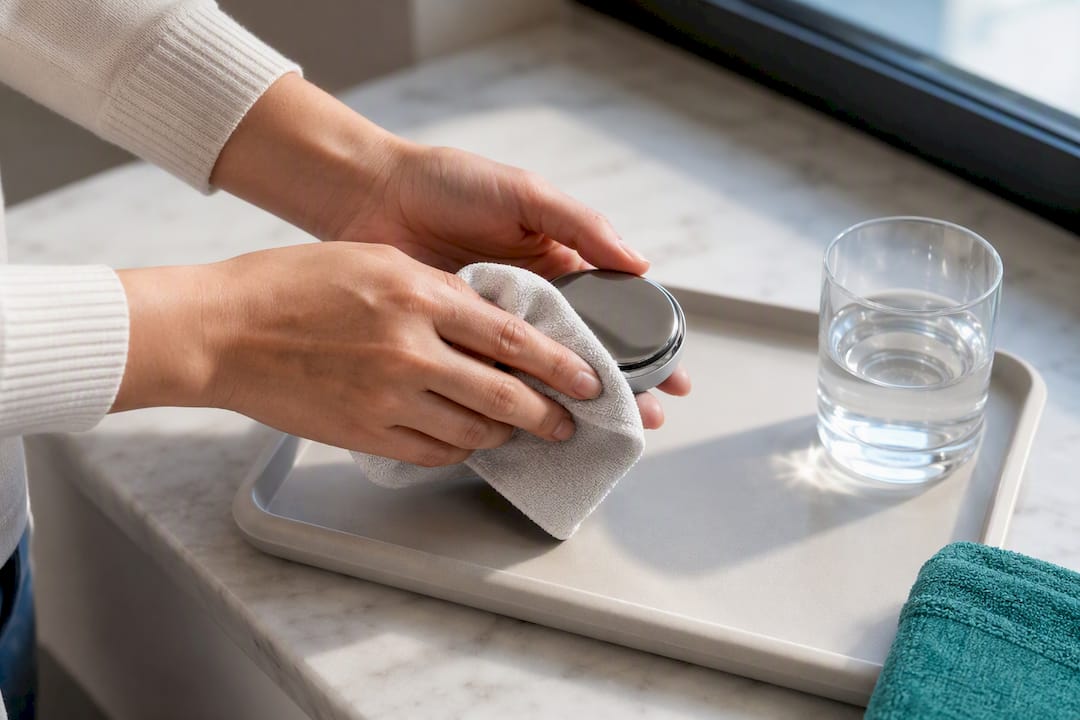
Pro Tip: Wipe down any device head before and after each session. Pregnancy can make skin more reactive, and a clean surface reduces irritation risk.
What Are the Safer Alternatives to a Neck Massager?
A massager treats the symptom. Long-term relief usually comes from addressing why your neck is tight in the first place.
- Gentle neck stretches and scapular strengthening exercises, ideally shown to you by a prenatal physical therapist
- Ergonomic adjustments at your workstation, like raising your monitor and swapping to a chair with better neck support
- A pregnancy pillow that keeps your neck aligned while you sleep, which prevents a lot of morning stiffness before it starts
- Licensed prenatal massage therapy, which pairs trained technique with pregnancy-safe positioning
Peer-reviewed research on massage therapy during pregnancy found that trained therapists can meaningfully reduce pain and anxiety, and pairing that kind of bodywork with regular movement tends to outperform device use alone. A massager can bridge the gap between appointments. It shouldn’t be the only strategy.
Our Standards for Pregnancy Safety Guidance
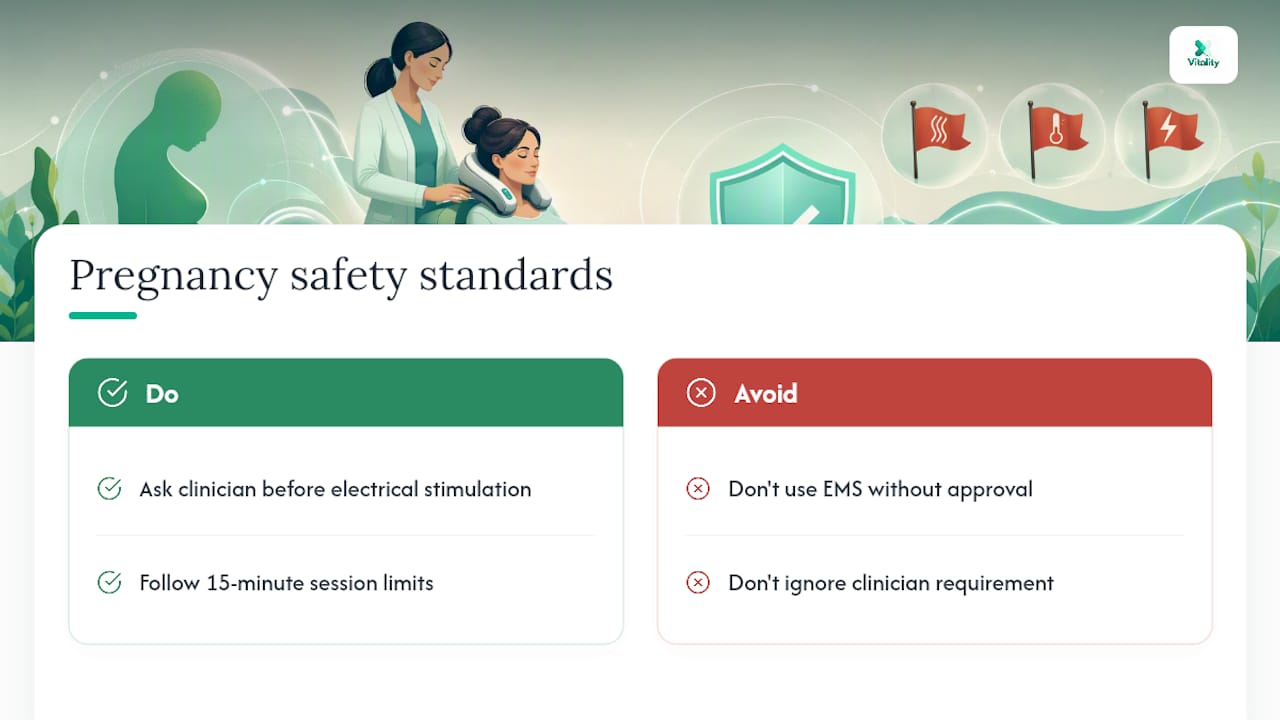
Certain neck relief devices combine electrical muscle stimulation, heat, and massage in 15-minute sessions and are designed to help users improve neck discomfort. That said, any feature involving electrical stimulation still requires clinician approval during pregnancy, no exceptions…
Why I’d Rather You Ask First Than Guess
My honest read on this: symptom relief matters, but nothing about a stiff neck is worth guessing your way past a red flag. If you have any high-risk factor, get your provider’s yes before you press start, and write down what happens if something feels off. Relief and caution aren’t opposites here. They work together.
— Achraf
Using MagicPro During Pregnancy: What to Know First
If you’ve read this far, you already know the drill: lowest setting, short sessions, nothing near the throat, clinician approval for anything electrical. That last part matters most with a device like the MagicPro 2.0, which combines electrical muscle stimulation with heat and massage in 15-minute sessions.
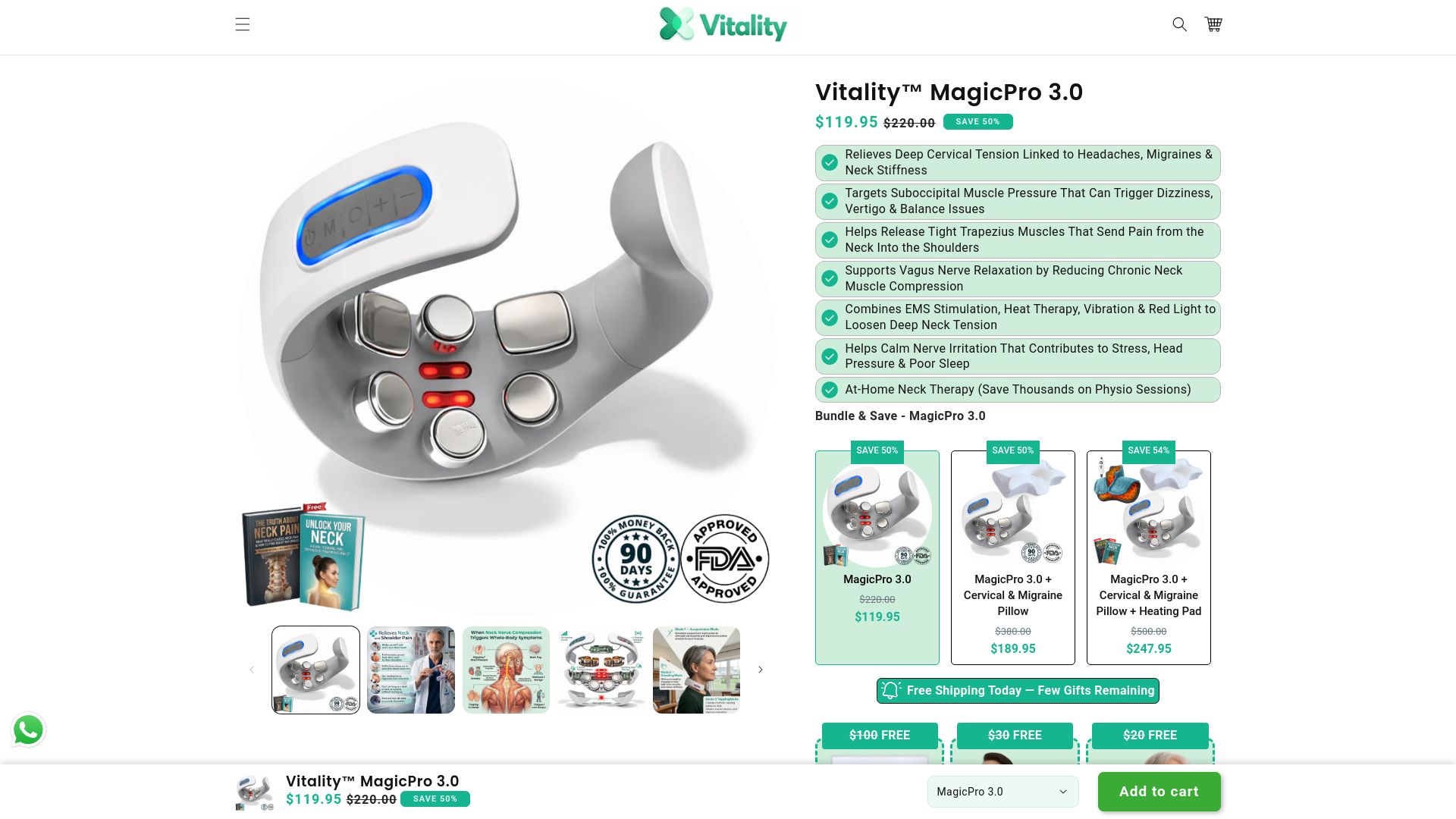
Unlike a standalone massage gun, MagicPro’s stimulation feature is the kind of device ACOG recommends discussing with your provider before pregnancy use. Once you have that go-ahead, follow conservative use: start low, keep sessions brief, and avoid sensitive areas. Many customers also add the companion heating pad accessory for gentler, heat-only relief on days when stimulation isn’t the right call.
If a stiff neck is wearing you down and your pregnancy is low-risk, get your provider’s approval, then explore the MagicPro 2.0 product page to see which settings and session lengths fit your situation best.
Sources
- Can I get a massage while pregnant? — ACOG
- Where Not to Massage a Pregnant Woman: Areas to Avoid — Healthline
- Massage therapy during pregnancy — NCBI/PMC
- Relevant PubMed study on mechanical stimulation and safety — PubMed
This article is general information, not a substitute for advice from a qualified doctor. Consult a qualified healthcare professional about your own circumstances before acting on anything here.